


What if your most vibrant brand asset wasn’t a liability the moment the wind picked up? Most ambitious event planners have felt that sinking frustration when a sudden mountain gust or coastal breeze turns a premium display into a tangled, shredded mess. It’s a common pain point that undermines your professional presence and wastes your marketing budget. We believe your visibility should be as resilient as your vision. By choosing high-performance wind resistant custom flags, you’re not just buying a sign; you’re investing in a strategic system designed to command attention while others are being taken down for safety.
In this 2026 guide, you’ll discover how to engineer brand durability through advanced aerodynamics, premium 4 oz. knitted materials, and specialized hardware. We’ll dive into the technical details that separate a standard banner from a high-impact survivor, including rotational bases that handle 37mph gusts and printing techniques that resist fading. From the thin air of Denver to the wind tunnels of urban centers, we’re sharing the boutique expertise needed to keep your brand flying proud and perfectly visible, no matter what the forecast predicts. Get ready to transform your outdoor presence into an enduring landmark of quality.
Key Takeaways
- Master the science of material breathability by understanding why knitted polyester outperforms thicker, rigid fabrics in high-velocity environments.
- Identify the ideal aerodynamic profile for your specific venue, comparing the superior stability of teardrop shapes against the branding surface area of feather flags.
- Discover how to engineer lasting visibility using wind resistant custom flags that leverage rotational hardware to dissipate energy and prevent tangling.
- Optimize your display’s lifespan by identifying and avoiding the “wind tunnel” effect created by urban architecture and narrow natural corridors.
- Implement professional-grade installation protocols that ensure your hardware remains perfectly vertical to maintain structural integrity during sudden gusts.
Beyond the Breeze: Why Wind Resistance is Vital for Brand Integrity
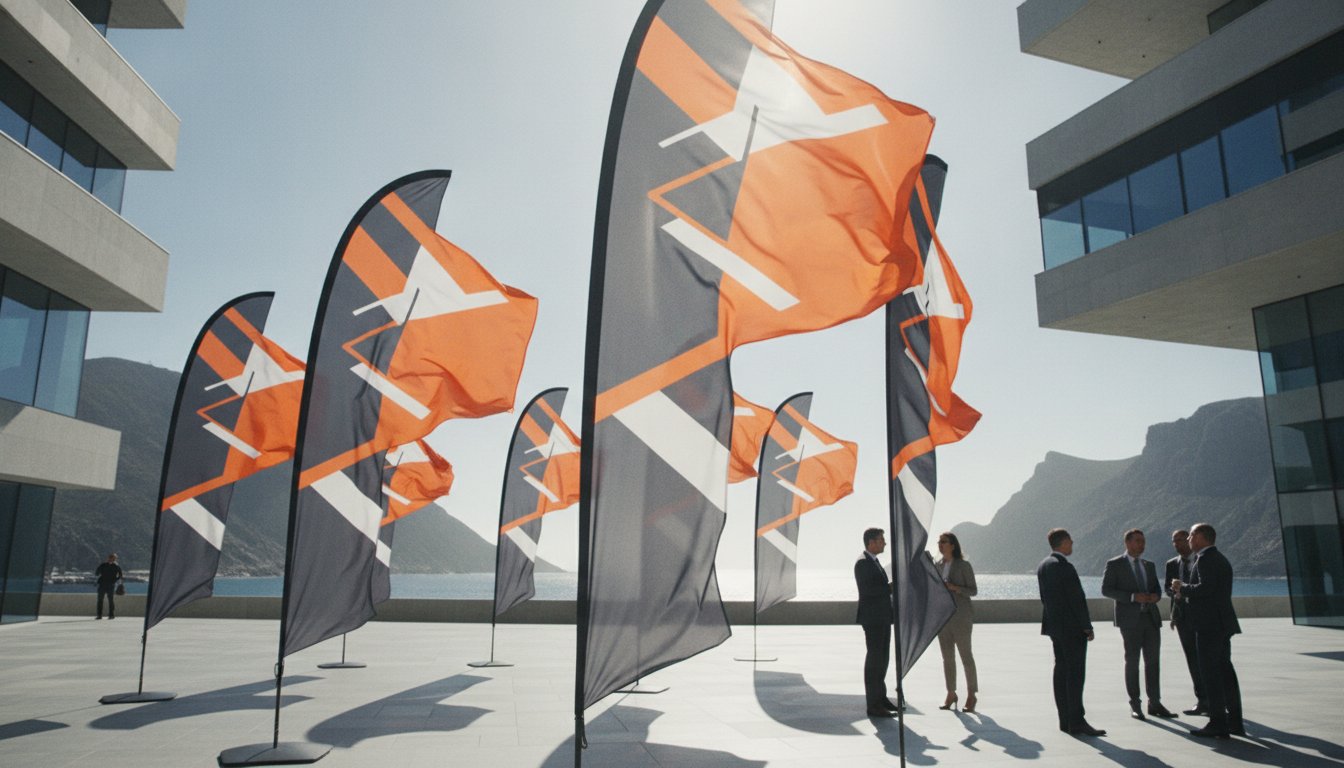
A shredded flag is a silent brand killer. When a sudden gust of wind transforms your vibrant logo into a collection of frayed threads, it sends a message of neglect rather than excellence. Professional reputation is built on consistency. High-impact visibility requires more than just bold colors; it demands the structural integrity to withstand the elements. We’ve seen how wind resistant custom flags serve as the frontline of your visual strategy, maintaining their composure when the weather turns volatile. A pristine, fluttering banner suggests a brand that’s prepared, professional, and powerful.
True durability is about visibility during velocity. If your flag is wrapped tightly around its pole or whipping so violently that your logo is a blur, your marketing investment is failing. Achieving a perfectly flying display involves understanding the principles of flag design, where shape and material work in harmony to shed wind loads. This is especially critical for brands operating in high-altitude regions like Denver. The combination of intense UV exposure and erratic, high-velocity gusts requires specialized engineering that standard products simply don’t provide. Thinner air doesn’t mean less force; it often means more unpredictable patterns that can catch a standard flag off guard.
Brand Reliability in Unpredictable Environments
Signs that survive the storm project an image of unshakeable stability. There is a specific psychology to movement in marketing; the human eye is naturally drawn to the rhythmic flutter of a flag. However, that attraction sours the moment a display becomes a tangled mess. Boutique fabrication allows for a level of precision that mass-produced budget options can’t match. By focusing on bespoke engineering, we ensure your message remains legible and your presentation stays polished throughout a multi-day festival or a season of coastal events. It’s about the pride of a well-executed presentation that never wavers.
Defining Real Wind Resistance in 2026
In 2026, a generic outdoor label isn’t enough. Real wind resistance is defined by specific performance metrics like material porosity and rotational hardware capabilities. While rip-stop materials prevent small tears from spreading, true wind-resistant engineering focuses on dissipating energy before damage occurs. At Zodiac Event Displays, we design for endurance. We treat every custom flag as a strategic asset, ensuring it possesses the breathability and aerodynamic profile needed to thrive. This boutique approach moves your brand away from a transactional purchase toward a visionary partnership that protects your long-term visibility across the globe.
The Engineering of Endurance: Aerodynamics and Advanced Materials
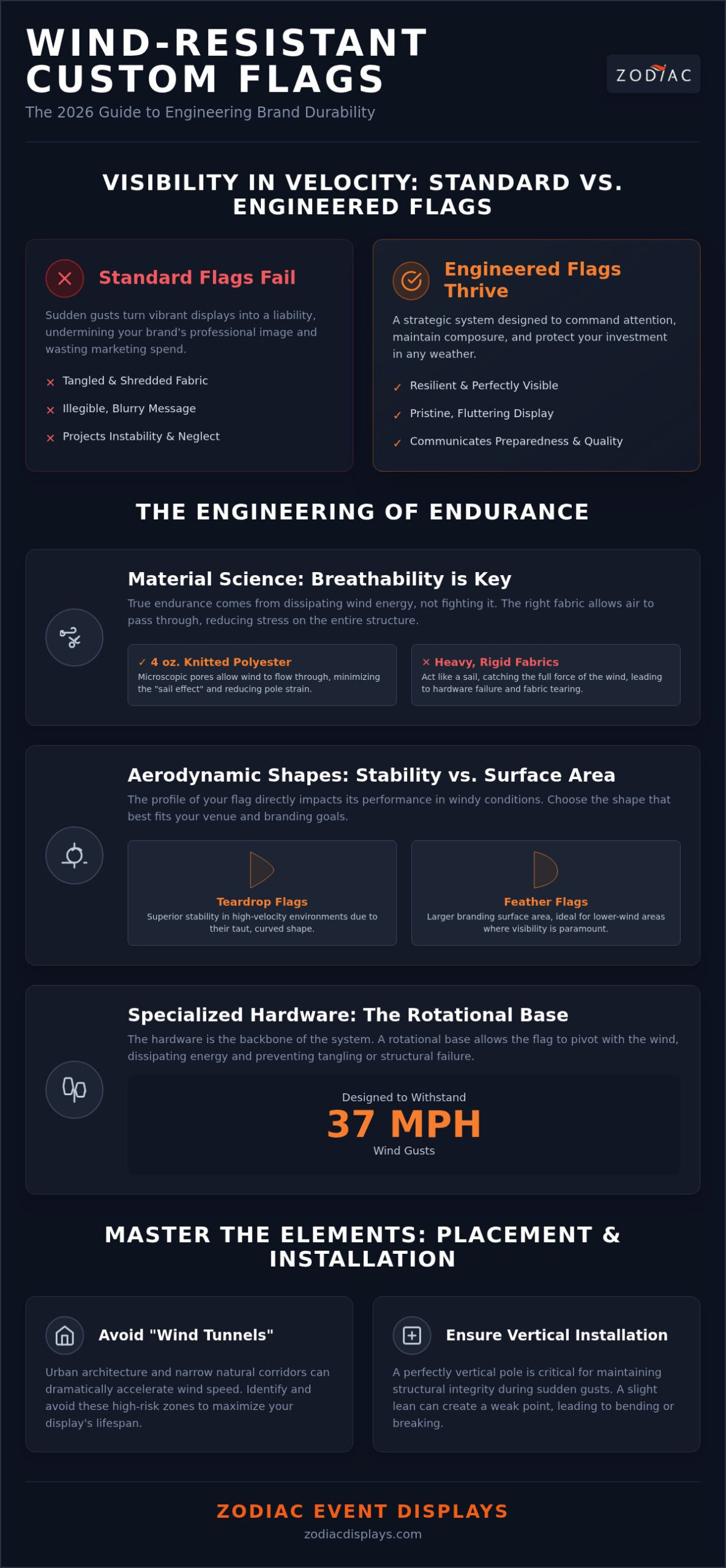
Engineering wind resistant custom flags requires a fundamental shift in perspective. Most vendors suggest that “thicker is better,” but true endurance comes from a soft signage system’s ability to dissipate wind energy rather than fight it. We define these high-performance tools as a synergy between porous, breathable fabrics and specialized rotational hardware. By allowing air to pass through the material and enabling the structure to pivot, we reduce the stress on the entire display. This strategic approach ensures your brand remains upright and legible when rigid, mass-produced alternatives succumb to the pressure.
Material Science: Knitted Polyester vs. Woven Nylon
Breathability is your best defense against structural failure. While some competitors promote heavy 3-ply fabrics, these often have a high aerodynamic drag coefficient of a flag, causing them to act like a sail rather than a wing. We utilize 4 oz. knitted polyester because its microscopic pores allow wind to flow through the banner. This reduces the “pull” on the pole significantly. To maintain tension stability, we incorporate heavy-duty headers that provide a rigid spine for the flexible fabric, ensuring the flag stays open even in lighter breezes.
Structural degradation often starts at the molecular level before a physical tear appears. UV-resistant inks do more than keep colors vibrant; they act as a shield for the underlying fibers, preventing the sun from making the material brittle. We pair this with reinforced stitching protocols along the edges, which are the first point of failure in high-wind zones. Every hem is a calculated reinforcement designed to handle the snap and whip of high-velocity gusts without fraying or losing shape.
Hardware: The Unsung Hero of Wind Resistance
Hardware is the hidden engine of a successful outdoor display. Ball-bearing swivels are essential components that allow the flag to rotate 360 degrees, constantly seeking the path of least resistance. When the flag can pivot with the wind direction, it eliminates the risk of the fabric tangling or the pole snapping. When deploying wind resistant custom flags, we often recommend carbon fiber poles over traditional aluminum. Carbon fiber offers a unique flex that serves as a defense mechanism, absorbing the shock of sudden mountain gusts rather than resisting them to the point of breaking.
The final piece of the engineering puzzle is ballast mathematics. Choosing the right base is a matter of calculating the necessary weight to counter specific wind speeds, which can reach up to 37mph for specialized designs. Whether it’s a drive-over base for a parking lot or a heavy-duty pavement base for high-traffic urban areas, the goal is to keep the center of gravity low. If you’re ready to build a display that commands respect in any climate, consider how bespoke engineering can elevate your brand. This level of precision is what transforms a simple sign into a long-term strategic asset.
Comparing Shapes and Sides: Feather, Teardrop, and Print Density
Selecting the right silhouette is a strategic decision that balances visual real estate with aerodynamic reality. While the material science discussed in previous sections provides the foundation, the shape of your display determines how it interacts with moving air. For wind resistant custom flags, the Teardrop profile is the undisputed champion of stability. Its high-tension design keeps the fabric taut, which virtually eliminates the abrasive flapping noise and edge wear common in lower-quality alternatives. This shape is ideal for high-velocity environments where maintaining a crisp, legible brand image is non-negotiable.
Feather and rectangular flags offer a different set of advantages. These shapes maximize the vertical surface area, providing a larger canvas for complex logos or bold typography. They’re the preferred choice for moderate conditions where visibility from a distance is your primary goal. However, as the height of the display increases, so does the wind load. A taller flag acts as a longer lever against its base, requiring more sophisticated ballast and high-strength hardware to remain vertical. Understanding this relationship between scale and force is essential for any high-impact outdoor presentation.
Teardrop vs. Feather: A Performance Comparison
Teardrop flags are engineered for tension. Because the fabric is pulled tight across the curved frame, it doesn’t whip in the wind, which significantly extends the lifespan of the print. Feather flags, by contrast, are best suited for environments where the message needs to be seen across a crowded festival floor or a sprawling parking lot. We often help our partners identify hybrid shapes that offer a middle ground, ensuring they have a versatile asset that performs well across a diverse event calendar. It’s about finding the perfect balance between artistic flair and physical endurance.
Single-Reverse vs. Double-Sided Graphics
The choice between single-reverse and double-sided printing is often a trade-off between weight and clarity. Single-reverse flags are the gold standard for pure wind performance. They’re lightweight and maintain the essential porosity required for air to flow through the knitted fibers. This reduces the overall stress on the pole and base. Double-sided flags utilize two layers of fabric with an internal “blockout” liner, ensuring your logo is oriented correctly on both sides. While this provides maximum brand impact, the added layers increase weight and drag. If you’re deploying in a high-wind zone, the extra stress of a double-sided flag demands the premium hardware and specialized engineering we provide at Zodiac Event Displays. We’ll guide you through these technical trade-offs to ensure your wind resistant custom flags remain a source of pride for years to come.
Master the Elements: Strategic Placement and Longevity Protocols
Strategic positioning is just as vital as material science for the endurance of your display. Even the most advanced wind resistant custom flags are subject to the laws of physics. One of the most overlooked hazards in urban or mountainous environments is the “wind tunnel” effect. Placing your signage between tall buildings or within narrow natural corridors can amplify wind speeds significantly. This creates a localized environment where the force exceeds the material’s design limits, leading to premature wear. By analyzing the site’s topography, you can place your assets where they command attention without bearing the brunt of unnecessary turbulence.
Strategic Placement for Maximum Lifespan
Successful event planners don’t just “put up a flag”; they orchestrate a visual environment. Before installation, take a moment to analyze the prevailing wind direction at your site. Ensure there is ample distance from solid obstacles like walls, fences, or trees to prevent abrasion wear. A sophisticated strategy involves using custom event tents as structural wind-breaks. This collaborative setup creates a shielded zone for your flags, allowing them to flutter gracefully while the tent absorbs the initial impact of the breeze. This partnership between signage types ensures your entire presentation remains pristine throughout the event.
Installation mastery is the second pillar of longevity. Always ensure your ground stake or base is perfectly vertical. If the pole leans even slightly, the ball-bearing swivels discussed earlier can’t rotate with the 360-degree precision they were designed for. This misalignment causes the fabric to wrap around the pole, increasing the stress on the fibers and the hardware. A level installation is the simplest way to ensure your flag seeks the path of least resistance naturally.
The Care and Keeping of Soft Signage
Maintenance isn’t just about aesthetics; it’s about structural preservation. Develop a rhythm for inspecting your flags for tiny frays at the fly-end corners. Catching a small tear early can prevent it from becoming a catastrophic failure. Spot-clean large-format graphics with mild soap to remove salt, dirt, or pollutants that can act as abrasives over time. Don’t forget the hardware. A quick check and occasional lubrication of the rotation points will keep your displays spinning smoothly for 2026 and beyond.
Knowing when to strike your display is the mark of a seasoned strategist. While specialized designs can withstand 37mph gusts, it’s wise to monitor the Beaufort Scale during extreme weather events. If you notice large branches in motion or feel the wind making it difficult to walk, it’s time to bring the flags down. This proactive care protects your high-impact assets for future use. If you’re ready to secure hardware that stands the test of time, explore our resilient custom flag solutions and ensure your brand always flies high.
Elevate Your Presence: The Zodiac Approach to Resilient Signage
True excellence in outdoor branding isn’t found on a factory assembly line; it’s engineered through dedicated partnership. At Zodiac Event Displays, we view every project as a unique creative challenge that requires a blend of high-end design and tactical endurance. We’ve spent over a decade refining our boutique approach, moving beyond the role of a simple vendor to become a visionary ally for your brand. Our experience in Denver’s high-altitude environment has taught us that wind resistant custom flags must be more than just pretty banners; they must be resilient landmarks of quality that never waver under pressure. This ‘Mile High’ expertise allows us to anticipate weather patterns that would catch standard manufacturers off guard, giving your brand a distinct advantage in any climate.
Our commitment to your success extends through the entire lifecycle of your signage, from the first spark of a creative concept to the moment your display commands the horizon. We don’t just provide equipment; we provide the peace of mind that comes from knowing your visual assets are built for the long haul. This authoritative yet approachable guidance ensures that your investment translates into professional growth and the pride of a well-executed presentation. We take the time to build a narrative of expertise and collaboration before delivering a product that exceeds standard requirements.
Design and Durability: Our Fabrication Philosophy
We believe that a well-executed presentation begins long before the first gust of wind hits the fabric. Our collaborative design process ensures that your artwork is perfectly optimized for the aerodynamic shapes discussed in this guide. This includes meticulous technical file preparation for high-impact custom flag banners, where we balance visual vibrancy with the structural needs of the material. By utilizing action-oriented design principles, we ensure your logo remains legible and striking even during high-velocity movement. We also prioritize sustainable practices in our soft signage manufacturing, selecting materials and processes that support your long-term success without compromising our commitment to the craft.
Partnership and Performance: Your Next High-Impact Event
Managing a global brand presence requires a partner who understands the complexities of international logistics and local weather challenges. Our team oversees the entire lifecycle of your display, from the initial creative concept to global delivery, ensuring consistency across every venue. We take the stress out of execution so you can focus on the pride of a successful presentation. Whether you’re planning a coastal festival or a mountain-top activation, we provide the seasoned strategy needed to protect your visibility. Our full-service fabrication model means we’re with you from the first sketch to the final installation. If you’re ready to engineer a strategy that stands tall, Contact Zodiac Event Displays to begin your journey toward high-impact durability and professional growth.
Command the Horizon: Securing Your Brand’s Future
Mastering the elements requires a fundamental shift from viewing signage as a disposable commodity to treating it as a strategic investment. We’ve explored how the synergy of porous fabrics, rotational hardware, and aerodynamic profiling creates wind resistant custom flags that don’t just survive but thrive in volatile conditions. By prioritizing material breathability over brute thickness and selecting the right profile for your specific venue, you ensure your brand maintains its integrity while others falter. Your visibility is a testament to your professional standards, and it deserves a system that matches your ambition.
With over a decade of Denver-based branding expertise, our boutique agency understands the unique challenges of high-altitude and coastal environments. We specialize in the entire lifecycle of high-impact soft signage, offering global delivery reach to ensure your message remains consistent across every continent. It’s time to move beyond the frustration of shredded banners and embrace the pride of a perfectly executed presentation. Elevate your brand with high-impact, wind-resistant displays from Zodiac and let your vision soar with confidence. Your brand is built for endurance; ensure your displays are too.
Frequently Asked Questions
What is the best flag shape for high-wind areas?
The teardrop shape is the premier choice for high-wind environments. Its unique design keeps the fabric under constant tension, which prevents the destructive whipping motion that leads to edge fraying. While feather shapes offer more surface area, the teardrop’s aerodynamic profile sheds wind loads effectively. This makes it an essential asset for mountain activations or coastal events where gusts are unpredictable and relentless.
How long do custom flags typically last outdoors?
Outdoor lifespan usually ranges from three to six months of continuous exposure, though this varies based on climate intensity. Factors like high-altitude UV rays and constant high-velocity gusts can accelerate wear. However, by implementing the maintenance rhythms we’ve discussed, such as regular cleaning and bringing them inside during extreme storms, you can significantly extend their operational life beyond the standard industry average.
Can I use double-sided flags in high winds?
You can certainly deploy double-sided wind resistant custom flags, but they require a more robust support system. The internal blockout layer adds weight and reduces porosity, which increases the physical stress on your pole and base. To ensure stability, we recommend pairing double-sided graphics with carbon fiber poles and heavier ballast to counter the increased drag created by the multi-layer construction.
What is the difference between knitted and woven polyester for flags?
Knitted polyester features a porous structure that allows wind to pass through the fabric, whereas woven polyester is more rigid and acts like a solid sail. For high-performance displays, knitted material is superior because it stretches and breathes under pressure. This flexibility prevents the fibers from snapping during sudden gusts, making it the industry standard for durability in challenging outdoor conditions.
How do I prevent my flag from tangling around the pole?
Preventing tangles requires a combination of high-quality hardware and precise installation. Ball-bearing swivels are the most effective solution, as they allow the flag to rotate 360 degrees to seek the path of least resistance. Additionally, you must ensure your ground stake or base is perfectly vertical. Even a slight lean can disrupt the rotation mechanism, causing the fabric to wrap tightly around the pole.
What wind speed can a custom flag banner withstand?
High-quality custom flag banners are often engineered to withstand wind speeds of up to 37mph. Performance depends heavily on the shape and the type of base used. For example, a teardrop flag on a heavy-duty pavement base will remain stable in conditions that would topple a standard rectangular sign. Always monitor local forecasts and strike your displays if speeds are predicted to exceed these safety thresholds.
How do I clean a large custom printed flag without damaging the graphics?
Cleaning your flag requires a gentle touch to preserve the vibrancy of the UV-resistant inks. We recommend spot cleaning with mild soap and cool water using a soft cloth or sponge. Avoid harsh chemical cleaners or abrasive brushes that can degrade the knitted fibers. After cleaning, always air-dry the fabric completely before folding it for storage to prevent mold and maintain the structural integrity of the print.
Do I need a special permit for outdoor flag displays in Denver?
Denver classifies advertising flags as temporary signs, and regulations can vary significantly depending on your specific business zone. Most local ordinances require these displays to be placed on private property rather than the public right-of-way. Before your next event, it’s a smart strategy to check with the Denver Department of Community Planning and Development to confirm current permit requirements and size limitations for your location.
 Previous reading