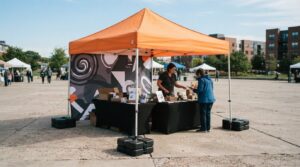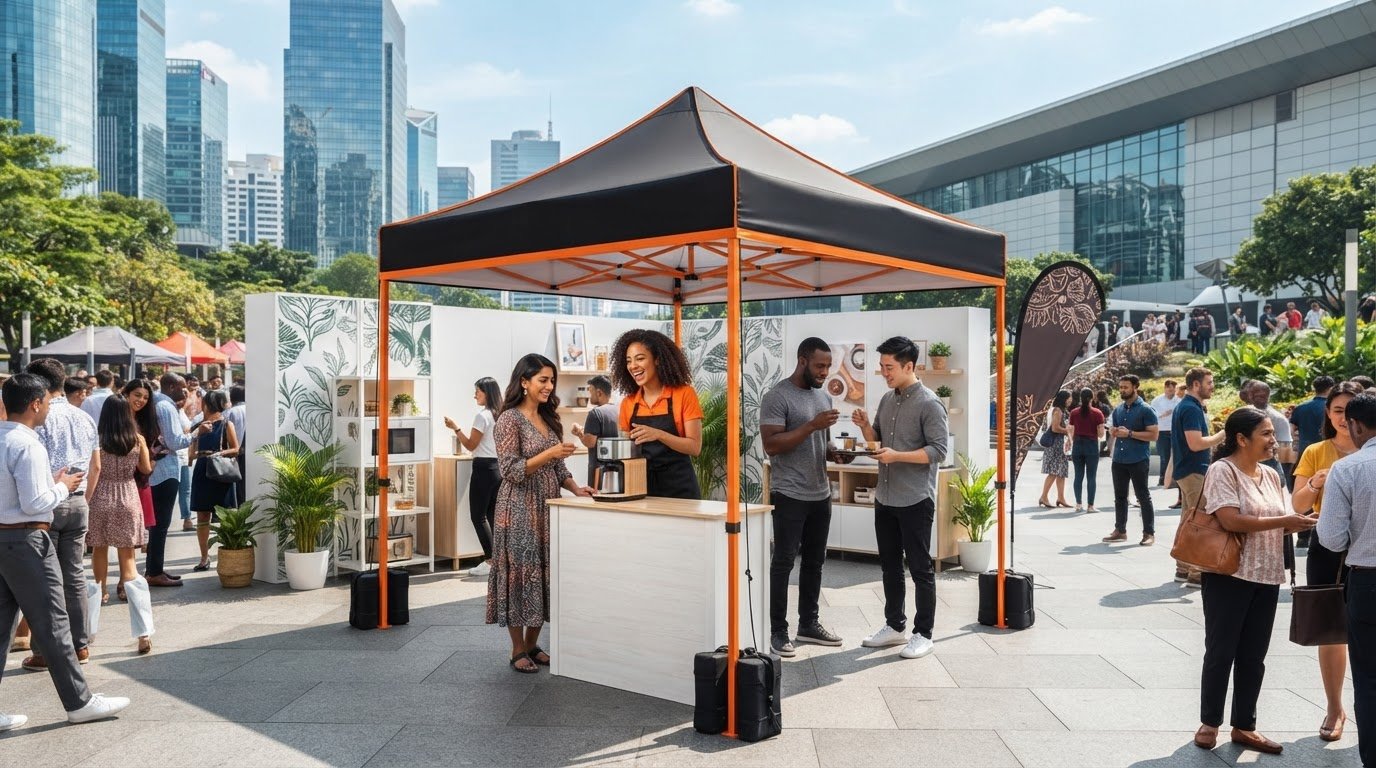
A trade show tent can be more than shelter: it can become the center of an outdoor brand experience. Yes, frame tents are suitable for brand activations, giving teams a defined space for product sampling, demonstrations, and conversation. A 10×10 canopy is a common all-purpose choice for compact displays and visitor engagement.
That structure matters: a defined footprint helps visitors recognize where to approach, while branded graphics connect the experience to your campaign. Choose the setup based on what visitors will do inside, the space staff and displays need, and the conditions at the event site.
This guide explains how brand activation tents can shape branded environments, urban activations, experiential marketing, and trade show displays. Learn how to plan the space, create a cohesive visual presence, and make the tent part of a wider display, not just a canopy overhead.
Key Takeaways
- Choose a frame tent around the activity it needs to support, from sampling and demonstrations to queues and staff work areas.
- Plan the footprint and layout together so branded graphics, displays, and visitor flow work as one environment.
- For urban events, consider how the site and weather conditions affect tent placement, stability, and the overall setup.
- Make the experience participatory with hands-on demonstrations or interactive elements that invite visitors to engage.
- Bring tents together with complementary displays to create a cohesive presence at outdoor events and trade shows.
Are frame tents suitable for brand activations?
Yes, frame tents create a defined footprint for branded displays, sampling, and visitor interaction. In the United States, the cost of a custom branded event tent depends on its footprint, frame construction, graphic coverage, and accessories, which determine material and fabrication needs.
Logo Canopies at City Events
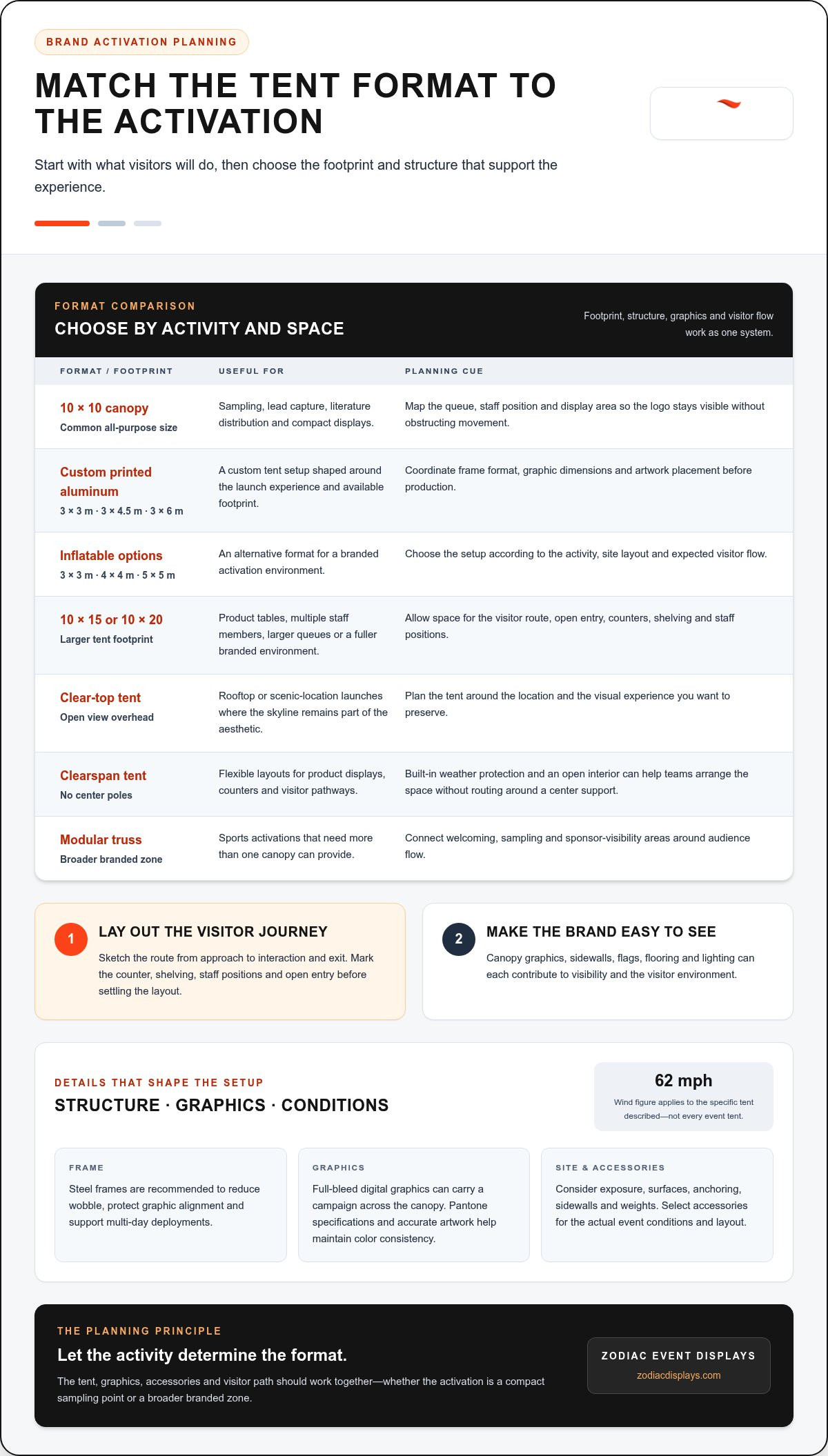
At New York City street events, a logo canopy can mark a sampling point, registration area, or sponsor station. A 10×10 canopy is a common all-purpose size for product sampling, lead capture, literature distribution, and compact displays. Before choosing one, map the queue, staff position, and display area so the logo remains visible without obstructing movement through the event space.
Weather Performance and Accessories
Weather planning starts with the frame, anchoring approach, and event conditions. Sturdy canopy tents have been described as tested in winds up to 62 mph, but that figure belongs to the tent described, not every event tent. For festivals, consider how sidewalls, weights, and the site’s exposure affect the setup. Select accessories around the actual conditions and event layout.
Frame construction shapes how a branded canopy performs during repeated setup and use. Steel frames are recommended to reduce wobble, protect graphic alignment, and support multi-day deployments. Compare the footprint with the activation plan: a 10×10 format can establish a focused station, while a larger area may be needed for product tables, staff, or queues. The tent, graphics, and visitor path should work together.
Sports events may call for a modular truss structure when an activation needs a broader branded zone than one canopy can provide. Plan connected areas for welcoming visitors, sampling, and sponsor visibility, then arrange them around audience flow. For example, a sports festival might place a logo canopy beside a truss-supported sign or display. The right structure depends on the footprint and the purpose of each area.
Flooring, lighting, and graphics help complete the environment. Flooring can mark the activation boundary and distinguish the visitor area from the surrounding surface. Lighting keeps logos, products, and information legible as conditions change through the day. Coordinate these elements with the canopy colors and graphic placement, then check sightlines from the approach. This creates a polished impression without overcrowding the space.
When planning brand activation tents, consider the frame, graphic visibility, layout, and accessories as one system. A thoughtful setup supports the activity beneath it, whether that is a compact New York City sampling point or a larger presence at a sports event.
Can you create branded or custom tent environments?
Yes, choose the tent shape, dimensions, graphics, and accessories to suit the activation. For safer setup and transport, follow the frame assembly and anchoring instructions, then secure each component for transport.
Activation and Launch Tent Options
Match the tent format to the launch experience, not just the available footprint. Custom printed aluminum event tents are available in 3 x 3 m, 3 x 4.5 m, and 3 x 6 m setups. Inflatable options come in 3 × 3 m, 4 × 4 m, and 5 × 5 m sizes. Some tent designs can provide an open interior that may suit staging or product demonstrations.
Working with a Tent Manufacturer
Working with a tent manufacturer can align structural choices with artwork and fabrication. Start by sharing the activation goal, site layout, and expected visitor flow. Then coordinate the frame format, graphic dimensions, and placement before production. For a corporate launch, this process helps keep the tent’s visual identity consistent with surrounding event materials and the planned brand experience.
Graphics, Sidewalls, and Visibility
Full-bleed digital graphics can carry a campaign across the canopy, while dye-sublimation printing produces vivid tent graphics. Pantone color specifications and accurate artwork help maintain color consistency across campaigns. Sidewalls add branding surfaces and can frame a product display. Trade show tents can also incorporate sidewalls, counters, and shelving to organize demonstrations, products, and visitor interactions.
Choosing a Format for Activation Goals
Let the activity determine the format. A 10×15 or 10×20 tent is recommended when an activation includes product tables, multiple staff members, larger queues, or a fuller branded environment. A clear-top tent can suit a rooftop or scenic-location launch where the skyline remains part of the aesthetic. For a compact activation, custom flags can add vertical visibility without taking over the display.
Before committing to a layout, sketch the visitor route from approach to interaction and exit. Mark the counter, shelving, staff positions, and open entry so graphics draw attention without crowding the experience. For ideas on coordinating branded event materials, explore custom event display options.
Weatherability and stability for urban activations
Urban sites expose an event setup to changing weather, nearby buildings, and hard or uneven surfaces. Plan the tent around the location and activity, whether it hosts a retail experience, product launch, or immersive demonstration. The structure, fabric, anchoring method, and layout all affect how the setup performs.
Clearspan tents have no center poles and provide built-in weather protection, allowing a flexible event layout. That open interior can help teams arrange product displays, counters, and visitor pathways without routing around a central support. For a launch, map the footprint first, then place the entrance and display area to suit the space. A compact site may call for a different arrangement than an open plaza.
Weather performance depends on more than canopy fabric. Consider wind exposure between buildings, possible rain, the ground surface, and the placement of walls or other attachments. Even fabric designed for outdoor use needs a compatible structure and suitable anchoring for the site. Keep the intended layout in mind, as walls and displays can change how the space feels and functions.
Plan for stability by assessing the site. Identify whether the tent will stand on pavement, a plaza, or another surface, then match the anchoring method to that surface and follow the structure’s instructions. Keep access routes clear and position displays without crowding entrances. At a street-level retail activation, this layout helps visitors approach without disrupting the surrounding flow.
Weather resistance and fire ratings address different performance requirements. Do not assume that fabric that resists rain also meets a fire-performance requirement. Compare the fabric’s documented fire classification with the venue’s stated requirements, and keep the relevant product information at hand during planning. This helps teams base decisions on documented material properties, not appearance or weather performance.
For an outdoor product launch, consider how the tent will perform throughout the event. A covered demonstration area can help preserve the planned visitor experience as conditions change, while an open clearspan layout lets teams adapt product placement. Review the site, expected weather exposure, and activity sequence together. Then coordinate the structure, fabric, anchoring, and footprint as one setup.
The goal is a stable, usable environment, not simply a tent that fits the site. For urban activations, assess the surface, exposure, fabric documentation, and planned layout before production. These choices help create an immersive space that meets the event’s visual and practical needs.
Creating memorable experiential marketing
A memorable event gives visitors something to do, not just something to see. Use a canopy tent to anchor one clear experience, such as a hands-on product demonstration. Arrange the space so guests can spot the activity, understand how to join, and participate without interrupting others. This makes the branded environment a functional part of the campaign.
Start with the action you want visitors to take. For a product trial, place the demonstration where people can see it as they approach. For a touchscreen or virtual reality station, make the activity easy to spot and leave room for visitors to take turns. A focused experience helps your team communicate one campaign message instead of competing with unrelated prompts.
Build participation into the environment. A beauty brand, for example, could invite guests to try a product with staff guidance, while a technology campaign could pair a touchscreen with a live demonstration. Give each activity a visible starting point and clear next step. Visitors should understand the experience from the tent entrance, even before speaking with staff.
Sponsored dining areas are another way to make an activation useful. At a food festival, corporate event, or charity gala, a brand can decorate the dining area with its colors, logos, and promotional materials. Seating gives guests a reason to pause, while the branded surroundings connect the sponsor with a shared experience. Coordinate table graphics and signage for a consistent impression.
Coordinate logistics with the visitor experience before event day. List what each activity needs, such as demonstration products, screens, signage, and staff materials. Assign each item a place in the tent and map how guests will move between them. A product demonstration, for example, should not block the route to a sampling station or create a bottleneck at the entrance.
Visibility should support participation, not overwhelm it. Repeat campaign colors and logos across the canopy and surrounding materials, then keep the main interaction area focused on the product or activity. This balance makes the brand recognizable in photos while giving visitors room to engage. Review the setup from both outside and inside the tent before opening.
Let the event shape the experience. At a festival, a short demonstration may suit a steady flow of passersby; at a corporate gathering, a longer guided interaction may better suit the audience. Effective experiential marketing connects the setting, activity, and message. With that alignment, brand activation tents can make campaigns more engaging and memorable.
Trade show tents as brand-activation displays
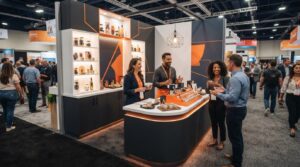
Popular ideas include festival sampling stations, hands-on product demonstrations, and branded dining areas. At trade shows, a tent can bring product displays, conversations, and campaign visuals together in one distinct space.
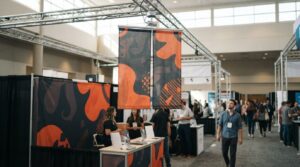
Strong graphics catch attention before visitors reach the booth. Use a clear logo, campaign colors, and one concise message across visible surfaces. Keep essential information at eye level, and let the product or demonstration remain the focal point. This visual hierarchy helps visitors understand the activation without having to decode crowded graphics.
Plan the interior around the interaction. Place samples near the staff member offering them, and keep the entrance open to visitors approaching from different directions. A product demonstration needs room for both the presenter and audience. For a festival tasting, position the serving counter so people can take part without blocking the route through the tent.
A 10×10 canopy is a common all-purpose choice for product sampling, lead capture, literature distribution, and small displays. For this footprint, select one primary activity and arrange supporting materials around it. A compact table, a visible sign, and a staff position can create a practical experience without competing for space. The format works best when the activation has a focused goal.
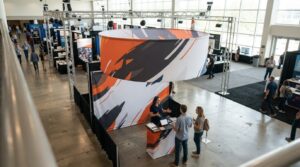
Combine a tent with a backwall display when the campaign needs a stronger visual anchor. Pacifico used an 8×8 media wall for photos at the GoPro Mountain Games in Vail, Colorado. That example shows how a backdrop can create a recognizable photo point beside an outdoor activation. Coordinate the wall’s imagery with the tent graphics so photos reinforce the campaign’s visual identity.
At festivals, the tent can be part of a sponsored experience. A branded dining area at a food festival gives guests a functional place to pause, while logos and campaign colors keep the sponsor visible. At trade shows, sidewalls, counters, and shelving can organize products and demonstrations. Choose each element for the activity it supports, not just its appearance.
Before choosing a layout, define the visitor action, map the display footprint, and list the materials needed. Then coordinate the graphics, samples, staff positions, and visitor flow. This practical sequence makes the tent an activation display, not just a branded shelter.
Explore trade show display options to shape a cohesive tent-and-display presence for your next event.
Zodiac Event Displays: Event Tents
Zodiac Event Displays helps turn an outdoor activation concept into a coordinated branded space with Event Tents. Work with the team when planning a product demonstration, festival presence, or trade show display that brings the tent and supporting graphics together.
Pair an Event Tent with Backwall Displays to create a visual focal point, or use Custom Flags to increase visibility around the activation. Inflatables can add a bold branded element to the surrounding environment. Choose products to suit the audience activity and keep the layout purposeful and cohesive.
Share your event concept with Zodiac Event Displays to explore an approach for your branded setup. Contact Zodiac Event Displays to discuss your event tent project.
Make Your Next Activation Count
Your next event can turn a campaign idea into a place people can step into, explore, and remember. Before production, define the visitor experience you want to create, then shape the environment around that goal. Thoughtful brand activation tents make your message tangible and give every design choice a purpose.
Zodiac Event Displays offers Event Tents, Backwall Displays, and Custom Flags to create a cohesive branded presence. Choose elements that support your event, whether you are planning a hands-on demonstration, sampling experience, or trade show display. A clear creative direction helps every piece contribute to the same impression.
Ready to develop a branded setup for your next outdoor event? Explore your event display options and take the next step toward a more engaging brand experience.
Frequently Asked Questions
Can temporary event tents have air conditioning and heating?
Yes, temporary event tents can accommodate heating or air conditioning when the layout, equipment, and power plan support it. An enclosed hospitality tent, for example, may need climate control, while an open sampling canopy may not. Consider equipment and cable placement, air circulation, and clear visitor routes. Include these needs in the event plan before finalizing the tent configuration.
How do you determine tent size for a large outdoor event?
Estimate the required footprint from the event activities and guest count. For a sit-down event, approximately 10 square feet per guest is a general starting point; active formats may need more space. Add room for stages, counters, staff, queues, and circulation before selecting a tent. For example, a seated meal and a product demonstration serving a moving audience need different layouts, even with the same attendance.
Why should agencies have a 10×10 custom activation pop-up tent manufacturer?
A 10×10 custom tent gives an agency a compact format for sampling, lead capture, literature, or small displays. Working directly with a manufacturer can help coordinate artwork, structure, and graphic placement as one project. That matters for agencies repeating a campaign across events: consistent colors and accurately created graphics can make the setup recognizable, while a defined footprint simplifies planning for each activation.
What kind of tent setup is best for an outdoor product launch?
A high-peak tent may suit a launch that needs an open interior for staging, banquets, or crowds. For a rooftop or scenic location, a clear-top tent can preserve views of the surroundings. Choose according to the launch activity, site, and desired atmosphere. A product reveal with a central stage needs a different layout from a launch built around interactive demonstrations.
What should be included in a brand activation site evaluation?
Record the usable footprint, ground surface, access routes, nearby obstructions, and likely weather exposure. Then map where guests will enter, queue, engage with the product, and exit. Include displays, counters, staff, and any equipment needed for the activation. For example, a narrow plaza may need an entrance that keeps visitor lines clear of public pathways and neighboring event areas.
What are brand activation tents and what are they used for?
Brand activation tents are branded temporary structures that give an event campaign a dedicated space for audience interaction. Common uses include product sampling, demonstrations, sponsored lounges, and temporary retail experiences. A food brand might host tastings in a tent, while a technology company could stage a hands-on product demonstration. Graphics, displays, and activities connect the physical environment with the campaign message.
What types and sizes of promotional tents are available for brand activations?
Promotional formats include canopy tents, aluminum-frame tents, and inflatable tents. Market examples include custom printed aluminum event tents in 3 x 3 m, 3 x 4.5 m, and 3 x 6 m setups. Inflatable tent examples include 3 × 3 m, 4 × 4 m, and 5 × 5 m sizes. Choose dimensions by matching the footprint to the activity, staff, displays, and visitor flow.
Where can I buy or rent brand activation tents in the United States?
For a branded tent purchase in the United States, Zodiac Event Displays offers Event Tents. Buyers can coordinate a broader display with Backwall Displays or Custom Flags. Define the activation’s purpose, footprint, and visual direction before choosing a setup. If you are planning brand activation tents to own and customize, explore Zodiac Event Displays’ Event Tents and related display options.
 Previous reading