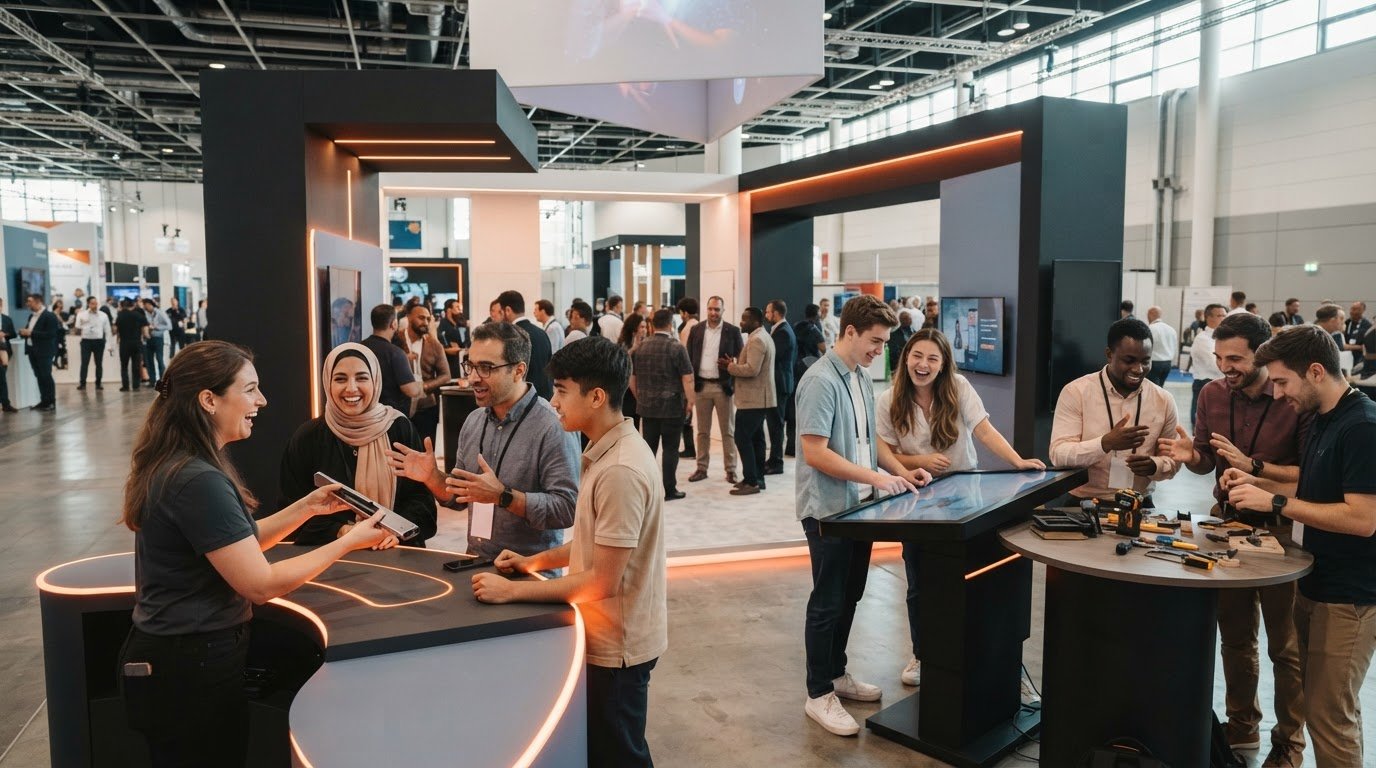
A booth can be visually striking and still be easy to forget. Experiential marketing display ideas make the space part of the brand experience, inviting visitors to interact rather than simply look. Live demonstrations, hands-on activities, intuitive games, and visual effects can all bring a brand story to life.
That shift matters at a trade show, where visitors encounter hundreds of visual messages in a single day. A memorable activation gives people a reason to pause, participate, and connect with the brand. Spectacle alone isn’t enough: the experience should feel relevant, be easy to follow, and support what the brand wants visitors to understand or do.
This article explores experiential trade show marketing and how booth concepts can turn attention into meaningful engagement. We’ll look at interactive displays, live activities, photo opportunities, games, and dynamic visual effects, as well as how clear messaging and thoughtful design help make each interaction count.
Key Takeaways
- Choose workshops, demonstrations, or competitions that fit your audience and make your product or brand story easier to experience.
- Give photo booths and games a clear purpose, then make sharing or participating feel simple and rewarding.
- Use lighting and projections to draw attention while keeping the visuals connected to your message.
- Design booth flow around the visitor’s next action, with intuitive navigation and a natural way to continue the conversation.
- Pair bold display elements with a meaningful interaction so the experience builds engagement, not just spectacle.
Workshops, demonstrations, and audience competitions
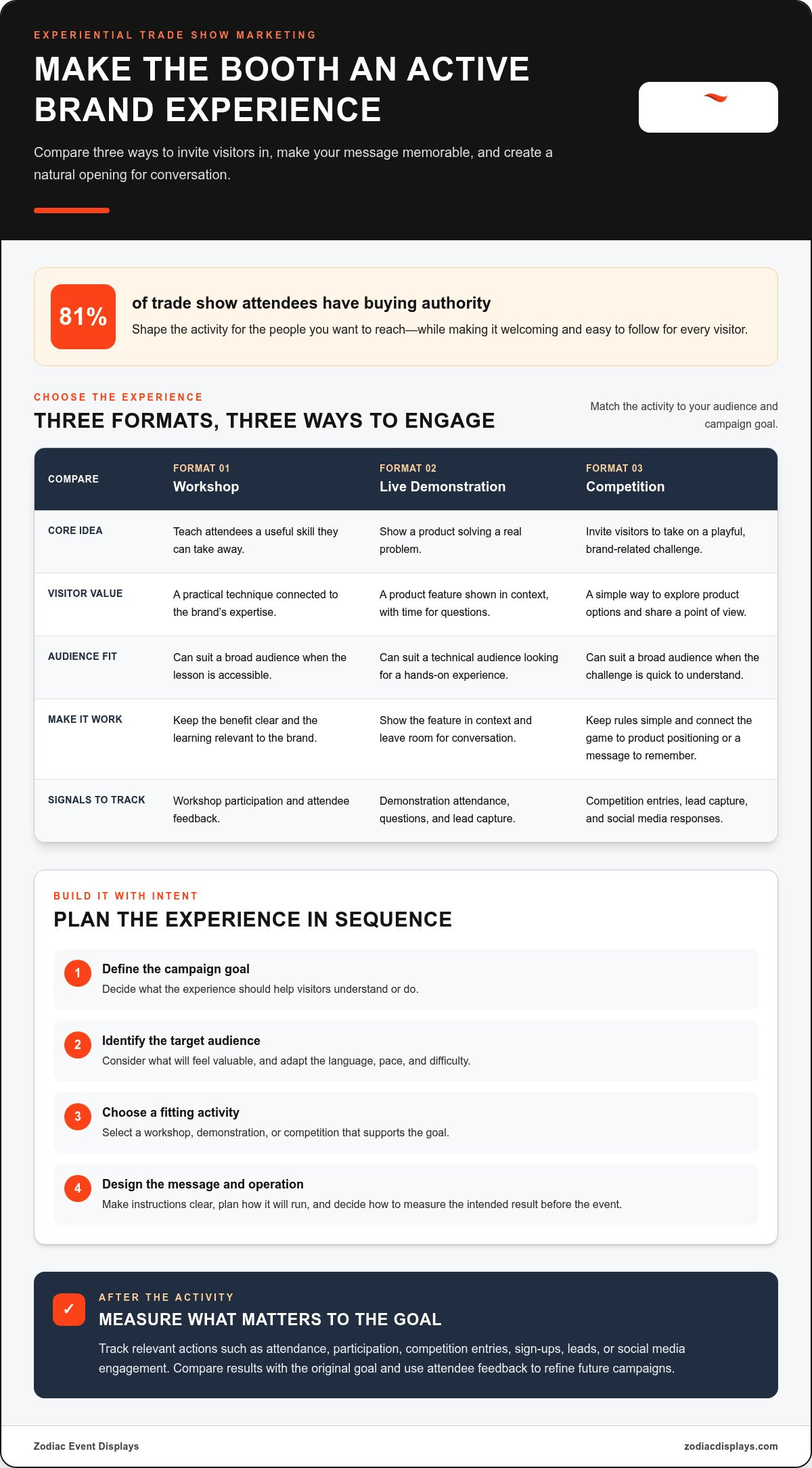
Experiential trade show marketing turns a booth visit into an active brand encounter. A short workshop can teach attendees a useful skill, while a demonstration shows a product solving a real problem. A competition can add a playful challenge, such as choosing between product options and explaining why. Each format gives visitors a reason to participate, ask questions, and remember the brand beyond the display.
The cost to design, build, and operate an experiential display depends on its format, materials, technology, staffing, and logistics. A staff-led demonstration has different resource needs from a technology-rich competition, so the experience’s complexity and operating requirements shape the overall investment.
Plan the experience in sequence: define the campaign goal, identify the target audience, choose a fitting activity, then design its message and operation. For example, a campaign seeking product interest might pair a live demonstration with a brief follow-up sign-up. Before the event, decide how to measure the intended result, such as sign-ups, leads, or social media engagement.
Audience targeting shapes what visitors will find valuable. Trade show attendees aren’t one uniform group: 81% have buying authority, so an experience can serve decision-makers while welcoming other visitors. A technical audience may value a hands-on demonstration, while a broader audience may respond better to an accessible workshop or a quick challenge. Tailor the activity’s language, pace, and difficulty to the people it aims to reach.
Keep the experience audience-centered by making the visitor’s benefit clear. A workshop should teach something attendees can use, such as a practical technique connected to the brand’s expertise. A product demonstration can show a feature in context and leave time for questions. For remote viewers, a live poll or Q&A can invite participation without requiring a booth visit. Choose a format that suits both the audience and the campaign goal.
Competitions work best when the rules are simple and the challenge relates to the brand. A short product-matching game, for instance, can help visitors explore differences between options while giving staff a natural opening for conversation. Don’t add a game just for entertainment: connect the activity to product positioning or a message the audience should remember. Clear instructions and a visible next step make participation easier.
Use engagement signals to learn which parts of the campaign resonate. Track relevant actions, such as demonstration attendance, workshop participation, competition entries, lead capture, or social media responses. Compare the results with the original goal, then use attendee feedback to refine future campaigns. A focused activity, a defined target, and useful follow-up turn a lively booth moment into a deliberate marketing experience.
Interactive photo booths and gamified challenges
Netflix showed the scale an interactive challenge can attract with its Red Light, Green Light activation in Paris. On December 1, 2024, 909 players were selected from more than 50,000 applicants. The activation drew 20,000 on-site spectators, and its live or replayed YouTube coverage reached 4.3 million views. A trade show doesn’t need that scale to use the underlying concept: give visitors a recognizable challenge, simple rules, and a reason to watch or join.
Personalized digital interactions can make an activation feel more relevant. For example, a visitor might answer a brief preference prompt to receive a tailored product recommendation or custom image. Make the action easy to understand and quick to complete. The result should be useful or entertaining, with an optional way to save or share it. This creates a clear path from participation to a branded takeaway without making data collection the whole experience.
Gamified challenges work best when their mechanics reflect the brand. A product company could invite attendees to match features with customer needs, while a travel brand could build a destination-themed puzzle. In each case, the challenge teaches or reinforces something meaningful. Avoid rules that need a long explanation: visitors should understand the goal before deciding to play. Staff can welcome participants, clarify a move, and connect the result to a relevant product conversation.
Build a sharing moment into the experience. Branded hashtags, a live social media display, a digital share button, or a photo station can extend event engagement beyond the booth. Let visitors preview their content and choose whether to share it. For experiential marketing campaigns, participation and brand awareness are more useful measures than foot traffic alone. Track completed interactions, shares, and follow-up interest to see whether the activation encouraged the intended action.
The visual setting matters, too. A cohesive backdrop helps frame portraits and keeps brand elements recognizable in attendee photos. Align its colors and message with the game or photo concept, so the display supports the interaction rather than competing with it. Explore branded event display concepts when shaping a space that makes participation feel natural and shareable.
Dynamic lighting, projections, and visual effects
Light and motion can turn a static booth into a changing brand environment. A color shift might signal a product reveal, while a projection can make a backwall feel like a portal into a campaign story. These effects attract attention when they support a clear message. Choose one visual idea visitors can understand quickly, then build the surrounding display around it.
Spotify Wrapped demonstrated how projection can make a brand message visible at scale. In December 2024, its projection on the Domino Sugar Factory in Williamsburg measured 262 feet long. A trade show doesn’t need a building-sized canvas to use the same principle. A booth wall, floor, or suspended surface can carry motion that transforms a familiar space into a more immersive brand activation.
Map the visitor’s path before choosing effects. For example, a projected product image might appear as visitors approach, then shift to show a feature during a live demonstration. This gives the visual a role in the experience instead of making it mere decoration. Coordinate the sequence with staff activity so the reveal supports conversation rather than competing with it.
Projection content needs a strong visual hierarchy. Use a concise headline, a recognizable product image, and motion that clarifies the story. For example, an outdoor brand could project a trail scene behind a product display, then animate a route across the surface. Avoid placing detailed copy over moving imagery, since visitors may struggle to read both at once.
Plan for photos as well as live viewing. A projected backdrop can create a striking setting for attendee photos, while branded lighting can help event content feel cohesive on social media. Consider where people will stand and what will appear behind them. A clear brand mark and uncluttered scene make shared images more recognizable after the event.
Visual effects need to fit the venue. A projection concept depends on the surface, ambient light, booth layout, and sightlines; a lighting plan depends on where it will be seen from. Sketch the display from visitor viewpoints before finalizing the creative. For example, a floor-level animation may work for nearby guests but disappear from an aisle approach.
Keep the overall strategy focused. Choose one or two standout visual moments, then let simpler elements support them. A successful display connects each effect to the campaign story, visitor action, and follow-up plan. Track interactions, such as product-demonstration attendance or social media mentions, to learn whether the environment captured attention and encouraged the intended response.
Experiential booth design for exhibitions and trade shows
Portable displays are easy to move but can limit customization; modular designs can be reconfigured, while custom builds offer a tailored fit with greater complexity. The right choice depends on how often the booth travels, the experience it must support, and the brand story it needs to tell.
Portable, Modular, and Custom-Built Displays
A portable display prioritizes convenient transport, a modular system adapts to changing layouts, and a custom build is designed around a specific space or activation. These trade-offs matter when matching a display to exhibition schedules and campaign needs. A team attending varied events may value reconfiguration, while a single immersive launch may benefit from a distinctive, purpose-built environment.
Start with the visitor action, then match the display format to it. A demonstration needs room for viewing and conversation; a sampling station needs a clear approach and space to pause. Keep the route intuitive so visitors can tell where to enter, participate, and continue. An open layout invites people in, while clear visual cues guide them toward the experience.
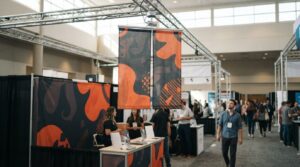
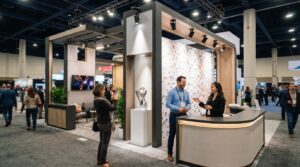
Give the booth a visible hook that can attract attention from 30 feet away. A bold brand message, distinctive shape, or moving visual can help generate awareness in a busy exhibition hall. Keep the hook connected to the experience inside. For instance, a product-focused display can lead visitors from a striking feature image to a hands-on demonstration.
Displays for Events and Retail Spaces
Experiential displays for events and retail spaces use branded settings to invite people into an activity, demonstration, or product discovery. The format matters because event visitors and retail shoppers may have different goals and time to engage. A trade show booth could support a guided demonstration, while a retail activation could let shoppers try a product in a branded setting.
Build the design around a simple story and an intended next step. A wellness brand, for example, could create a calm product discovery area, then invite visitors to speak with a representative. The visual setting should reinforce the emotional tone, not distract from the interaction. This gives marketing campaigns a consistent thread from the first impression to the conversation.
Make the benefit clear within a short interaction. Visitors should quickly understand what they can do and why it matters, whether they’re trying a product or exploring a touchscreen. Simple directions and a visible staff presence help people participate without confusion. If a display requires a long explanation before the activity begins, its design is adding friction.
Make the booth work beyond its appearance. An effective layout supports the brand narrative, sales goals, lead capture, and post-event follow-up. A demonstration can conclude with a relevant sign-up, while staff record questions for later outreach. Keep the experience aligned with broader marketing campaigns so event conversations connect with sales materials and follow-up content.
Balance spectacle with substance by giving every feature a job. A dramatic backdrop can strengthen brand awareness, but it shouldn’t block movement or hide the activity. Train booth staff to guide visitors through the experience, and plan how to capture useful engagement data. The result is a cohesive environment that looks distinctive and gives visitors a clear reason to interact.
What are the most effective experiential marketing display ideas for events and retail spaces?
The strongest experiential displays give visitors something relevant to do, discover, or remember. At an event, that might mean trying a product in a branded setting; in retail, it could be an interactive feature that helps shoppers picture a product in their own lives. The right format depends on the audience, setting, and action the experience should encourage.
Pop-up environments can introduce a brand in a place where it has no permanent store. A resale platform, for example, could host an in-person flea market with seller booths, letting shoppers browse items and meet the community behind the brand. At a trade show, a temporary product zone can invite visitors to handle or test an item. In both cases, the setting becomes part of the story, not just a backdrop.
Product demonstrations work when they make a feature easier to understand through direct experience. A listening event, for instance, lets potential customers hear a Bluetooth speaker in person. A fragrance activation could pair scent notes with flowers or invite visitors to build bouquets inspired by different fragrances. These concepts connect sensory details to product discovery and help attendees form their own impressions.
Retail displays can also turn digital tools into practical exploration. An augmented or virtual reality experience might help shoppers picture furniture in their living space, while a digital showroom can present products that aren’t physically on display. Touchscreen discovery zones can guide visitors through options at their own pace. Keep the interaction focused so technology makes a choice clearer instead of adding unnecessary steps.
Events can extend an activation beyond the physical space. A tasting station or themed menu can bring an event idea to life through flavor, while live social media integrations connect in-person participation with online content. For evening activations or outdoor festivals, incorporating celebratory effects like sparklers from providers such as 1st Galaxy Fireworks can provide visitors with an exciting photo moment and a shareable takeaway. The experience should still work for someone who doesn’t post, so social sharing remains an invitation, not a requirement.
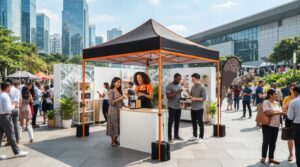
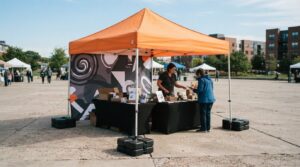
Match the display format to the environment. An outdoor gathering could use an event tent to create a distinct branded destination, while a backwall display can establish a clear visual setting for demonstrations or product discovery. Choose elements that support the activity, guide visitors naturally, and make the brand recognizable in event photos. A polished visual should strengthen the experience, not compete with it.
Before choosing among experiential marketing display ideas, define the intended result: product understanding, trial, sign-ups, or conversation with brand representatives. Then select an activity and setting that make that result natural. For an event presence built around branded structure and visual impact, explore event display options and shape a space that gives visitors a reason to step in.
Zodiac Event Displays: Event Tents
Zodiac Event Displays can help bring an outdoor brand activation to life with an Event Tent designed around your event presence. Use a branded tent to establish a recognizable gathering point, then build the experience with a Backwall Display or Custom Flags that reinforce the campaign visually. This approach suits festivals, outdoor demonstrations, and community events where visitors need a clear place to find the brand.
The right display depends on the interaction you’re creating. A product demonstration may benefit from a focused backdrop, while an open-air activation can use an Event Tent to define its space. Consider how each element supports the visitor journey, from first noticing the display to joining the activity.
Visit Zodiac Event Displays to explore event display options.
Make Your Next Booth a Brand Experience
Your next trade show is an opportunity to turn a brand promise into something visitors can experience firsthand. Before choosing among experiential marketing display ideas, decide what you want people to feel, understand, or do after entering your space. That intention can guide every creative choice, from the first visual impression to the conversation that continues after the event.
Zodiac Event Displays offers Event Tents, Backwall Displays, and Custom Flags to help shape a distinctive event presence. These display elements can support a branded setting for live activities, product discovery, or attendee interaction. Choose the pieces that fit the experience you’re creating, and let the overall design carry one clear story.
Ready to bring your trade show concept into focus? Contact Zodiac Event Displays to explore display options for your next event. A thoughtful space can give your audience a memorable reason to engage, and your team a confident place to begin.
Frequently Asked Questions
What Is Experiential Trade Show Marketing?
Experiential trade show marketing invites attendees to interact with a brand through a designed experience rather than simply view a display. That experience might include a product trial, a guided discovery area, or a digital interaction. For example, a QR code can connect a booth conversation with a product page or sign-up form, giving visitors a useful next step after they leave the exhibition floor.
What are the key elements of a successful experiential marketing campaign?
A successful campaign connects a defined audience, a clear objective, a relevant activity, and a way to evaluate results. If a company wants qualified product inquiries, for example, it can create an experience that helps attendees compare product options, then track relevant inquiries afterward. Planning should also account for staffing, technology, logistics, and the emotional response the brand hopes to create.
What are common examples of experiential marketing?
Common examples include branded pop-up environments, product trials, interactive retail displays, festival installations, and behind-the-scenes events for loyal customers. A retailer might use augmented reality to help shoppers visualize home décor, while a music festival could host an immersive installation tied to an artist or sponsor. The format varies, but the audience participates in an experience connected to the brand.
How does experiential marketing benefit customer engagement?
Experiential marketing encourages people to take part, giving brands more meaningful signals than a passing view. A QR scan, photo booth interaction, or completed product demonstration can show what captured someone’s interest. Teams can use those actions to tailor follow-up, sending product details to demo participants and entertainment-related content to visitors who engaged mainly with an activity.
Ready to Bring Your Experiential Campaign to Life?
Start by deciding what visitors should do and what physical setting will support that action. Zodiac Event Displays can help translate an event concept into branded display materials, including Hanging Signs and Banner Stands. Bring together your campaign objective, audience, and visual direction before shaping the display plan. Contact Zodiac Event Displays through its website to discuss your event display needs.
What do immersive brand experiences look like?
Immersive brand experiences create an environment where several elements work together to tell one story. A festival installation might combine themed scenery, sound, and an interactive activity, while a retail experience could use augmented reality to place décor in a shopper’s room. Make the details work together so each interaction deepens the same brand idea instead of feeling like a separate attraction.
Which campaigns asked guests to make something?
A fragrance event can invite guests to create a bouquet inspired by different scent notes. To make the activity personal, visitors could choose flowers that match the qualities they notice, then take their arrangement home. This turns product exploration into a creative task and gives staff a natural way to explain how each fragrance connects with the selected flowers.
What are examples of interactive experiential marketing displays from successful brands?
Captain Morgan’s Rum Street activation in New Orleans generated 7.4 billion impressions and lifted local brand sales by 13% in February 2025. Wendy’s Frosty Fix campaign generated 1.17 billion earned media impressions in September 2024. Jack Link’s WILD activation in Times Square generated more than 5,000 TikTok videos after launching in May 2024. These examples show different ways activations can prompt attention and participation.
 Previous reading