A lighter display can still make a confident impression. Lightweight fabric display stands pair a printed fabric graphic with a frame, creating a portable presentation backdrop; many frames assemble without tools. If you need a display that’s easy to transport, the details matter just as much as the finished look.
Choosing between straight and curved styles, deciding what belongs in the kit, and understanding how the configuration affects cost can make the options feel complicated. This guide explains what display kits typically include, how the shapes differ, and how to think about frames, bases, and carrying cases for your event or presentation. You’ll have a clearer sense of which setup suits your space, transport needs, and visual goals.
Key Takeaways
- Compare what each display kit includes, since the graphic, frame, and transport pieces shape the setup you’ll take to an event.
- Choose a straight or curved profile based on the presentation space and the visual effect you want to create.
- Think through assembly, base stability, and how the display will be carried when selecting a frame and case.
- For a branded event backdrop or portable presentation, explore how banner stands and related display options can support your setup.
Product kit contents and prices
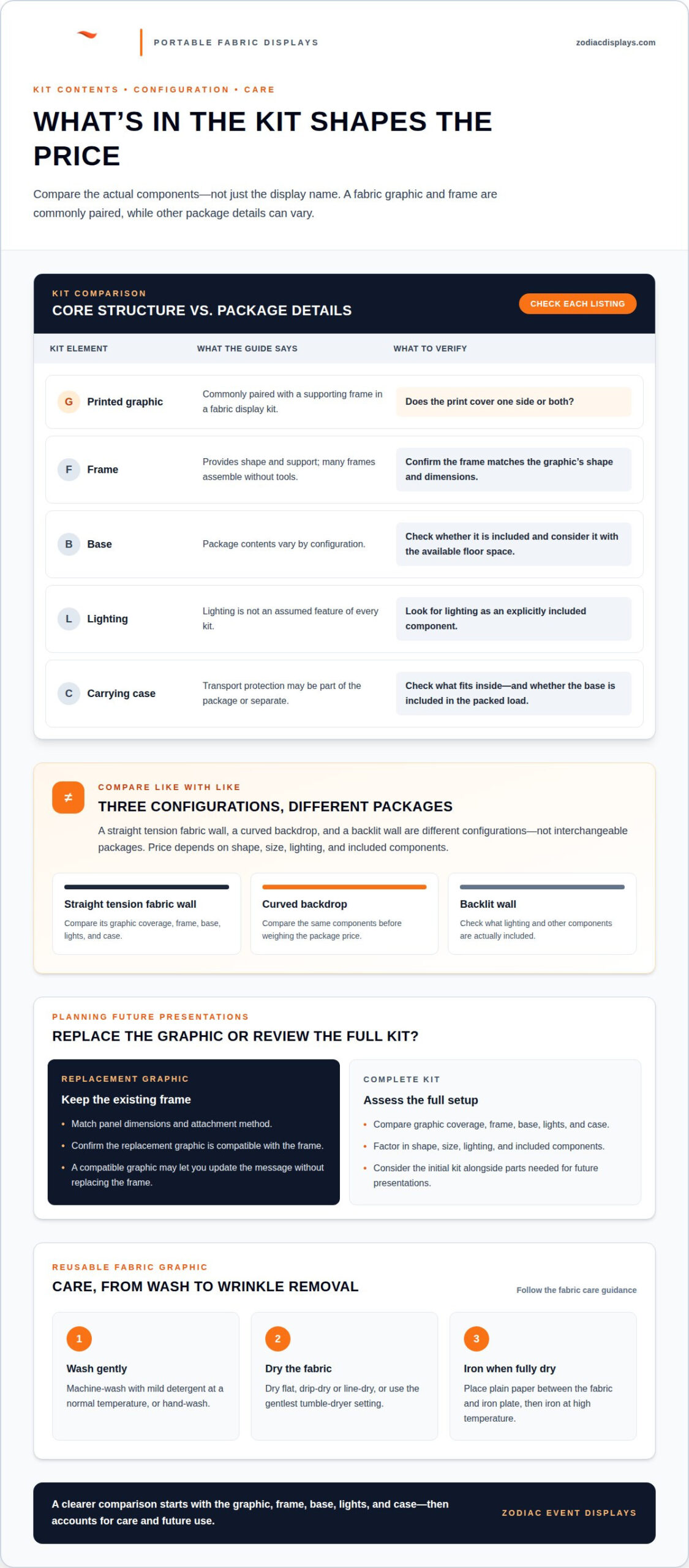
A fabric display kit commonly pairs a printed fabric graphic with a supporting frame. The exact contents vary by configuration, so distinguish the essential structure from optional presentation and transport pieces. Before comparing prices, identify whether the listed package includes the graphic, frame, base, lighting, and carrying case. That itemized view makes unlike kits easier to assess.
Tension fabric banner stands can use single-sided or double-sided graphics. For a replacement graphic, match the panel dimensions and attachment method to the existing frame. If both are compatible, you may be able to update the graphic without replacing the frame.
Price depends on the display’s shape, size, lighting, and included components. A straight tension fabric wall, a curved backdrop, and a backlit wall are different configurations, not interchangeable packages. Compare the same elements across options: graphic coverage, frame, base, lights, and case. Then weigh the initial kit against the parts you may need for future presentations.
- Graphic: Check whether the fabric print covers one side or both.
- Frame: Confirm that the frame matches the graphic’s shape and dimensions.
- Lighting: Look for lighting as an included component, not an assumed feature.
- Case: Determine whether transport protection is part of the package.
Fabric care also affects the value of a reusable graphic. The fabric can be machine-washed with mild detergent at a normal temperature or hand-washed. Dry it flat, drip-dry or line-dry it, or use the gentlest tumble-dryer setting. For wrinkles on fully dry fabric, place plain paper between the fabric and iron plate, then iron at high temperature.
If you expect to change the message, plan around whether a replacement graphic will fit the frame. For repeated presentations, compare the full kit contents and care requirements, not just one component. This gives you a clearer basis for choosing a setup that fits your space and future use.
Uses at events, presentations, offices, and stores
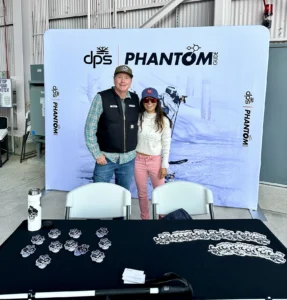
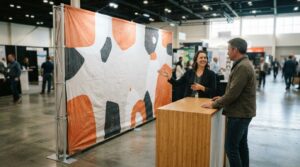
At a trade show, a fabric backdrop can frame a product demonstration or establish a booth’s visual focus. Position it behind the presenter or beside a sample table, with the main message visible from the aisle. At a conference, a branded backdrop can create a consistent setting for speakers, press photos, or partner announcements. Make sure the graphic supports the event’s purpose rather than competing with the activity in front of it.
In an office, a fabric display can give a reception area a clear brand presence without making the room feel like an exhibit. Place it near the entrance to introduce your company, or behind a presentation area to keep meeting visuals cohesive. For a product launch, use a focused graphic to highlight the feature being discussed. Plan the message and placement together, keeping doorways and work areas clear.
- Events: Use a branded backdrop to anchor a booth, demonstration, or sponsor area.
- Presentations: Place the display behind speakers to create a deliberate visual setting.
- Offices: Feature a welcome message or company identity near reception.
- Stores: Highlight a seasonal promotion or product category near the relevant merchandise.
In retail, a fabric graphic can draw attention to a collection, campaign, or store event. Set it near the products it describes, rather than across the aisle from them. For a pop-up activation, coordinate the display’s message with the surrounding setup, such as a branded tent at an outdoor event. A useful planning step is to write the key message first, then select a location where shoppers or attendees naturally pause. For more event display inspiration, consider how the graphic can work with the setting and audience.
Frames, bases, and transport cases
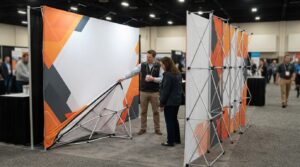
A tension fabric backdrop stretches over a lightweight frame. The frame assembles without tools, so setup and take-down involve fitting the frame together and removing the graphic.
Frames and Bases
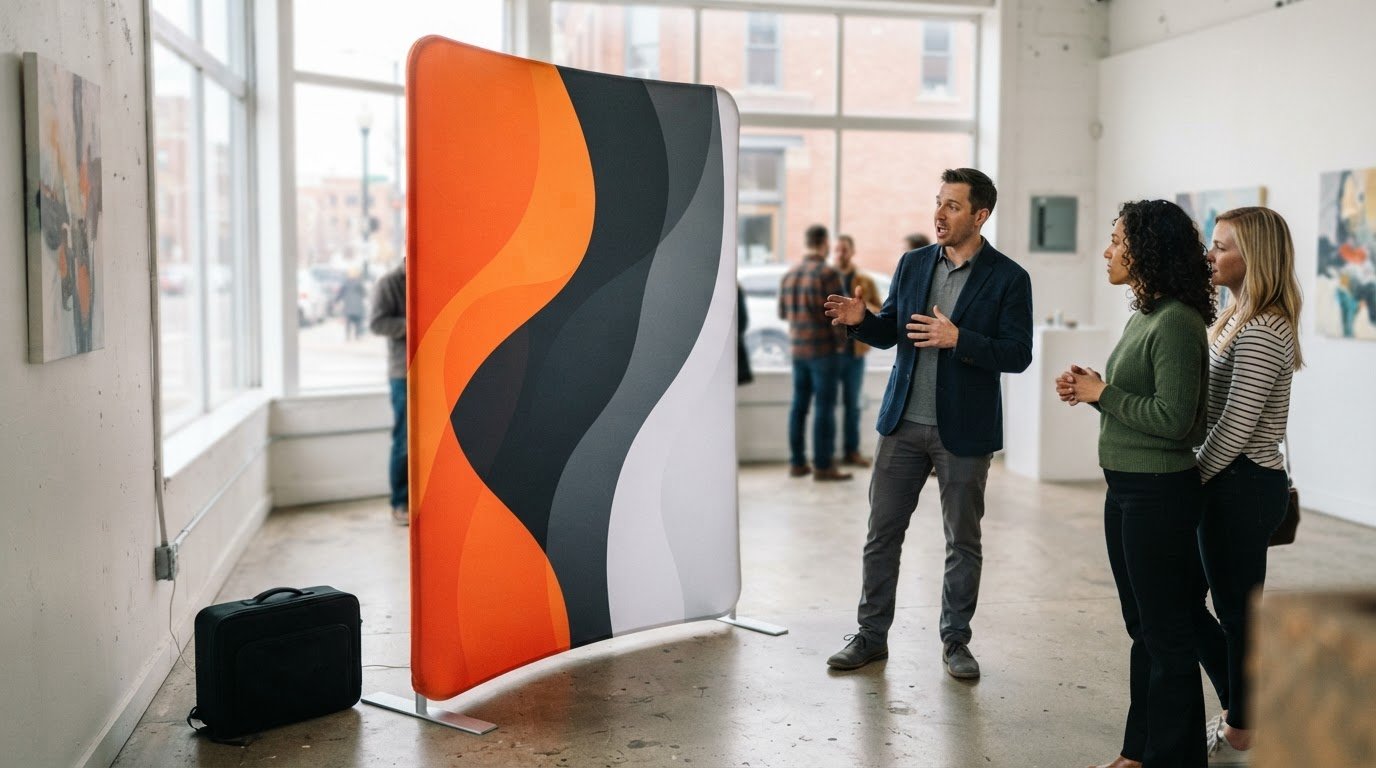
The frame gives the fabric its shape and support, so match its form to the graphic and setting. A straight backdrop, for example, can create a clean presentation wall. Consider the base and available floor space together: a compact meeting room may call for a different footprint than an open exhibit area. The frame and base form one practical setup, not separate styling choices.
Packed Dimensions and Weight
Portability depends on the packed frame, fabric graphic, base, and case as a whole. A wide assembled backdrop may break down into sections, but the packed dimensions still matter for vehicle storage and doorways. Consider the full load, not just the fabric’s weight. A display carried across a venue also has different handling needs from one moved a short distance from a vehicle to a room.
Before choosing a setup, map its route from storage to display position. Account for the vehicle trunk, building entrance, elevator, and presentation space. Compare the packed case dimensions with your storage area, and consider who will carry the components. These details show whether a display will fit your regular travel routine.
A transport case groups the graphic and frame for moving and storage. Check how the components fit inside and whether the packed case is comfortable to handle. Include the base when considering the full load and storage needs. A case that holds the whole setup can simplify packing, while separate pieces need careful organization between events.
For repeated use, follow the same sequence at each event: assemble the frame, position the base, fit the fabric graphic, then reverse the steps for take-down. Keeping components together helps prevent a frame section or base from being left behind. Consider packed dimensions and the full load when deciding how easily the setup will travel.
How portable are fabric display stands, and what are their packed dimensions and weights?
There is no single packed size or weight for every fabric display stand. A straight or curved frame, base, graphic, and case create different configurations. Assess the complete kit rather than the fabric panel alone to see whether it suits your vehicle, storage space, and event routine.
Compare the packed dimensions with the tightest point on the journey, such as a car trunk opening or venue doorway. A long frame section can be the deciding factor, even when the graphic rolls compactly. If samples and presentation materials share the same transport, leave room for every component instead of measuring the case in isolation.
The full load depends on what travels together: frame, base, graphic, and carrying case. A display moved by one person between a vehicle and a meeting room has different handling needs from a kit transported on a cart. Assess the complete packed setup and how it will be moved at the event.
- Compare the complete kit: Include the frame, base, fabric graphic, and case.
- Measure the route: Consider storage, vehicle access, and the venue’s entry points.
- Plan handling: Account for the packed load and who will move it.
A compact presentation space may suit a straight display whose frame packs into manageable sections. A larger backdrop may need a different frame arrangement and more storage room. These are configuration considerations, not universal size or weight figures. Use the packed dimensions and weight for the specific kit, then compare them with your transport and storage constraints.
Good portability is a match between the kit and its journey. Choose the display around the route, carrying method, and space available after arrival. To explore custom event display options for your presentation setup, consider how the complete kit will travel from storage to the finished display.
Zodiac Event Displays: Banner Stands
Zodiac Event Displays offers banner stands for branded messaging alongside presentations and event setups. For a larger backdrop or a broader event presence, consider how Backwall Displays, Event Tents, or Custom Flags could complement the visual plan.
Start with the setting and message. A presentation may call for a focused graphic, while an outdoor event may need a broader branded presence. Matching the display to its role helps keep the setup cohesive without crowding the space.
If you’re planning event signage, contact Zodiac Event Displays to discuss your project.
Make Your Next Display Part of a Bigger Picture
Your event presence can do more than fill a space. Treat each display as part of a clear visual identity, carrying a consistent message from a presentation to an outdoor gathering or branded venue. Lightweight fabric display stands can support that plan when their design and placement help create the experience you want visitors to remember.
Think ahead to the settings where your brand will appear next. Zodiac Event Displays offers Event Tents, Backwall Displays, and Custom Flags to help create a cohesive presence across different event environments. The right combination depends on your setting, audience, and communication goals.
Bring your next event idea into focus and explore how its visual elements can work together. Contact Zodiac Event Displays to discuss your project, and take the next step toward a presentation that feels considered and distinctly yours.
Frequently Asked Questions
What types of lightweight fabric display stands are available?
Common fabric display formats include straight and curved walls, U-shaped displays, step-and-repeat backdrops, and backlit exhibition walls. A straight wall can suit a narrow presentation area, while a U-shaped arrangement can create a more enclosed branded space. Backlit styles illuminate the graphic. Choose a format according to its role, such as framing a speaker or defining a booth.
What materials and frame designs make fabric display stands lightweight?
A tension fabric graphic fits over a frame, and some frames assemble without tools. Frame construction varies by display system. For example, Zodiac Event Displays’ Expanding Backwalls use an accordion-style aluminum frame. Compare the frame design with the graphic’s fitting method, since both affect setup and compatibility.
How much do lightweight fabric display stands cost in the US?
In the US, Zodiac Event Displays provides project quotes rather than published prices. The final quote depends on the selected configuration and project requirements, including the display’s dimensions, graphic setup, and any lighting or other components. To compare options meaningfully, define the intended use and required display arrangement first. That gives the project quote a clear scope without relying on unrelated product prices.
What sizes and configurations are available for fabric display stands?
Sizes and configurations depend on the display system and the space it needs to occupy. Displays can be straight, curved, or arranged as a U-shaped backdrop; tension fabric banner stands can also use single-sided or double-sided graphics. In a tight presentation area, plan around the available floor space and viewing direction. In a larger booth, consider how the display relates to nearby products and signage.
What should buyers look for when choosing a lightweight fabric display stand?
Start with the display’s purpose: welcoming visitors, framing a speaker, or highlighting a product. Match its shape to the available space, then check that the graphic works from the intended viewing angles. For repeat use, consider whether a replacement graphic will fit the frame. Also account for lighting and the route from storage to the event, so the display suits both presentation and handling.
How durable are lightweight fabric display stands for repeated trade show use?
They are intended for repeated use: the frame assembles without tools, and the fabric graphic can be washed with mild detergent or hand-washed. Follow the care instructions and keep the frame, graphic, and base together during transport and storage.
 Previous reading