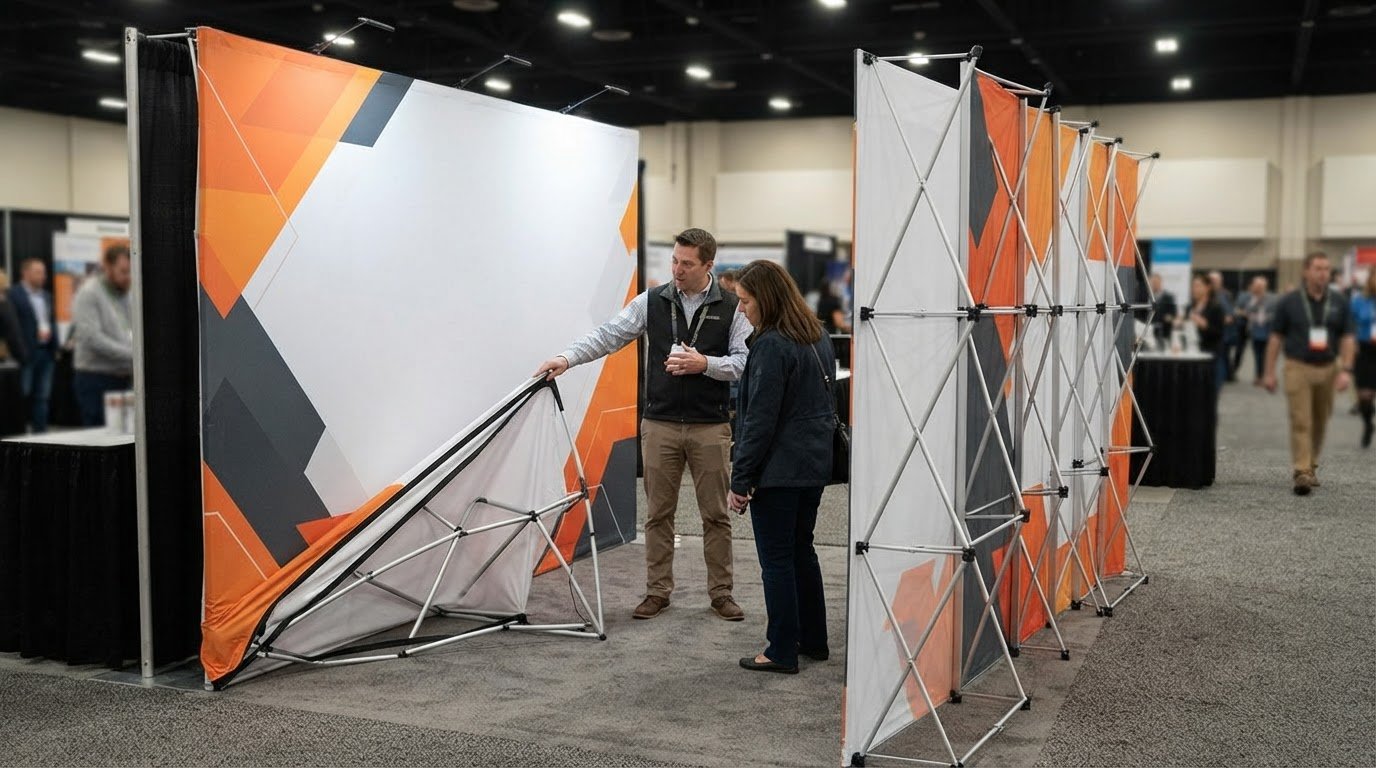
Pop-up displays are suitable for trade shows, especially when quick setup matters: a 10-foot pop-up frame display typically takes five to ten minutes to set up. In the tension fabric backwall vs popup display comparison, the better fit depends on your priorities, including graphic attachment, portability, budget, and how often you exhibit. Neither option is right for every booth or event.
Appearance matters, but a display’s construction and practical demands matter just as much when you travel to events and set up on site. This guide compares tension fabric backwalls and pop-up displays, including their frames, graphics, setup, and transport. Use the differences to match a backdrop to your booth, event schedule, and presentation goals.
Key Takeaways
- Choose a pop-up display when a quick, straightforward setup is a priority; weigh the extra assembly time of a tension fabric wall against its presentation needs.
- Understand how each frame holds its graphic to plan for assembly, display changes, and the look you want in your booth.
- Compare transport demands as well as booth impact, especially when your event schedule involves frequent travel.
- Match your display to how often you exhibit, the space you need to fill, and whether you value an economical upfront choice or longer-term flexibility.
Are pop-up displays suitable for trade shows?
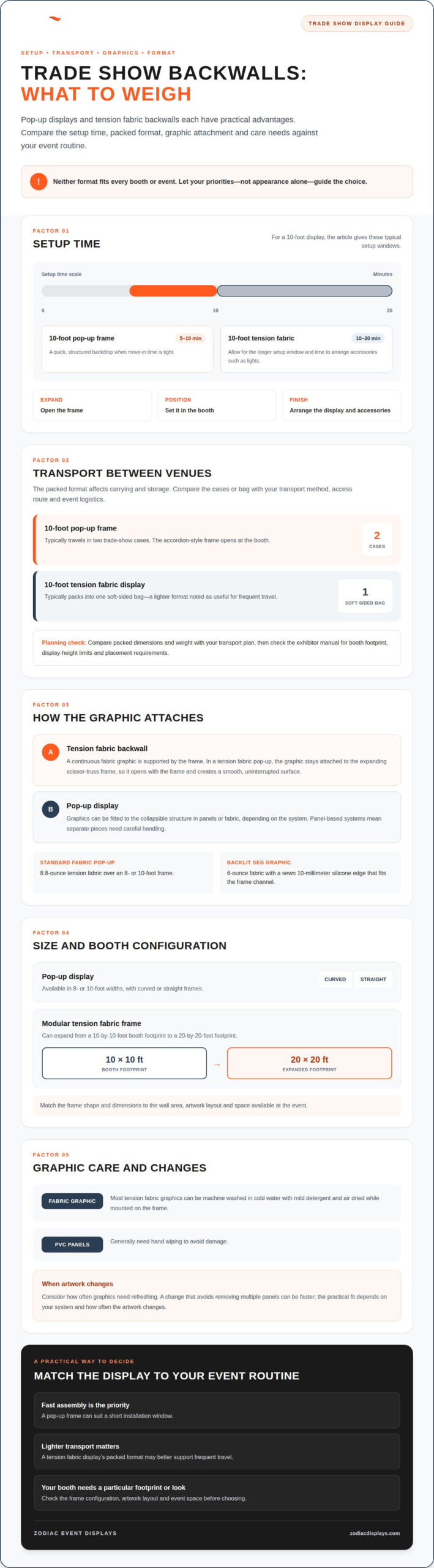
Yes. A pop-up display can suit a trade show when fast setup and a defined booth backdrop matter. Most pop-up systems assemble in under ten minutes without tools or professional installation. For a 10-foot pop-up frame display, setup typically takes five to ten minutes, giving exhibitors a practical option when move-in time is tight.
Setup follows a simple sequence: expand the frame, position it, then finish the display. With a tension fabric pop-up, the graphic stays attached to the expanding scissor-truss frame, so the graphic opens with the frame. Many tension fabric displays can be assembled by one person. Actual setup time depends on frame complexity and the display format, so allow time to arrange accessories such as lights.
| Display option | Typical setup | Transport consideration | Useful fit |
|---|---|---|---|
| 10-foot pop-up frame | Five to ten minutes | Typically two trade-show cases | A quick, structured booth backdrop |
| 10-foot tension fabric display | Ten to twenty minutes | A lighter setup for frequent travel |
Those figures make setup speed only one part of the decision. A pop-up frame can be appealing when a short installation window is the priority. A tension fabric display may take longer, but its transport format can be easier to handle between venues. A curved frame creates a different visual profile than a straight one, while printed artwork determines the booth’s message and visual impact.
For a busy schedule, plan the setup around the whole booth, not just the backdrop. Set the frame in position, secure its graphic, then arrange banner stands and lights. An up banner can add a separate message without changing the wall. Choose the pop-up when fast assembly leads; choose fabric when its lighter transport format better supports your event routine.
Frame construction and graphic attachment
A tension fabric display uses a frame to support a continuous fabric graphic. In a tension fabric pop-up, the graphic stays attached to the expanding scissor-truss frame, so opening the frame also brings the image into position. This integrated construction reduces separate graphic-installation steps, while the fabric surface creates a smooth, uninterrupted visual.
Pop-up displays use collapsible frames, with graphics fitted to the structure in panels or fabric, depending on the system. A standard fabric pop-up uses 8.8-ounce tension fabric stretched over an 8- or 10-foot frame. For backlit SEG displays, 6-ounce fabric has a sewn 10-millimeter silicone edge that fits into the frame’s channel. That edge holds the graphic in place around its perimeter.
Sizes and configurations vary by format: pop-up displays are available in 8- or 10-foot widths, with curved or straight frames. Modular tension fabric frames can expand from a 10-by-10-foot booth footprint to a 20-by-20-foot footprint. Match the frame shape and dimensions to the wall area and artwork layout.
Replacement and maintenance costs depend on what needs attention: a fabric graphic or individual PVC panels. Most tension fabric graphics can be machine washed in cold water with mild detergent and air dried while mounted on the frame; PVC panels generally need hand wiping to avoid damage.
For transport, consider how the graphic attaches and how the frame packs. A fitted fabric graphic travels with its frame, while panel-based systems require careful handling of separate pieces. A compact shipping case can help keep the components together, but the frame type determines what must be packed and assembled. The fastest graphic change is one that avoids removing multiple panels; the practical choice depends on how often your artwork changes.
To shape a cohesive booth backdrop, explore trade show display options alongside your graphic and frame requirements.
Tension Fabric vs Pop-Up Displays: Which Trade Show Display Is Right for You?
At a trade show, portability depends on packed size, carrying cases, total weight, and venue logistics. Before choosing either backdrop, use the event’s exhibitor manual to find its stated booth footprint, display-height limits, and placement requirements.
Tension Fabric Backwall Portability
A tension fabric backwall can be a strong fit when lighter transport matters across a busy event schedule. Its frame expands at the venue, while the attached fabric graphic travels with the structure.
That packed format can simplify carrying the display between a vehicle, loading area, and booth. Still, compare the packed dimensions with your transport method and the venue’s access route. A modular frame that expands from a 10×10-foot footprint to a 20×20-foot footprint offers flexibility, but the booth space must support its expanded configuration.
Pop-Up Display Portability
A traditional pop-up display is portable, but its frame and transport cases can take more handling. A 10-foot pop-up frame display typically requires two trade-show cases, compared with one soft-sided bag for a 10-foot tension fabric display. The accordion-style frame opens at the booth, while the packed cases need room during transport and storage.
When planning transport, account for the packed display’s size and weight, as well as how your team will carry and protect its components. These details can affect how easily the backdrop fits into your event logistics.
For either option, match the display’s packed form to your travel plan, then compare the exhibitor manual’s booth dimensions and placement rules with the assembled display. Choose fabric when compact transport and lower display weight lead; choose a pop-up when its case-based format suits your existing transport setup. Add banner stands only if the booth layout and event rules allow their placement.
Choosing a display for budget and event needs
The tension fabric backwall vs. popup display decision depends on the full event cycle, not just the initial choice. Event frequency, plans for refreshing graphics, transport, and visual presentation all shape which format fits your needs.
Tension Fabric Backwalls for Event Needs
A tension fabric backwall can suit exhibitors who reuse a consistent frame while refreshing messaging for different campaigns. A new fabric pillowcase reprint usually costs about half as much as replacing all the PVC panels in a pop-up display, making graphic replacement one factor in the long-term budget.
If messaging changes every 18-24 months, fabric may become more economical over time. Exhibitors running six or more shows a year may also value a lightweight setup across repeated events. The right choice depends on how often you refresh artwork and how much weight and transport influence your event plans.
Pop-Up Displays for Event Needs
A pop-up display may suit trade shows, retail presentations, or occasional events where the same graphic can remain relevant. Consider the booth’s visual goals and how often you plan to use the display, rather than choosing by venue type alone. If a campaign’s message is stable, a graphic change may not be a priority.
For repeated use, consider both the frame and future graphic changes. If the message may need frequent updates, compare how each format supports replacements before choosing. A polished finish matters in retail, while a trade show backdrop may need to carry a broader brand story across multiple events.
Use this decision sequence: estimate annual event frequency, identify how often messaging may change, then weigh transport needs against display presence. For the tension fabric backwall vs. popup display choice, six or more shows a year can make fabric worth considering, especially when lighter transport and repeated use matter. For fewer events with stable artwork, a pop-up may better match the intended use.
When you’re ready to shape a backdrop around your event schedule and messaging, explore display options for your booth.
Zodiac Event Displays: Backwall Displays
Zodiac Event Displays can help turn your booth requirements into a cohesive backwall display. If your decision depends on graphic presentation, booth footprint, or how the backdrop fits your wider event setup, its team can guide the design and fabrication process around those priorities.
Bring your event goals, messaging, and space details into the design process. These give Zodiac Event Displays a practical starting point for developing a display that supports your brand presence alongside other event materials, such as custom flags or event tents. A coordinated setup can make the booth feel considered rather than assembled from unrelated pieces.
If you’re ready to plan a backwall display for your next event, contact Zodiac Event Displays.
Build a Backdrop That Grows With Your Events
Your tension fabric backwall vs. pop-up display choice can shape more than one booth. Consider how your brand may evolve: a new campaign, a different event format, or a refreshed message may change what your backdrop needs to do. Choose a display that suits today’s floor plan and supports your plans for future graphics.
Before your next event, gather the essentials: booth dimensions, your core message, the visual style you want to project, and how your team will transport the display. These details create a clearer starting point for a design that supports your goals rather than simply filling a wall. Contact Zodiac Event Displays to turn your vision into a considered event presentation.
Connect with Zodiac Event Displays to discuss your next booth backdrop. Give your brand a confident, distinctive presence at the events ahead.
Frequently Asked Questions
What is a pop-up banner display?
A pop-up banner display is a portable stand that presents a printed message on a freestanding graphic. It can highlight a product, direct visitors, or add a focused brand message beside a larger booth backdrop. Unlike a full-width backwall, it acts as a separate visual element, so placement and message hierarchy help it complement the booth.
Final Verdict: Which Display System Should You Choose?
Choose the system that best fits your event rhythm and how you expect to use its graphics. For a backdrop that will travel repeatedly and may need refreshed messaging, consider a tension fabric system. For a booth where straightforward assembly and a stable campaign message are priorities, a pop-up display can be a practical fit. Your planned use matters more than a universal winner.
Quick Verdict: Which Should You Buy?
Start with the job your display must do. For a prominent backdrop at repeated events, prioritize the overall wall presentation and how you will update its graphics. For a defined message in a booth or smaller presentation area, consider whether a pop-up format suits the space. Sketch the booth layout and place the main message before choosing a structure.
What is a tension fabric backwall display?
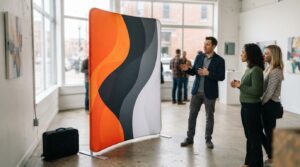
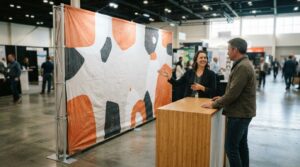
A tension fabric backwall is a booth backdrop made from a supporting frame and a fitted fabric graphic. Its broad surface gives brands room to create one continuous visual, such as a campaign image with a clear logo and concise message. It can serve as the visual anchor behind a reception counter, product demonstration, or staff presentation.
What is a pop-up display?
A pop-up display is a portable exhibit structure designed to open into a presentation backdrop. Depending on its construction, it may use fabric or separate graphic panels supported by a collapsible frame. Its purpose is to create a defined branded area without building a permanent wall. Consider the full booth layout so the display leaves room for visitors, products, and conversation.
How do tension fabric backwalls and pop-up displays compare in appearance and print quality?
Both formats can present colorful branded artwork, but their surfaces create different visual effects. A tension fabric graphic can read as one continuous image, while panel-based pop-up graphics may appear in separate sections. Print quality depends on the artwork file, printing, and material, not just the frame category. Use suitable brand assets and a layout designed for the display’s shape.
 Previous reading