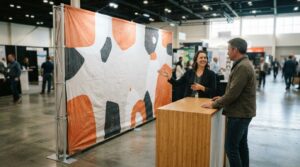
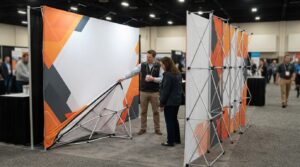
If you have booked a standard 10×10 inline booth, the backwall is the single most important piece of your display. It is the first thing attendees see from the aisle, it frames every conversation you have, and it is usually the biggest graphic you will print. Here is how to choose the right size and style, and how to design it so it actually works on the show floor.
The short answer: 10 feet wide, up to 8 feet tall
A 10×10 booth is 10 feet wide and 10 feet deep, so most exhibitors use a 10ft-wide backwall that spans the back of the space. For height, many U.S. shows follow industry guidelines that cap inline booths at 8 feet tall at the back, with side areas kept lower toward the aisle so neighbors are not blocked.
Always check your show’s exhibitor manual before you order. Some venues allow taller displays, some are stricter, and corner or end-cap spaces can have different rules. If you are exhibiting in Denver, we are happy to look over the manual for you.
Which backwall style is right for you?
Straight tension fabric backwall
The most popular choice. A 10ft straight tension fabric backwall gives you one large, seamless graphic with a lightweight aluminum frame that snaps together without tools. It is the best value per square foot of branding and the easiest to set up alone.

Curved backwall
A 10ft curved backwall wraps slightly around visitors and makes a 10×10 space feel more like a custom exhibit. It uses a little more floor depth, so leave room for a table or counter in front.
Serpentine (S-curve) backwall
If you are in a long row of flat walls, a serpentine backwall stands out immediately. It works best when your artwork is bold and simple, because the S-shape bends the graphic.
Expanding pop-up backwall
Expanding pop-up backwalls use an accordion frame that opens in seconds, with a fabric graphic attached by Velcro. They are a great fit for teams that do many shows a year and want the fastest possible setup.
Smaller options: 8ft walls and tabletop displays
If your booth is shared, or you only have a table, an 8ft backwall or a tabletop display gives you a professional backdrop without filling the whole space.
Design tips that make a backwall work
- Put your logo and main message in the top third. Tables, counters and people block the bottom of the wall for most of the show.
- Say what you do in five words or fewer. Attendees decide in a few seconds whether to stop. “Custom Trade Show Displays” beats a slogan.
- Design for 10–15 feet away. Large type, high contrast and one strong image read better from the aisle than detailed copy.
- Use the full width. Edge-to-edge fabric printing means no seams, so backgrounds and photos can run across the whole wall.
- Plan your lighting. LED arm lights or a backlit wall make colors pop under convention-center lighting.
Build the rest of your 10×10 around it
Most exhibitors pair the backwall with a printed table cover or counter, plus one vertical piece near the aisle. Popular combinations:
- Backwall + stretch tablecloth + retractable banner stand
- Backwall + printed podium counter for demos and sign-ups
- A complete package from our 10×10 trade show booth collection, with TV mounts, shelving or tablet stands included
How long does it take?
Production and delivery for our backwalls takes about 10 days from artwork approval. Our Denver team checks your files and sends a digital proof before printing, and rush production is available.
Need help choosing?
Tell us your show, booth size and budget, and we will recommend a backwall and layout. Request a quote or call (877) 425-1494. Zodiac Event Displays has been helping exhibitors in Denver and across the U.S. since 2014.

 Previous reading