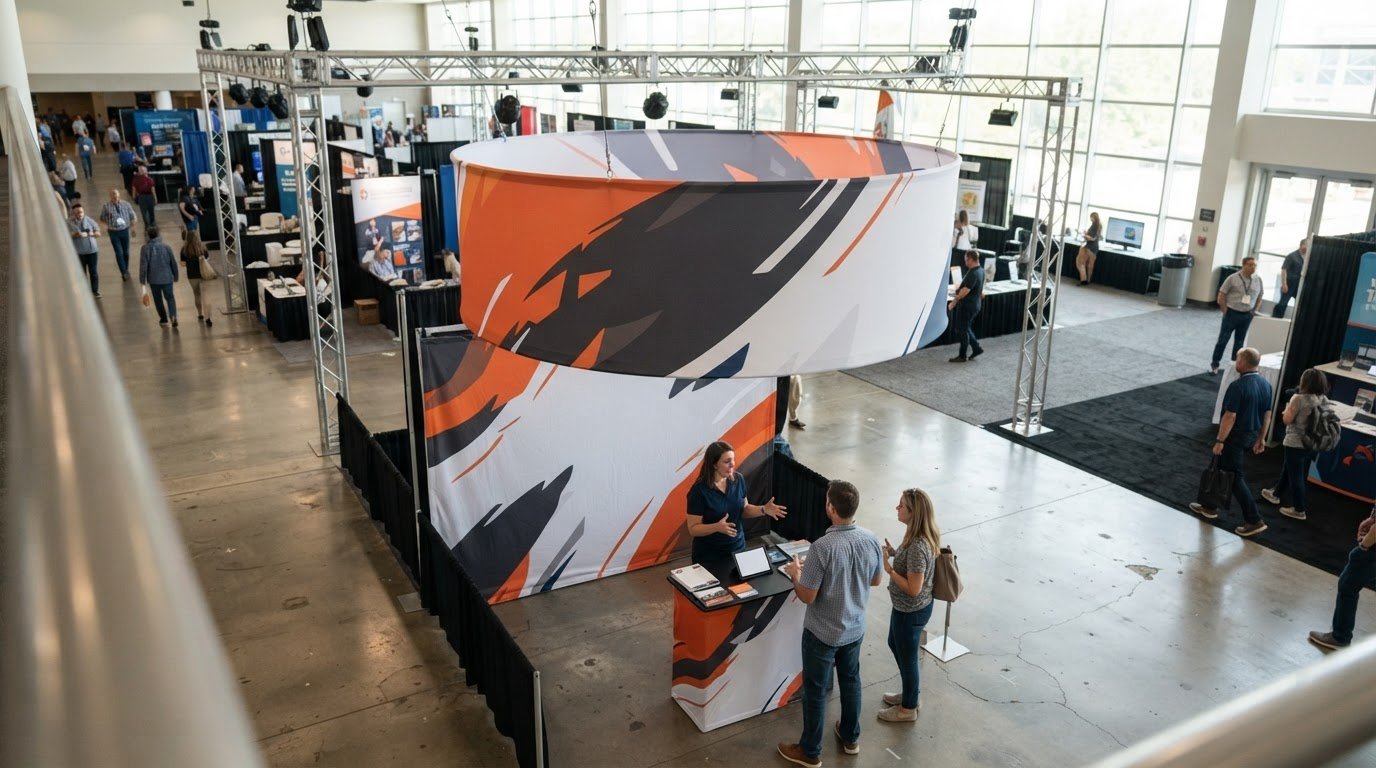
A round hanging banner for a trade show puts your brand above the booth, where it can help visitors spot your space and see it from different directions. Circular overhead banners commonly range from 5 to 20 feet in diameter, creating a visible landmark without using more floor space. The right impact depends on more than size: the frame and fabric shape how the display looks and works overhead.
You already know a strong booth needs to stand out in a busy hall. Choosing the right hanging sign means balancing visibility with practical details, including the round style, frame materials, artwork preparation, and time for production and shipping. This guide explains what these banners do at trade shows and exhibitions, compares the key design and material considerations, and shows how to plan the timeline so your overhead display is ready for the event.
Key Takeaways
- Build in time for artwork approval, production, and shipping so your overhead display is ready before the event.
- Choose a circular shape and scale that make your booth easy to spot without overwhelming its footprint.
- Compare fabric and frame construction to understand how the display’s appearance and structure work together.
- Plan the display’s dimensions and weight around the venue’s hanging requirements, then coordinate it with the rest of your booth.
Production and shipping timelines
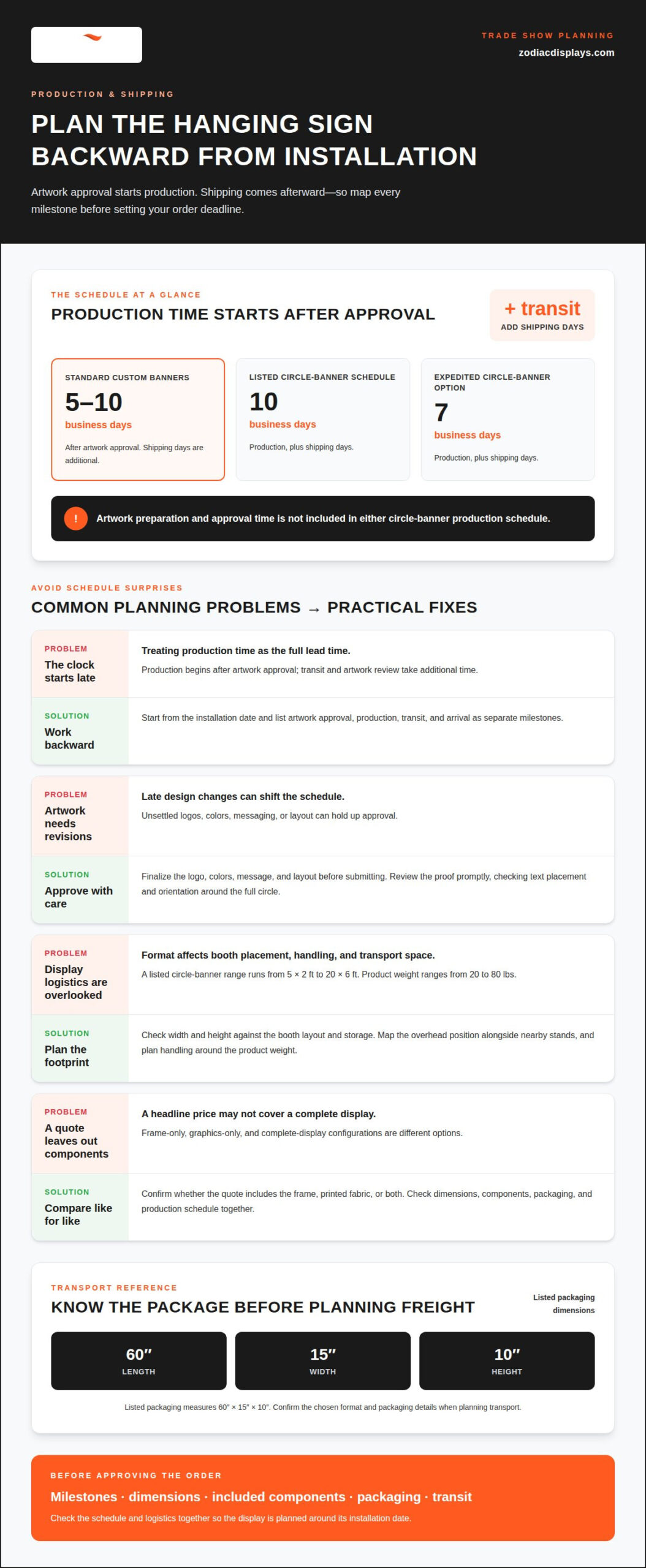
Plan backward from the event’s installation date, not its opening day. Most standard custom hanging banners are produced within 5 to 10 business days after artwork approval. Shipping days come afterward, so include transit time when setting your order deadline. A listed circle-banner schedule allows 10 business days for production, plus shipping days. Its expedited production option takes 7 business days, plus shipping days. Neither timeline includes the time needed to prepare or approve artwork.
Keep the artwork stage moving. Finalize the logo, colors, message, and layout before submitting files. Review a proof promptly, checking text placement and the design’s orientation around the full circle. Approval starts the production clock for standard custom banners. Late revisions can shift the schedule, so settle design decisions early. For a show with a fixed installation window, write down approval, production, transit, and arrival milestones separately. That makes delays easier to spot before they affect setup.
Dimensions shape both the display and the shipping plan. A listed circle-banner range runs from 5x2ft to 20x6ft. Check the chosen format’s width and height against the booth layout and available storage. A triangle-shaped floor plan can make display placement less obvious, so map the overhead sign’s position alongside nearby stands. Larger formats also call for careful freight planning. Product weight ranges from 20 to 80 lbs, while listed packaging measures 60” x 15” x 10”. Use those figures to plan handling and transport space.
Compare quotes by what each includes, rather than comparing a headline figure alone. Confirm whether the price covers the frame, printed fabric, or both. Aluminum construction and graphic choices can affect the configuration being priced. A frame-only option differs from a complete display, so match the quote to your needs. Before approving, check dimensions, components, packaging, and the production schedule together. This step helps align the selected display with both your budget and event logistics.
Round and circular hanging banner styles
Custom exhibit-display manufacturers and large-format print providers make round trade show banners. A round hanging banner for a trade show can serve as an overhead landmark, helping visitors recognize a booth from different directions. Suspended above the display, circular graphics can provide 360-degree visibility without using additional floor space.
Start by matching the shape to your booth layout. Circular overhead banners commonly range from 5 feet to 20 feet in diameter, while a listed circle-banner range runs from 5x2ft to 20x6ft. These measurements describe different dimensions, so compare the actual width and height with your exhibit plan. A smaller format can suit a compact space; a broader circle can command more attention in a large hall.
Round banners come in several profiles. A continuous circular band creates a clean silhouette, while a tapered funnel shape has a more sculptural outline. Tiered circles create separate graphic bands for a logo, message, or supporting visuals. Choose a shape that keeps key graphics readable from the aisle, not only from directly beneath the sign.
Consider how the sign appears from every approach. Place the primary logo where visitors can see it as they walk around the booth. Repeat essential brand cues across the graphic rather than relying on one face. A lightweight-looking design can still feel visually prominent when its color contrast and scale are planned carefully. For example, a bold logo against a simple background can be easier to recognize than dense copy.
Before settling on a style, sketch the booth footprint and mark the ceiling position, sightlines, and neighboring displays. Then compare the round profile with square or rectangular signs already in the space. For a cohesive booth plan, explore custom event display ideas alongside your overhead graphics.
Custom exhibit display manufacturers and large-format print providers produce custom round trade show hanging banners.
Trade show hanging sign materials and frames
A hanging sign pairs a printed graphic with a frame that holds its shape. Trade show structures commonly use extruded aluminum and hang from exhibit hall ceilings. The frame creates the outline, while the graphic carries the color and branding. Consider both components when planning an overhead booth display.
Fabric and vinyl round hanging banners differ mainly in surface and print approach. Fabric gives the graphic a textile finish; vinyl provides a smoother, more solid-looking surface. The specified circle-banner construction uses 7-oz polyester fabric, with graphics dye-sublimated in full color onto knit polyester. Match the material to the visual finish you want visitors to see.
Frame proportions matter, too. One listed circle-banner frame uses poles measuring 1.26 inches in diameter and 0.05 inches thick, or 1.4 mm. Those dimensions describe that particular construction, not every hanging sign. For a round profile, the frame must support the curved shape while keeping the graphic positioned cleanly around the exhibit.
Separate frame and graphic decisions when comparing trade show displays. Confirm whether a configuration includes both components or just one. A frame-only display and a graphics-only replacement serve different needs. This distinction also matters when updating branding without replacing the entire structure. Compare the material, frame dimensions, and included components side by side.
Picture the sign from each aisle. A continuous fabric graphic can carry color around the circular form, while the aluminum structure defines its overhead silhouette. Place the logo and a short message where they are visible from the main approach. Dense copy can be difficult to read as visitors move around the booth.
Compare the graphic’s finish with nearby booth elements, such as backwalls and printed panels. Coordinate colors and typography across the exhibit so the overhead sign feels connected to the display below. Then confirm that the frame and graphic combination suits the intended shape and booth plan.
What are the height, weight, and hanging regulations for trade show banners?
Product dimensions describe the banner, not permission to suspend it. One circle-banner graphic height ranges from 2ft to 6ft. Its graphic weighs 6.78 oz, while the complete product weighs from 20 to 80 lbs. These figures refer to different parts of the display. Use the full display weight when planning overhead support, not the graphic weight alone.
Hanging rules depend on the specific event and exhibit hall. The exhibitor manual is the practical starting point for permitted sign dimensions, placement, rigging procedures, and deadlines. Compare the banner’s height with the booth plan and ceiling clearance. A 6ft-tall graphic needs more vertical room than a 2ft graphic, including space for its frame and suspension.
Plan the installation in stages. Record the product’s complete dimensions and weight, then mark its intended position above the booth. Compare that location with aisle sightlines, neighboring exhibits, and venue instructions. Give the designated rigging team the display details and follow the venue’s approved hanging process. Product measurements alone do not constitute venue approval.
For example, a 20-foot-wide display may create a strong overhead landmark, but its placement still needs to fit the assigned exhibit space. A tall graphic can also block sightlines if positioned too low. Match the display’s width and height to the booth footprint, then account for the frame, suspension, and surrounding structures. Keep the product specification and venue requirements together during planning.
Use the same careful approach when coordinating other signs. A hanging sign display should fit the booth plan and event’s installation process. Confirm the final dimensions, total weight, ceiling position, and required rigging details before setup. Those four details help your team plan a safe, polished overhead presentation.
Zodiac Event Displays: Event Tents
Zodiac Event Displays helps extend your event presence with branded Event Tents and coordinated display elements. After planning an overhead banner, consider how your booth experience continues at ground level or outdoors. Event Tents define a welcoming space, Backwall Displays create a branded backdrop, and Custom Flags add visible accents. Inflatables can add another distinctive shape to an event presentation.
These options are useful when your event plan extends beyond an indoor exhibit or you want a consistent visual identity across several spaces. Align colors, logos, and messaging so each element supports the same brand story without competing with the overhead sign.
To discuss your event display needs, contact Zodiac Event Displays.
Build a Booth That Carries Your Brand Forward
Your next exhibit can do more than draw attention overhead. Use the visual direction of a round hanging banner for a trade show as the starting point for a cohesive experience, carrying the same identity from the aisle into the booth and beyond. A consistent palette, clear messaging, and thoughtful placement help every element feel connected.
Zodiac Event Displays offers Event Tents, Backwall Displays, and Custom Flags to help shape that wider presentation. These elements can support different event settings while keeping your brand visible and recognizable. Choose the pieces that serve your goals, then bring them together around one clear creative direction.
Take the next step and explore event display options with Zodiac Event Displays. A well-planned visual presence gives your team a stronger foundation for making the next show memorable.
Frequently Asked Questions
What are hanging banners used for at trade shows and exhibitions?
Hanging banners help visitors identify a booth from across an exhibition hall. Their overhead position can make a brand easier to spot above crowds and neighboring displays. Use a prominent logo and concise message so attendees can recognize your booth as they walk the aisles. For example, a sponsor can use its name and brand colors to make its exhibit easier to find.
Can hanging banners be reused across multiple events?
A hanging banner can be reused if its frame and graphic remain in suitable condition and fit the next event’s booth plan. Before packing, inspect the frame connections, graphic edges, and printed surface. A consistent brand graphic can travel between shows, while a new campaign may call for updated artwork. Store each component carefully to help prevent avoidable wear.
How difficult is it to set up a hanging banner at a venue?
Setup generally takes two people and 20 to 45 minutes, depending on the display’s size and shape. Allow time to assemble the frame, position the graphic, and coordinate overhead suspension. For a smoother installation, unpack components in a clear area and follow the product instructions. Venue rigging teams handle approved ceiling suspension, so coordinate the installation sequence with them.
How do I transport and store a hanging banner between events?
Use a protective carrying case when available, and keep the frame parts and graphic together. Pack the fabric so it is not trapped beneath hard components. Circle-banner graphics can be machine washed at a normal temperature with mild detergent or hand washed, then dried flat. Store the display clean and dry, ready for the next booth plan.
What material is used to print hanging banner graphics?
Circle hanging banner graphics use knit polyester fabric printed in full color with dye-sublimation. The process applies artwork to the fabric, creating a surface for vibrant brand graphics. Prepare a design with strong contrast and readable logos, then review how key elements appear across the curved form instead of judging the layout as a flat rectangle.
What shapes are available for custom hanging banners?
Profile options include circular, tapered funnel, tiered-circle, and disc styles. Each creates a different overhead silhouette: a funnel narrows toward one end, while tiered circles form stacked graphic sections. Choose a profile based on the booth layout and visitor approach. A continuous circular graphic suits branding viewed from several sides, while tiered sections can separate a logo from supporting messages.

 Previous reading