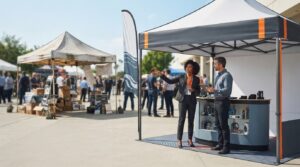



Your display’s first impression is decided long before it reaches the show floor. Following trade show display shipping best practices helps protect that impact, but a damaged crate, missed deadline, or unexpected show-site fee can quickly derail your plans. Freight and drayage are separate parts of the journey: shipping gets your display to the venue city, while drayage moves it through the venue to your booth.
You need more than a shipping label. A solid plan protects every piece, accounts for deadlines and handling, and makes logistics costs easier to anticipate. With more than 10 years of industry experience and global delivery capabilities, Zodiac Event Displays connects design, fabrication, and delivery planning. Durable fabric backwalls and custom tents are designed with repeated shipping in mind.
This guide covers practical steps for packing and labeling, reading the exhibitor services manual, planning for drayage, and coordinating international shipments. Use them to reduce damage risks, avoid preventable surprises, and arrive ready for a smoother setup.
Key Takeaways
- Use trade show display shipping best practices to plan protection, timing, and handling before your branded assets leave for the event.
- Choose packing methods suited to each display, and handle fabric carefully to help preserve backwalls between shows.
- Understand what drayage covers and how advance warehouse and show-site delivery can affect your logistics plan.
- Prepare for international shipments by learning the role of an ATA Carnet and the paperwork considerations for promotional materials.
- Coordinate display design, fabrication, and global delivery to create a more connected logistics experience.
The Logistics of Luxury: Why Shipping Strategy Matters
A striking display earns attention only if it arrives ready to make the right impression. Shipping is the final stage of brand preservation, not just a line in the event budget. A low-cost freight option can become costly if rough handling damages graphics, a delay leaves no time to resolve problems, or a missed delivery window disrupts setup. Strong trade show display shipping best practices connect the transport plan to the experience you want visitors to have.
High-impact displays often include several components, from fabric backwalls to event tents and frames. Each piece may need different protection, labeling, and handling. Parcel service can suit small items, but larger or more complex shipments call for freight planning that accounts for dimensions, venue receiving rules, and what happens after arrival. For a general introduction to understanding trade show logistics, remember that getting freight to the host city and moving it through the venue are separate parts of the journey.
Defining Your Event Delivery Timeline
Start with the show opening and work backward. Mark the venue’s receiving window and the advance-shipment deadline, then allow time for transit, possible delays, and transfer to the booth. A 48-hour buffer can disappear if a shipment is delayed, a delivery appointment changes, or the venue cannot receive freight outside its scheduled window. Build a realistic cushion around the event’s instructions, not just the carrier’s estimated arrival date.
For 2026, map the full event calendar before setting ship dates. Check whether multiple shows, holidays, or busy periods overlap with your route, and avoid relying on the last available shipping window. Align the timeline with marketing milestones too: product launches, campaign assets, and staff travel all depend on the display being ready when the team arrives. A calendar with booking, dispatch, arrival, and setup checkpoints makes responsibilities clear and reduces last-minute scrambling.
Shipping as Brand Preservation
Visitors notice the details. A wrinkled backwall can make a polished campaign feel unfinished, while a scuffed tent frame can distract from the message it supports. The display represents your brand before a conversation even begins.
Shipping resilience starts before packing. Fabrication choices, material quality, and how components fit together all affect how well an asset stands up to repeated handling and transport. Durable fabric backwalls and custom tents are designed for repeated shipping, while careful preparation helps protect their appearance from event to event. Zodiac Event Displays brings more than 10 years of industry experience to branded assets from design through global delivery, connecting creative goals with logistics planning.
A clear plan also brings peace of mind. When delivery dates, venue requirements, and team responsibilities are mapped out, you can focus on your audience and the story your display tells instead of wondering where it is or whether it will be ready.
Packing for Perfection: Protecting Your Branded Assets
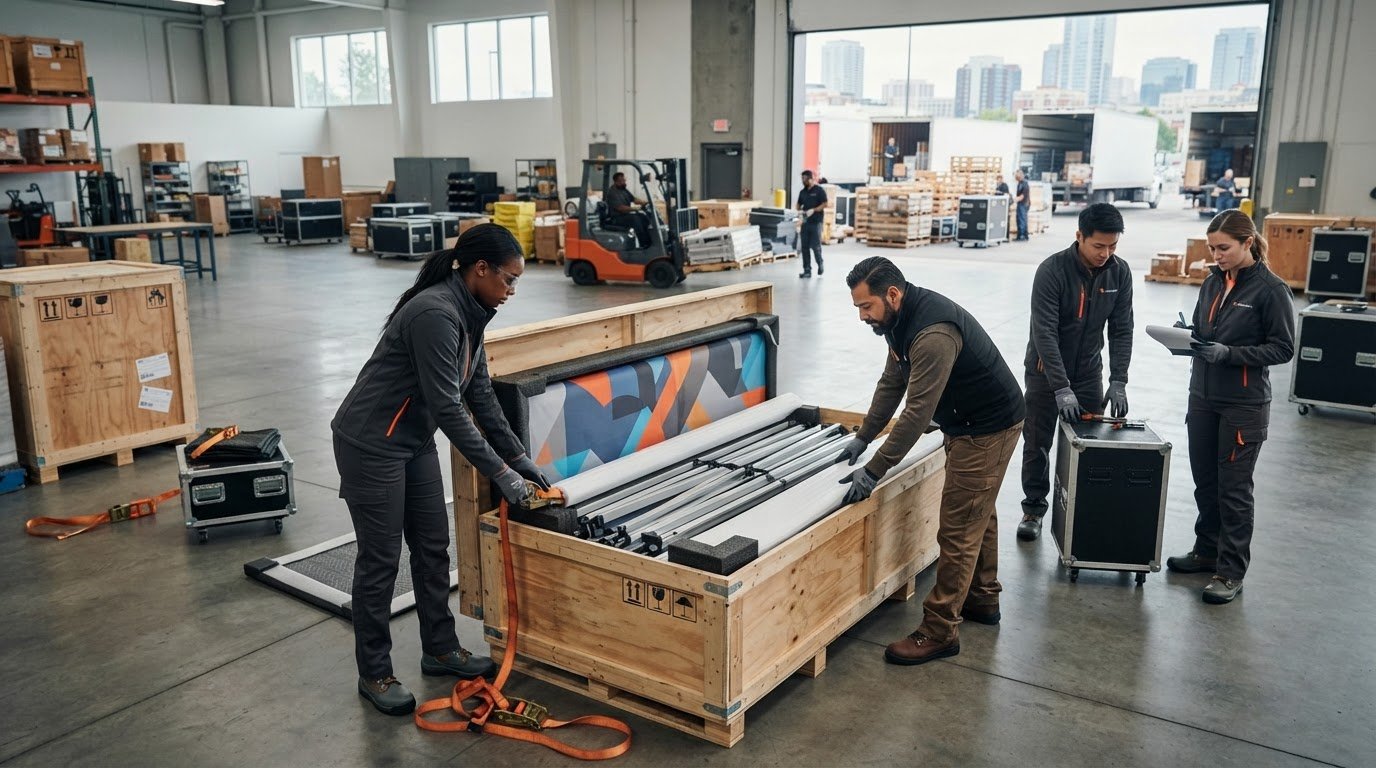
Packaging is part of the display system. A backwall, event tent, or custom inflatable can be durable and still suffer avoidable scuffs, snags, creases, or punctures if it shifts in transit. Effective trade show display shipping best practices match each asset with suitable protection and give the on-site team a clear unpacking and repacking plan.
Choose protection for the piece
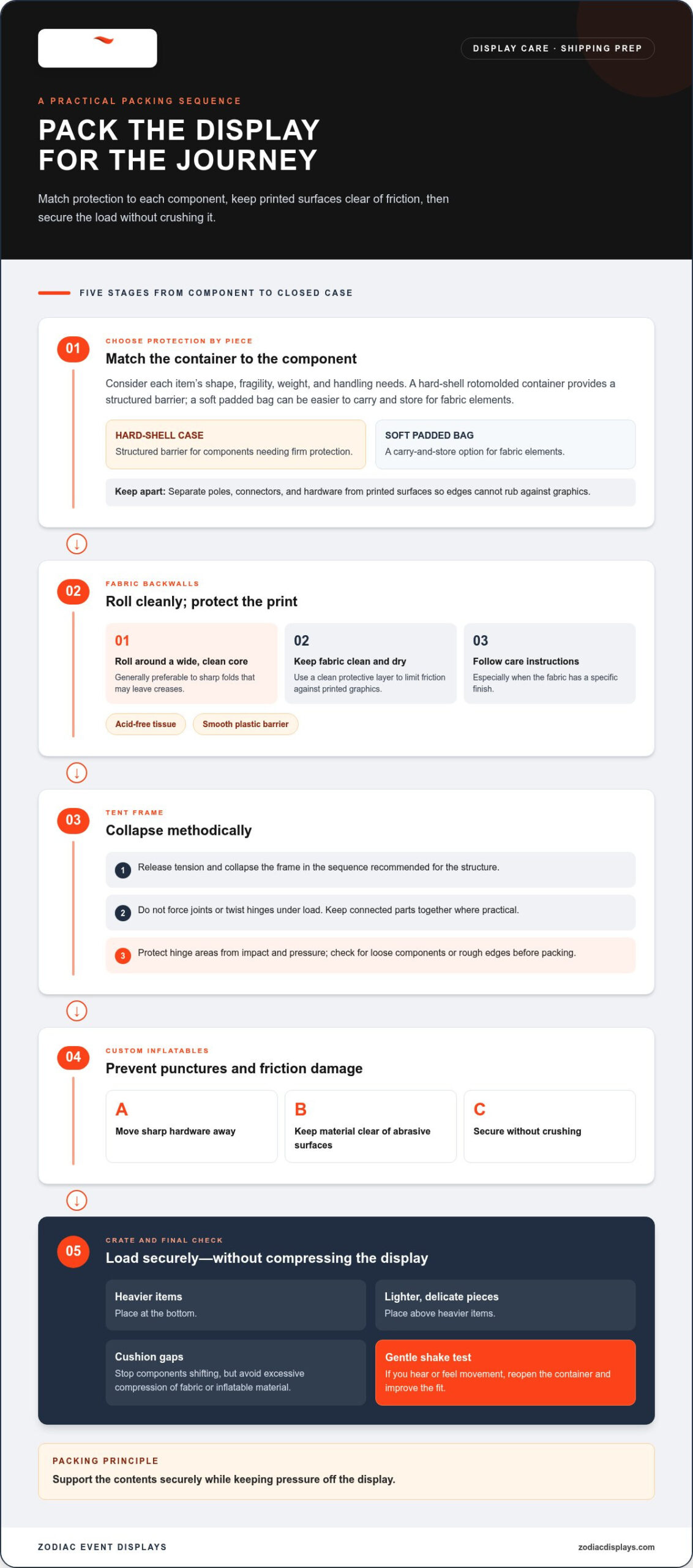
Hard-shell rotomolded containers provide a structured barrier for components that need firm protection. Soft padded bags can be easier to carry and store for fabric elements. Neither option suits every part of a display. Consider each item’s shape, fragility, weight, and handling needs. Separate poles, connectors, and hardware from printed surfaces so edges cannot rub against graphics.
For fabric backwalls, rolling around a wide, clean core is generally preferable to making sharp folds that may leave creases. Keep the fabric clean and dry, and use a clean protective layer such as acid-free tissue or a smooth plastic barrier to limit friction against printed graphics. Follow the display’s care instructions, especially if the fabric has a specific finish. For custom inflatables, move sharp hardware away, keep the material clear of abrasive surfaces, and secure it without crushing it. These steps help reduce the risk of punctures and friction damage.
Soft signage and frame care
Break down event tents methodically. Release tension and collapse the frame in the sequence recommended for the structure, rather than forcing joints or twisting hinges under load. Keep connected parts together where practical, and protect hinge areas from impact and pressure inside the case. Check the frame before packing for loose components or rough edges that could damage fabric on the next journey.
Trade show participation can support a company’s wider market goals, including reaching audiences abroad. The U.S. Department of Commerce offers guidance on international trade show participation. For an overseas event, make the packing list and item descriptions consistent with the records used to plan the shipment.
Build a crate that travels well
Place heavier items at the bottom and lighter, more delicate pieces above them. Cushion gaps so components cannot shift, but avoid excessive compression of fabric or inflatable material. Close the container and perform a gentle shake test. If you hear or feel movement, reopen it and improve the fit. The goal is to support the contents securely without putting pressure on the display.
- Label outside: Put the shipment destination, booth or event details, and a clear piece count on each case.
- Label inside: Add a duplicate contact card and inventory to each container in case an outer label is damaged or separated.
- Document the pack: Photograph each layer as it goes in, then save the images as a pack-back guide for the on-site team.
A photo record makes teardown more repeatable and helps each component return to its proper place. Zodiac Event Displays manages branded assets from design through global delivery, bringing logistics into the same conversation as the creative vision. Explore how Zodiac’s display approach can support a cohesive plan for your next event.
Navigating the Show Floor: Drayage and Deadlines
Freight delivery does not end at the venue’s loading dock. Drayage, also called material handling, covers moving a shipment from the carrier’s vehicle or advance warehouse to your booth, then handling it again when the event closes. It is separate from the cost of transporting freight to the host city, so budget for both. The show’s exhibitor services manual lists its rates, deadlines, and handling rules.
Drayage may be calculated by hundredweight (CWT), or 100 pounds, and some shows apply minimum billable weights. As a 2026 budgeting reference, major-show advance warehouse rates are typically $115–$175 per CWT, compared with $140–$210 per CWT for direct-to-show shipments. Actual charges depend on the event’s published terms, shipment weight, and handling requirements. Use the show’s rate sheet to estimate your costs, rather than relying on a generic quote.
Choose the delivery path with care
An advance warehouse receives freight before the event and holds it until delivery to the show floor. That early window can add time for transit delays, and 2026 industry estimates suggest advance delivery may reduce drayage costs by 15–30% compared with direct delivery. But early delivery still has limits: shipments arriving outside the warehouse’s stated receiving window can incur extra handling or be refused. Direct-to-show delivery avoids warehouse storage, but requires arrival within the venue’s assigned schedule.
At a venue, the marshaling yard is where carriers check in and wait for instructions before proceeding to the dock. Freight may then be unloaded, checked, and moved to the booth by the show’s material-handling team. Confirm the delivery address and target date, follow the event’s check-in instructions, and share arrival details with your on-site lead. Missing a deadline can result in forced freight: the show’s designated carrier may have to move a shipment that arrives outside its window, potentially triggering additional charges.
Make paperwork work for you
Consolidating related pieces into fewer clearly identified shipments can simplify receiving and reduce the risk of scattered components. First check the event’s minimum billable weight and handling rules. Combining freight does not automatically lower the charge if minimums or other fees apply. On each bill of lading (BOL), accurately record the shipper and recipient, event and booth details, piece count, weight, and delivery instructions. Keep a copy accessible to the team.
A carrier tracking number shows shipment progress, while a PRO number is commonly used to identify and trace an LTL freight shipment through the carrier. Save both where applicable, and give the PRO number to the person monitoring delivery. For show-site paperwork planning, Contact Zodiac as part of your logistics preparation.
These trade show display shipping best practices turn venue rules into a workable plan: read the manual, choose the right receiving window, document each piece, and brief your team on the route from carrier check-in to booth.
Global Delivery: Taking Your Brand Across Borders
A display crossing borders carries more than its graphics. It also brings documentation, customs procedures, venue requirements, and sometimes electrical considerations that can differ by destination. Planning these details early helps protect your schedule and budget, especially when branded assets will travel to multiple events before returning home.
Plan customs documents around the shipment
An ATA Carnet acts like a passport for eligible goods, allowing qualifying trade show equipment to enter temporarily and be re-exported without paying import duties and taxes, subject to the carnet’s terms and proper processing. For goods valued over $2,500 that will leave the United States again, a Temporary Importation Under Bond or ATA Carnet is recommended. Consumables and giveaways are not covered by an ATA Carnet, so keep them separate from reusable booth hardware.
Prepare a detailed commercial invoice and inventory that clearly describe each item, including its quantity, value, and purpose. Consistent descriptions across shipping documents help distinguish reusable display assets from promotional materials. For an international show, a customs broker experienced with trade-show freight can help coordinate classification and documentation. Do not assume the same paperwork or process applies at every border.
Match the shipping method to the tour
Air freight can suit urgent or time-sensitive shipments, while ocean freight is often considered for larger consignments with more flexible schedules. Compare the full timeline, including handling at both ends and customs processing, rather than looking at transit time alone. For a multi-event tour, allow time for the display to clear each border before the next installation date.
If a display includes backlit or other electrical components, check the equipment’s voltage requirements and the destination’s power and plug standards before shipping. A plug adapter changes the connection shape, not necessarily the electrical supply. Confirm that the components are appropriate for the destination and plan any needed compatible equipment before the team travels.
Pair global planning with local knowledge
“International shipping” does not mean every venue works the same way. Receiving hours, delivery appointments, labeling instructions, and handling procedures can vary by show and country, including between European and Asian venues. Read each event’s exhibitor instructions and coordinate delivery details with the local logistics plan. Zodiac Event Displays manages branded assets from design through global delivery, connecting the creative brief with personalized logistics planning.
These trade show display shipping best practices help make cross-border delivery more predictable: separate reusable hardware from giveaways, keep descriptions consistent, and match freight timing to customs and venue requirements. For a globally coordinated display plan, coordinate your branded display project with Zodiac.
The Zodiac Advantage: From Fabrication to Final Destination
A display’s journey does not begin when it is packed, and it does not end when it reaches the venue. Design choices, fabrication, packing, and delivery all shape how confidently your brand appears on the show floor. Zodiac Event Displays manages branded assets from design through global delivery, bringing creative intent and logistics planning into one connected process. This continuity helps teams make decisions with the full journey in view.
Design with repeated travel in mind
Event displays need to balance visual impact with practical handling. Fabric backwalls and custom event tents are durable soft signage suited to repeated shipping, while a portable banner stand may call for different packing and transport considerations. Planning for the display’s format, components, and event schedule from the outset helps align fabrication choices with how your team will use and move each asset.
That coordination matters. When design is considered separately from shipping, teams may face avoidable questions about packing, handling, or how separate pieces fit together. With more than 10 years of industry experience, Zodiac brings a boutique agency approach to branded display projects, tailoring logistics planning to each event’s creative and practical needs. The aim is thoughtful coordination, not a one-size-fits-all handoff.
Keep the full lifecycle connected
When design, fabrication, and delivery are managed as parts of the same lifecycle, teams can carry project details forward instead of rebuilding context at each stage. That makes it easier to clarify which assets are traveling, how they support the campaign, and what the event team needs to prepare for arrival and setup. For a multi-event schedule, a shared view of the assets and their journey supports more deliberate planning from one show to the next.
Project scale can vary. A shipment might center on banner stands and fabric backwalls, or include event tents and custom inflatables. Each project brings its own mix of branded components and logistics considerations. Zodiac’s global delivery capabilities and personalized approach help connect those moving parts, making the team an extension of yours as event plans take shape.
Make logistics part of the brand experience
Reliable execution starts with clear coordination, not a promise that every shipment will be identical. Build confidence by aligning the intended display, delivery plan, and event requirements early, then keep the people responsible for creative and logistics decisions in the loop. This practical partnership supports the trade show display shipping best practices covered throughout this guide while keeping the brand vision at the center.
For your next event, bring the display concept and its delivery needs into the same conversation. Start your high-impact journey with Zodiac today.
Make Every Arrival Part of the Experience
Your next event is an opportunity to build on what your brand has already created. Treat each display as a traveling part of your marketing, with a plan that carries its purpose and presentation from one show to the next. That mindset makes trade show display shipping best practices more than a checklist: logistics become a deliberate part of how your audience experiences your brand.
As you plan upcoming events, consider how your display, schedule, and delivery approach can work together. Zodiac Event Displays brings a boutique creative consultancy approach to branded assets, serving as an extension of your team from concept through delivery. A connected plan helps your next activation feel considered and ready to make an impression.
Start planning your next high-impact display with Zodiac, and move toward your next event with confidence.
Frequently Asked Questions
What is the difference between shipping to an advance warehouse and show-site?
An advance warehouse receives freight before the event and holds it for scheduled delivery, while show-site shipping sends it directly to the venue during its designated receiving window. The warehouse option can provide more time for freight to travel, but early arrivals must still fit the stated receiving period. Direct delivery requires close coordination with the venue’s schedule. Use the event’s exhibitor manual to compare deadlines, address details, and handling instructions.
How do I calculate drayage costs for my trade show display?
Use the show’s drayage rate sheet and your shipment’s billable weight to estimate the charge. Some events calculate by hundredweight, while others use a per-pound rate; minimum weights and additional handling rules may apply. Verify whether the listed weight covers the entire shipment or each piece. Add the estimate to your transport budget, then compare it with the actual invoice after the event to improve planning for future shows.
What is an ATA Carnet and do I need one for international shipping?
An ATA Carnet is a customs document for eligible goods temporarily taken abroad and then brought back, often described as a passport for goods. It may be relevant when reusable display hardware will return home after a show. For items valued over $2,500 that will leave the United States again, a carnet or Temporary Importation Under Bond is recommended. Give your shipment details to a trade-show customs broker, since giveaways and consumables should not be included as carnet goods.
How can I prevent my fabric graphics from wrinkling during shipping?
Roll fabric graphics around a wide, clean core instead of folding them into sharp creases, unless the display’s care instructions specify another method. Keep the printed surface clean and separate it from hardware that could rub or snag it. A protective layer, such as acid-free tissue or a smooth plastic barrier, can reduce friction. Make sure the fabric is dry before packing, and avoid placing heavy components on top of it.
What should I do if my trade show display arrives damaged?
Document the condition before unpacking further: photograph the exterior packaging, shipping labels, and visible damage, and note any issues on the delivery receipt before signing if possible. Keep the packaging and damaged components, then promptly notify the carrier and the responsible shipping contact, following the applicable claim process. Record what is still usable and what could affect setup so your team can prioritize a practical response before the show opens.
Is it better to use a common carrier or a specialized exhibit mover?
It depends on the shipment and the event’s delivery requirements. A common carrier may suit straightforward freight moving between business addresses, while an exhibit mover may suit shipments that need event-specific coordination or venue handling. Compare the service scope, delivery window, and handoff responsibilities rather than choosing on transport time alone. Let the display’s size, packaging, route, and show-site rules guide the decision.
What is forced freight and how can I avoid it?
Forced freight is a shipment the show’s designated provider must move because it was not handled according to the event’s delivery process, such as missing a scheduled window or leaving freight at the booth after teardown. Avoid it by following the exhibitor manual, meeting the target delivery time, and understanding outbound procedures before the show ends. Tell your team who is responsible for releasing the shipment and completing the required paperwork.
How early should I ship my booth to ensure it arrives on time?
Set the dispatch date by working backward from the event’s receiving deadline, not just the opening day. Factor in the carrier’s estimated transit time, the venue’s delivery window, and customs clearance if shipping internationally. Leave a practical contingency for disruptions, and do not send freight before an advance warehouse begins accepting it. These trade show display shipping best practices turn a carrier estimate into a schedule that accounts for the full delivery process.

 Previous reading