


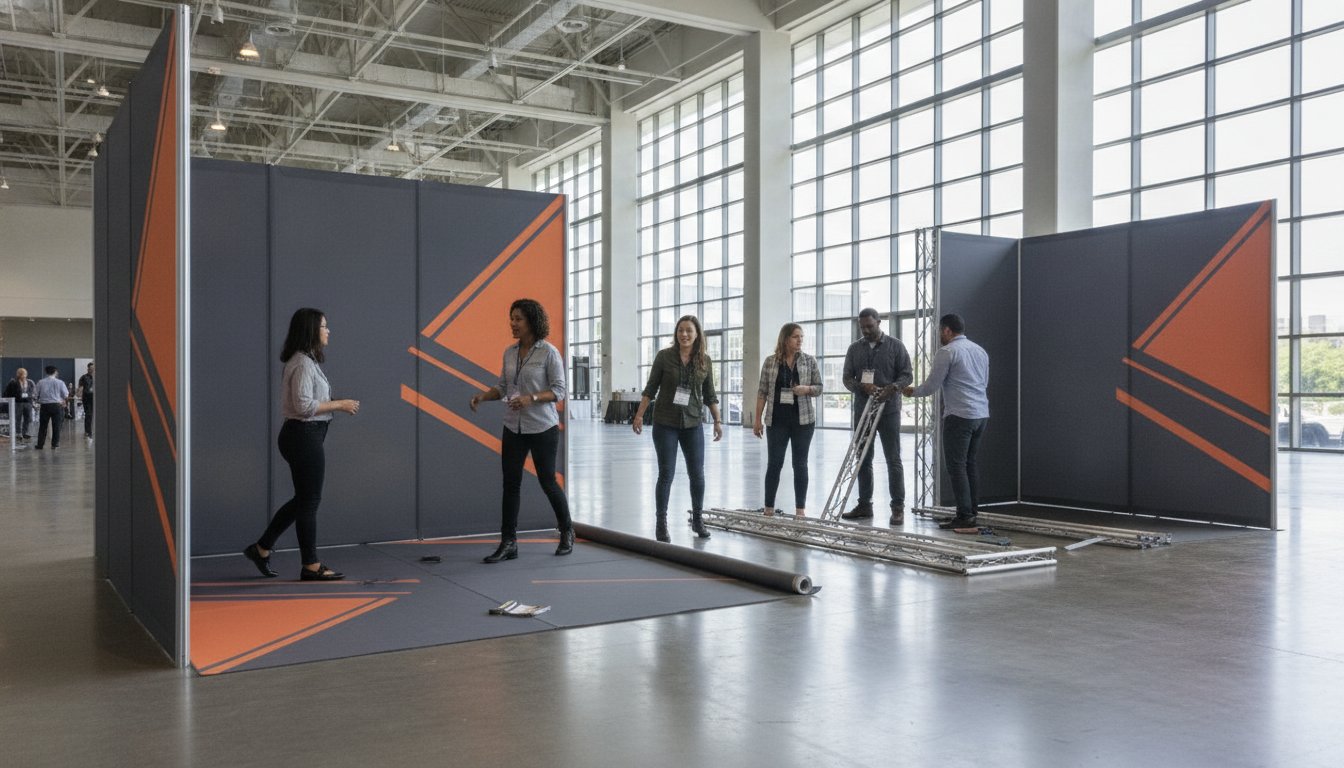
What if your most ambitious marketing asset wasn’t a static monument, but a living, breathing toolkit that evolved with every show? Most brands find themselves trapped in a cycle of high-cost, one-off exhibits that feel like a logistical nightmare to store and a burden to transport. You’ve likely felt the frustration of a rigid display that looks stunning in a 20×20 space but becomes a wasted investment the moment you’re assigned a smaller corner booth. Mastering the art of reusing modular displays in different configurations changes the game, turning a single high-impact investment into a versatile arsenal that scales with your vision.
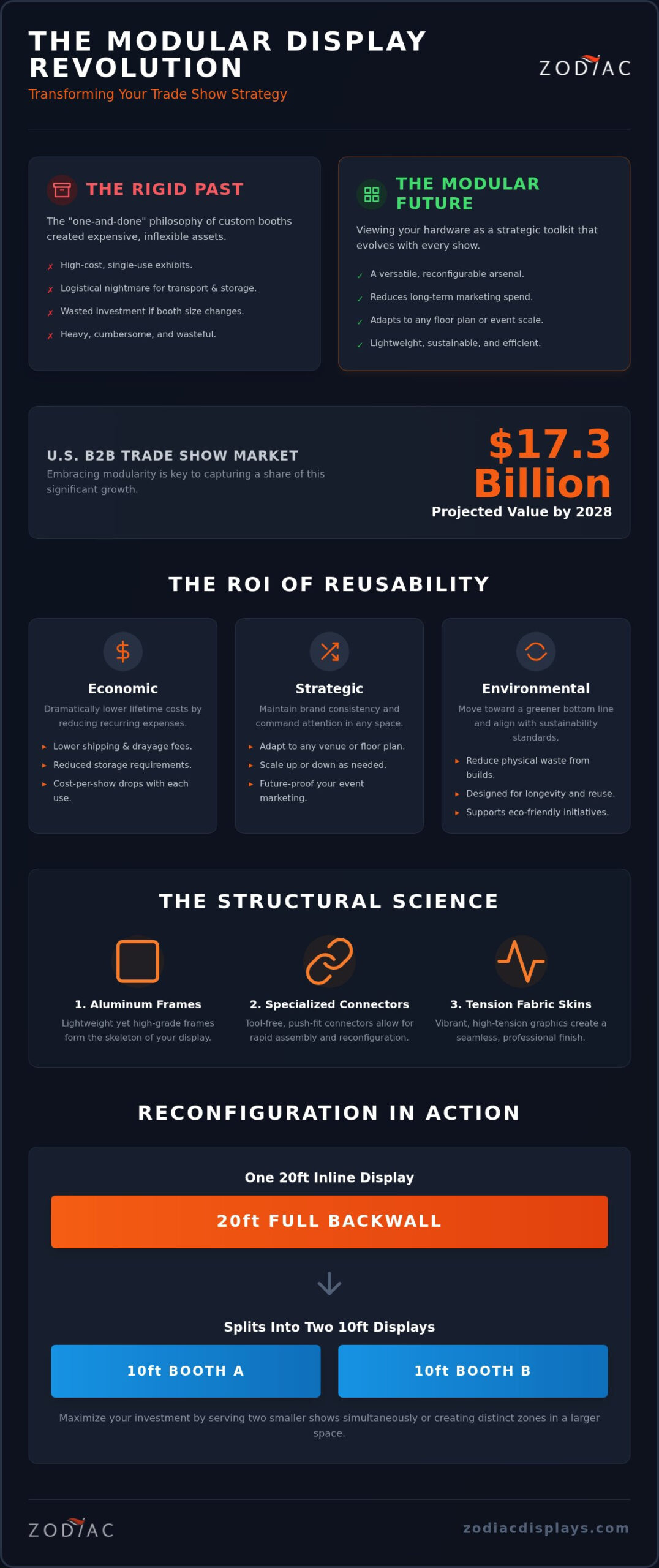
We understand that trade show success requires both creative flair and strategic endurance. While the U.S. B2B trade show market is projected to reach $17.3 billion by 2028, capturing your share of that growth shouldn’t mean blowing your entire budget on hardware. This guide will teach you how to transform your fabric backwalls and modular frames into a chameleon-like presence that fits any floor plan. You’ll learn the secrets to reducing long-term marketing spend while maintaining a polished, premium brand presence that commands attention at every scale. Let’s explore how to build a display kit that works as hard as you do.
Key Takeaways
- Discover how to break the cycle of expensive, single-use exhibits by treating your hardware as a strategic, evolving asset for long-term brand growth.
- Learn the structural science behind aluminum frames and tension fabric to master the “building block” nature of modern backwall displays.
- Unlock graphic design secrets that ensure your brand’s visual impact remains consistent whether you are occupying a 10ft space or a sprawling island exhibit.
- Gain a practical framework for reusing modular displays in different configurations, such as effortlessly splitting a 20ft inline display into two distinct 10ft booths.
- Understand how a visionary partnership can help you design for durability and future-proof your event marketing budget for years to come.
Breaking the Single-Use Cycle: Why Modular Reconfigurability is the Future of Events
For years, the trade show industry relied on a “one-and-done” philosophy. Brands would commission a massive, custom-built booth for a single flagship event, only to realize later it was too heavy, too expensive to store, and entirely incompatible with smaller floor plans. This rigid approach is a relic of the past. Today, visionary brands view their exhibit hardware as a strategic, evolving asset. Modular reconfigurability is the superpower that allows you to treat your booth as a fluid kit of parts rather than a fixed monument. By embracing Modular design principles, you gain the ability to pivot effortlessly between different event scales without sacrificing your professional polish.
The shift toward modular systems represents a fundamental change in mindset. Instead of a static structure, you own a versatile toolkit of aluminum frames, connectors, and vibrant fabric skins. This “forever-evolving” system means your brand presence is never limited by the physical boundaries of a single venue. You can expand, contract, or completely reshape your footprint as your marketing goals shift. Reusing modular displays in different configurations isn’t just a logistical hack; it’s a strategic commitment to brand consistency and operational excellence.
The ROI of Reusability
The economic logic of modular systems is undeniable when viewed through a multi-year lens. While a custom build might look impressive once, the recurring costs of storage, heavy drayage, and specialized labor quickly erode your marketing budget. Lightweight aluminum frames and tension fabric systems dramatically lower shipping expenses. Because these components are designed for longevity, the cost per show drops significantly every time you commit to reusing modular displays in different configurations. This shift also supports a greener bottom line. By reducing the physical waste associated with discarded custom builds, you are naturally moving toward eco-friendly trade show displays that align with 2026 sustainability standards.
Adapting to Shifting Venue Requirements
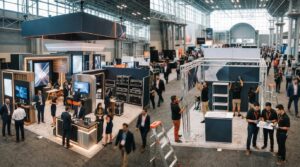
The 2026 event landscape demands agility. You might plan for a 20×20 island only to find your preferred show space is sold out, leaving you with a 10×20 inline. A modular mindset ensures you never lose your visual impact due to floor plan constraints. This flexibility is why many Denver businesses are increasingly choosing high-impact custom trade show displays that utilize modular frames. Whether you are scaling up for a global summit or down for a regional mixer, the ability to reconfigure your assets allows your brand to remain consistent and commanding. You aren’t just buying a booth; you’re investing in a versatile arsenal that adapts to every opportunity.
The Structural Science: How Modular Components Pivot Across Event Spaces
To achieve visual excellence on the trade show floor, you need a foundation built on precision and engineering. True modularity relies on three core elements: high-grade aluminum frames, specialized connectors, and high-tension fabric skins. Unlike “fixed portable” systems that only expand to one set size, true modular backwall displays function like high-end architectural building blocks. This structural science allows you to rethink your footprint for every show, ensuring your presentation always looks intentional rather than improvised. Understanding this “grid” mindset is the first step toward reusing modular displays in different configurations with total confidence.
The difference between a basic pop-up and a true modular system lies in the assembly philosophy. Fixed portable systems are often limited by internal mechanics that only allow for one specific shape. In contrast, modular frames are designed for agility. They utilize tool-free, push-fit connectors that allow your team to assemble complex structures in minutes. This speed is a strategic advantage in fast-paced event environments where every second of setup time impacts your team’s energy and readiness. If you’re looking to build a kit that grows with your brand, reach out to our strategists to discuss a custom-tailored hardware plan.
Frame Architecture and Scalability
Modular systems are designed for growth and transformation. A standard 10ft frame isn’t just a standalone unit; it’s a versatile starting point for a larger narrative. By utilizing “bridge” components and 90-degree corner connectors, you can seamlessly combine two 10ft inline sections into a sophisticated L-shaped or U-shaped exhibit. We favor high-grade aluminum for these frames because it provides the endurance required for repeated assembly and disassembly. This durability ensures that the frame remains perfectly aligned even after years of reusing modular displays in different configurations across the country.
Integrating Diverse Assets
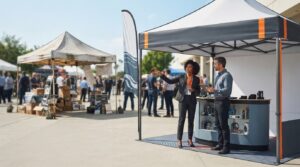
A master configuration often involves more than just a backwall; it’s a multi-sensory environment. To command attention in a crowded hall, you can integrate height and movement by blending your modular frames with custom flag banners. These soft signage additions draw the eye upward, while modular counters and kiosks provide functional touchpoints for lead generation. When scaling from a 10×10 booth to a 20×20 island, structural integrity becomes the top priority. A well-planned modular kit ensures that every connection point is secure, providing a stable, professional environment that reflects the premium nature of your service. This holistic approach turns your exhibit into a cohesive brand experience that scales effortlessly.
Strategic Graphic Design: Creating Visuals That Scale from 10×10 to Island Exhibits
Visual impact is the heartbeat of your exhibit. When you’re reusing modular displays in different configurations, the primary challenge isn’t just the hardware; it’s the art. We move beyond the “one image fits all” trap by utilizing a “Master Graphic” versus “Modular Panel” design philosophy. This approach ensures your brand message remains crisp and powerful, whether you’re anchoring a small corner or dominating a center aisle. High-resolution, large-format event signage is non-negotiable for maintaining brand integrity at this scale. Tension fabric serves as the ultimate medium here, offering a seamless, wrinkle-free finish that drapes perfectly over your frames every time you rebuild your presence.
Designing for reconfigurability requires a visionary eye that anticipates the next three shows, not just the next one. By focusing on focal points that remain consistent regardless of the booth width, you create a recognizable brand lighthouse. This precision prevents your graphics from looking like a stretched after-thought when you transition from a small footprint to a massive island exhibit. It’s about creating a visual language that speaks with the same authority in every environment.
Designing for the 10-Foot Core
Every configuration needs a heartbeat. By placing your primary logo and core message in the central 10-foot section of your modular array, you create a visual anchor that travels with you to every venue. When scaling up to 20 or 30 feet, you can introduce “filler” graphics or sophisticated textures on the outer wings. This strategy ensures your most important information is always front and center. Using negative space effectively is also vital; it ensures that a sprawling 20ft graphic feels open and inviting rather than crowded. This balance allows your brand to breathe, even when reusing modular displays in different configurations that occupy larger floor spaces.
The “Mix and Match” Graphic Inventory
Strategic growth requires a library of assets rather than a single, static image. Instead of printing one massive skin that only fits a specific frame, consider building a collection of modular fabric panels tailored to specific product lines or target demographics. You can swap out a single panel to refresh your message or target a new audience without the expense of a full re-print. Universal Graphic Architecture is a strategic method for designing 10×10 panels with bleed-safe edges and aligned horizons that seamlessly tile into expansive 10×30 exhibits. This inventory approach gives you the power to pivot your narrative on the fly, ensuring your presentation is always as precise as it is vibrant.
Reconfiguring Your Display: A Step-by-Step Guide to Three Common Layouts
Mastering the pivot requires moving from theory to the physical floor. Before you begin the assembly process, start with a comprehensive inventory audit of your modular frame and graphic kit. Ensure every connector, foot, and fabric skin is accounted for and clean. Reusing modular displays in different configurations is only efficient when your kit is organized and ready for action. This systematic approach prevents mid-setup delays and ensures your brand looks flawless from the moment the doors open. By treating your hardware as a versatile library, you can transform a single 20ft display into two distinct 10ft environments or a sprawling corner exhibit.
Scenario A: The 10×10 Standard Setup
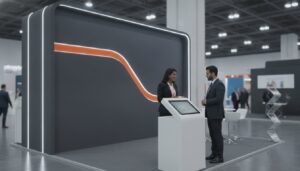
The 10×10 booth is the foundation of most event strategies. Begin by assembling the base aluminum frame and installing the central vertical support to ensure structural stability. Once the skeleton is secure, slide on your “Hero” graphic skin. This central piece should carry your most potent brand message, designed to captivate traffic in tighter aisles. Complete the professional look by adding targeted LED lighting and a premium branded table cloth. This creates a self-contained, high-impact environment that punches well above its weight class while maintaining a compact footprint.
Scenario B: The 10×20 Inline Expansion
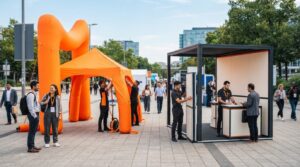
When you have more room to run, expanding your footprint is a matter of strategic connection. Link two 10ft frames using heavy-duty modular couplers to create a seamless 20ft wall. Managing the seam is the most critical step here; pull the tension fabric taut across the junction to ensure a flawless transition that looks like a single custom build. To anchor the larger space and provide a three-dimensional focal point, consider the strategic placement of custom inflatables. These dynamic elements add volume and personality to a wide inline space, making your brand impossible to ignore. This adaptability is the core benefit of reusing modular displays in different configurations, allowing you to scale your presence with zero friction.
Perform a final inspection once the structure is up. Tension the fabric to remove any micro-wrinkles and integrate your accessories, such as monitor mounts or literature racks, to finalize the configuration. If you’re ready to build a kit that offers this level of versatility and visual excellence, explore our full range of backwall displays to find your perfect match. Every component we provide is designed to handle the rigors of the road while keeping your presentation polished and precise.
Maximizing Your Marketing Assets: The Zodiac Approach to Sustainable Brand Growth
Zodiac Event Displays acts as the visionary strategist behind your brand’s long-term growth. We don’t just provide hardware; we help you solve the complex puzzle of an annual event calendar. You’ve seen how modular components and strategic design create a versatile toolkit. Now, it’s about finding a partner who understands the endurance required for success on a global scale. Our boutique agency approach ensures that every detail of your modular kit is designed with the next three years of your brand journey in mind. With our expertise in global delivery and precision fabrication, your assets arrive ready to command attention in any city, from Denver to Dubai.
Your event schedule shouldn’t be a source of stress. Instead, it’s a strategic opportunity to showcase your brand’s adaptability. By reusing modular displays in different configurations, you turn every floor plan assigned to you into a custom-tailored win. We pride ourselves on being more than a vendor; we’re an essential extension of your creative team, guiding you through the complexities of modern event marketing with high-energy confidence and a commitment to visual excellence.
Partnering for Long-Term Success
Finding a dedicated event display fabrication partner who prioritizes modularity is the key to unlocking true sustainability. We manage the entire lifecycle of your branding assets, ensuring they remain as vibrant and durable as the day they were first printed. During our collaborative design phase, we map out every potential venue size you might encounter. This foresight ensures that reusing modular displays in different configurations feels like a seamless extension of your marketing strategy rather than a logistical hurdle. We help you build a narrative of expertise that grows alongside your business.
Your Next High-Impact Move
The power of the pivot lies in its ability to offer total flexibility without draining your marketing budget. You gain significant long-term savings and maintain a consistent, premium brand presence across every show on your tour. Whether you are scaling up for a major industry summit or refining your message for a regional mixer, your modular kit remains your most reliable asset. It’s time to stop thinking in terms of one-off exhibits and start building a future that scales with your vision. Contact Zodiac Event Displays today to schedule your design consultation and master the art of the modular pivot. Let’s transform your presentation into a high-impact legacy.
Future-Proof Your Brand with Strategic Versatility
Owning your presence on the trade show floor requires a shift from static structures to a dynamic, modular mindset. By mastering the structural science of aluminum frames and the art of universal graphic design, you’ve gained the power to scale your vision effortlessly. Reusing modular displays in different configurations allows you to maintain a polished, professional edge whether you’re occupying a compact corner or a massive island exhibit. This flexibility doesn’t just protect your budget; it amplifies your brand’s authority at every touchpoint.
At Zodiac Event Displays, we bring over 10 years of boutique branding expertise to your creative team. Our premium tension fabric and aluminum hardware are engineered for the endurance of the road, supported by global fabrication and delivery capabilities that ensure your kit is ready for any destination. It’s time to stop settling for rigid exhibits and start investing in a versatile arsenal that grows alongside your success. Ready to build a display that grows with you? Contact Zodiac Event Displays for a custom modular quote. We are excited to help you command the spotlight and achieve visual excellence at your next event.
Frequently Asked Questions
Can I really set up a 20ft modular booth by myself?
It’s entirely possible to set up a 20ft modular booth by yourself, though having a partner’ll make the process much faster. Most modular systems utilize tool-free, push-fit connectors that are designed for intuitive assembly. While one person can manage the frame sections, a second person is helpful for guiding the tension fabric over the top of a large display to ensure it sits perfectly without snagging.
How do I store my modular display graphics to ensure they last for years?
You should fold your tension fabric graphics with the printed side facing inward and store them in a cool, dry environment. Avoid damp basements or hot storage units, as extreme temperatures can degrade the fabric’s elasticity over time. If your graphics get dusty, most high-quality tension fabrics are machine washable on a gentle cycle, ensuring they remain vibrant for years of repeated use.
Do modular displays look as professional as custom-built exhibits?
Modular displays provide a polished, high-end aesthetic that rivals fully custom builds at a fraction of the weight and cost. The secret lies in the high-tension fabric, which stretches tightly over the aluminum frame to create a smooth, wrinkle-free surface. This precision engineering gives your brand a sophisticated, architectural presence that looks permanent and professional rather than temporary or flimsy.
What happens if I lose a connector for my modular frame?
You’ll find it’s easy to replace lost connectors because modular systems are built with standardized components. If a piece goes missing on the road, your display partner can typically ship a replacement within a few business days. This reliability is a core reason why reusing modular displays in different configurations is such a sustainable strategy for brands with a heavy event schedule.
Can I add new sections to my modular display years after the initial purchase?
That’s the beauty of the modular system; you can expand your display at any time by adding new frame sections and connectors to your existing kit. The building block nature of these systems means your 10ft backwall can grow into a 20ft or 30ft exhibit as your floor space requirements increase. This scalability ensures your initial investment remains relevant and valuable for years to come.
Is it possible to integrate digital screens or shelving into a reconfigurable booth?
You can definitely integrate digital screens, iPad mounts, and shelving into your modular configuration using specialized internal brackets. These accessories attach directly to the aluminum frame, allowing you to create an interactive environment without compromising structural integrity. This versatility is essential for modern brands that need to blend physical products with digital storytelling at every show.
How do I choose between a tension fabric backwall and a rigid modular system?
You should choose a tension fabric backwall if you prioritize lightweight portability and fast setup, while rigid modular systems are better suited for displaying heavy physical products. Fabric systems are much easier to ship and handle, reducing drayage costs significantly. However, if your booth needs to support heavy-duty shelving or deep recessed lighting, a rigid frame might offer the extra support you need.
Will my 10ft graphics still look good when used as part of a 20ft display?
Your 10ft graphics’ll look excellent as part of a larger display if they’re designed using a modular philosophy. By keeping your primary branding on the central 10ft panel, you can use the additional space for textures or secondary messages. This strategic approach to reusing modular displays in different configurations ensures your presentation always looks intentional and balanced, regardless of the total booth width.
 Previous reading