


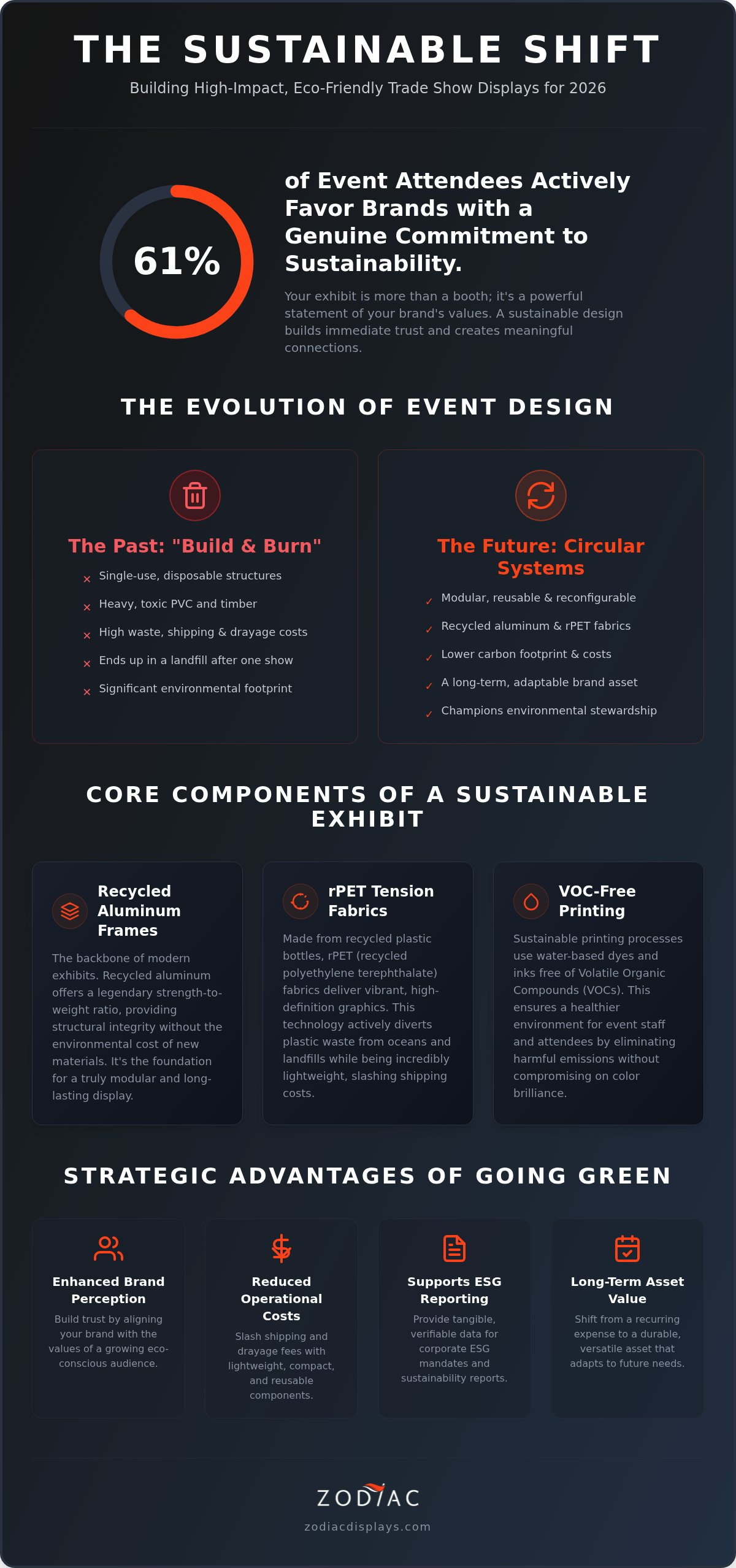
Did you know that 61% of event attendees now actively favor brands that demonstrate a genuine commitment to sustainability? It’s no longer enough to simply show up; your presence must reflect a conscious choice for the planet without losing an ounce of visual prestige. Finding the right eco-friendly trade show display materials used to feel like a compromise between professional polish and environmental ethics. You’ve likely felt the frustration of green options that looked flimsy or the sting of greenwashing claims that didn’t hold up under scrutiny.
We understand that your booth is a high-stakes investment where every detail must radiate quality. You want a vibrant, premium presentation that’s also lightweight enough to slash shipping costs and drayage fees. This guide reveals how to achieve that perfect balance using the latest 2026 standards for sustainable design. We’ll explore how recycled rPET fabrics and modular aluminum frames meet the rigorous new ISO 20121:2024 requirements while providing the clear data you need for stakeholder reporting. From tension fabric brilliance to structural integrity, you’re about to discover how to lead the charge in a circular event economy with confidence and style.
Key Takeaways
- Transition from “build-and-burn” waste to circular, modular systems that enhance both brand longevity and environmental stewardship in 2026.
- Leverage high-strength recycled aluminum and organic FSC-certified materials to build a sophisticated, premium aesthetic for your next event structure.
- Discover how eco-friendly trade show display materials like rPET fabrics combine high-definition visual impact with responsible manufacturing practices.
- Reduce your carbon footprint and drayage costs by prioritizing lightweight, reusable soft signage and sustainable, VOC-free printing technologies.
- Learn how a boutique design partnership transforms sustainable components into a vibrant, professional environment that resonates with your target audience.
The Evolution of Sustainable Event Design in 2026
The trade show floor is undergoing a massive architectural transformation. We’ve moved past the era of disposable, single-use exhibits that end up in a landfill the moment the hall lights dim. In 2026, the industry has embraced circularity as the gold standard for success. This isn’t just about using a different type of board or fabric; it’s a holistic fusion of creative engineering, material science, and logistical precision. When selecting eco-friendly trade show display materials, we are looking for systems that minimize environmental waste while maximizing your visual ROI. The Evolution of Sustainable Event Design now centers on creating high-impact environments that are built to be reused, reconfigured, and eventually recycled without losing their premium edge.
Circularity is the dominant force driving booth design today. Instead of “build-and-burn” structures, forward-thinking brands are investing in modular, long-term assets. By utilizing high-grade aluminum frames and interchangeable tension graphics, you create a versatile kit of parts that adapts to different booth sizes without requiring new production for every show. This shift represents a move from temporary expenses to strategic capital assets that maintain their vibrancy year after year.
Why Sustainability is a Strategic Brand Advantage
Adopting a green strategy is no longer a niche choice; it’s a powerful differentiator that builds immediate trust. Research indicates that 61% of event attendees favor brands that promote sustainability, making your booth’s material composition a silent but persuasive brand ambassador. Beyond attendee perception, marketing departments now face rigorous corporate ESG mandates. Choosing eco-friendly trade show display materials provides the verifiable data needed for annual sustainability reports, turning your exhibit into a tangible proof point of your company’s values. A sustainable booth serves as a natural conversation starter, allowing your team to connect with prospects over shared goals for a better future. This commitment to a green identity is further reinforced when your hospitality choices, such as using compostable packaging from Goodies Distribution, reflect the same environmental values.
Understanding the 2026 Material Lifecycle
The vocabulary of “green” has matured. In 2026, we look beyond simple recyclability to prioritize high-performance recycled content and biodegradable options. Durability remains the ultimate sustainable choice. A well-crafted backwall display or a set of custom flags that lasts for five years is infinitely more eco-friendly than a “compostable” item that fails after one use. We also focus on low-impact logistics, where every ounce matters:
- Lightweight Engineering: Soft signage and tension fabrics significantly reduce shipping weight, lowering the carbon footprint of every mile traveled.
- Volume Efficiency: Modular systems pack down into smaller crates, reducing the number of trucks required for transport and slashing drayage costs.
- Material Transparency: Using certified rPET (recycled polyester) ensures that your display is actively diverting plastic waste from oceans and landfills.
Eco-Friendly Hardware: Recycled Metals and Sustainable Structures
The structural integrity of your exhibit defines both its endurance and its environmental footprint. In 2026, we’ve moved decisively beyond the era of heavy, toxic PVC and single-use timber. High-impact booths now rely on recycled metals and rapidly renewable composites that provide the same structural rigidity as traditional materials without the environmental toll. Choosing eco-friendly trade show display materials for your booth hardware isn’t just a “green” gesture. It’s a strategic investment in smarter, lighter, and more versatile components that enhance your brand’s presence while protecting the planet.
Modular hardware is the secret to a successful circular strategy. By moving away from custom-built, “one-and-done” wooden crates, you embrace a system designed for reconfiguration. This approach eliminates the need for fresh fabrication for every show on your calendar. It transforms your booth from a temporary expense into a long-term brand asset that adapts to your growing needs.
The Power of Recycled Aluminum Frames
Recycled aluminum stands as the undisputed champion of modern event architecture. As of September 2026, the market price of aluminum sits at approximately $1.49 per pound, maintaining its status as a cost-effective, premium choice for framing. Its strength-to-weight ratio is legendary; it allows us to engineer massive backwall displays and hanging signs that remain remarkably light. This weight reduction translates directly into lower shipping emissions and significant savings on drayage fees. Aluminum is also “infinitely recyclable,” meaning it can be processed and reused indefinitely without any loss in structural quality. These modular systems allow you to scale your design seamlessly, fitting a 10×10 space one week and expanding to a 20×30 the next.
Sustainable Wood and Natural Composites
High-quality natural accents require expert preparation to prevent warping or splitting under convention center lights. To ensure your custom timber elements are professionally processed, you can discover Bourbon Bigfoot Woodworking for specialized sawmilling and vacuum kiln drying services that guarantee material stability for your exhibit.
For brands seeking an organic, warm aesthetic, FSC-certified plywood and bamboo are the leading alternatives to traditional plastics. Bamboo is a rapidly renewable resource that grows significantly faster than hardwoods, making it ideal for banner stands and counters. When we design these bespoke structures, we prioritize the use of emissions-free, water-based adhesives to ensure your environment remains healthy for both staff and attendees. This commitment to Sustainable Printing and Logistics ensures that every component, down to the bonding agents, aligns with a low-impact lifecycle. If you’re ready to see how these innovative structures can elevate your visual impact, the creative strategists at Zodiac Event Displays are ready to help you build your sustainable future.
The Rise of Recycled Soft Signage: Sustainable Fabric Graphics
The shift toward soft signage represents the most significant visual and logistical leap in recent event history. It replaces heavy, brittle rigid panels with high-performance textiles that offer a tactile, premium feel rigid plastics simply can’t replicate. In 2026, tension fabrics have perfected the art of the “clean look.” Wrinkles and fading are now relics of the past. Today’s advanced dye-sublimation process bonds ink directly into the fibers, creating a finish that is as durable as it is striking. These eco-friendly trade show display materials ensure your brand remains vibrant under the harsh glow of convention center lights while significantly reducing your environmental footprint.
Portability is where soft signage truly shines. Unlike rigid panels that require massive crates and specialized handling, fabric graphics fold down into compact bags. This dramatic reduction in volume allows you to bypass expensive freight services and heavy drayage fees. Even high-impact additions like custom flag banners now utilize these advanced textiles to provide movement and height with a fraction of the material weight found in traditional signage.
Tension Fabric Displays: The Clean, Green Choice
Silicon Edge Graphics (SEG) have revolutionized the architecture of custom trade show displays. By using a thin silicone strip to tension the fabric perfectly across a frame, you eliminate the need for bulky mounting hardware and excessive plastic waste. The graphics are inherently durable and often washable, allowing you to refresh your booth’s appearance without discarding the entire display. This longevity is a core pillar of the Events Industry Council Sustainable Event Standards, which prioritize materials that endure multiple show cycles. It’s a sophisticated system that balances high-end aesthetics with practical reusability.
RPET and the Circular Economy
The true magic of modern soft signage happens at the molecular level. Most premium fabric graphics in 2026 are crafted from rPET, a recycled polyester derived from post-consumer plastic bottles. This process actively diverts ocean-bound plastic and transforms it into high-vibrancy display surfaces. When comparing the carbon footprint, recycled polyester requires significantly less energy to produce than virgin polyester, making it a closed-loop success story. Using these eco-friendly trade show display materials also simplifies your eventual rebrand. When the time comes for a new look, rPET fabrics can often be recycled back into industrial textiles rather than heading to a landfill, ensuring your brand’s legacy is defined by its vision, not its waste.
Beyond the Booth: Sustainable Printing and Logistics
The brilliance of your brand shouldn’t leave a toxic trail. While the structural components of your exhibit provide the frame, the chemical composition of your graphics and the weight of your crates determine the true depth of your sustainability. True environmental stewardship in 2026 requires looking past the physical booth to the invisible impacts of production and transport. By selecting eco-friendly trade show display materials that prioritize clean chemistry and lightweight engineering, you’re not just building a booth; you’re optimizing a global supply chain. This strategic approach ensures your high-impact presentation remains as clean as its visual aesthetic.
Logistics often represent the largest portion of an event’s carbon footprint. Every pound of material shipped translates directly into fuel consumption and carbon emissions. Choosing lightweight alternatives isn’t just a matter of convenience. It’s a fundamental requirement for meeting modern ESG goals. In fact, industry data shows that transitioning from traditional rigid panels to advanced tension fabrics can reduce shipping costs by up to 40%. This weight-to-sustainability ratio is the new metric for success on the trade show floor.
Water-Based and Dye-Sublimation Printing
The era of solvent-based inks is over. In professional event display fabrication, we’ve replaced harsh chemicals with water-based and UV-curable alternatives. Dye-sublimation has become the gold standard because it uses heat to bond non-toxic pigments directly into the fabric fibers. This creates a permanent, vibrant finish that won’t crack, peel, or off-gas harmful Volatile Organic Compounds (VOCs) into your booth environment. You get the benefit of precise color matching and deep saturation without the heavy-metal pigments that once defined the industry. Your staff and attendees breathe easier, and your graphics remain durable enough for years of repeated use.
Lightweighting: The Hidden Key to Sustainability
Drayage fees are the silent budget killer of the event world. By choosing eco-friendly trade show display materials like soft signage and modular aluminum, you slash the weight of your shipment. This “lightweighting” strategy does more than save money; it significantly reduces the carbon credits required to offset your travel. To protect these assets for the long haul, we utilize shipping cases made from recycled high-density plastics. These cases are engineered to endure a decade of rigorous travel, ensuring that your sustainable investment stays out of the landfill. If you’re ready to optimize your logistics and lower your environmental impact, reach out to Zodiac Event Displays to start your strategic design journey today.
Designing Your Sustainable Future with Zodiac Event Displays
Choosing the right materials is only half the battle; the true victory lies in how those elements are woven into your brand’s story. At Zodiac Event Displays, we don’t just supply hardware. We act as a visionary partner and a dedicated ally in your pursuit of visual excellence. With over 10 years of industry experience, our Denver-based boutique agency understands that eco-friendly trade show display materials must do more than satisfy a checklist. They must command attention, radiate quality, and endure the rigors of the global event circuit. We bridge the gap between “green” and “great,” ensuring your commitment to the planet never comes at the expense of your professional pride.
Our “Design for Durability” philosophy is simple. We create assets that grow with your brand rather than being discarded after a single season. By prioritizing high-impact soft signage and modular structures, we provide the flexibility you need to pivot your messaging without starting from scratch. This approach transforms your exhibit from a temporary expense into a strategic, reusable asset that delivers consistent ROI across multiple years and venues.
The Boutique Advantage: Tailored Sustainable Strategies
A one-size-fits-all “green” booth often fails because it ignores the unique rhythm of your marketing calendar. We take a personalized approach, selecting materials based on your specific event frequency and logistical needs. Whether you require a massive backwall display for a flagship convention or lightweight custom flags for regional outdoor events, our creative team ensures every component aligns with your broader vision. By integrating eco-friendly trade show displays into your long-term strategy, you demonstrate a sophisticated brand identity that resonates with the modern, conscious consumer.
Start Your Sustainable Journey Today
Success in sustainable design begins long before you hit the show floor. Early-stage consultation allows us to source the most innovative eco-friendly trade show display materials and engineer them for maximum impact. We help you navigate the complexities of material lifecycles, from rPET certifications to the latest VOC-free printing technologies. Our goal is to make the process seamless, moving you from an inspirational concept to a flawlessly executed presentation with confidence. If you’re ready to elevate your brand’s visibility while protecting the planet, it’s time to collaborate with a team that values your legacy as much as you do. Contact our strategists for a comprehensive trade show display quote that prioritizes both your visual impact and your environmental responsibility.
Lead the Future of Sustainable Brand Storytelling
The journey toward a carbon-neutral presence on the trade show floor is no longer a path of compromise. It’s a strategic evolution where premium aesthetics and environmental responsibility converge to create unforgettable brand experiences. By integrating advanced eco-friendly trade show display materials like rPET fabrics and modular aluminum frames, you demonstrate a visionary commitment that resonates with today’s conscious attendees. You’ve seen how lightweighting and clean chemistry don’t just protect the planet; they protect your bottom line by slashing logistics costs and enhancing reusability.
Success in 2026 requires a partner who understands the nuance of high-impact design and the technicalities of global sustainability standards. With over a decade of industry experience and a boutique agency approach based in Denver, we provide the expert design consultation and global delivery capabilities your brand deserves. It’s time to move beyond the disposable and build a legacy of excellence. Partner with Zodiac for your next sustainable event display and turn your environmental goals into a vibrant reality. Your most impactful presentation is just a creative collaboration away.
Frequently Asked Questions
What makes a trade show display material truly “eco-friendly”?
Truly sustainable materials are defined by their entire lifecycle, from responsible sourcing to final disposal. This includes using post-consumer recycled content like rPET or infinitely recyclable metals like aluminum. It also involves low-impact manufacturing processes that eliminate toxic solvents and VOCs. Durability is a critical factor; a high-quality display that lasts for a decade of events is far more sustainable than a single-use alternative that requires frequent replacement. Using eco-friendly trade show display materials ensures a lower environmental footprint.
Are sustainable trade show materials more expensive than traditional options?
While some sustainable materials may have a slightly higher initial price point, they often deliver superior long-term ROI. Modern eco-friendly trade show display materials like tension fabrics and modular aluminum systems are much lighter than traditional wood or PVC. This reduces shipping and drayage costs significantly. Additionally, their durability and reconfigurability mean you don’t need to buy new hardware for every show. Over several event cycles, the total cost of ownership is often lower than traditional builds.
Can recycled fabric graphics achieve the same color vibrancy as standard polyester?
Yes, modern rPET fabrics provide exceptional color depth and clarity that matches or exceeds virgin polyester. The dye-sublimation process used in 2026 bonds ink directly into the fibers of the recycled material. This results in high-definition graphics that are resistant to fading and cracking. You get the same brilliant saturation and professional finish required for premium branding without the environmental impact of using newly manufactured, petroleum-based plastics. It’s a win for both your brand and the planet.
How do I recycle my old trade show displays properly?
Proper disposal depends on the specific components of your booth. Aluminum frames can be taken to almost any local scrap metal recycler, as aluminum is infinitely recyclable without losing quality. For fabric graphics made from rPET, you should look for specialty textile recycling programs that can process polyester back into industrial materials. Many venues now offer waste diversion programs. We recommend consulting with your design partner during the planning phase to establish a clear end-of-life plan for every component.
What is rPET fabric, and why is it used in event signage?
rPET stands for recycled Polyethylene Terephthalate, which is a high-performance textile created from post-consumer plastic water bottles. It’s the standard for sustainable soft signage because it diverts waste from landfills and oceans while maintaining incredible structural integrity. In the event industry, it’s prized for its wrinkle resistance and ability to hold vibrant dye-sublimation prints. It allows brands to create massive, high-impact backwall displays and hanging signs with a significantly reduced carbon footprint compared to virgin materials.
Are lightweight displays really more sustainable if they use plastic?
Yes, the sustainability of a display is heavily influenced by the emissions generated during transport. Lightweight materials, even those derived from recycled plastics, require much less fuel to ship across the globe. This “lightweighting” strategy reduces the overall carbon footprint of your event schedule. When these materials are also durable enough for years of reuse, the environmental benefit of reduced shipping weight far outweighs the impact of the material’s initial production. It’s about optimizing the entire logistics chain.
Does using eco-friendly materials affect the durability of my booth?
Choosing sustainable options often enhances the durability of your booth. Materials like recycled aluminum and high-tension rPET fabrics are engineered for the rigors of frequent travel and assembly. Unlike traditional wood or foam core that chips and dents easily, these modular systems are built to be resilient. A well-designed sustainable booth is a long-term asset that maintains its premium appearance through dozens of shows, proving that “green” design is synonymous with high-quality, professional engineering and lasting value.
How can I reduce the carbon footprint of my event shipping?
You can drastically lower shipping emissions by prioritizing lightweight soft signage and modular hardware that packs into smaller, more efficient crates. Reducing the volume and weight of your shipment directly cuts fuel consumption. Additionally, working with a partner that offers strategic logistics management can help optimize routes. Using reusable, recycled plastic shipping cases also protects your assets from damage, ensuring they don’t need to be replaced prematurely due to transit wear. Every pound saved helps the environment.

 Previous reading