




The strongest case for a trade show exhibit is not just how it looks, but what it can help your business achieve. Getting budget approval for trade show exhibit spending can be challenging when costs span booth space, display production, shipping, labor, travel, and show services, while the return may take time to measure.
It’s reasonable for leadership to question a major event investment, especially when “generate leads” doesn’t explain how success will be measured. A credible request connects the exhibit to specific business goals, accounts for the full cost, and shows how the team will evaluate results after the event.
This guide explains how to organize the budget, compare exhibit approaches against your goals and constraints, and choose practical measures such as qualified conversations, meetings booked, and pipeline influenced. It also covers why pre-show planning and timely follow-up belong in the proposal, so the investment supports a complete path from first impression to measurable business impact.
Key Takeaways
- Frame the exhibit request around a business objective, not booth size or visual impact alone.
- For getting budget approval for trade show exhibit investment, connect the proposed scope to measurable outcomes and a clear evaluation plan.
- Compare custom purchase, rental, reuse, and a smaller-scale approach against your event schedule and practical constraints.
- Build a finance-ready budget by listing key cost categories, documenting assumptions, and clarifying what each vendor proposal includes.
- Turn approval into a focused brief that keeps design, production, delivery, and follow-up aligned with the goals decision-makers approved.
Why Trade Show Exhibit Budget Requests Get Rejected, and How to Reframe Yours
A bold exhibit can make a brand hard to miss. But if the budget request focuses on booth size, visual impact, or product specifications without explaining the business purpose, decision-makers may see a discretionary expense rather than a strategic investment. The issue isn’t necessarily the ambition. It’s the connection between that ambition and a priority the organization already values.
A Trade show can support product awareness, business networking, and sales conversations. Your request should identify the event’s role for your organization, the audience you need to reach, and what you want attendees to do next. That context helps leaders assess the proposed scope, whether it involves a custom display, existing assets, or a more modest setup.
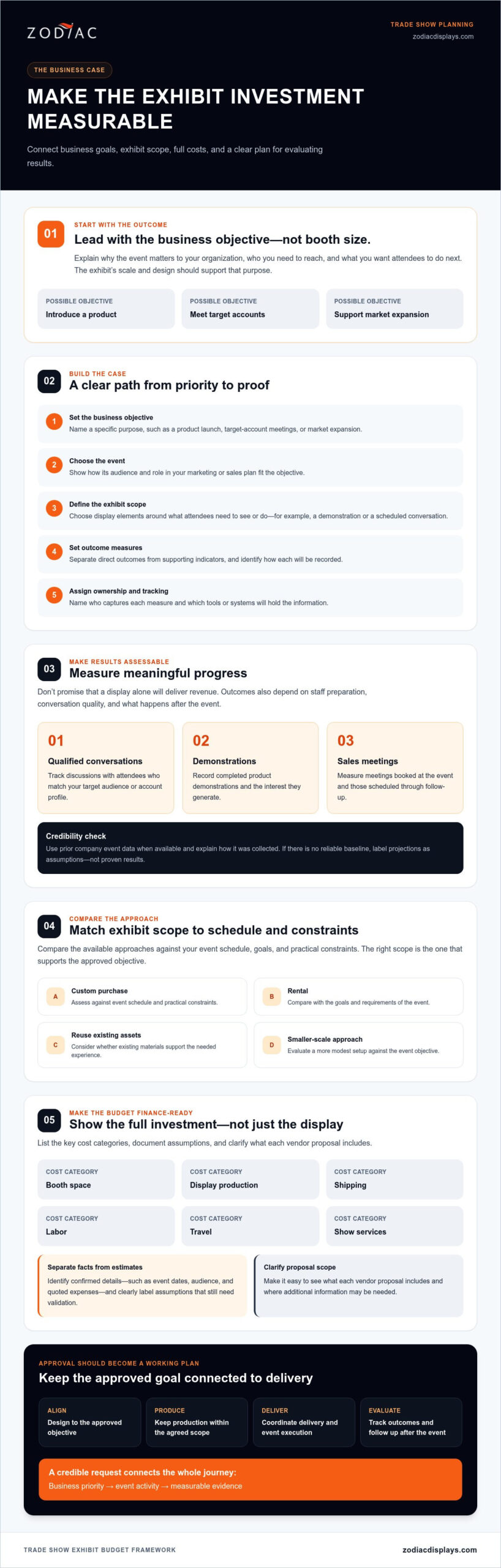
A strong exhibit request ties the investment to measurable goals and explains how the team will pursue and evaluate them.
What decision-makers need to see in an exhibit request
Lead with the objective, not the design concept. State whether the event is intended to introduce a product to a defined audience, deepen relationships with existing accounts, or create opportunities for sales meetings. Then explain why the event is a good way to reach that audience and what action you want attendees to take, such as requesting a demonstration or scheduling a conversation.
Make the evidence easy to assess. Separate confirmed information, such as the event dates, audience, and quoted expenses, from estimates that still need validation. Label assumptions clearly, including projected exhibit visits or conversations. This transparency helps reviewers see what the request rests on and where more information may be needed.
How to answer the concern that results are hard to prove
Don’t promise that a display alone will deliver revenue. Event outcomes also depend on staff preparation, the quality of conversations, and what happens after attendees leave. Show how the exhibit supports the wider event plan, then choose indicators that reflect meaningful progress.
- Qualified conversations: Track discussions with attendees who match your target audience or account profile.
- Demonstrations: Record completed product demonstrations and the interest they generate.
- Sales meetings: Measure meetings booked at the event and those scheduled through follow-up.
Use prior company event data when it’s available, and explain how it was collected. If you don’t have a reliable baseline, present projections as assumptions rather than proven results. When getting budget approval for trade show exhibit spending, that distinction can make the request more credible. It shows leaders both what you expect to learn and how you’ll report back.
Build a Trade Show Exhibit Business Case from Goals to Measurable Results
A persuasive business case follows a clear line from company priority to event activity to evidence. The exhibit is one part of that plan. Its size and design should support what the team needs to accomplish, rather than become the objective themselves. The U.S. International Trade Administration outlines the benefits of a trade show, including presenting products and generating leads. Choose the benefits that matter to your organization, then make them measurable.
Choose targets that connect the exhibit to business priorities
Use this sequence to shape the case before finalizing the display scope:
- Set the business objective. Name a specific purpose, such as launching a product, meeting target accounts, or supporting a market expansion.
- Choose the event. Explain why its audience and role in your marketing or sales plan fit that objective.
- Define the exhibit scope. Describe what attendees need to see or do, then select display elements that support that experience. A demonstration-focused event may call for a different setup than one centered on scheduled conversations.
- Set outcome measures. Separate direct outcomes, such as qualified conversations or sales meetings held, from supporting indicators, such as demonstrations completed or follow-up meetings booked.
- Assign ownership and tracking. Name who will record each measure and how. For example, the team might use a shared lead form during the event and record follow-up in the company’s sales system.
Choose indicators your team can consistently capture on the show floor and afterward. A metric without an owner or tracking method may sound impressive, but it won’t give leadership a dependable way to evaluate performance.
Present the return calculation without overstating certainty
If you estimate financial return, show the inputs so finance can review the logic. One simple framework is to compare the event’s attributable value with its total cost, while stating what counts as attributable value and the period you’ll use to assess it. Draw on approved internal records from comparable events when available. If those records don’t exist, label conversion rates, deal values, and expected outcomes as assumptions to validate, not established facts.
Projected results are planning assumptions. Verified past performance requires documented outcomes and a consistent measurement method. That distinction keeps the request ambitious without promising a return the evidence can’t support.
Not every benefit will appear as immediate revenue. Present brand visibility, product feedback, and potential reuse of event assets separately from the financial calculation, and explain how each supports the objective. A clearly defined scope also helps a creative partner align display design and fabrication with approved goals. Explore custom trade show display options as one possible part of that plan.
Does a Trade Show Exhibit Pay Off? Compare Options Before Asking for Approval
An exhibit can suit your goals and still be the wrong investment approach for a particular event. Before asking leaders to approve a direction, compare how each option supports your goals and what it requires from the team. The best fit depends on factors such as how often you exhibit, which assets you already own, and how much time and space you can devote to transport, storage, and setup.
| Approach | May fit when… | Questions to weigh |
|---|---|---|
| Custom purchase | You expect to exhibit repeatedly and need a consistent brand presentation. | Can the design adapt to future events? Where will the display be stored, and who will coordinate transport and setup? |
| Rental | You need a display for a specific event or want to limit the assets your organization owns. | Does the available format meet brand requirements? Confirm what the rental proposal includes and what your team must arrange separately. |
| Reuse | Existing assets remain suitable for the event and can be transported and installed practically. | Are the graphics and configuration current? Account for storage, condition, and any updates needed to suit the audience. |
| Scaled-down scope | A smaller footprint or simpler setup can still serve the event objective. | Will attendees have what they need to understand the offer and take the intended next step? |
Compare the full investment, not just the display
For each option, build a like-for-like comparison. Include design, graphics, shipping, labor, storage, and any required event services. Ask vendors to specify what each proposal covers so a lower headline figure doesn’t conceal expenses assigned to your team. Where records allow, separate one-time asset costs from recurring, event-specific costs. This makes it easier to assess reuse across future shows without treating every expense as though it occurs only once.
If reuse is part of your case, consider how often the display can realistically serve your event schedule and whether storage and transport make that plan workable. An option that appears economical on paper may require more internal time or coordination. A larger investment may be easier to justify if it supports repeated use and consistent branding. Compare the trade-offs instead of assuming one format always wins.
For a structured approach to justifying your budget, the U.S. Small Business Administration recommends defining event goals and how you’ll measure success. Apply that discipline to each alternative, then present the assumptions alongside the comparison. Getting budget approval for trade show exhibit spending is more credible when decision-makers can see why the selected approach fits the organization’s objectives and constraints, not just why it looks compelling.
Create a Finance-Ready Trade Show Exhibit Budget Request
A polished request makes the decision clear without requiring anyone to interpret a stack of quotes. Give finance a concise summary of why you’re exhibiting, what the team needs, how the estimate was built, and what approval you’re seeking. This structure makes getting budget approval for trade show exhibit spending a review of goals, assumptions, and trade-offs, not just a display concept.
What to include in the budget and supporting documents
Organize the request so a reviewer can follow it from purpose to cost. Include:
- Objective and audience: State the business goal, who the event is meant to reach, and the action you want attendees to take.
- Scope: Describe the exhibit approach and the elements needed to support that goal.
- Budget line items: Include design, fabrication, graphics, shipping, labor, storage, and event-specific requirements where applicable.
- Assumptions and measures: Identify estimates that need confirmation, along with the indicators the team will track and report.
- Timeline and dependencies: Note the decision deadline, key milestones, and what depends on approval, such as confirming the event scope or finalizing artwork.
Attach comparable vendor quotes when possible. If their scopes differ, explain why. One proposal may include graphics or shipping while another excludes them, so ask vendors to clarify inclusions, exclusions, estimate validity, and details finance should verify, including tax treatment. Flag risks plainly, such as a pending event requirement or an unconfirmed logistics estimate. Don’t hide uncertainty inside a single total.
How to make the approval decision easy
End with a direct decision request. Name the responsible approver, state what they’re being asked to authorize, and specify the date by which the team needs a decision. Present a recommended option alongside a lower-scope alternative, then summarize what changes between them, such as the attendee experience, branding needs met, or work the team must handle internally.
Close with a brief evaluation plan: who will track outcomes, which measures they’ll use, and when results will be reported. That turns approval into a clear commitment, not an open-ended spend. Once your requirements are defined, discuss your exhibit brief with a creative and production partner to help align the proposed display with the approved scope.
Turn Exhibit Approval into a Clear Plan for Design, Delivery, and Follow-Up
Approval is the handoff from business case to execution. Keep the approved objective visible as the team makes creative decisions, plans production, and prepares for the event. A clear brief helps prevent a striking design from drifting away from the audience, scope, or measures that leadership agreed to fund.
What to hand off after the budget is approved
Give the selected provider and internal team a single, current brief that captures the decision and the practical details needed to act on it. Include:
- Approved scope and objectives: The exhibit’s purpose, audience, essential elements, and intended attendee actions.
- Event requirements: Confirmed booth details, venue information, and organizer specifications relevant to the display.
- Schedule and owners: Key milestones, approval points, delivery details to confirm, and the people responsible for decisions.
- Brand assets: Current logos, messaging, imagery, and brand guidelines for the creative team.
- Budget assumptions: The estimates submitted for approval, known exclusions, and any scope changes made afterward.
Confirm production and delivery requirements directly with the provider selected for the project. Document changes, including what changed and why. This record helps the team coordinate decisions and later distinguish event results from changes in scope or assumptions.
How a design partner can support the approved plan
A design partner can translate approved goals into a visual and production brief, then coordinate creative direction with fabrication and delivery planning. Zodiac Event Displays designs, fabricates, and delivers custom trade show displays and other branded event assets. Share the objective, audience, event constraints, existing assets, and approved scope before discussing display concepts. That gives the conversation a practical foundation and helps keep creative choices aligned with the request leadership approved, without assuming a particular design will guarantee event results.
After the show, compare actual results with the targets and assumptions in the original request. Review the indicators your team committed to track, note where evidence is incomplete, and record changes that affected execution. Share the findings with the approver so the next event plan can build on what the team learned.
For getting budget approval for trade show exhibit investment, a clear path from approved objective to measured follow-up makes the request more than a funding decision. Contact Zodiac about your exhibit to discuss your objectives and constraints.
Make Your Next Exhibit Request Easier to Approve
A strong exhibit proposal connects the event to a business priority, explains why the recommended approach fits, and gives decision-makers a clear way to assess results. Compare purchase, rental, reuse, and reduced-scope options against your team’s needs, then make assumptions, costs, owners, and follow-up measures visible in the request.
Getting budget approval for trade show exhibit investment is easier to support when the plan continues beyond approval. A clear brief keeps the approved objectives connected to design, production, delivery, and post-event review, so the team can compare actual outcomes with its targets and identify what to refine next time.
Zodiac Event Displays brings more than ten years of industry experience, with design, fabrication, and global delivery capabilities for custom trade show displays and branded event assets. If you’re ready to turn an approved plan into a focused exhibit brief, discuss your trade show exhibit brief with Zodiac. Build your case with clarity, then take the next step by discussing your exhibit plans with Zodiac.
Frequently Asked Questions
How do you get budget approval for a trade show exhibit?
Getting budget approval for trade show exhibit spending starts with a business objective, not a design idea. Explain who the event is meant to reach, what you want attendees to do, and how the exhibit supports a company priority. Then present the full estimated cost, distinguish confirmed figures from assumptions, compare practical options, and propose measures for evaluating results. End with a specific approval request, an owner, and the date a decision is needed.
What should a trade show exhibit budget include?
Include booth space and the display approach, plus applicable design, fabrication, graphics, shipping, material handling, labor, storage, travel, and event services such as electrical or internet. Account for pre-show promotion and post-show follow-up if they support the event objective. Ask vendors to spell out inclusions and exclusions, and label estimates that still need confirmation. Separating one-time asset costs from event-specific expenses can help reviewers understand what may apply to future shows.
How do you calculate ROI for a trade show exhibit?
Compare the financial return you can reasonably attribute to the event with its total cost. A common formula is (attributable return minus total event cost) divided by total event cost, multiplied by 100. Agree on what counts as return and the measurement period before the show. Use approved company data where available, explain assumptions, and avoid treating every lead or influenced opportunity as closed revenue. Report pipeline and non-financial outcomes separately to keep the calculation transparent.
What if leadership says the trade show exhibit is too expensive?
Ask which part of the investment concerns them, then respond with clearer comparisons rather than defending the original scope by default. Show a lower-scope alternative alongside the recommendation, noting what each option preserves or gives up. Check whether existing assets can be reused, whether a smaller footprint meets the event objective, and whether the estimate includes all relevant costs. Keep essential audience and outcome goals intact, and document assumptions that need updated quotes.
Is renting a trade show exhibit better than buying one?
Neither option is automatically better. Compare how often your organization exhibits, how important consistent branding is, and whether you can store, transport, and set up an owned display. Rental may suit a one-off event or limited internal capacity, but confirm the available format, customization, logistics, and included services with the provider. Buying may make sense for repeated use if the design can serve future events. Evaluate total requirements, not just the initial quote.
When should I request approval for a trade show exhibit?
Start once the event, audience, and basic exhibit requirements are clear enough to build a credible request. Work backward from the event using the organizer’s deadlines, your company’s approval process, and the production and delivery schedule confirmed with the selected provider. Allow time for finance review, quote clarification, and design decisions. Since requirements and schedules differ, avoid relying on a generic lead-time rule. Verify the dates and dependencies for your specific event.
How can I measure whether a trade show exhibit was successful?
Define success before the event and choose measures your team can consistently record. Track direct outcomes such as qualified conversations, completed demonstrations, and sales meetings, alongside supporting indicators such as follow-up meetings booked. Assign an owner and tracking method to each measure, then compare actual results with the approved targets and assumptions. Review outcomes again as opportunities progress, and report brand visibility or product feedback separately from financial return rather than combining unlike measures.

 Previous reading