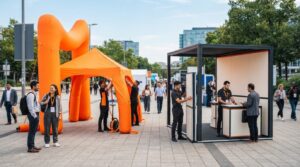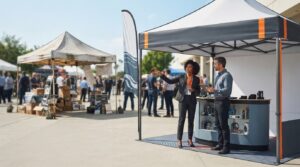



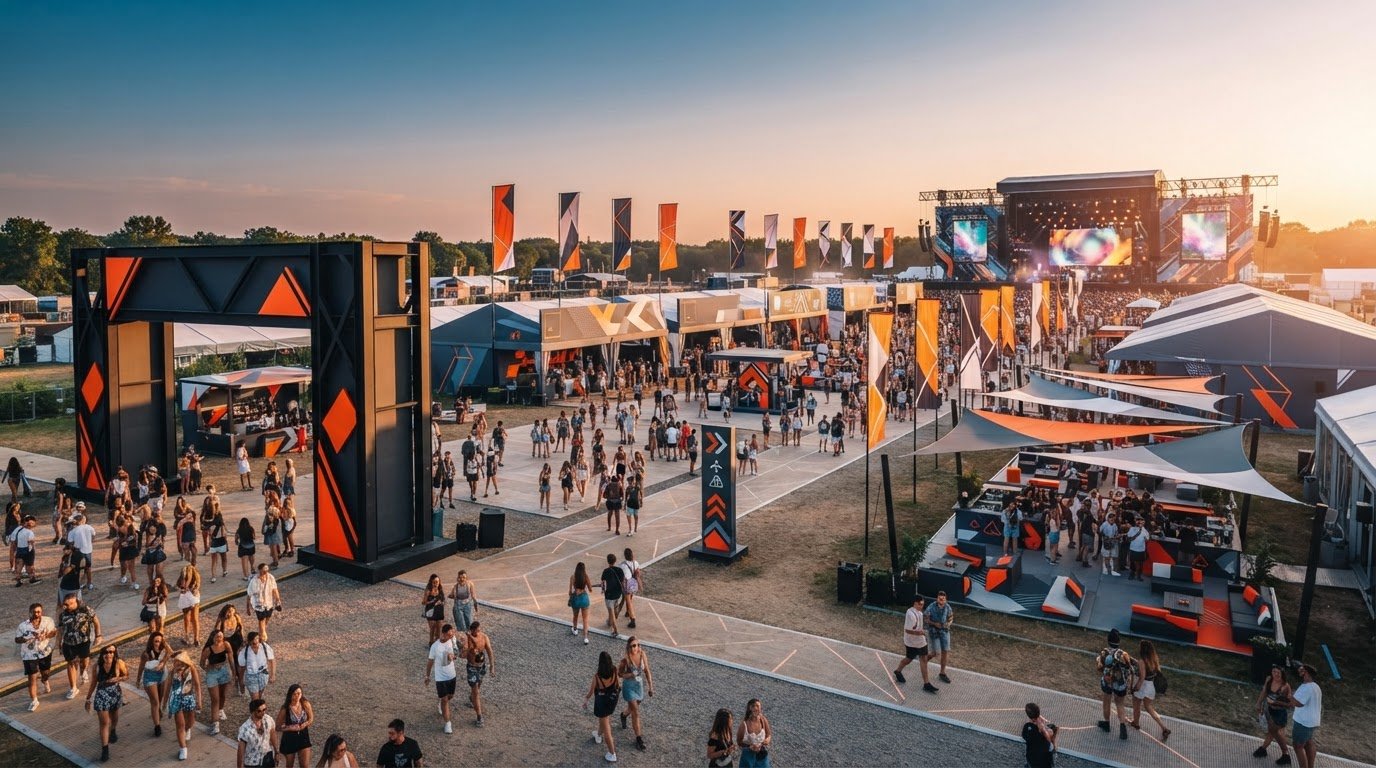
A festival brand isn’t built at the main stage alone. It takes shape throughout the attendee journey, from the entrance and wayfinding points to sponsor activations and gathering spots. Outdoor music festival branding solutions work best when each display contributes to one clear visual story, rather than appearing as a collection of disconnected logos.
If you’re weighing tents against flags, backwalls, or other displays, the right mix depends on your venue, audience flow, and event goals. This guide explains how to plan a cohesive festival presence, choose display types for different touchpoints, and coordinate design, fabrication, transport, and setup. It also covers practical considerations for outdoor conditions and crowd movement, so your brand stays visible without obstructing routes or access. Start with a site map, then develop a placement plan that is recognizable, practical, and ready for festival day.
Key Takeaways
- Map the attendee journey to identify where displays can strengthen recognition, navigation, and sponsor visibility.
- Use a shared visual system to keep event and sponsor branding consistent while giving each zone room to feel distinct.
- Explore how outdoor music festival branding solutions such as tents, flags, backwalls, and inflatables can address different site needs.
- Build a clear production workflow, confirming artwork, venue permissions, installation responsibilities, and delivery logistics before event day.
- See how Zodiac Event Displays can support coordinated physical branding through creative design, fabrication, and global delivery.
Outdoor Music Festival Branding Solutions Begin with the Attendee Journey
A festival site may include open fields, stages, food areas, sponsor activations, and multiple entrances. In that visual bustle, a logo alone won’t tell attendees where they are or what to do next. Outdoor music festival branding solutions are coordinated visual assets that help people recognize the event, navigate its site, and identify sponsor and service areas. Plan them as connected touchpoints, not isolated displays.
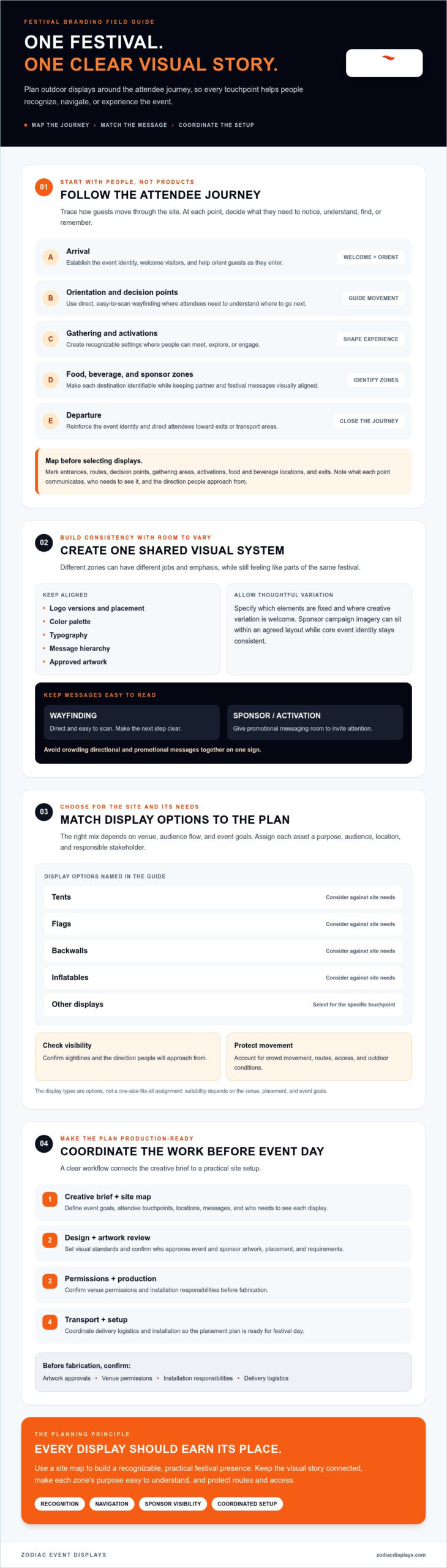
Start by tracing the route attendees take through the site: arrival, orientation, gathering, activations, food and beverage, and departure. At each point, ask what visitors need to notice, understand, or find. For example, an entrance may need to establish the event identity, while a junction may need a direct directional message. This turns a broad branding brief into a practical map of visual priorities.
Which festival moments deserve a branded touchpoint?
Give each area a clear purpose. At arrival, event identity can welcome visitors and set expectations. At gathering spaces and activations, branded settings can make the experience distinctive and recognizable. Food, beverage, and sponsor zones need clear signals of their own, coordinated with the festival’s identity while making each area’s function easy to understand.
- Arrival: Establish the event identity and help orient guests as they enter.
- Gathering and activation: Create recognizable settings where people can meet, explore, or engage.
- Service and sponsor zones: Make destinations identifiable while keeping event and partner messages visually aligned.
- Departure: Reinforce the event identity and direct attendees toward exits or transport areas.
This journey-based approach also supports experiential marketing, where the audience encounters a brand through an experience rather than only through a message. The useful planning question is not simply “Where can we put a logo?” It’s “What should this moment help an attendee do or remember?”
How does a consistent festival identity help attendees?
Repeated colors, logos, typography, and message hierarchy create a recognizable visual thread, even when different zones serve different purposes. Keep directions separate from promotion: a wayfinding message should be direct and easy to scan, while sponsor or activation messaging can invite more attention. Combining both in one crowded sign can make the next step harder to spot.
Before choosing displays, mark entrances, routes, decision points, gathering areas, activations, food and beverage locations, and exits on a site map. For each point, note what it needs to communicate, who needs to see it, and the direction people will approach from. That map gives you the context to select display types and plan placements in the sections ahead.
Build a Cohesive Festival Identity Across Outdoor Brand Assets
A strong visual identity creates a common thread across the festival without making every area look the same. The main stage, a sponsor activation, and a food service zone have different jobs, so each can have its own emphasis while following clear brand standards. For effective outdoor music festival branding solutions, define those standards before artwork moves into production.
Set the foundation in a short visual guide covering logo versions and placement, color palette, typography, message hierarchy, and approved artwork. Specify which elements are fixed and where creative variation is welcome. For example, a sponsor may use its own campaign imagery within an agreed layout, while the event logo, type style, or core color treatment stays consistent. This gives partner creative room to stand out without losing the festival’s identity.
How should event and sponsor branding work together?
Separate the festival’s master identity from sponsor-specific messaging, then establish a review process. Confirm who approves artwork and placement, along with any venue or sponsor requirements, before fabrication. Sponsorship planning resources, including Eventbrite’s guidance on festival sponsorship packages, can help organizers consider how partner participation fits the wider event. Don’t imply exclusivity, guaranteed placement, or audience reach unless the organizer has confirmed those terms.
Which display types suit different festival zones?
Use the site plan to assign each display a purpose, audience, location, and responsible stakeholder. A display that works at a gathering point may not suit a narrow route or service counter. Match the asset to the task, then confirm sightlines, access, venue rules, and installation conditions with the organizer.
- Event tents: Consider them for branded gathering or activation areas, subject to the venue’s site and installation requirements.
- Custom flags: Use them as visual markers where their position and surrounding sightlines make sense.
- Backwall displays: Define a branded space or provide a visual backdrop for an activation.
- Inflatables and hanging signs: Assess their placement and visibility against venue conditions and the intended purpose.
- Tablecloths, banner stands, and pop-up signs: Consider them for information, service, or sponsor points where attendees can view them clearly.
Keep an asset schedule alongside the map. For each item, record the approved artwork, final location, intended message, approval owner, and installation details that still need confirmation. This gives event, sponsor, and production stakeholders a shared reference and helps maintain a cohesive look across distinct zones.
To connect the visual system with the physical assets, review coordinated event display design.
Compare Festival Branding Solutions by Visibility, Function, and Logistics
Choose a display for the job it needs to do, not simply because it looks striking in a mockup. A tent can define a branded footprint, a flag can mark an approach, and a backwall can establish a visual boundary. In a busy festival environment, visibility depends on the venue layout, viewing distance, crowd movement, and clear sightlines. Review each proposed placement on the site plan, then check it from the attendee’s likely approach.
When are tents, flags, backwalls, or inflatables a better fit?
Each format has a different role. Event tents can suit gathering or activation areas that need a defined branded footprint, subject to venue approval. Custom flags can identify an area or approach where vertical markers are suitable. Backwall displays can define a branded space, while inflatables may suit a focal point or activation concept after the site has been reviewed. These formats work best as complementary tools, not interchangeable choices.
| Asset type | Intended role and placement | Portability considerations | Design needs |
|---|---|---|---|
| Event tents | Mark a gathering or activation footprint where permitted. | Confirm transport, access, storage, and installation responsibilities. | Plan branding for the visible sides and intended use. |
| Custom flags | Identify an approach or area after checking surrounding sightlines. | Check how items will be transported and handled on site. | Keep the message concise and legible at the expected viewing distance. |
| Backwall displays | Define a branded space or activation backdrop. | Confirm delivery access, storage, and setup arrangements. | Consider viewing angles and how the display relates to nearby assets. |
| Inflatables | Support a focal-point or activation concept where the venue allows. | Verify transport, storage, installation, and dismantling requirements. | Review placement, scale, and surrounding sightlines with the event team. |
What should organizers compare before choosing displays?
Compare each option against the actual site and operating plan. Ask the event team about access routes, available storage, installation and dismantling responsibilities, nearby structures, and restrictions. Map the view from key approaches and consider how crowds may move or gather. A display that is visible on an empty site plan may be obscured once the event is underway.
Reuse can be valuable, but assess it only after confirming construction details, care requirements, and whether the asset will suit future venues. For more detail on inflatable display options, explore this custom inflatable guide. A thoughtful comparison turns outdoor music festival branding solutions into a practical mix that supports the attendee experience and accounts for the site’s real constraints.
Plan Outdoor Festival Branding from Creative Brief to Site Setup
A clear workflow turns outdoor music festival branding solutions from a creative idea into coordinated, site-ready assets. Bring the event team, sponsors, venue contacts, and display provider into the process early, and document each person’s responsibilities. Confirm venue approval, access windows, installation arrangements, and site-specific requirements directly with the venue or event organizer.
What belongs in a festival branding brief?
Give collaborators one shared starting point. Record the event objectives and audience, brand guidelines, sponsor obligations, key site zones, and the role of each display. Include a site map with placement references, artwork ownership, approval contacts, and required deliverables. Spell out who is responsible for transport, storage, setup, and teardown rather than assuming the display provider handles every task.
How can teams reduce artwork and setup surprises?
Use a controlled approval process. Confirm artwork specifications with the chosen display provider before preparing production files, then review proofs and placement mockups with event, sponsor, and venue stakeholders. Keep approved artwork in one accessible location, clearly labeled by asset and version, so teams don’t work from outdated files. For broader production-planning context, see this event display fabrication guide.
Move through the project in sequence:
- 1. Set goals: Define the event identity, audiences, sponsor needs, and what each branded area should communicate.
- 2. Map the site: Mark intended placements and routes, then confirm permissions, access conditions, and site restrictions with the organizer.
- 3. Prepare the brief: Assign each asset a purpose, location, audience, stakeholder, and approval owner.
- 4. Finalize artwork: Verify provider requirements, submit production-ready files, and secure documented approvals before production.
- 5. Coordinate delivery and setup: Confirm delivery details, access windows, storage, installation responsibilities, and teardown plans with the relevant parties.
- 6. Review the result: Check placements against the approved plan and record changes that should inform future events.
This sequence creates checkpoints before design, fabrication, and delivery, while leaving venue-specific decisions with the people who control the site. Zodiac Event Displays provides creative design, fabrication, and delivery for physical event branding. Organizers can review event display design and fabrication when planning festival assets.
Bring Your Outdoor Music Festival Branding Plan to Life with Zodiac
A clear site plan and approved visual system give the production conversation a strong starting point. Zodiac Event Displays supports festival teams with creative design, fabrication, and global delivery for physical event branding. Its offerings include event tents, backwall displays, custom flags, inflatables, hanging signs, tablecloths, banner stands, and pop-up signs. Consider each product for the job it needs to do, then coordinate the assets through shared artwork and brand direction.
Zodiac sells display products and does not provide event equipment rental. The company cites more than ten years of industry experience. For each event, organizers should confirm asset specifications, venue requirements, delivery details, and installation responsibilities.
What can a coordinated production partner contribute?
One design conversation can connect creative decisions across entrances, activations, service areas, and sponsor spaces. Rather than treating every display as a separate request, teams can discuss how the assets relate to the event identity, where each will be used, and what information needs approval before fabrication. A shared view can help organizers and partners align around a coherent plan.
Keep practical decisions in the conversation, too. Check display specifications and suitability for the intended use, and confirm venue permissions and installation arrangements with the organizer or venue. Establish who will receive and store the displays, who handles setup and dismantling, and how delivery access will work. Responsibilities vary by event, so confirm them rather than assume.
What should organizers prepare before requesting a conversation?
A focused brief helps turn ideas into useful next steps. Gather the event dates, current site plan, brand guidelines, audience needs, and sponsor requirements. Note the display categories you’re considering and record each asset’s intended location and function. Include known access windows, delivery instructions, approval contacts, and any unanswered venue questions.
- Event context: Dates, audience, objectives, and key site zones.
- Creative direction: Brand guidelines, approved logos, sponsor artwork, and message priorities.
- Display plan: Potential assets, proposed locations, and the purpose of each placement.
- Site logistics: Venue requirements, delivery details, and assigned installation responsibilities.
Visit the Zodiac Event Displays homepage to review its event display capabilities. Prepare your brief with the information above so the team can discuss the display options and production details relevant to your festival.
Make Your Festival Brand Journey Cohesive
Effective outdoor music festival branding solutions start with the attendee journey and connect each touchpoint through a consistent visual identity. Map key locations before selecting displays, then match each asset to its purpose, sightlines, and site logistics. Clear artwork approvals and confirmed venue arrangements help carry the plan from creative brief through setup.
Zodiac Event Displays brings more than ten years of industry experience to physical event branding, with design, fabrication, and global delivery capabilities. Event tents, custom flags, backwall displays, and inflatables can each play a distinct role in a coordinated festival presence. Confirm product specifications, delivery details, and installation responsibilities for your venue as you develop the plan.
Ready to shape a recognizable festival experience? Discuss your festival display vision with Zodiac and take the next step toward a cohesive, practical plan for your event.
Frequently Asked Questions
What are outdoor music festival branding solutions?
Outdoor music festival branding solutions are physical visual assets and coordinated design choices that help make a festival, sponsor, or activation recognizable across an outdoor site. Examples include branded tents, custom flags, backwall displays, inflatables, hanging signs, and smaller display elements. The right mix depends on the event identity, site plan, audience movement, venue requirements, and each asset’s purpose. Map key attendee touchpoints first, then match displays to those locations.
Which branding displays work best for an outdoor music festival?
No single display is best for every festival. Event tents can define a branded area, custom flags can mark selected locations, and backwall displays can frame an activation. Inflatables may suit a focal-point concept if the site allows them. Compare each option against the venue layout, sightlines, audience movement, transport, access, installation needs, and event rules. Confirm product specifications and placement requirements before selecting displays for a specific site.
How do you make festival branding consistent across different areas?
Use approved brand guidelines to create a consistent visual thread across the site. Define logo use, colors, typography, and message hierarchy, then map each asset to a specific zone and purpose. Sponsor creative can have its own character while following shared visual standards. Before production, share approved artwork and placement plans with the relevant event, venue, and sponsor contacts so everyone can review the intended use and confirm approvals.
How can festival organizers prepare branded displays for outdoor conditions?
Confirm the selected display’s intended use, setup requirements, and care instructions with the provider, and review placement with the event team. Check venue rules, ground conditions, access, and the display’s exposure at the proposed location. Don’t assume a product is suitable for every site or weather condition. Verify product specifications and installation requirements before committing, and confirm who is responsible for installation with the organizer or venue.
Can festival branding displays be reused at future events?
Some displays may be reusable, but suitability depends on their construction, condition, care, artwork, and the next venue’s requirements. Ask the provider how to store and maintain each selected display, then check its condition before planning another use. Consider whether the branding will remain current and whether the new site supports the display’s intended placement. Confirm reuse suitability for each product rather than assuming every asset is designed for repeated events.
How early should you plan outdoor festival branding?
Begin planning once event goals, venue information, and key brand requirements are available. Allow time for stakeholder approvals, site review, artwork preparation, production, delivery, and coordination with venue teams. The schedule depends on project scope and provider capacity, so confirm timing directly with the selected provider instead of relying on a general estimate. Sharing site plans and approval contacts early can help teams identify open questions before production begins.

 Previous reading