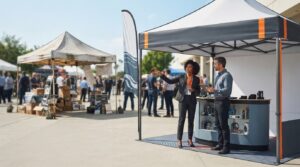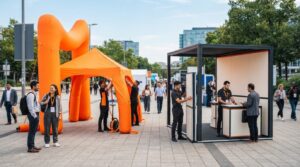



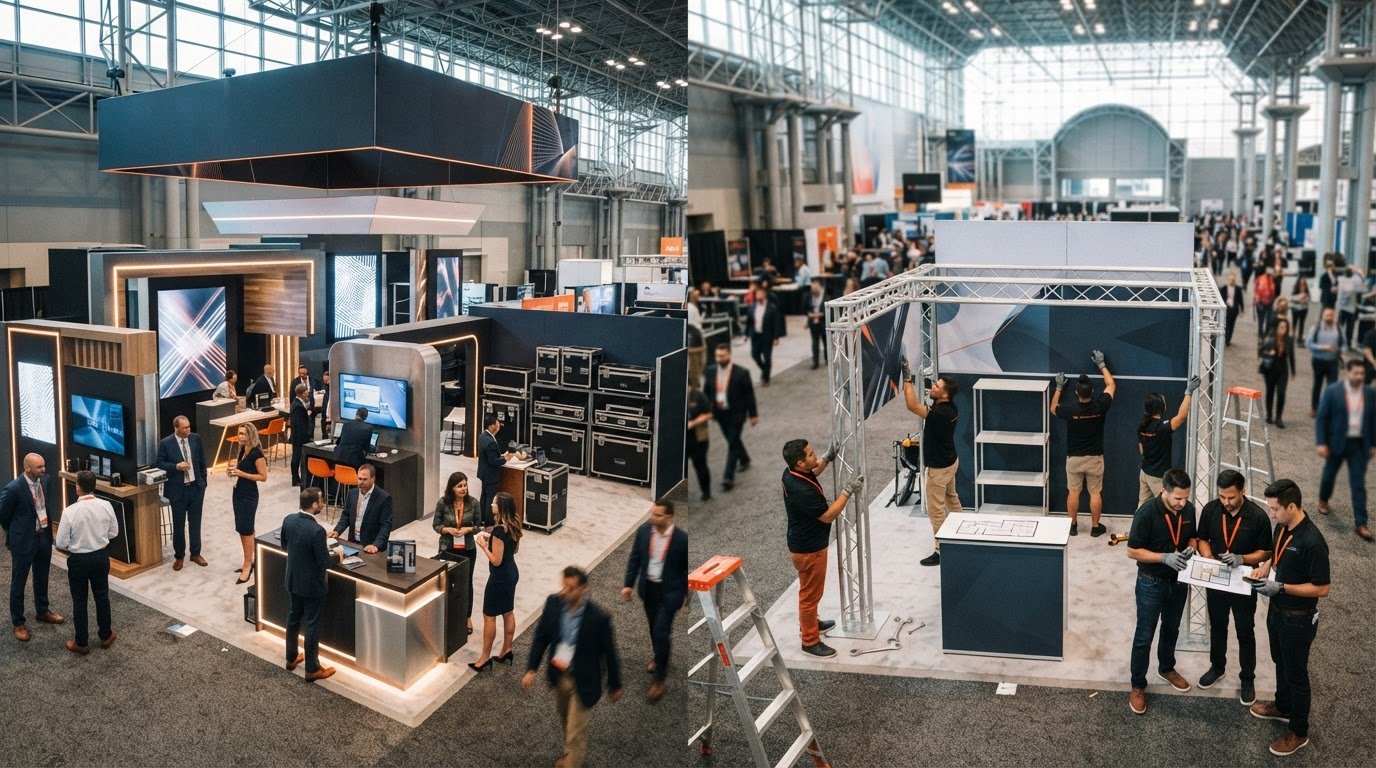
The booth with the lower upfront commitment isn’t always the more cost-effective choice. If your team returns to the show floor regularly, the custom trade show booth vs renting decision depends on more than the first quote: repeat use, brand control, shipping, storage, and the capacity to manage each event all shape the real value.
It’s easy to see why renting appeals. It can simplify a one-off appearance and give you flexibility from show to show. A custom exhibit, on the other hand, can create a distinctive, reusable brand asset, but only when it fits your event calendar and operations. A polished presence should build recognition without adding avoidable complexity.
This guide compares ownership and rental through the factors that matter beyond the initial cost, including event frequency, visual impact, logistics, and long-term value. You’ll learn when each approach makes sense, what work to account for, and how a hybrid strategy can balance brand consistency with flexibility. Zodiac Event Displays brings more than ten years of experience designing and fabricating custom trade show displays, helping carry a brand vision from concept through delivery.
Key Takeaways
- Compare custom trade show booth vs renting against your event schedule, brand goals, and team capacity, not just the initial quote.
- Map the full workload of ownership, including storage, transport, and responsibility for managing the booth between events.
- Assess how much consistency and creative control your brand needs, and where changing audiences or campaigns call for flexibility.
- Use a practical checklist to align event plans, venue needs, and internal responsibilities before choosing an approach.
- A thoughtful design brief can help shape a custom booth asset around your brand and plans for future events.
Custom Trade Show Booth vs. Renting: What Is the Real Decision?
The real choice is between building a branded exhibit your company owns and arranging a booth for an individual event. Neither option suits every team. A predictable event calendar may make repeat use a priority, while changing audiences, venues, and campaign goals can make flexibility more valuable. Your team’s capacity to plan, move, and manage an exhibit matters as much as its visual ambition.
A custom trade show booth is a reusable branded exhibit asset designed around a company’s identity and event objectives. A trade show is an opportunity to present that identity in person, but the right booth strategy depends on how your business plans to show up across events, not just on one show floor.
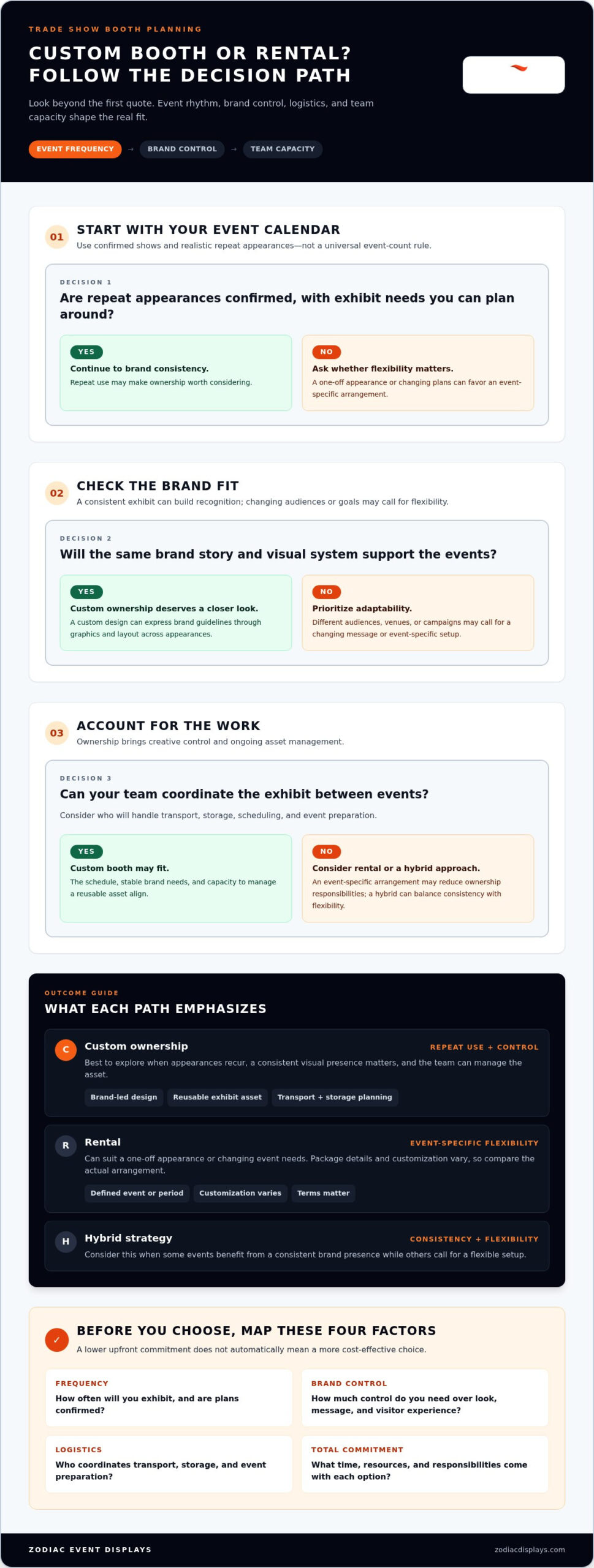
To make the custom trade show booth vs renting decision, compare four connected factors:
- Frequency: How often does your team expect to exhibit, and are those plans confirmed?
- Brand control: How much control do you need over the look, message, and visitor experience?
- Logistics: Who will coordinate transport, storage, and event preparation?
- Total commitment: What time, resources, and responsibilities come with each option across your event schedule?
These factors move the conversation beyond “Which quote is lower?” A booth is part of a broader event plan, so consider what your team can consistently support as well as what it wants attendees to see.
What does owning a custom trade show booth involve?
Ownership starts with commissioning an exhibit shaped around your brand and event objectives. The design can create a consistent visual presence, but your team also needs a plan for using the asset again. Account for transport, storage, scheduling, and the people who will coordinate the exhibit between events. Ownership offers creative control along with ongoing asset management.
What does renting a trade show booth typically mean?
Renting generally means arranging a booth for a particular event or defined period rather than taking responsibility for owning the exhibit. Package details and customization vary, so the experience can differ from one arrangement to another. Rental isn’t automatically simpler, less expensive, or lower quality. Its value depends on the event requirements and the terms of the package.
The decision becomes clearer when you match the exhibit approach to your event rhythm and your team’s ability to manage it. That balance sets up a useful comparison of design control, repeat use, and practical responsibilities.
How Event Frequency, Brand Control, and Logistics Change the Choice
A recurring schedule can make ownership worth considering because the same exhibit may support multiple appearances. Map confirmed events and likely repeat shows across your planning horizon, then note where the audience, venue, or campaign changes. A booth built around a stable brand story may serve several events; a changing program may call for a different configuration or message each time.
Each appearance also has a purpose. The U.S. Department of Commerce’s International Trade Administration outlines the benefits of trade shows for businesses, including meeting potential buyers and assessing competition. Identify which goals matter at each event, then decide whether a consistent owned exhibit or an event-specific setup better supports them.
Event frequency alone isn’t enough; teams must weigh logistics and brand needs alongside repeat use. That’s the practical heart of the custom trade show booth vs renting decision.
How many events make booth ownership worth considering?
There’s no universal event count that settles the question. List confirmed shows and realistic repeat appearances over the period your team plans to exhibit. Compare that calendar with the work of arranging a booth for each event, including coordination, transportation, and event preparation. Ownership deserves closer consideration when recurring appearances align with your team’s capacity to manage the asset between shows.
Which option better supports a consistent brand presence?
A custom design can bring brand guidelines into the exhibit’s graphics and layout, helping attendees recognize a coherent presence from show to show. Rental customization depends on the package and agreement, so the degree of control can vary. For more on planning an exhibit around a unified brand experience, explore this custom trade show display strategy guide.
Flexibility matters too. A company exhibiting to different audiences may need to shift its message, emphasis, or booth presentation for each show. Venue constraints can also affect what works from one event to the next. An owned exhibit can be designed around a planned event strategy, while an event-specific rental arrangement can suit teams whose plans vary. Neither option eliminates the need for planning.
Before choosing, look at the operational fit:
- Repeat use: Are event dates and exhibit needs consistent enough to plan around?
- Brand needs: Does the same visual system support each audience, or will messaging change?
- Team capacity: Who will coordinate transport, storage, and preparation for an owned exhibit?
When ownership fits your schedule and brand goals, thoughtful design planning can connect the creative vision to practical event needs. Zodiac Event Displays supports custom trade show displays from creative design through fabrication and delivery. Explore custom exhibit planning as you shape an asset for your event strategy.
Custom Booth vs. Rental: Compare the Trade-Offs Side by Side
A side-by-side comparison makes the commitment behind each option easier to see. Ownership gives your team greater control over the exhibit’s look and brand presentation, while also making your team responsible for managing the asset. A rental can suit a one-off event, but package details, branding choices, and responsibilities depend on the arrangement. Either way, planning matters.
| Consideration | Custom booth ownership | Rental |
|---|---|---|
| Customization | Designed around your brand and event objectives. | Branding options depend on the package and agreement. |
| Repeat use | Can be planned as an asset for future appearances. | Arranged for a particular event or defined period. |
| Storage | Your team plans where and how the exhibit will be stored between events. | Storage responsibilities depend on the rental arrangement. |
| Transport and handling | Your event plan accounts for moving and handling the owned asset. | Delivery and handling terms vary by agreement. |
| Planning | Requires coordination of design, fabrication, use, and asset management. | Requires coordination of package scope, customization, and event-specific arrangements. |
Compare the full commitment, not just the initial quote
For an ownership proposal, consider design, fabrication, transport, storage, maintenance, and planned reuse. For a rental proposal, review the rental terms, customization, delivery, handling, and any agreement-specific charges. Compare both options over the same event horizon and with the same scope, including the same shows, branding needs, and expected responsibilities. Otherwise, a lower initial quote may reflect a different package or workload.
Build a simple comparison for each confirmed event. Record which tasks your team handles, what the proposal includes, and what remains your responsibility. Include shipping and storage in the evaluation, even if they appear outside the booth quote. This gives decision-makers a fuller view of the operational commitment without relying on assumptions about future costs or reuse.
Where does a modular or flexible approach fit?
Flexibility can start in the design brief. Describe the event footprints, audiences, and objectives the booth may need to serve, then outline how the design should respond to them. Separate the goals, such as adapting the presentation for different audiences, from the specific features and components to be included in the project scope. This keeps the brief focused on practical needs while leaving the design process room to explore solutions.
For the custom trade show booth vs renting decision, compare the same shows and responsibilities, then weigh creative control against the work of managing an asset. That’s a fairer measure of the commitment than an initial quote alone.
Use This Checklist to Decide Before Your Next Trade Show
A clear brief helps your team compare ownership and rental on equal terms. Work through these steps before reviewing proposals, and record the answers in one shared document. That way, each option is measured against the same event schedule, brand priorities, and delivery expectations.
- List your events. Separate confirmed appearances from tentative opportunities and one-time activations. Note the expected event count across your planning horizon.
- Define each event’s goals. Identify whether the priority is lead generation, product awareness, buyer meetings, or another outcome, and flag where audiences differ.
- Set your brand needs. Document the key visual elements, messages, and visitor experience the exhibit should communicate consistently.
- Map logistics and responsibilities. Identify venue constraints and who will coordinate planning, shipping, storage, and event-day handling.
- Compare proposals consistently. Use the same design scope, event list, and delivery expectations to assess custom and rental options.
Questions to answer about your event calendar
Start with what’s known, then mark what’s tentative. For each appearance, record the audience, venue, and campaign message so you can see where the exhibit needs consistency and where it may need to adapt. Assign a clear internal owner for booth planning, shipping, storage, and event-day handling. An ownership plan needs named responsibilities, not assumptions.
- Which events are confirmed, tentative, or one-time?
- How much do audiences, venues, and campaign goals change?
- Who coordinates each stage of booth preparation and handling?
Questions to answer about the exhibit itself
Describe the brand elements attendees should recognize and the visitor experience you want to create. Check each show’s documentation before recording venue requirements or booth dimensions, since assumptions can lead to mismatched proposals. For design-to-delivery considerations, consult the event display fabrication resource guide.
- Which graphics, messages, or brand guidelines must be represented?
- What venue requirements and dimensions are specified by the event?
- Do all proposals reflect the same scope and delivery expectations?
Once your brief is complete, compare what each proposal covers and what your team must manage. This makes the custom trade show booth vs renting decision more grounded in your actual schedule and capacity, rather than broad assumptions about either approach.
Ready to shape a custom exhibit around your goals and event requirements? Explore custom trade show display design and fabrication with Zodiac Event Displays.
Plan a Custom Trade Show Booth That Works Beyond One Event
A custom booth can do more than make a strong first impression. A focused design brief can connect your brand expression to the events you plan to attend and the practical realities of managing an exhibit over time. That creates a clearer foundation for deciding whether ownership fits your event strategy and for shaping a booth that can support more than one appearance.
Turn your comparison into a focused design brief
Bring the decisions from your custom trade show booth vs renting comparison into one brief. Explain what the exhibit needs to communicate, who it needs to engage, and how it must work at the events on your calendar. Include known venue requirements and repeat-use plans, along with practical considerations for transporting and storing the exhibit. The clearer the context, the easier it is to balance creative ideas with event needs.
- Event goals: Describe the outcomes the booth should support and the audiences you expect to meet.
- Brand expression: Gather brand guidelines, priority messages, and visual elements that should carry through the exhibit.
- Event conditions: Include confirmed venue information and distinguish it from requirements still being finalized.
- Ongoing use: Explain how often you expect to exhibit and what your team can manage between events.
Ask the creative process to connect visual impact with function. Clarify what visitors should notice first, what information they should take away, and how the exhibit should support conversations. These priorities give the design team a purposeful starting point without assuming specific materials, components, or configurations.
Work with a partner from concept through delivery
A custom exhibit takes shape through connected decisions: creative direction, fabrication, and delivery all need to support the brief. Zodiac Event Displays brings more than ten years of industry experience to custom trade show display projects, with support from creative design and fabrication through global delivery. Materials, production schedules, and booth components are developed around the specific project requirements.
That partnership helps your team carry the original event goals through the practical stages of bringing an exhibit to life. A well-defined brief keeps the brand story, audience, venue information, and repeat-use intentions in view as the project develops. It also gives your team a shared reference for discussing priorities and decisions.
If you’re ready to explore an owned exhibit, start a conversation about your goals and event plans through custom exhibit project discussions. It’s a straightforward next step toward turning a clear brief into a considered design.
Make Your Next Exhibit Decision With Confidence
The right choice is the one your team can support and your brand can grow with. Before committing, turn your event plans into a clear brief: define what the booth needs to achieve, what should stay consistent, and where the experience may need to flex. That gives your next decision a practical foundation, whether you’re weighing custom trade show booth vs renting or preparing to develop an owned exhibit.
A custom booth project can translate your brand into a distinctive, purposeful presence on the show floor. Zodiac Event Displays brings more than ten years of industry experience, with support spanning design, fabrication, and global delivery, to help shape that vision around your event strategy.
Have a direction in mind? Discuss your custom trade show booth project with Zodiac Event Displays and take the next step toward a presence built around your brand and event plans.
Frequently Asked Questions
Is buying a custom trade show booth better than renting?
Neither is automatically better; the right fit depends on your schedule, brand goals, and capacity to manage an exhibit. Buying may suit a team with recurring events and a consistent visitor experience to create. Renting may fit a one-off appearance or an uncertain calendar. For a fair custom trade show booth vs renting comparison, evaluate the same shows, branding requirements, logistics, and proposal scope rather than judging by the headline quote alone.
How often do you need to exhibit for a custom booth to make sense?
There’s no universal event count that makes ownership worthwhile. Start with the shows your team has confirmed, then separate likely repeat appearances from possibilities that may not happen. Consider whether one exhibit can support the same brand goals across those events, or whether each calls for a different approach. Include design, fabrication, transport, storage, and handling in your comparison, and base any break-even estimate on your proposals and plans.
Can a rented trade show booth be customized with my branding?
Rental branding options depend on the package and agreement. One arrangement may accommodate branded graphics or visual adjustments, while another may offer less flexibility. Before comparing options, decide which brand elements are essential, such as a logo, core message, or campaign visuals. Then assess what each package includes against those priorities. Don’t assume rental packages provide identical customization or that every requested change is part of the original terms.
What costs should I compare when choosing a custom booth or rental?
Compare the full scope, not just the amount shown first. For an owned exhibit, account for design, fabrication, delivery, storage, maintenance, and the planned number of uses. For a rental, review the rental terms, customization, delivery, handling, and any agreement-specific charges. Make the comparison meaningful by using the same events, booth requirements, and delivery expectations for both options. Rely on current project proposals rather than generic industry averages.
What should I do with a custom trade show booth between events?
Plan for the time between shows before committing to ownership. Decide where the exhibit will be stored, who will coordinate its handling, and how it will be transported to the next venue. Keep the care and packing instructions for the specific exhibit with your event records, and assign someone to track its condition after each use. If storage or transport is difficult for your team, count that effort as part of the ownership decision.
Can a custom trade show booth work for different venues?
It can be planned around multiple venues, but fit depends on each event’s requirements and the exhibit’s specific design. Gather the booth-space dimensions, access details, and exhibitor instructions from event documentation before finalizing the brief. If one show has unusual constraints, flag them early alongside the recurring requirements. This helps the design plan account for actual venue conditions instead of assuming that a single layout will suit every event.
How do I get started planning a custom trade show booth?
Start with a brief that captures your event calendar, audience, brand guidelines, goals, venue details, and plans for future use. Add notes about transport, storage, and who on your team will coordinate the exhibit. Zodiac Event Displays can use that information to shape a custom exhibit project around your brand and event needs. A focused brief helps turn a broad idea into useful design decisions.

 Previous reading