


The familiar pull-up banner may be the wrong tool for your next event. If its narrow footprint feels generic or its retractable mechanism seems less dependable in a busy space, exploring alternatives to standard pull up banners can open up stronger ways to be seen.
Look beyond appearance alone. A display needs to suit its setting, attract attention from the right distance, travel and set up comfortably, and support the story your brand wants to tell. A format that works well at an indoor trade show may not suit an outdoor event or a larger branded environment.
This guide compares practical options, including tension fabric displays, pop-up backwalls, X-frame banners, flags, and other event formats. You’ll see how each balances visibility, portability, setup, and branding, so you can choose with confidence. Whether you need a focused message, a striking backdrop, or a coordinated presence across several assets, match the display to the event task and build a polished experience around it.
Key Takeaways
- Explore alternatives to standard pull up banners by matching each format to your event’s setting and communication goal.
- Compare display options by footprint, visual coverage, portability, and indoor or outdoor suitability before choosing.
- See how a focal display and supporting branded assets can work together to create a cohesive event presence.
- Use a simple planning process to build greater visual impact without making setup feel unmanageable.
- Learn how Zodiac Event Displays’ decade-plus experience informs the design of coordinated branded environments.
Why look beyond standard pull-up banners for event branding?
A standard pull-up banner is a compact, freestanding graphic that rises from a base, typically to deliver a concise message in a vertical format. It’s a practical choice when you need a display that’s easy to position and quick to set up. At a reception point, beside a product demonstration, or in a compact booth, it can introduce a brand or reinforce one clear idea without taking up much floor space.
The right display depends on what you want the audience to notice. A single vertical graphic may not provide enough coverage for a broad exhibit area, create a defined backdrop for conversations, or stand out across a busy venue. Event environments often bring together multiple elements, from booth design to signage, as this overview of trade show displays and their importance illustrates. If your goal calls for greater scale, dimension, or reach, another format may serve it more effectively.
Where standard pull-up banners work, and where they feel limited
Keep the pull-up format in mind for compact spaces, reception desks, and focused supporting messages. It can identify a meeting point or highlight one offer without asking visitors to process a wall of information. Its limitations become apparent when the display must define a larger space or carry the visual weight of an entire exhibit. One vertical panel can be clear and useful, yet leave the wider environment feeling unfinished.
That doesn’t make the format outdated. It makes it one option among several. A pull-up banner can work alongside a larger focal display, while another format can take the lead when the event calls for broader coverage, a more immersive backdrop, or visibility beyond the booth itself.
What should an alternative accomplish?
Start with the outcome, not the object. Decide what the display needs to do: catch attention from a distance, create a branded backdrop for conversations, establish an outdoor presence, or encourage interaction. These goals point to different solutions. A tall format can help with visibility, while a backwall gives a booth a more complete visual frame.
Weigh practical considerations alongside appearance. Consider the available floor space, how the display will travel, how much setup your team can manage, and whether it can be reused in different event layouts. Visual coherence matters, too. Supporting graphics should feel like part of the same brand environment, not separate pieces competing for attention. These criteria make alternatives to standard pull up banners easier to compare based on purpose, not just appearance.
Choose another display when it solves an event need your current format can’t meet as well. Once that need is clear, you can consider scale and impact without assuming that a larger presence must mean a complicated setup. A focused banner may still be right for one part of the event, while a complementary format can make the full presentation more visible, welcoming, or distinctive.
Six alternatives to standard pull-up banners for stronger event presence
Each display format plays a different role. Some frame a booth, some draw attention from beyond it, and others make a branded space feel more complete. Match the format to the setting and the job it needs to do, rather than treating alternatives to standard pull up banners as interchangeable.
Backwalls and pop-up signs for a defined branded backdrop
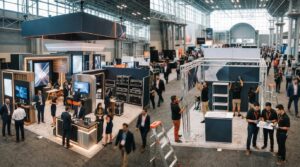
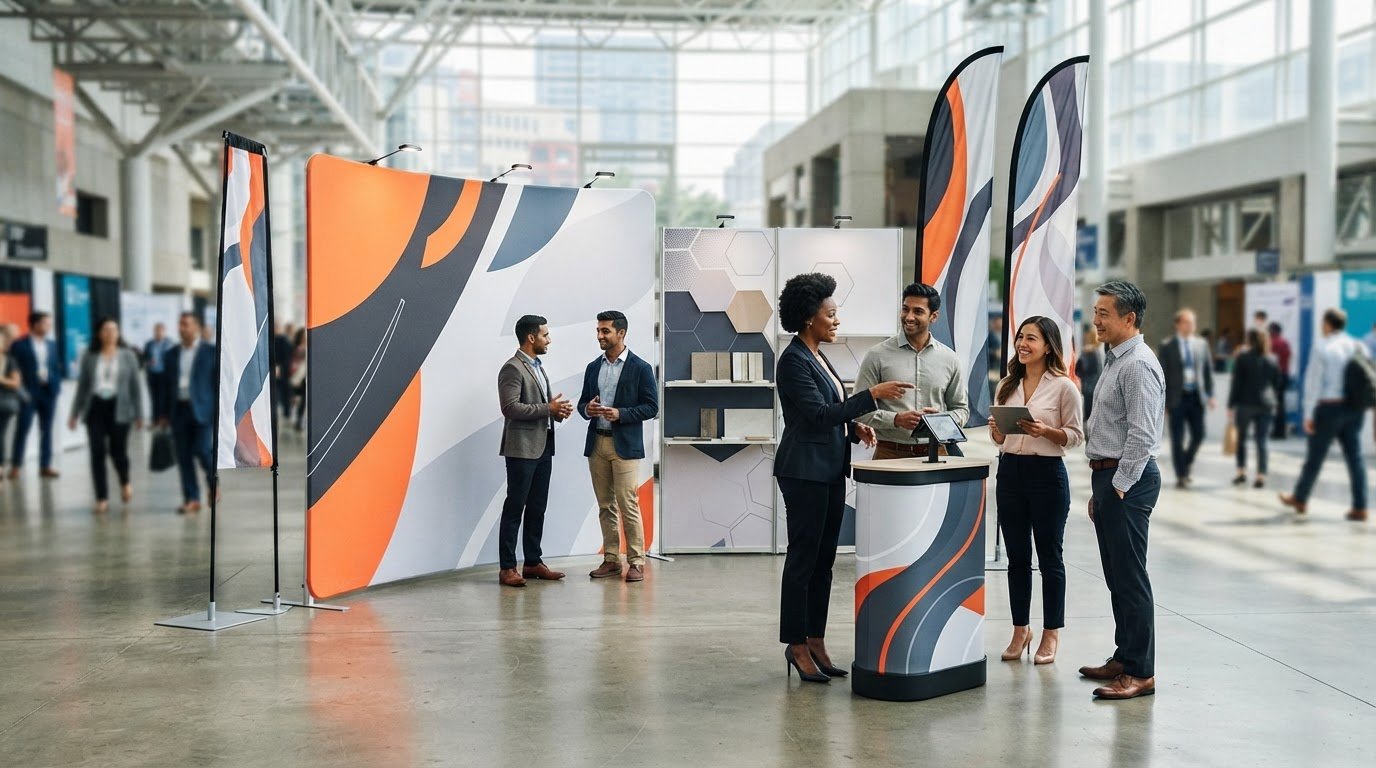
Backwall displays create a broad visual anchor behind a booth, presentation area, or product demonstration. They give conversations a clear branded setting and provide more coverage than one compact vertical panel. A backdrop needs more room than a single banner, so consider the available footprint and how it fits with other booth elements.
Pop-up signs suit situations where you want a visible message in a particular spot, such as near a product area or along an event route. Their role is more focused than a backwall’s: they draw attention to a point rather than define an entire background. Place a sign where it falls within the audience’s natural line of sight so it is easy to notice.
Flags and event tents for visibility beyond the booth
Custom flags can mark an entrance, identify an outdoor event zone, or help visitors spot a brand across an open space. They add height and movement to an environment, but their placement should suit the venue and conditions. For ideas on using flags as part of an outdoor brand presence, explore custom flag banner ideas.
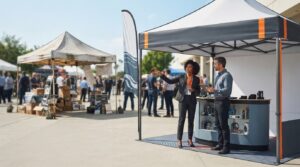
Event tents bring shelter and a recognizable gathering point to outdoor activations, community events, and other open-air settings. A branded tent can help define where visitors should meet or engage. Its larger footprint is useful for establishing a destination, but it calls for more space and planning than a standalone sign.
Inflatables, hanging signs, and table cloths for added presence
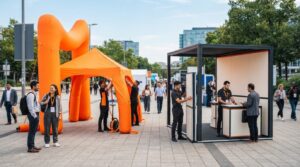
Inflatables introduce scale and dimension, making them a fit for attention-led activations where a distinctive visual landmark supports the experience. Their impact comes with a practical consideration: they need space and thoughtful placement within the event layout.
Hanging signs can identify a booth or event area from overhead, helping visitors orient themselves in a busy indoor venue. They depend on suitable placement and venue conditions, so consider them as part of the space plan rather than as an isolated graphic.
Branded table cloths extend identity across a registration or product table. They won’t replace a backdrop or overhead marker, but they can connect visitor-facing details to the larger display. For a coordinated environment, Zodiac Event Displays designs and fabricates event assets in formats including backwalls, flags, tents, and inflatables. Explore its branded event display work.
Compare banner alternatives by space, visibility, portability, and setting
Use the comparison below to narrow down alternatives to standard pull up banners by the job each format can do. These qualitative descriptions are a starting point, not a guarantee of fit. Venue rules, available space, audience flow, and setup plans all shape what will work in practice.
| Display format | Footprint | Visual coverage | Portability | Typical setting |
|---|---|---|---|---|
| Standard pull-up banner | Compact | Focused, vertical | Easy to move | Indoor; limited outdoor use |
| Backwalls and pop-up signs | Medium to broad | Backdrop or focused point | Moderate | Indoor exhibits and presentations |
| Custom flags | Small ground area | Elevated, directional | Portable | Entrances and outdoor zones |
| Event tents | Broad | High, shelter-scale presence | More planning to transport and set up | Outdoor activations |
| Inflatables | Variable, often prominent | Dimensional focal point | Requires a planned setup | Attention-led events |
| Hanging signs | Minimal floor space | Overhead identification | Venue-dependent | Indoor venues that allow overhead placement |
| Branded table cloths | Uses table space | Close-range, supporting | Easy to carry | Registration and product tables |
Choose by footprint, audience distance, and sightline
A compact point-of-information display can serve people already near your booth, while a broad backdrop helps establish the exhibit visually. An overhead marker serves a different need, helping visitors identify an area from across a venue. Consider how attendees approach, how far away they’ll be, and whether people, furniture, or neighboring displays could block the message.
Before settling on a layout, sketch the exhibit footprint. Mark entrances, tables, presentation areas, and visitor routes. Then note where each display would sit and what it needs to be visible above or around. This quick plan can reveal when a larger graphic would crowd the space or when a small sign would disappear from key sightlines.
Balance portability, setup, and repeat use
Portability means more than whether a display can be moved. Consider how it travels between venues, how many components need handling, and who will assemble it. A compact banner may be straightforward to transport, while a larger backdrop, tent, or inflatable asks for more coordination. Overhead signs also depend on venue arrangements and placement.
If you attend events repeatedly, consider whether the display system and graphics could suit different layouts or be used again. Adaptable components may support changing booth plans, while a consistent visual approach helps separate assets feel like one brand environment. There’s no universal winner. Display suitability depends on the use case and the event context.
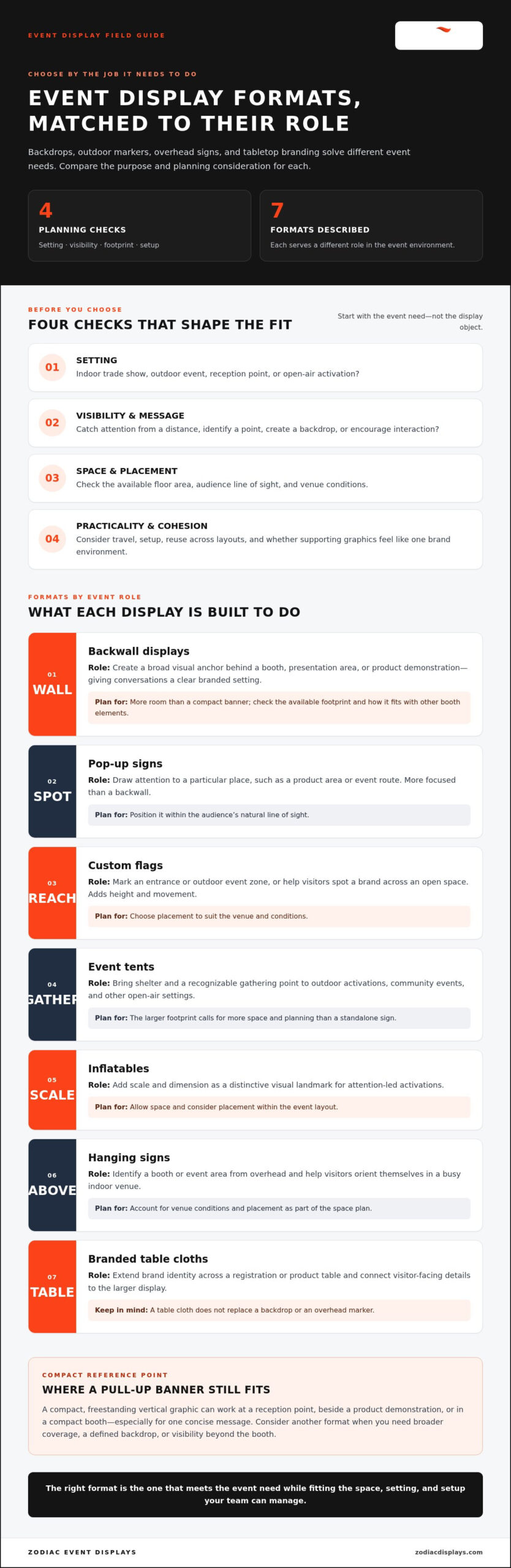
How to choose the right pull-up banner alternative for your event
A stronger display plan doesn’t have to mean a complicated setup. Start with the event’s purpose, choose a primary format that does that job, then add only the supporting pieces that earn their place. This keeps the experience clear for visitors and manageable for your team.
- Define the event task. Decide whether the display should attract attention, identify a space, frame a booth, or support conversations. At a trade show, a backwall might frame a product presentation. At registration, a branded table cloth and a concise sign may be enough to guide arrivals.
- Record the venue conditions. Note whether the event is indoors or outdoors, the usable floor area, how visitors move through the space, and any placement restrictions. An outdoor activation may call for a tent as a gathering point, while an indoor exhibit with limited floor space may benefit from an overhead identifier where the venue permits it.
- Choose a format that fits the objective. Match the display’s role to the audience’s approach and viewing distance. For example, a flag can help mark an outdoor zone, while a backdrop can give a product presentation a defined visual setting. Avoid formats that block visitor paths or compete with the activity they’re meant to support.
- Select one primary visual anchor. Give the space a clear focal point before adding complementary assets. This could be a backwall for a trade show booth, a tent for an outdoor event, or a prominent display near a product demonstration. For broader custom trade show display planning, think through the visitor journey as well as the graphics: where people first notice the brand, where they pause, and where the conversation happens.
- Build the layout and check the logistics. Sketch the footprint with entrances, tables, displays, and visitor routes marked. Establish a message hierarchy, decide where the logo should appear, and keep the visual language consistent across the assets. Then consider transport, storage, setup, and whether the components could suit future event layouts.
These steps help balance impact and practicality. A focused registration setup may need just a few coordinated elements. A larger product presentation can gain presence from a backdrop and a supporting sign without filling every open space. For outdoor events, the tent can serve as the anchor, with flags helping visitors recognize the area from a distance.
The best alternatives to standard pull up banners aren’t automatically the biggest or most elaborate. They’re the formats that make the event objective visible while fitting the venue, audience, and team’s setup needs. A clear focal point, uncluttered messaging, and a simple visitor path can make a display feel purposeful without making it unwieldy.
Explore Zodiac Event Displays’ design and fabrication approach to see how individual assets can become a cohesive event environment.
Create a cohesive event display with Zodiac Event Displays
A memorable event presence is more than a collection of individual signs. The strongest environments give each asset a clear role: one display draws the eye, others help visitors find their way, and supporting details carry the brand through the space. A backwall can anchor a booth, for example, while custom flags identify an outdoor zone and a branded table cloth keeps the registration point visually connected.
Zodiac Event Displays is a Denver-based boutique branding agency with over ten years of experience designing, fabricating, and delivering branded event assets worldwide. Its creative production approach brings formats such as backwalls, flags, event tents, inflatables, and table cloths into a coordinated plan. This helps you move beyond alternatives to standard pull up banners while keeping the visitor experience consistent from first glance to closer conversation.
From display concept to fabricated event assets
Good planning starts with the message and the environment. The team considers how the brand should appear, which format supports the event’s purpose, and where each asset belongs. A trade show backdrop, an outdoor gathering point, and a product presentation each call for a different balance of visibility and supporting graphics. The event display fabrication process connects creative design with fabrication and global delivery, turning a considered concept into branded assets for the event.
A joined-up approach helps prevent the display from looking like separate pieces assembled at the last minute. The focal graphic, logo placement, and supporting assets can work together, whether the plan includes a backwall with table cloths or a tent supported by flags. Each element has a purpose, and the overall presentation feels intentional.
Plan a display system that reflects your brand
To create a useful starting point, outline the event type, its goals, the venue context, and the role you want each display to play. Note what attendees should notice first, where they’ll pause, and which areas need identification or visual support. These details help shape a display system that suits both the brand and the way people experience the space.
Coordinated branded assets can create a consistent visitor experience without asking every element to do the same job. A focal display establishes the scene; supporting graphics reinforce the message and help visitors navigate. Zodiac Event Displays brings more than a decade of experience to creative design, fabrication, and delivery, working across event formats to create a cohesive presence.
Have an event in mind? Start planning your event display with Zodiac Event Displays. Share your goals, venue context, and the impression you want to make.
Make your next event presence your own
The best display choice is the one that helps people understand your brand and feel invited into the experience. As you plan your next event, picture the visitor’s journey: what catches their eye, what helps them find you, and what gives them a reason to pause. That perspective can turn alternatives to standard pull up banners into a more intentional, memorable environment.
Bring your event goal, venue context, and first ideas together, then shape a display plan around the moments that matter. A clear focal point and thoughtful supporting details can make a space feel distinctive without making it feel crowded. Start with the experience you want to create, and let the right branded assets bring it to life.
Explore event display design and fabrication and take the next step toward a presence that feels unmistakably yours.
Frequently Asked Questions
Are pull-up banners outdated for trade shows?
No. Pull-up banners remain useful when you need a concise message in a small area, such as beside a demo station or at a meeting point. Their role may simply change as booth goals evolve. If you need broader coverage or a more distinctive brand environment, alternatives to standard pull up banners can complement the familiar format rather than replace it everywhere. Choose based on what visitors need to notice.
What is the best alternative to a pull-up banner for a small booth?
There isn’t one best choice for every small booth. A pop-up sign can focus attention on a specific product or offer, while a backwall can create a stronger branded background if the layout has room. Consider what must remain accessible, such as a demo surface or space for conversation. A simple floor plan can help you avoid choosing a display that competes with the booth’s main activity.
Can event display alternatives be used outdoors?
Yes, some event display formats are suited to outdoor settings, including custom flags and event tents. The right choice depends on the venue, ground conditions, weather exposure, and any rules for placement. Don’t assume an indoor display will perform the same way outdoors. Plan where each asset will sit and how it will be secured for the setting, while keeping visitor routes clear.
How do I make several event display types look consistent together?
Use a shared visual system across the assets: consistent logo treatment, typography, colors, and image style. Give each piece a distinct job, too. For example, a main graphic can introduce the brand, while a sign highlights a specific message and a table cloth carries the identity to a service point. Review the complete arrangement together so the elements feel connected rather than crowded or repetitive.
Can I reuse the same event display graphics at different events?
Often, yes, if the graphic content suits the display format and the next event’s purpose. Keep core brand elements and evergreen messages in reusable artwork, then handle event-specific details separately where possible. Before reusing a graphic, check that it fits the planned layout and reflects the current campaign. This helps extend its usefulness without carrying outdated dates, offers, or event references into a new setting.
How can I reduce the environmental impact of event displays?
Plan for repeat use before creating the graphics. Favor a core design that can serve different events, and limit time-sensitive copy that could make a display irrelevant after one occasion. Consider modular arrangements that can adapt to different layouts, and store display components carefully between events. Thoughtful planning can also help avoid producing extra pieces that add little to the visitor experience.
 Previous reading