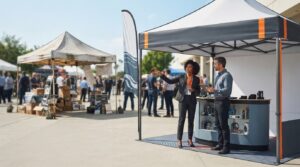



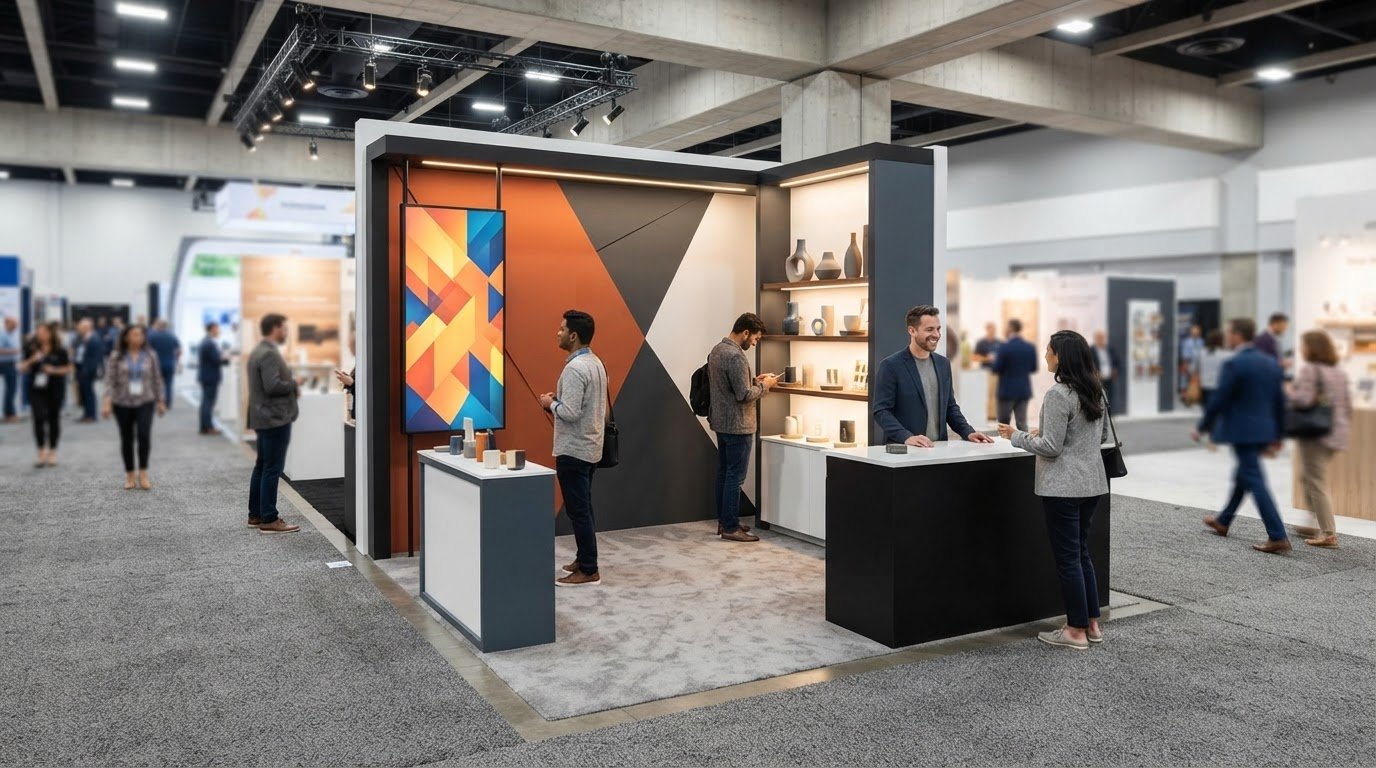
What if a smaller booth could make your brand easier to notice, not harder? The challenge of trade show booth design for small spaces isn’t filling every inch. It’s giving each element a clear purpose. Extra graphics can compete for attention, while a crowded layout makes it harder for visitors to step in and start a conversation.
A compact booth can still feel confident, welcoming, and unmistakably yours. Plan sightlines, brand messaging, and visitor movement together so the space looks polished and works smoothly on the show floor.
In this guide, you’ll learn how to plan around your assigned footprint, build a visual hierarchy around one focused message, and choose displays that support your event goals without obstructing movement. Coordinated backwalls, banners, and table displays can bring the details together. Zodiac Event Displays helps brands plan and create cohesive event presentations, from creative design and fabrication through delivery.
Key Takeaways
- Trade show booth design for small spaces works best when each display has a clear role in the visitor experience.
- Measure the assigned footprint first, then map sightlines and a comfortable visitor path before choosing display placement.
- Use a simple graphic hierarchy to help visitors recognize your brand, understand your value, and spot one next step.
- Review graphics from likely viewing distances to catch messaging that may be hard to read on the show floor.
- Coordinate display selection and graphic design from the initial brief through fabrication and event preparation for a cohesive result.
Trade Show Booth Design for Small Spaces Starts with One Clear Goal
A compact booth has to do more than look polished. Its message, displays, and visitor access must work together within the assigned footprint. The event defines the space and any event-specific restrictions; your design determines how to use that space to tell your brand story.
Small-booth design is the purposeful coordination of brand messaging, displays, and visitor movement within an assigned footprint. The goal isn’t to fit in as many elements as possible. Make the main message visible, give visitors a reason to stop, and leave room for a useful interaction. This is the foundation of the process of developing an exhibit, where the physical environment helps communicate an idea.
What should a small trade show booth accomplish?
Choose one priority before selecting graphics or displays. Are you introducing a product, inviting visitors to discuss a challenge, or launching a brand? Define your audience and the action you want them to take. A product-discovery booth, for example, can make a featured item easy to see, while a lead-focused booth can make starting a conversation feel natural.
Build the visual message around that priority: brand first, one concise value proposition next, then a supporting detail or action. Save lengthy specifications, case studies, and secondary offers for handouts or follow-up. A focused message is easier to scan and gives every display a clear job.
How do you assess the space before designing?
Start with the event’s assigned footprint, included furnishings, and restrictions that affect display placement or height. These set the boundaries for your plan. Within them, map entrances, neighboring booths, likely approach directions, and the sightlines visitors will have as they pass.
Before positioning a backwall, banner stand, or table, mark where staff will stand, where products will be demonstrated, and where supplies need to go. Trace the visitor path from first glance to conversation, including how people enter and leave without getting in one another’s way. Keep circulation accessible and open. A quick floor sketch can reveal pinch points early, while planning displays and graphics together helps the finished booth feel intentional rather than assembled from competing parts.
Plan a Small Trade Show Booth Layout Around Sightlines and Flow
A strong layout lets visitors understand the booth before they step inside. For trade show booth design for small spaces, plan in three dimensions: what people see as they approach, where they can pause, and how they move through the display. A single focal point can anchor the experience, while an open entry makes the booth feel inviting rather than closed off.
Where should the main visual focal point go?
Place your main message where visitors approaching from the aisle can notice and read it. A backwall display can create a clear visual anchor, while a banner stand or hanging sign can help draw attention from a particular direction. Use height with care: displays should strengthen your presence without hiding key graphics or intruding on neighboring exhibits. For layout ideas, Exhibitor Magazine shares six layouts for small booths.
If you’re featuring a product or demonstration, position it where people can see what’s happening without blocking the main message. Leave room for a staff member to explain and for visitors to gather naturally. The focal point should guide attention, not create a bottleneck.
How can a compact booth feel open and welcoming?
Keep the primary approach clear. Instead of arranging displays like a wall across the front, use the footprint to create an open entry and an easy route to the conversation area. Move supplies and less important materials out of the most visible zone so the booth looks intentional from the aisle.
Before finalizing the arrangement, walk through it as both an attendee and a staff member. Can someone pause at a display while another visitor enters? Can staff greet people without standing in the main path? Small adjustments to a table, banner stand, or product position can make the experience feel more relaxed.
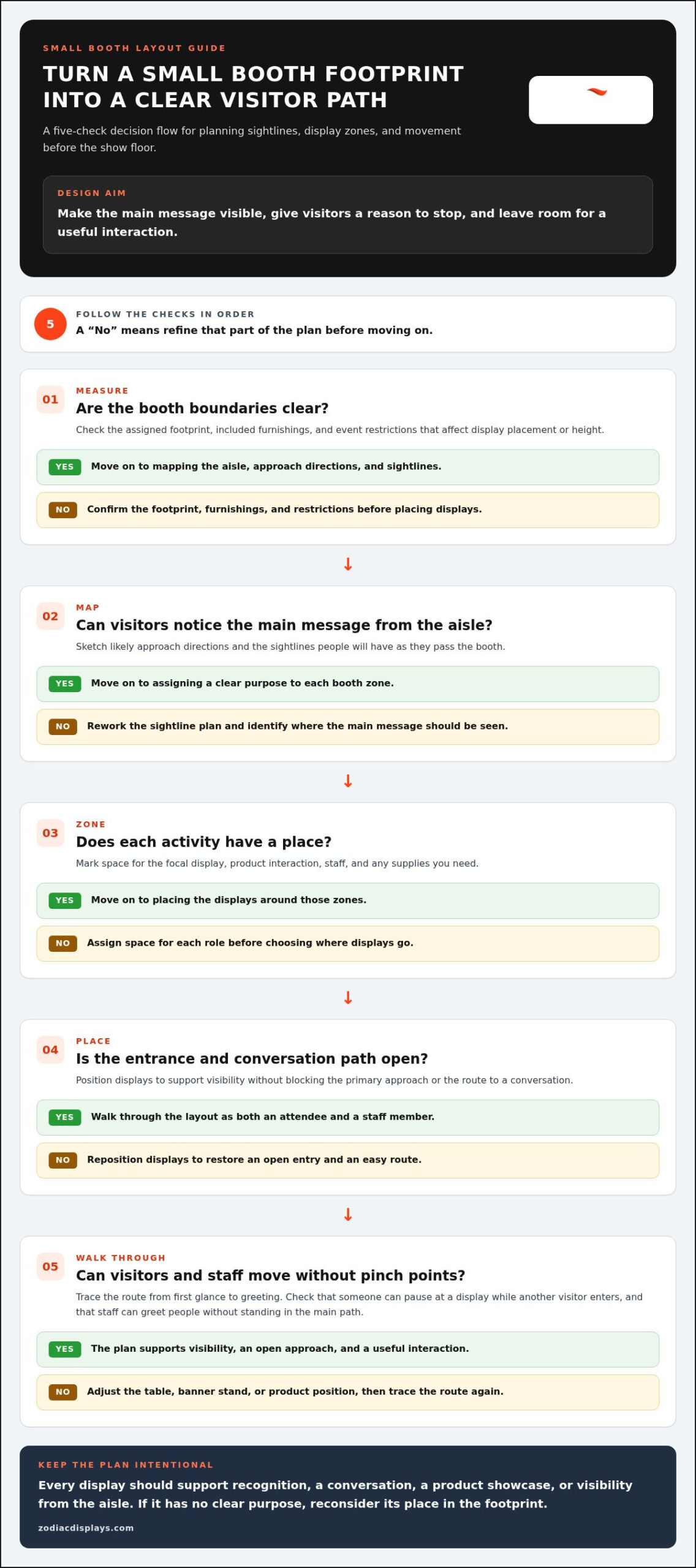
Use this sequence to turn the footprint into a working plan:
- Measure: Mark the assigned footprint and note event restrictions or included furnishings.
- Map: Sketch the aisle, likely approach directions, and sightlines toward the main message.
- Zone: Assign space for the focal display, product interaction, staff, and any needed supplies.
- Place: Position displays to support visibility while keeping the entrance and conversation path open.
- Walk through: Trace a visitor’s route from first glance to greeting, then adjust any pinch points.
An annotated floor plan makes the decisions easier to review. Mark sightlines with arrows, label each display zone, and draw the visitor path. As you refine the plan, explore coordinated event display options that can bring the layout and brand presentation together.
Choose Trade Show Displays for Small Spaces by Function, Not Quantity
A compact booth doesn’t need every display format. It needs the right combination for the product, event goal, and footprint. When planning trade show booth design for small spaces, ask what each element contributes: Does it make the brand easier to recognize, support a conversation, showcase a product, or improve visibility from the aisle? If it has no clear purpose, it may take up attention or room better used elsewhere.
| Display type | Primary role | Visibility | Space considerations |
|---|---|---|---|
| Backwall display | Anchors the booth’s main brand message | Creates a broad, prominent backdrop | Uses a booth edge; keep key graphics visible and the entry open |
| Banner stand | Adds a focused secondary message | Can be noticed from an approach aisle | Place only where it won’t narrow the visitor path |
| Table cloth | Brings branding to a useful table | Keeps the brand visible at conversation level | Include a table only if it supports samples, product discovery, or discussion |
| Hanging sign | Helps identify the booth from farther away | May be visible above nearby displays | Depends on venue rules and booth configuration; it doesn’t replace clear messaging at visitor level |
When does a backwall or banner stand make sense?
A backwall display can anchor the presentation, carrying the brand and primary message on one strong visual plane. A banner stand can add a supporting point, such as a product feature or a simple next step, if there’s room to position it without obstructing entry. Keep the hierarchy clear: one lead message should command attention instead of competing with several signs.
Which supporting elements deserve limited floor space?
A branded table cloth makes sense when the table has a defined job, such as presenting samples or giving visitors a place to talk with staff. An overhead hanging sign can extend visibility when the venue and booth setup support it. Protect space for demonstrations and visitor interaction first; supporting displays should enhance those moments, not crowd them.
Use the event goal and floor plan to choose a purposeful set, not a preset bundle. A product demonstration may need an open display zone and a single backdrop, while a conversation-led booth may benefit from a table with a branded cloth. Review how the pieces work together in scale, message, and placement. For broader context on custom trade show display planning, consider how each format can contribute to one unified exhibit.
Make Small Booth Graphics Easier to Read and Remember
In a compact booth, graphics have to communicate quickly. Give each message a place in a simple hierarchy: brand, concise value proposition, then one supporting detail or action. This guides the visitor’s eye from recognition to understanding without asking them to decipher competing blocks of text.
Compact booth graphics need one clear primary message, supported by only the details visitors need to take the next step. Use contrast to make that message stand out and whitespace to give it room to register. Consistent logos, colors, and typography connect the pieces, while a crowded layout can make even strong content harder to absorb.
How much text should a small booth display use?
Use short phrases that someone passing the booth can grasp at a glance. A clear headline and brief value statement can introduce what you offer; detailed specifications and longer explanations are better handled in conversation or follow-up materials. Keep the call to action distinct from product descriptions so visitors can tell what you’re presenting and what to do next.
Before finalizing artwork, review it from the distances visitors are likely to see it. Check the main message from the aisle, then inspect supporting information closer to the display. If the headline is hard to catch at a glance or smaller copy draws attention first, simplify and adjust the hierarchy. Reviewing a printed or scaled layout in context can reveal crowded areas and awkward line breaks.
How can a booth feel coordinated across multiple displays?
Repeat core brand colors, typography, and visual assets across the formats you’ve selected, such as a backwall display, banner stand, or table cloth. Give each piece a distinct role: the backwall can establish the main message, while another display highlights a product or offers a clear next step. Consistency should connect the story, not make every surface repeat identical copy.
As you develop the graphics, review them alongside the selected displays so the message, scale, and visual treatment feel like one system. That coordination is central to effective trade show booth design for small spaces: every element earns its place by making the brand easier to recognize and understand.
Explore custom trade show display options to shape a cohesive visual presentation for your booth.
Bring Your Small-Space Booth Design from Concept to Show Floor
A compact booth comes together when practical needs shape the creative work from the start. Treat display selection, layout, and graphics as one coordinated system: the message should fit the space, each display should have a purpose, and the visitor experience should carry through to fabrication and event preparation. That alignment is central to effective trade show booth design for small spaces.
What should an effective small-booth design brief include?
Give the design process a clear foundation. Record the event goal, intended audience, assigned footprint, brand assets, and the primary action you want visitors to take. Add product-display needs, staffing plans, storage considerations, and setup requirements so the creative direction reflects how the booth must work, not just how it should look.
Share practical constraints early, including event layout requirements and any furnishings or restrictions that affect the plan. These details connect the concept to the actual space and help prevent graphics or displays from working against the intended experience.
How does coordinated design support a polished result?
Once the brief and footprint plan are aligned, the design can connect the layout, display formats, and artwork. A backwall, banner stand, or table cloth should feel like part of the same visual story while serving a distinct function. Reviewing graphics alongside the planned displays lets the team consider message hierarchy and placement before fabrication begins.
Zodiac Event Displays brings more than ten years of event-display experience, with creative design, fabrication, and global delivery managed by the team. This integrated approach connects the concept to the finished presentation. Explore event display design and fabrication to see how coordinated planning can support a cohesive booth.
From brief to event preparation, a practical sequence keeps the project focused:
- Brief: Define the audience, goal, brand assets, and visitor action.
- Plan: Map the footprint, display zones, staffing, and movement.
- Design: Develop the layout and graphics as one system.
- Review: Check artwork for clear messaging and fit with the selected displays.
- Fabricate and prepare: Bring the approved design to life and organize what’s needed for the event.
Ready to turn your compact-booth plan into a cohesive presentation? Start planning your booth design.
Make Your Small Booth Feel Remarkably Complete
Strong trade show booth design for small spaces starts with a clear goal, then turns it into an open, easy-to-understand visitor experience. Protect sightlines and movement, choose displays for a specific purpose, and focus graphics on one primary message. A thoughtful combination makes a stronger impression than filling every available inch.
Bringing those choices together takes creative vision and practical coordination. Zodiac Event Displays has more than ten years of industry experience, with design, fabrication, and global delivery managed by the team. Custom trade show displays, backwalls, banner stands, table cloths, and other event-display formats can be coordinated around your footprint and brand story.
Your space may be compact, but your presentation can still feel polished, welcoming, and unmistakably yours. Plan a trade show booth that makes every inch count and take the next step toward a booth that works beautifully on the show floor.
Frequently Asked Questions
How do you design a trade show booth for a small space?
Start by defining what the booth should accomplish, then plan the layout and displays around that goal. For trade show booth design for small spaces, measure the assigned footprint, note event restrictions, and map visitor approaches, staff positions, and product interactions. Choose one primary message and a few purposeful display elements. Walk through the visitor route on your plan before finalizing to spot blocked sightlines or cramped areas.
What should you include in a small trade show booth?
Include the essentials for your event goal: a clear brand message, a display that makes it visible, and room for visitors to engage. A backwall can anchor the presentation; a banner stand or branded table cloth may help when it serves a specific purpose. Add products or samples that support discovery or conversation. Don’t assume every format belongs in the booth, especially if it limits movement.
How can a small booth stand out at a trade show?
Make the booth easy to recognize and understand from the aisle. Use a prominent brand identity, a concise value proposition, and a focal display that draws attention without blocking the entrance. Strong contrast and uncluttered graphics help the message register quickly. Give visitors a reason to pause, such as a visible product demonstration or an inviting conversation area, rather than relying on extra signs to compete for attention.
Are banner stands a good choice for small trade show booths?
Yes, a banner stand can work well when it adds a focused message and fits naturally into the layout. Use it to highlight a product feature, campaign, or next step that supports the booth’s primary message. Position it where visitors approaching from the aisle can see it without narrowing the entry or interrupting movement. If it repeats existing information or creates an obstacle, leave it out.
How do you make a small trade show booth look professional?
Create a cohesive presentation by coordinating graphics, colors, typography, and display choices. Keep the message hierarchy clear, align artwork with each display’s purpose, and leave enough open space for visitors to enter and talk with staff. Review the layout and graphics together before production. A polished booth feels considered from every angle, with no display, message, or piece of equipment competing needlessly for attention.
What is the best layout for a small trade show booth?
The best layout supports your goal while keeping the approach open and the main message visible. Place a focal display where approaching visitors can notice it, then arrange products, demonstrations, and staff positions so conversations can happen without blocking the path. Sketch the footprint and mark sightlines and visitor movement. Walk through the plan from the aisle before settling on display placement.
How do you choose graphics for a compact trade show booth?
Choose graphics that communicate in a clear order: brand, concise value proposition, then one supporting detail or action. Keep aisle-facing text short, and move detailed specifications into conversations or follow-up materials. Use contrast and whitespace to make the key message stand out, while repeating consistent brand elements across selected displays. Review the artwork from likely visitor viewing distances to check what’s readable at a glance and up close.

 Previous reading