


Picture the scene. You’ve traveled across the country for your biggest show of the year, but as you pull your backwall display from its case, you’re met with a musty odor and a jagged tear in the fabric. It’s a high-stakes moment that quickly turns into a frantic, expensive scramble for venue repairs. This isn’t just a logistical failure; it’s a blow to your brand’s visual excellence. To prevent these preventable disasters, you need more than a quick wipe-down. You need a comprehensive trade show display maintenance checklist that treats your exhibits as the strategic assets they truly are.
We understand that your event tents and banner stands are the face of your company. You want them to project confidence and quality every time they hit the floor. We’ve built this guide to help you master the art of brand stewardship, ensuring your displays look brand new for five years or more. By following our professional-grade routine, you’ll eliminate the stress of broken hardware and wrinkled graphics while significantly reducing your long-term replacement costs. We’re diving into a repeatable system for fabric preservation, hardware precision, and smart storage that guarantees a flawless presentation at every single event.
Key Takeaways
- Transform your booth from a recurring expense into a long-term asset by adopting a routine that keeps your exhibits looking pristine for over five years.
- Learn why the “strike” phase is the most critical window for identifying hardware damage and preventing costly emergency repairs at your next venue.
- Master the professional-grade trade show display maintenance checklist to properly clean dye-sublimation fabrics and maintain the internal components of custom inflatables.
- Shield your investment from “hidden killers” like humidity and temperature shifts by utilizing strategic crating and climate-controlled storage solutions.
- Conduct quarterly brand audits to ensure your graphics and integrated technology remain as vibrant and relevant as your evolving business goals.
Strategic Preservation: Why Display Maintenance is Your Best Marketing Move
Trade show display maintenance is far more than a janitorial chore; it’s a strategic act of brand stewardship. When you view your backwall displays and event tents as high-value assets rather than disposable equipment, you shift your mindset from simple cleaning to long-term preservation. This proactive approach ensures that your primary marketing tools are always ready for the spotlight. By implementing a professional trade show display maintenance checklist, you protect the visual capital you’ve invested in your brand’s physical presence.
The psychology of the trade show floor is brutal and fast. Attendees make split-second judgments based on the visual integrity of your booth. A crisp, vibrant fabric graphic builds instant trust, while a faded or stained display suggests a brand that has stopped caring about the small details. Neglect carries a heavy price tag, often manifesting as shipping damage discovered too late or the high cost of emergency on-site fabrication. These avoidable crises drain your budget and distract your team from their primary goal: capturing leads and building relationships.
The ROI of a Flawless Presentation
Visual excellence directly correlates with lead conversion. In a crowded hall where dozens of brands compete for attention, a sharp, professional presentation acts as a silent closer. It creates a competitive advantage that draws visitors in and makes your sales team’s job easier. Display maintenance is the foundational pillar of brand equity that ensures every physical touchpoint reflects the premium quality of your services. When your booth looks brand new after five years of heavy use, you aren’t just saving money; you’re maintaining a high-performance marketing machine that continues to deliver value.
Sustainable Success Through Longevity
Sustainability is a core value for modern brands, and the most eco-friendly display is the one you don’t have to replace. Regular care extends the lifecycle of heavy-duty aluminum extrusions and premium tension fabrics, keeping them out of landfills and in the field. By reducing the need for frequent replacements, you lower the carbon footprint of your event marketing through meaningful reuse. You can explore more about this in our Eco-Friendly Trade Show Displays guide. Integrating a trade show display maintenance checklist into your post-show workflow proves that your commitment to quality and the environment is more than just a slogan; it’s a measurable, professional practice.
The Post-Show Protocol: Catching Issues Before They Hibernate
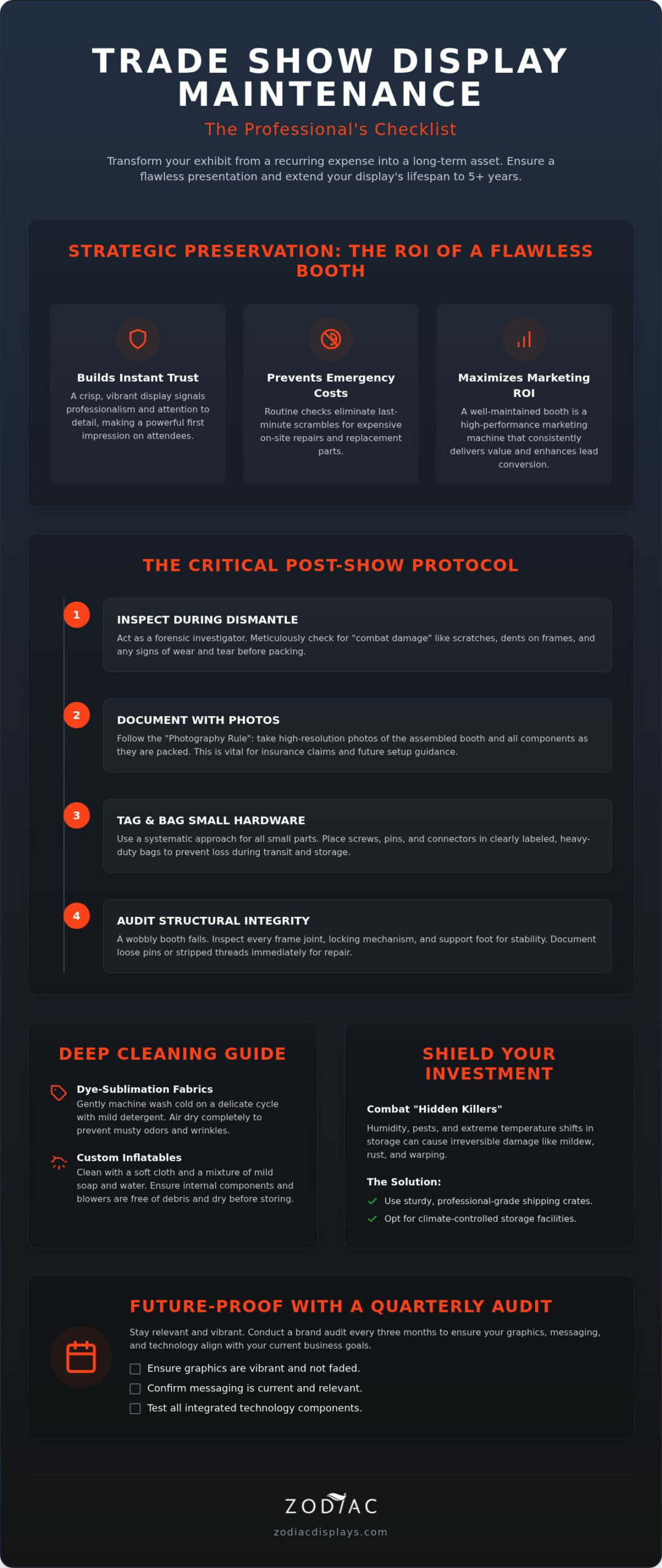
The window of time between the final “thank you” to an attendee and the closing of the shipping crate is your most valuable opportunity for asset protection. This “strike” phase is where a professional trade show display maintenance checklist truly begins. Instead of rushing to the airport, your team must act as forensic investigators, identifying “combat damage” that occurs during the high-pressure environment of the show floor. Scratches on aluminum frames, minor dents, or the inevitable missing hardware components are much easier to resolve now than 48 hours before your next event.
Documentation is your best defense. Before any component hits the crate, follow the photography rule: take high-resolution photos of the booth in its assembled state and as it is being packed. These images serve as vital evidence for insurance claims if shipping damage occurs and provide a visual guide for the next setup team. To stay organized, adopt a “tag and bag” system. Small screws, pins, and connectors should be placed in clearly labeled, heavy-duty bags. If you find yourself missing essential parts, it’s a perfect time to reach out for replacement hardware before the item goes into storage.
The Structural Integrity Audit
A booth that wobbles is a booth that fails. During dismantle, inspect every frame joint, locking mechanism, and support foot for stability. Portable trade show displays often suffer from bent aluminum or stripped threads after multiple uses. If a locking pin feels loose or a support foot doesn’t sit flush, document it immediately. Integrating these steps into your trade show display maintenance checklist ensures your hardware remains as resilient as your brand’s reputation. Creating a dedicated “needs repair” log ensures that your fabrication team or vendor can address structural issues while the display “hibernates” in storage.
The Graphic Health Check
Your fabric backwalls are the canvas of your brand, and they require specialized attention. Check for tension loss or edge fraying along the silicone edge graphics (SEG) or zipper lines. Spotting stains, whether from spilled coffee or greasy fingerprints, while they are fresh increases the chance of successful removal. When packing, avoid the temptation to stuff fabrics into bags. Use proper folding techniques to prevent permanent creasing in dye-sub graphics. Rolling graphics or folding them along original seams preserves the crisp, high-impact look that defines a professional presentation.
The Deep Clean: Specialized Care for Soft Signage and Inflatables
Visual impact relies on the vibrancy and precision of your soft signage. While rigid panels are easy to wipe down, tension fabrics and bespoke inflatables require a more nuanced touch to maintain their premium feel. Incorporating specialized cleaning into your trade show display maintenance checklist preserves the “out-of-the-box” glow that attracts high-value leads. When you treat your fabrics and skins with professional care, you’re not just cleaning; you’re protecting the strategic investment you’ve made in your brand’s visibility.
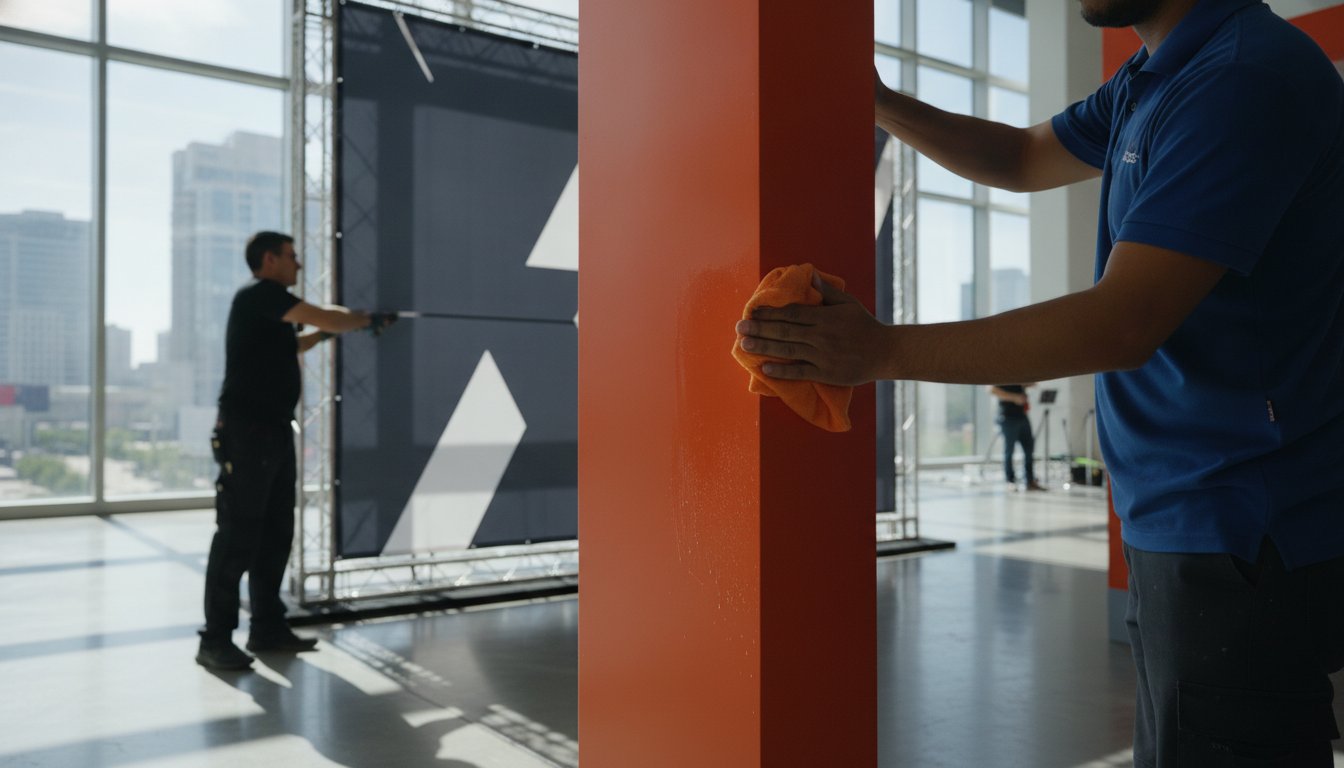
Dye-sublimated graphics are remarkably resilient, but they aren’t invincible. For minor wrinkles or surface dust, a handheld steamer is your best friend on the show floor. It relaxes the fibers without the risk of scorching. For deep-seated grime or floor scuffs, machine washing is the most effective route. Don’t ignore the “skeleton” of your booth either. Aluminum hardware attracts oils and dust that can eventually transfer to your graphics. Use a soft microfiber cloth and a gentle, non-abrasive cleaner to remove fingerprints. Avoid steel wool or harsh chemicals that can strip the anodized finish or leave permanent scratches on your frame.
Mastering Tension Fabric and Flags
When machine washing your polyester graphics, use a cold, gentle cycle with a mild, bleach-free detergent. Temperature control is non-negotiable. High heat is the primary enemy of your brand colors, as it can cause synthetic fibers to shrink or the ink to migrate. Air drying is always the safest path to maintain the graphic’s original dimensions. Proper drying protocols are essential to prevent mold and mildew, especially for custom flag banners that may have been exposed to outdoor humidity or rain before being packed away for the season.
Inflatable and Tent Maintenance
Custom inflatables, from towering arches to detailed product replicas, need a gentle “skin” cleaning with a damp cloth to remove surface pollutants. While you’re at it, check the internal blowers for dust buildup. Clogged intakes can cause overheating and motor failure during a live event. For your event tents, inspect the heavy-duty canopy for any thinning areas in the UV-resistant coating or water-repellent finish. Fabric integrity is the foundation of visual impact. Ensure tent leg sliders and push-button connectors operate smoothly by using a dry silicone spray. Avoid oil-based lubricants, as they attract more dirt and can stain your fabric during the next setup.
Storage and Logistics: Protecting Your Investment from the Elements
Storage isn’t a passive state; it’s a strategic phase of your trade show display maintenance checklist. While your booth is away from the spotlight, it’s vulnerable to environmental factors that can degrade its quality faster than a week on the show floor. Humidity, temperature fluctuations, and pests are the silent killers of brand assets. Moisture trapped in a shipping crate can lead to fabric rot or mildew, while extreme heat can cause adhesives to fail and plastics to warp. Treating storage as an extension of your maintenance routine ensures your exhibits are always ready for deployment.
Smart crating is your primary defense against the physical rigors of global transit. Metal-on-metal friction is a leading cause of “road rash” on aluminum frames, which is why padded dividers are essential. Whenever possible, utilize the original packaging designed specifically for your portable trade show displays. These custom-molded cases provide the precise fit required to eliminate shifting during international shipping. Digital inventory management adds another layer of security, allowing you to track the location and condition of every crate across complex logistics routes.
Climate-Controlled vs. Standard Storage
Soft signage and tension fabrics require a dry, cool environment to maintain their structural integrity. Standard warehouses often lack the climate regulation needed to prevent fabric fibers from breaking down or colors from fading due to heat-induced chemical reactions. Choosing a storage partner that understands the nuances of event display fabrication is a vital marketing move. These specialists ensure your assets are kept in optimal conditions, preventing the musty odors and brittle graphics that often plague poorly stored equipment.
Shipping Preparation for Global Delivery
International transit demands a higher standard of preparation. Secure your crates with heavy-duty straps to prevent internal shifting that causes scratches and dents. Establish clear labeling protocols so your setup team can identify contents at a glance, speeding up the installation process. Every crate should include a kit of “Essential Spares,” such as extra screws, touch-up paint, and high-quality tape. This small addition to your trade show display maintenance checklist can be the difference between a minor hiccup and a booth failure. If you want to ensure your next exhibit is built for the long haul, explore our heavy-duty display solutions today.
The Quarterly Audit: Future-Proofing Your Brand Presence
A quarterly audit is the final, visionary step in your trade show display maintenance checklist. It’s the moment where you transition from simple preservation to strategic evolution. While the post-show protocol catches immediate damage, the quarterly review asks if your assets still align with your trajectory for 2026 and beyond. This is your chance to standardize hardware across your inventory, replacing aging connectors with heavy-duty upgrades that offer better endurance and faster assembly. By evaluating your booth components every 90 days, you ensure that no part of your presentation is left behind as your brand’s scale and sophistication grow.
Planning for the next show begins long before the shipping labels are printed. Use this audit to bridge the gap between maintenance and new design by identifying which elements need a professional touch-up. Standardizing your hardware doesn’t just improve reliability; it creates a modular system that makes future booth expansions seamless. When your equipment is in peak condition, your team can focus on the excitement of professional growth rather than the anxiety of technical failures.
Maintaining Backlit and Integrated Displays
High-impact lighting is a hallmark of modern exhibits, but it requires technical oversight to remain effective. During your audit, test all LED strips for “dead spots” or subtle color shifting that can occur over time. Inconsistent lighting ruins the professional glow of a premium backwall. Perform a thorough cable management sweep, checking for frayed wires or loose connectors that could pose a safety risk or cause on-site failure. Don’t forget to inspect integrated screen mounts for structural stability and dust the internal components of your lightboxes. Even a thin layer of debris can significantly reduce the luminosity and visual precision of your graphics.
Refreshing Your Visual Narrative
Even the most durable fabrics eventually lose their vibrancy factor after heavy use. Use your audit to objectively assess whether your brand colors still pop or if environmental exposure has dulled the impact of your prints. If your messaging has shifted, you don’t always need to replace the entire custom trade show booth. Often, a simple graphic refresh can breathe new life into your existing frames. This is also the ideal time to Contact Zodiac for a professional hardware audit or to order new prints that reflect your latest marketing goals. Integrating these strategic reviews into your trade show display maintenance checklist keeps your presentation flawless and your brand ahead of the competition year after year.
Securing Your Visual Legacy on the Global Stage
Your exhibit is more than a collection of aluminum and fabric; it’s a dynamic representation of your professional growth. By committing to a comprehensive trade show display maintenance checklist, you’ve moved beyond reactive repairs and stepped into the role of a visionary brand steward. You now have the tools to catch structural damage during the strike phase, preserve the vibrancy of your soft signage through specialized deep cleaning, and future-proof your tech-integrated displays with quarterly audits. These habits ensure that every first impression you make is as sharp and impactful as your very first show.
As a boutique Denver-based agency with over 10 years of industry experience, we understand the endurance required for long-term success. Whether you’re managing complex logistics or seeking a graphic refresh, our team provides global delivery capabilities for high-impact branded assets. Ready to elevate your event presence? Contact Zodiac Event Displays for a custom design consultation. We’re here to act as an extension of your creative team, helping you build a presentation you can take pride in for years to come.
Frequently Asked Questions
How often should I clean my trade show display graphics?
You should perform a basic inspection and spot cleaning after every event to ensure your brand’s visual integrity. A deep clean is recommended annually or if you notice significant floor grime or beverage spills. Integrating these steps into your trade show display maintenance checklist prevents stains from setting permanently. Regular care preserves the high-impact vibrancy of your soft signage, ensuring your presentation looks brand new for years of professional growth.
Can I wash my tension fabric graphics in a standard washing machine?
Most dye-sublimated polyester graphics are compatible with standard washing machines using a cold, gentle cycle. Avoid harsh detergents and never use bleach, as these chemicals can strip the precision of your brand colors. To maintain the structural integrity of the fabric, always air dry your graphics. High heat in a dryer can cause synthetic fibers to shrink, making it difficult to achieve the perfect tension required for your backwall frames.
What is the best way to remove wrinkles from a fabric backwall?
The most effective way to eliminate wrinkles is using a handheld steamer while the fabric is fully tensioned on its frame. This allows the fibers to relax and smooth out naturally without the risk of scorching. Avoid using a traditional iron directly on the printed surface, as the high heat can damage the synthetic fibers or cause ink migration. A quick steam during setup ensures your booth projects a polished, professional image.
How do I store a custom inflatable display to prevent damage?
Ensure the inflatable is completely clean and dry before packing to prevent mold and musty odors. Roll the material loosely rather than folding it tightly to avoid permanent creases in the “skin.” Store the unit in a climate-controlled environment away from pests and extreme temperature shifts. This level of stewardship protects the internal blowers and airtight seals, ensuring your bespoke inflatables remain high-impact assets for every strategic event.
What should be included in a trade show emergency repair kit?
Your kit should be a comprehensive toolkit for on-site resilience. Include essential hardware like spare screws, pins, and hex keys, alongside a handheld steamer for fabric care. Add microfiber cloths, gentle cleaning solution, and fabric-safe adhesive tape for minor repairs. Having these items ready as part of your trade show display maintenance checklist allows your team to handle “combat damage” with confidence, ensuring your presentation remains flawless despite the rigors of the show floor.
How long does a high-quality trade show display typically last with proper maintenance?
A professional-grade display featuring heavy-duty aluminum hardware can easily last five years or more when you follow a dedicated maintenance routine. While graphics may need refreshing every two to three years to reflect evolving brand goals, the core structural components are built for long-term endurance. Investing in quality materials and proactive care significantly reduces your replacement costs, allowing you to focus your budget on strategic growth and new creative designs.
Is it better to steam or iron fabric event signage?
Steaming is the superior choice for tension fabric and flags because it provides a gentle, effective way to release wrinkles without direct heat contact. Ironing poses a significant risk of scorching or melting the polyester fibers used in high-end soft signage. A professional steamer allows you to refresh your graphics quickly during the setup phase, maintaining the vibrant, crisp look that builds instant trust with your audience on the trade show floor.
What is the most common cause of damage to trade show exhibits during shipping?
The primary culprit of exhibit damage is internal shifting and metal-on-metal friction during transit. When components aren’t secured properly, aluminum frames can suffer from “road rash” and graphics can be punctured by loose hardware. Using original custom-molded cases and padded dividers is your best defense against these logistical hazards. Proper crating protocols ensure your high-value assets arrive at the venue in the same pristine condition they left the warehouse.

 Previous reading