


What if your 2026 trade show booth wasn’t just a line item on a spreadsheet, but a high-performance engine for your sales pipeline? We understand the tension of staring at a shrinking marketing budget while being asked to deliver more vibrant, high-impact results than ever. It’s a difficult gap to bridge, especially when you’re searching for the specific questions to ask a trade show display company to ensure your vision survives the executive chopping block. You deserve a presence that reflects your brand’s prestige, rather than a generic setup that fails to capture the 81% of attendees who arrive with buying authority.
It’s true that leadership often views events as a discretionary expense rather than a vital revenue driver, but we’re here to change that narrative together. This guide provides the strategic framework you need to transform your 2026 proposal into a compelling business case that executives simply cannot refuse. We will explore how to quantify brand impact, leverage durable fabric architecture for long-term value, and select a partner who treats your visibility as their primary mission. You’re about to gain the tools to secure a signed-off budget for premium displays that command attention and drive measurable growth.
Key Takeaways
- Reframe your trade show presence as a high-performance business asset that generates measurable revenue rather than a simple marketing cost.
- Identify the critical questions to ask a trade show display company to find a partner capable of translating your vision into a premium, professional reality.
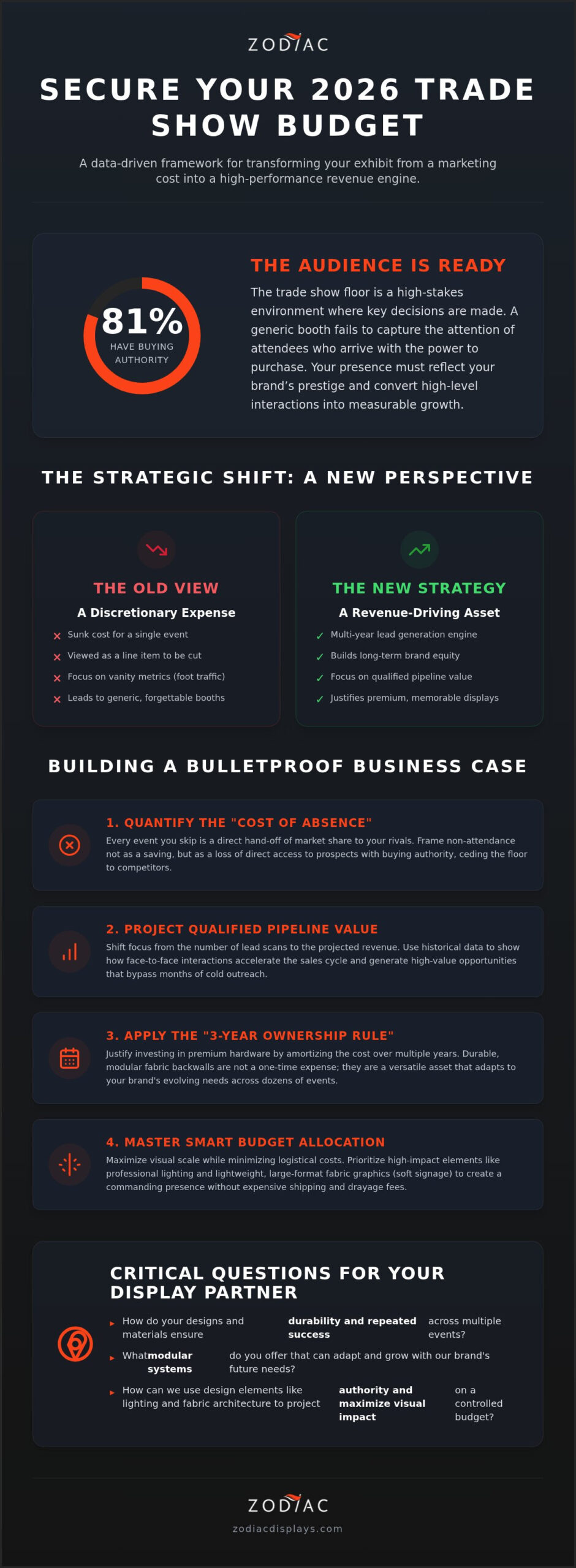
- Build a bulletproof business case using data points like the “Cost of Absence” and projected pipeline value to secure immediate executive buy-in.
- Apply the “3-Year Ownership Rule” to justify investing in durable, modular fabric backwalls that grow alongside your brand’s evolving needs.
- Master smart budget allocation by prioritizing high-impact elements like lighting and soft signage to minimize logistical costs while maximizing visual scale.
The Strategic Shift: Reframing Your Exhibit from Expense to Revenue Driver
The traditional view of trade shows often traps marketing managers in a cycle of defensive budgeting. You aren’t just buying hardware; you’re acquiring a multi-year lead generation engine. In 2026, the distinction between a marketing expense and a business asset is the difference between a booth that ends up in a dumpster and one that builds long-term brand equity. When you begin evaluating your strategy, the first questions to ask a trade show display company should focus on how their designs facilitate durable, repeatable success across multiple events. A visionary partner understands that your exhibit is a silent salesperson that never sleeps, working to project authority and precision from the moment the doors open.
Traditional budgeting often fails because it treats the exhibit as a sunk cost for a single weekend. This narrow perspective ignores the cumulative impact of brand visibility and the physical trust built through face-to-face interaction. High-impact presence is no longer an optional luxury; it’s a competitive necessity on a floor where 92% of attendees are looking for the next big innovation. By investing in high-quality fabric backwalls and modular systems, you’re securing a versatile platform that adapts to your growing needs, ensuring your brand remains vibrant and relevant for years to come.
Why Executives Say No: Identifying the Approval Bottlenecks
Approval bottlenecks usually stem from a lack of historical data or a perceived lack of accountability. CFOs frequently exhibit a digital bias, preferring the granular, immediate tracking of social media or search ads over the perceived ambiguity of an event. A generic, uninspired booth reinforces this bias by failing to stand out, appearing as a wasted opportunity rather than a strategic investment. To break through this resistance, you must position your exhibit as a high-performance environment designed for conversion. When you have the right questions to ask a trade show display company, you can extract the design intelligence needed to prove your booth is engineered for engagement, not just aesthetics.
The ROI of Being There: More Than Just Lead Scans
Lead scans only tell half the story of your success. The true value of a physical presence lies in brand sentiment and the significant acceleration of the sales cycle through direct networking. Since 81% of trade show attendees have buying authority, every interaction in your booth is a high-level touchpoint that bypasses weeks of cold calling. A sophisticated exhibit creates a sensory experience that anchors your brand in the minds of your most valuable prospects. Trade show ROI is the measured sum of direct pipeline revenue and the long-term brand lift generated through immersive physical engagement and established professional trust.
Building the Business Case: Data Points Every Executive Needs to See
Winning the budget battle requires moving beyond vanity metrics like booth visitors or social media mentions. Executives prioritize data that demonstrates market share protection and revenue growth. One of the most persuasive arguments you can present is the Cost of Absence. While your team remains on the sidelines, your primary competitors are shaking hands with your top prospects. If 81% of trade show attendees have buying authority, every event you skip is a direct hand-off of market share to your rivals. When formulating the questions to ask a trade show display company, inquire about how they can help you visualize this competitive displacement through bold, authoritative design that commands the floor.
Projecting lead value is equally critical. Instead of focusing on the total number of leads, shift the conversation toward qualified pipeline value. Use your historical data from 2024 and 2025 to predict how a premium presence will perform in 2026. A well-executed exhibit creates a great return on investment (ROI) by compressing the sales cycle. The physical trust established in a booth often takes months to replicate through digital outreach or cold calling.
Calculating Estimated Cost Per Lead (CPL) vs. Digital Channels
To provide a clear comparison, use a simple formula: divide your total show investment by the number of sales-qualified leads. While digital channels like LinkedIn or Google Ads offer high trackability, they often suffer from lower intent and higher noise. In-person leads are pre-qualified by their presence at the event. High-impact graphics and backwall displays reduce your cost per impression over time because these assets are reusable across multiple years. By investing in quality hardware now, you are effectively lowering your long-term acquisition costs.
The Strategic Advantage of Competitive Benchmarking
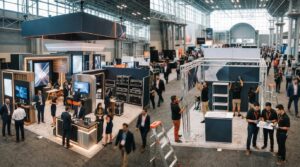
Executives respond to visual evidence of a “Brand Gap.” If your competitors are utilizing double-deck exhibits or custom inflatables while you rely on generic pop-up signs, the perceived authority of your brand suffers. Use photos of competitor booths to justify a budget that matches your industry standing. For inspiration on how to close this gap, explore this strategic guide to high-impact exhibits in 2026. Seeing the potential for a superior presentation helps leadership understand that a custom exhibit is a tactical tool for winning market share in real-time. If you are ready to start mapping out a dominant floor presence, you can connect with our strategy team to begin your design consultation.
Optimizing Asset Selection: Balancing High-Impact Design with Long-Term Value
Selecting the right assets is a balancing act between immediate visual dominance and sustained financial sense. While many vendors push rentals for their perceived low entry cost, growing brands find much higher value in the 3-Year Ownership Rule. This principle suggests that if you plan to exhibit at more than two shows a year, purchasing custom hardware is almost always the smarter move. It allows you to build a consistent brand narrative that isn’t limited by the generic components of a rental fleet. When you’re narrowing down your list of questions to ask a trade show display company, you should focus on the modularity of their systems. Can your 20-foot backwall be reconfigured into a 10-foot display for smaller regional events? This versatility ensures your investment stays active across your entire event calendar.
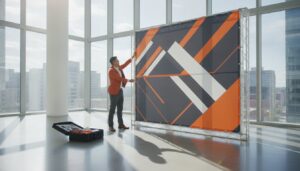
Durability is the cornerstone of this long-term strategy. Premium materials like tension fabric and lightweight aluminum frames aren’t just about aesthetics; they’re about endurance. These materials resist the wear and tear of frequent shipping and drayage, ensuring your presentation looks as crisp at show number ten as it did at show number one. Understanding the nuances of Event Display Fabrication is vital for maintaining quality control over these assets. By owning your gear, you control the finish, the fit, and the first impression every single time you step onto the floor.
Custom Exhibits as Capital Expenditures (CAPEX)
Shifting your exhibit from a marketing expense to a capital expenditure offers significant tax and accounting advantages. Instead of a one-time hit to your operational budget, you can depreciate the asset over several years, which often aligns better with long-term financial planning. If you look at the cost-per-use breakdown over a five-event annual calendar, the ownership model typically pays for itself within eighteen months. This approach is central to optimizing your 2026 trade show budget. Plus, reusable fabric backwalls are a win for sustainability, as they eliminate the waste associated with single-use builds that end up in landfills after the closing keynote.
High-Impact Add-ons: Inflatables and Hanging Signs
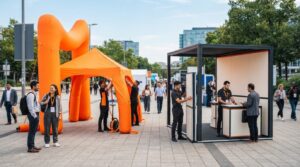
Ownership also gives you the freedom to invest in high-impact “air space” assets that rentals rarely provide effectively. Hanging signs are essential for owning the room; they act as a beacon that guides attendees to your location from across the hall. For outdoor events or large-scale indoor halls, custom inflatables offer an unparalleled ROI by maximizing visibility in high-traffic zones. These dynamic assets aren’t just functional; they’re highly “Instagrammable,” driving organic social media engagement that extends your brand’s reach far beyond the convention center walls. When refining your final list of questions to ask a trade show display company, ask about their ability to integrate these high-visibility elements into a cohesive, modular ecosystem that reflects your brand’s unique personality.
Navigating the Approval Meeting: Overcoming Common Financial Objections
Stepping into the boardroom to request a significant investment requires more than enthusiasm; it requires a bulletproof defense of your strategy. Executives often view large exhibits with skepticism, seeing only the initial invoice rather than the long-term pipeline. To flip this script, you must lead with financial logic. When you’ve already identified the right questions to ask a trade show display company, you’ll have the precise data needed to handle objections with confidence and poise. You are no longer just asking for money; you are presenting a calculated path to market dominance.
If the “too expensive” argument arises, shift the focus immediately to Cost Per Impression (CPI). Unlike digital ads that vanish after a single click, a custom backwall or hanging sign generates thousands of high-quality impressions across multiple years of service. When leadership claims “digital is better,” remind them that physical presence builds the kind of trust that a LinkedIn ad never will. You can also dismantle the “let’s just rent” mindset by showing the long-term ROI of ownership. Renting is a recurring fee for someone else’s asset; buying is an investment in your own brand equity. Presenting a tiered budget, including Good, Better, and Best options, empowers your leadership to feel in control of the spend while still ensuring a professional, high-impact result.
Developing Your Executive Pitch Deck
Leveraging Full-Service Partnerships to Reduce Risk
Risk mitigation is a major selling point for any CFO or Marketing Director. A boutique agency like Zodiac Event Displays reduces hidden costs through end-to-end management of the entire creative and fabrication process. Having a single point of contact for design, fabrication, and delivery eliminates the expensive communication gaps that often plague larger, fragmented vendors. This streamlined approach ensures your project stays within the approved scope while delivering a result that exceeds standard requirements. If you need a detailed breakdown to support your business case, you should contact Zodiac Event Displays for a custom quote to include in your proposal. Securing an authoritative partner is the final step in proving that your event strategy is a calculated, low-risk path to significant growth.
Maximizing Your Approved Budget: Turning Dollars into High-Impact Brand Presence
Once the ink is dry on your budget approval, the mission shifts from persuasion to precision. You must now ensure that every dollar allocated works twice as hard to secure your brand’s dominance on the floor. Smart allocation isn’t about cutting corners; it’s about investing in high-yield elements like vibrant graphics and programmable lighting while aggressively minimizing invisible costs like shipping and labor. Soft signage, specifically high-quality tension fabric backwalls, is your secret weapon here. These assets offer massive visual scale but collapse into compact, lightweight cases, drastically reducing drayage fees and monthly storage expenses.
Small booth spaces don’t have to feel confined. By using strategic visual impact techniques, such as vertical height with hanging signs or the bold curves of custom inflatables, you can create an environment that feels expansive and authoritative. One of the most tactical questions to ask a trade show display company involves how they engineer their displays to maximize “perceived square footage” through smart architecture. A partner like Zodiac Event Displays ensures your budget is treated with the same respect as your brand, guiding you toward choices that offer the highest aesthetic return for every cent spent.
Strategic Design: Lowering Logistics Costs Without Sacrificing Style
Lightweight tension fabric is a game-changer for global shipping, allowing you to bypass the heavy crating required by traditional hard-panel builds. This modularity is essential; your assets should be designed to scale up for a 20×20 island or down for a 10×10 corner without losing their premium feel. Focus on design longevity by selecting sophisticated color palettes and architectural lines that won’t feel dated by the time 2027 rolls around. Avoiding fleeting fads ensures your exhibit remains a durable asset rather than a temporary trend that requires a costly redesign next season.
The Final Polish: Ensuring Global Delivery and Flawless Execution
The final phase of your journey requires a partner who manages the transition from design to delivery with obsessive attention to detail. Boutique agencies based in hubs like Denver offer a level of personalized service that big-box exhibit houses simply can’t match. You aren’t just a project number; you’re a partner whose success is tied to the agency’s reputation. This “single point of contact” model ensures that the vision you pitched to your board is exactly what arrives on the show floor, executed with flawless precision and vibrant energy. When you finalize your questions to ask a trade show display company, make sure they have a proven track record of managing the entire creative and fabrication process under one roof. Start your 2026 exhibit journey with Zodiac Event Displays today and transform your approved budget into a legendary brand presence.
Seizing the Floor: Your Path to 2026 Event Dominance
Securing your 2026 budget is about more than just spreadsheets; it’s about proving that your physical presence is an irreplaceable engine for growth. By reframing your booth as a multi-year business asset and using data to calculate the cost of absence, you move from a cost center to a revenue driver. You’ve learned how to navigate executive objections and where to allocate funds for the highest visual impact. Having the right questions to ask a trade show display company is your final step in moving from planning to high-performance execution.
Zodiac Event Displays brings over a decade of design and fabrication mastery to your side, offering boutique agency attention with seamless global delivery capabilities. We specialize in premium, sustainable materials designed for high-impact longevity, ensuring your brand remains vibrant for years to come. Ready to build an exhibit that pays for itself? Contact Zodiac Event Displays for a strategic consultation. Your brand deserves to be the most authoritative voice on the floor, and we’re ready to help you lead the way.
Frequently Asked Questions
What is the average ROI for a custom trade show exhibit in 2026?
Positive returns are reported by 77% of exhibitors who formally measure their trade show ROI according to industry data from May 2026. This high success rate is tied to the quality of the audience, as 81% of trade show attendees arrive with direct buying authority. By focusing on qualified pipeline value rather than just raw lead counts, your custom exhibit becomes a powerful tool for accelerating the sales cycle and building long-term brand equity.
Should I buy or rent my trade show booth for a single event?
Purchasing your assets is almost always the more strategic move if you plan to exhibit at more than one show. While rentals may seem convenient, they often consist of generic components that fail to capture the 92% of attendees looking for innovation. Owning your hardware, such as modular fabric backwalls, allows you to maintain a consistent, premium brand image while significantly lowering your cost per use over a three-year period.
How far in advance should I request budget approval for a trade show?
Securing budget approval six to nine months in advance is critical for successful 2026 event planning. This lead time allows your team to navigate strict venue regulations, manage complex logistics, and secure fabrication slots for high-impact assets. Early approval also provides the flexibility to refine your design strategy without the added pressure of rush fees or limited material availability.
What are the most common hidden costs in trade show budgeting?
Drayage, electrical rigging, and specialized labor are the most frequent hidden expenses that can surprise unprepared marketing departments. When compiling your questions to ask a trade show display company, you must inquire about how their engineering choices impact these fees. For example, choosing lightweight tension fabric over traditional hard walls can drastically reduce your material handling and shipping costs.
How can I justify the cost of high-impact signage like custom inflatables?
Justify these investments by highlighting their ability to capture “Air Space” and drive organic social media engagement. Custom inflatables serve as a visual beacon in crowded halls or outdoor zones, ensuring your brand is seen from across the venue. These assets are particularly effective because 92% of attendees go to trade shows specifically to see new products, making high-visibility signage a necessity for attracting foot traffic.
What data points do CFOs care about most in a marketing proposal?
CFOs prioritize competitive displacement and qualified pipeline value over vanity metrics like booth visitors. They want to see a clear plan for how your presence will win market share from rivals and compress the time it takes to close a deal. Providing a “Cost of Absence” analysis helps leadership understand the financial risk of staying home while competitors engage with the 81% of attendees who have buying power.
How does a custom fabric backwall save money over time?
Custom fabric backwalls save money by being exceptionally durable and inexpensive to ship compared to traditional solid displays. The lightweight aluminum frames are designed for high-impact longevity, allowing you to update your messaging by simply printing new fabric graphics rather than commissioning a new build. This modularity ensures your display can adapt to different booth sizes across your entire event calendar.
Can I use my trade show budget for outdoor event tents as well?
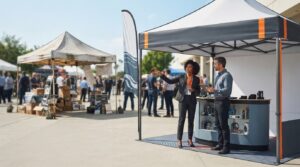
Yes, your budget should prioritize versatile assets that perform in multiple environments, including professional event tents for outdoor activations. One of the smartest questions to ask a trade show display company is whether their hardware is engineered for both indoor and outdoor durability. Investing in high-quality, branded tents and flags ensures your brand maintains a sophisticated and cohesive presence regardless of the venue.

 Previous reading