


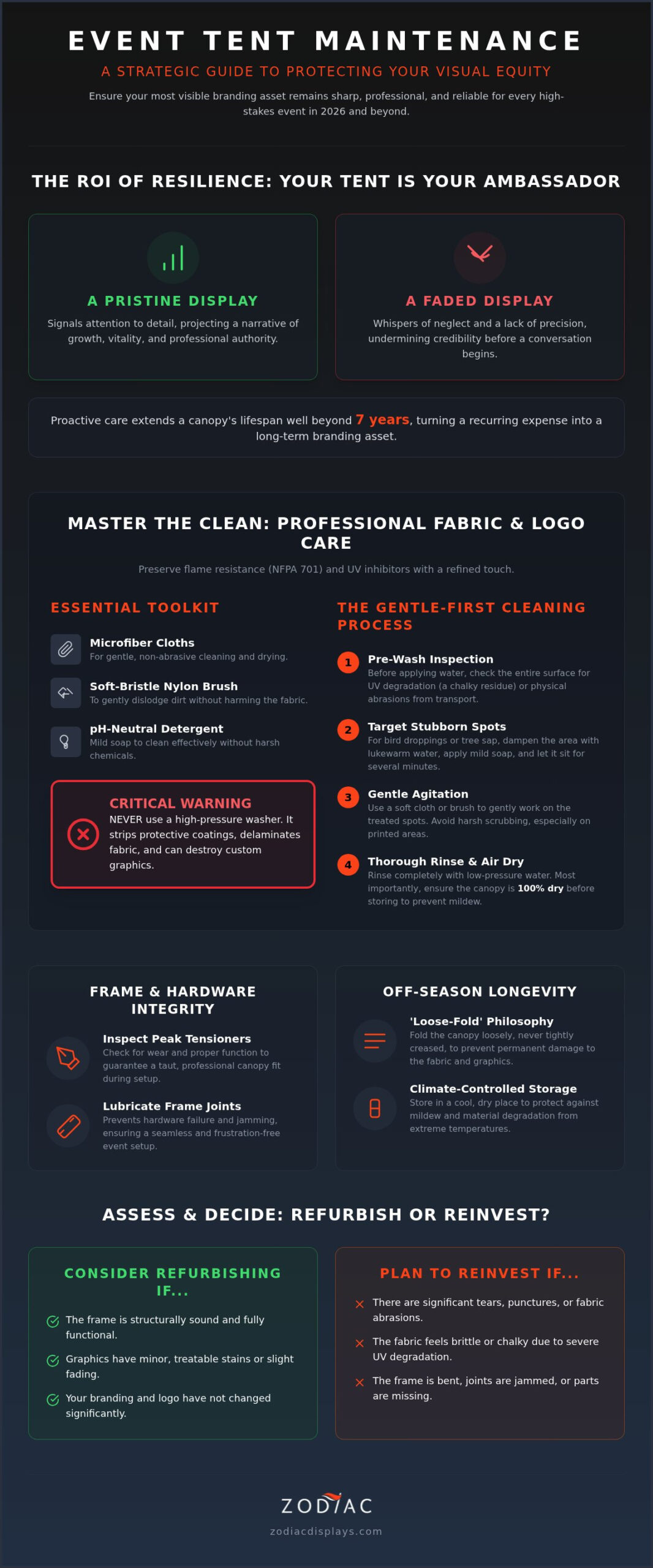
What if your most expensive branding asset is secretly whispering to your customers that you’ve stopped caring about the details? A faded logo or a jammed frame can tell a story of neglect before you even say hello to a potential lead. We understand that your reputation is woven into every fiber of your display, and you’ve worked too hard to let a weathered canopy dim your spotlight. That’s why mastering a comprehensive event tent maintenance guide is essential for any serious marketer looking to protect their visual equity in 2026. You’ve invested in a premium asset, and you deserve a presentation that looks as sharp and professional as the day it was unboxed.
It’s frustrating to watch a significant investment lose its vibrancy or fail right when the crowd starts to gather. This article provides the strategic roadmap you need to ensure your logo stays brilliant and your hardware remains flawlessly reliable for years of high-stakes events. We’ll explore professional-grade cleaning techniques that respect the latest NFPA 701 flame resistance standards and share storage secrets that prevent structural failure. From navigating 2026 fire code compliance to extending your fabric’s lifespan well beyond the seven-year mark, you’re about to transform how you care for your most visible branding tools.
Key Takeaways
- Elevate your presentation by treating maintenance as a strategic brand investment that preserves your professional authority and visual impact.
- Master a professional cleaning protocol using this event tent maintenance guide to defend your custom graphics against UV degradation and environmental stains.
- Guarantee a seamless setup by inspecting peak tensioners and lubricating frame joints, preventing hardware failure during critical event windows.
- Protect your assets during the off-season by adopting the ‘loose-fold’ philosophy and climate-controlled storage to prevent permanent fabric creasing.
- Gain the strategic foresight to evaluate visual health, knowing exactly when to refurbish your gear or reinvest in new high-impact displays.
The ROI of Resilience: Why Event Tent Maintenance is a Strategic Priority
Your event tent is the physical embodiment of your brand’s promise. When you step into a high-stakes trade show or outdoor activation in 2026, the vibrancy of your custom graphics acts as a silent ambassador. A well-executed presentation creates an atmosphere of reliability and premium service. Conversely, neglect carries a heavy price. Fading fabric and accumulated grime don’t just look tired; they suggest a lack of precision that can undermine your professional credibility before a single conversation begins. Embracing a comprehensive event tent maintenance guide isn’t just about cleaning fabric; it’s about safeguarding your company’s visual equity and ensuring your first impression remains flawless.
Proactive care transforms a recurring expense into a long-term branding asset. While modern fabrication techniques offer incredible durability, environmental stressors like UV radiation and industrial pollutants are relentless. By understanding the structural nuances of your gear, much like the information found in this comprehensive overview of tent types, you can implement a care routine that extends the lifecycle of heavy-duty custom canopies by years. This longevity isn’t just a win for your balance sheet; it’s a requirement for the sophisticated standards of the 2026 event circuit.
Preserving Your Visual Brand Equity
A pristine canopy reinforces your premium market positioning by signaling attention to detail. Attendees at professional events make split-second psychological assessments based on the environment you curate. When your graphics pop with their original intensity, you project a narrative of growth and vitality. Protecting that vibrancy against environmental wear requires a strategic approach to pre-event inspections and post-event recovery. Your event tent maintenance guide should prioritize the integrity of the logo, as this is the focal point of your attendee’s visual journey. A sharp, clean display suggests that your internal operations are just as polished as your public-facing assets.
The Environmental and Financial Impact of Longevity
Modern marketing success is increasingly measured by sustainability and fiscal responsibility. Choosing to maintain rather than replace reduces waste and aligns your brand with eco-friendly trade show displays principles. Every additional year of service you extract from a high-quality frame and canopy significantly reduces your cost-per-event. This financial efficiency allows you to reallocate budget toward creative engagement and lead generation rather than asset replacement. Proper maintenance protocols ensure that your heavy-duty hardware remains a reliable foundation for your brand’s presence, reflecting a commitment to quality that resonates with today’s eco-conscious and value-driven consumers.
Master the Clean: A Professional Protocol for Fabric and Logo Care
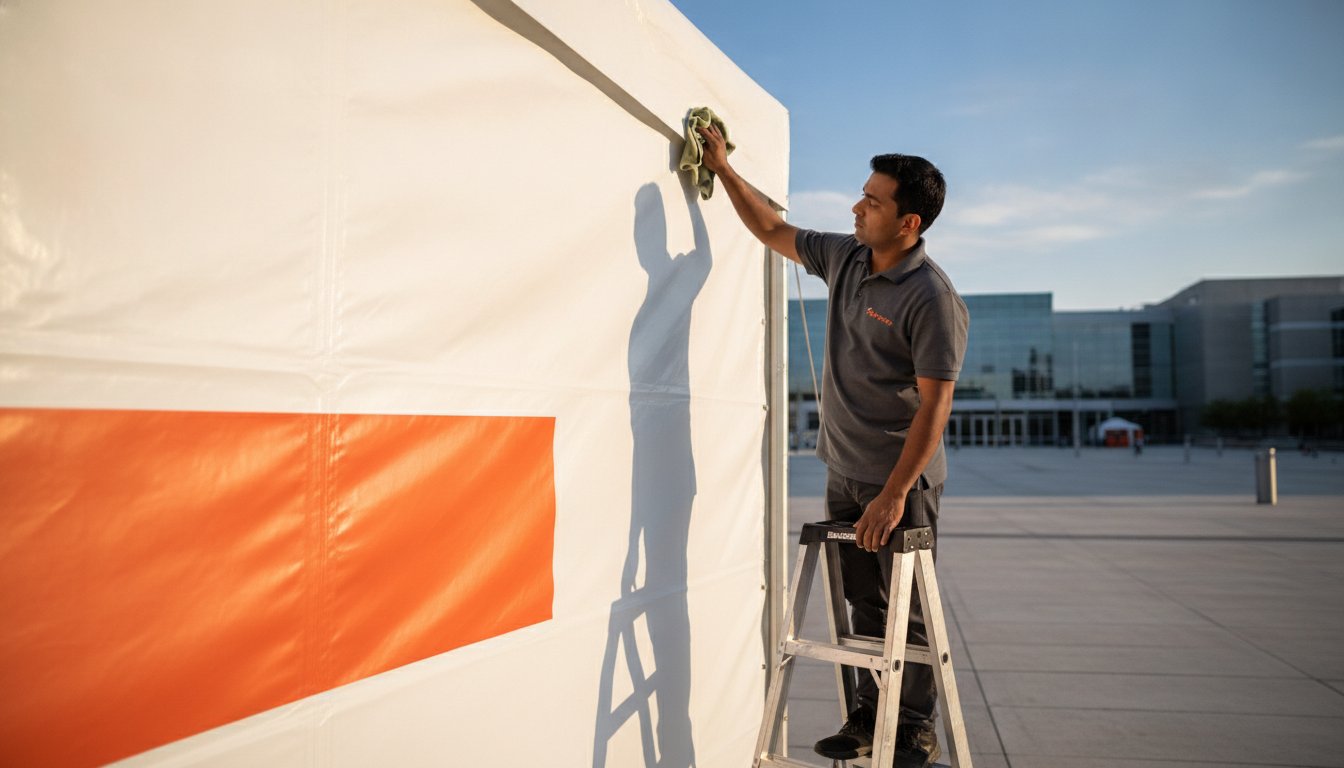
Cleaning a high-performance canopy requires more than a garden hose and a prayer. It demands a specialized toolkit and a refined touch. Your professional kit should include microfiber cloths, soft-bristle nylon brushes, and a high-quality pH-neutral detergent. Before applying any water, perform a detailed inspection of the entire surface. Search for UV degradation, which often appears as a slight chalky residue, and identify abrasions that might have occurred during transport. This proactive step ensures you don’t aggravate existing issues while following your event tent maintenance guide.
High-pressure washing is the fastest way to ruin a custom canopy. The intense force can delaminate the fabric or strip the ink layers right off the surface. Instead, stick to the ‘Gentle-First’ rule. For stubborn spots like bird droppings or tree sap, use a targeted approach. Dampen the area with lukewarm water, apply a small amount of mild soap, and let it sit for several minutes before gently agitating with a soft cloth. Following a Professional Protocol for Fabric and Logo Care ensures that your fabric’s fire-retardant coatings and UV inhibitors remain intact.
Protecting High-Impact Graphics and Custom Printing
pH-neutral soaps are non-negotiable for preserving your brand’s vibrancy. Harsh chemicals can react with large-format inks, causing bleeding or premature fading. Lukewarm water is the gold standard; extreme heat can soften vinyl layers, while cold water often fails to break down oils. Avoid abrasive brushes that can scratch or lift ink layers. If your current canopy is starting to show its age despite these efforts, it might be time to refresh your visual presence with a new high-impact display.
The Drying Protocol: Preventing the Silent Brand Killer (Mold)
Mold is the silent killer of brand equity. If you pack a damp tent, you’re essentially inviting a colony of mildew to destroy your logo. The ‘Never Pack Wet’ rule is absolute. If you must strike a tent in the rain, set it back up in a well-ventilated warehouse immediately upon return. Use the frame itself as a natural drying rack to ensure air circulates through every fold. Identifying early signs of mildew, like small dark spots or a musty odor, is critical before they become permanent stains on your brand’s reputation. This level of care is a core component of any effective event tent maintenance guide.
Beyond the Canopy: Maintaining Frame and Hardware Integrity
While the canopy captures the crowd’s attention, the frame is the silent engine of your event’s success. A high-performance aluminum or powder-coated steel structure provides the necessary tension to keep your graphics looking crisp and professional. Neglecting the skeleton of your display is a gamble that often results in jammed sliders or structural failure at the worst possible moment. This event tent maintenance guide shifts focus to the mechanical precision required to keep your setup process frustration-free. By treating your hardware with the same respect as your custom printing, you ensure your presence remains steady and authoritative regardless of the environment.
Corrosion prevention is a strategic priority for any team operating in coastal or high-humidity regions. Salt air and industrial runoff can compromise even the most durable finishes over time. After every outdoor activation, take a moment to wipe down the legs and trusses with a damp cloth to remove grit and environmental pollutants. Tightening the ship is equally vital; high-wind events place immense stress on every connection point. Developing a habit of checking bolts, pins, and peak tensioners after a show ensures that a loose fastener doesn’t turn into a bent truss during your next deployment. Reliability is built through these small, methodical actions.
Inspecting the Scissor Frame and Mechanical Joints
The scissor frame is a masterpiece of engineering designed for rapid deployment, but its many moving parts require regular monitoring. Identify bent trusses early, as even a slight curve can prevent the frame from folding correctly or lead to total failure under wind load. Maintaining the ‘pop-up’ mechanism is essential for effortless custom event tents deployment. Replacing a single worn-out slider or a stripped bolt is a minor investment that prevents the need for a total frame replacement, keeping your visual assets in peak condition for the long haul.
Hardware Protection and Storage Logistics
Dirt and grit are the primary enemies of smooth mechanical movement. When cleaning the legs, pay close attention to the sliding mechanisms where friction is highest. Lubricant selection is a critical detail often overlooked in a standard event tent maintenance guide. Always choose a dry silicone spray over greasy alternatives like WD-40; silicone provides a slick surface without attracting the dust and debris that eventually leads to jamming. Finally, store your stakes and weights in dedicated bags. Keeping heavy metal hardware separate from your fabric canopy prevents accidental punctures or grease transfers that could permanently mar your brand’s visual equity.
Strategic Storage: Techniques for Off-Season Longevity
Strategic storage is where your brand’s visual impact is either preserved or slowly eroded. After the adrenaline of a successful activation fades, the way you pack your gear determines its readiness for the next show. Many coordinators make the mistake of treating storage as an afterthought; however, in a professional event tent maintenance guide, it’s treated as a strategic preservation phase. Proper organization and climate-conscious decisions prevent the permanent creases and fabric degradation that signal a lack of polish to your future audience. You’ve invested in quality, and your storage habits should reflect that commitment to excellence.
Inventory management is your first line of defense against warehouse chaos. Labeling and organizing your assets by event type or size ensures that your team isn’t wrestling with mismatched hardware in the loading dock. Beyond organization, you must guard against the unseen threats of industrial spaces. Rodents and pests view fabric as nesting material, and a single hole can ruin a custom canopy. Investing in sealed, heavy-duty storage bins or elevated shelving units keeps your equipment safe from both pests and the occasional floor-level moisture that can plague commercial environments. Precision in storage leads to precision in presentation.
Folding Techniques for Tension Fabric and Vinyl
Never ‘stuff’ a branded canopy into its transport bag. This brute-force approach creates micro-fractures in the ink layers and permanent creases in the vinyl. Instead, use the ‘Rolling’ method for large graphics to minimize sharp folds. If space is tight, the ‘Accordion’ fold offers a structured alternative that protects the print surface. Pay special attention to clear windows or specialized fabric sections. Placing a layer of acid-free paper or a soft cloth between these surfaces prevents “ghosting,” where ink transfers from one section of the fold to another during long-term storage.
Climate and Environment: The Ideal Storage Conditions
The environment inside your warehouse is a critical factor in the longevity of your event display fabrication. Extreme temperature fluctuations and high humidity can lead to fabric delamination, where the protective coatings peel away from the base material. Aim for a climate-controlled space with stable humidity levels. Avoid areas with direct sunlight, as secondary UV fading can occur even when the tent is packed if the bag isn’t fully opaque. Elevated storage is mandatory; keeping your gear off the warehouse floor protects it from spills and moisture wicking. If you need a partner to help manage your high-impact assets, explore our professional display solutions today.
Partnering for Presence: Professional Refurbishment and Replacement
Every high-performance asset eventually reaches a crossroads where maintenance meets the need for evolution. Even with the most disciplined adherence to an event tent maintenance guide, the rigors of the 2026 event circuit will eventually show on your gear. Evaluating your tent’s visual health is a strategic exercise in brand management. If your heavy-duty frame remains structurally sound but your messaging has shifted, a graphic refresh is a cost-effective way to maintain a premium presence. However, if the mechanical joints show signs of fatigue or the fabric has lost its fire-retardant integrity, reinvesting in a new display ensures you never compromise on safety or style during a live activation.
The lifecycle of a branded canopy in a professional environment is an ongoing journey of refinement. You aren’t just buying a product; you’re building a visual foundation that can grow with your marketing objectives. Customization upgrades, such as adding vibrant sidewalls or custom flags, can breathe new life into an existing setup, allowing you to adapt to different venue requirements without a total overhaul. This modular approach to brand visibility allows you to stay agile, ensuring your presentation remains as dynamic as the market you serve.
The Zodiac Approach to Lifecycle Management
We view ourselves as a dedicated ally in your brand’s long-term success. Our Denver-based experts are available to consult on graphic refreshes, helping you translate new campaign visions into high-impact fabric displays. By leveraging our global delivery network, you can secure replacement parts or entirely new assets regardless of where your next show takes you. We specialize in integrating your tent into a much larger custom trade show displays strategy, ensuring every touchpoint of your exhibit reflects a cohesive and visionary design language.
Ready for the Next Show? Your Final Prep Checklist
Success favors the prepared. Before you head to your next high-stakes event, implement a final 48-hour inspection protocol to ensure your event tent maintenance guide has been followed to the letter. This brief window allows you to address any unforeseen issues before they become public-facing problems.
- Frame Stress Test: Deploy the frame fully to ensure all sliders and peak tensioners move with effortless precision.
- Graphic Audit: Inspect the canopy under bright light to check for any missed stains or micro-abrasions from previous shows.
- Accessory Sync: Verify that all custom flags, weighted bases, and table cloths are clean, functional, and packed securely.
- Emergency Liaison: Keep the contact details for Zodiac Event Displays handy for last-minute branding emergencies or hardware questions.
By treating your event assets with the care they deserve, you guarantee a presentation that commands respect and inspires confidence. Your tent is more than shelter; it’s a high-energy platform for your brand’s most important stories. With the right maintenance protocol and a strategic partnership, your visual equity will remain vibrant and reliable for years of high-impact growth.
Securing Your Visual Legacy on the 2026 Event Circuit
Your presence at a high-stakes trade show is a performance where every detail speaks volumes about your professional standards. Precision matters. By shifting your perspective from simple upkeep to strategic brand preservation, you ensure that your visual equity remains a powerful force for years to come. This event tent maintenance guide has provided the roadmap to mastering professional cleaning protocols, maintaining mechanical hardware integrity, and implementing climate-conscious storage techniques. These aren’t just chores; they are essential investments in your professional authority and long-term ROI.
At Zodiac Event Displays, we act as a dedicated ally in your brand’s growth. With over 10 years of high-impact event experience and boutique Denver-based design expertise, we understand the endurance required for success. Whether you need replacement parts through our global delivery network or a total graphic refresh to match a new campaign, we’re here to guide you through the journey. We pride ourselves on exceeding standard requirements to ensure your presentation is always flawless.
Elevate your brand presence with a custom display consultation and let’s ensure your next activation is your most vibrant yet. Your journey toward visual excellence is a marathon, and we’re ready to pace that journey with you.
Frequently Asked Questions
Can I machine wash my custom branded tent canopy?
No, you should never machine wash a custom branded canopy. The aggressive agitation and heat of a washing machine can delaminate the fabric and cause large-format inks to crack or peel. Instead, lay the canopy flat on a clean surface and use a soft sponge with lukewarm water. This gentle approach preserves the fire-retardant coatings and ensures your logo remains sharp and vibrant for your next high-impact activation.
How do I remove mold and mildew from my tent without ruining the logo?
You can remove light mold by gently scrubbing the affected area with a soft-bristle brush and a mixture of mild, pH-neutral soap and water. Avoid using bleach or harsh chemicals, as these will permanently damage your custom graphics and weaken the fabric’s UV resistance. The best strategy is prevention; always ensure your canopy is 100% dry before storage to stop mildew before it starts, as outlined in this event tent maintenance guide.
What is the best way to clean the aluminum frame of my pop-up tent?
The most effective way to clean an aluminum frame is to wipe it down with a damp microfiber cloth to remove salt, grit, and environmental pollutants. Pay close attention to the sliding joints and legs where debris can cause jamming. After cleaning, apply a light coat of dry silicone spray to the mechanical joints. This keeps the setup process smooth and prevents the friction that leads to long-term hardware wear.
How long should a high-quality custom event tent last with proper care?
A high-quality custom event tent featuring UV-resistant fabric and heavy-duty hardware should last seven years or more with diligent care. While some imported fabrics may degrade in as little as two years, professional-grade materials are engineered for endurance. Following a consistent event tent maintenance guide ensures that your investment continues to project a premium brand image across hundreds of shows, maximizing your visual equity and long-term ROI.
Is it okay to store my tent in a garage or outdoor shed?
Storing your tent in a standard garage or outdoor shed is risky unless the space is fully climate-controlled and pest-proof. Fluctuating temperatures and high humidity can cause fabric delamination and encourage mold growth. Additionally, rodents often seek out fabric for nesting. It’s best to store your branded assets in an elevated, dry, and temperature-stable environment to protect the integrity of both the frame and the custom graphics.
What kind of soap is safe for large-format printed graphics?
Always use a mild, pH-neutral soap that’s free of bleach, alcohols, or abrasive scrubbers. Dish soaps or specialized fabric cleaners designed for outdoor gear are usually the safest options for large-format printed graphics. These gentle solutions break down surface grime without reacting with the ink layers. Avoiding harsh detergents ensures that your brand’s colors stay true and the fabric’s protective coatings remain fully functional through every season.
How do I fix a small tear in the fabric of my branded canopy?
You can fix small punctures or tears using a high-quality adhesive repair tape specifically designed for outdoor fabrics. For a more professional and permanent solution, contact a specialist for a heat-welded patch that matches your canopy’s material. Addressing minor damage immediately prevents tears from spreading under wind tension. If the damage affects a high-visibility area of your logo, consider a graphic refresh to maintain your premium market positioning.
Should I leave the canopy on the frame when I pack it away?
It’s generally best to remove the canopy from the frame before packing it away for long-term storage. Leaving it attached can lead to the fabric getting pinched or torn in the scissor-frame joints during transport. If you’re moving between shows on a tight schedule, you can leave it on as long as it’s folded loosely. For off-season protection, separate the two components to ensure the fabric remains crease-free and the hardware stays clean.
 Previous reading