


What if the premium trade show display is the more cost-conscious choice over time? That’s the case to make when justifying trade show display cost to management: a well-designed display can work across multiple events, strengthen brand recognition, and support more valuable conversations long after the initial investment. It’s understandable that leaders question a higher upfront budget, especially when a basic pop-up seems simpler and shipping and drayage costs keep climbing. But the purchase price alone doesn’t show the full return.
To win approval, connect the display to business outcomes management already tracks, from qualified leads and pipeline contribution to cost per lead over repeated shows. This guide shows you how to build a data-backed case for custom fabrication, frame brand presence in terms a digital-first organization can measure, and account for total cost of ownership and logistics. You’ll also learn how durable fabric backwalls and custom tents can serve as reusable brand assets, helping your team make a stronger impression while working toward lower long-term cost per lead.
Key Takeaways
- Frame your display as a physical expression of your brand strategy, creating an in-person experience that complements digital marketing.
- Compare options using cost per show over a three-to-five-year period, not just the initial spend, and account for potential repairs and replacements.
- Connect material reuse and display longevity to your organization’s ESG priorities, while evaluating environmental claims carefully.
- When justifying trade show display cost to management, focus on qualified opportunities, pipeline contribution, and the potential cost of a weaker market presence.
- Choose a partner whose creative approach and delivery capabilities align with your goals; Zodiac Event Displays brings a boutique perspective and over 10 years of industry experience.
The Strategic Value of High-Impact Brand Environments
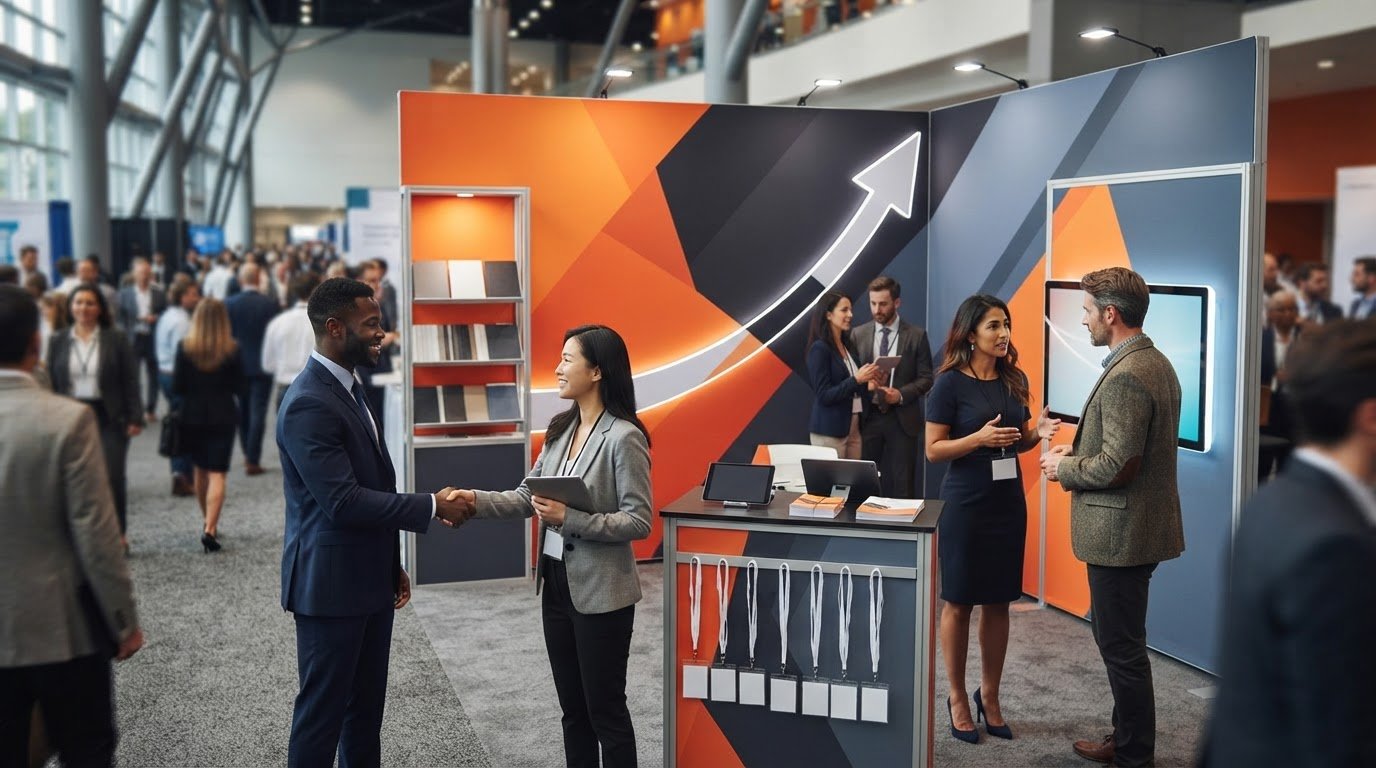
A trade show booth is more than a place to stand. It’s a physical manifestation of corporate strategy: the space where your brand’s positioning, values, and promise take shape in three dimensions. A Trade show brings people together to discover and evaluate businesses, and your environment helps shape what they understand about yours before a conversation even begins.
Think of the display as a physical handshake. Digital touchpoints can introduce a company, but an in-person environment lets prospects experience its presence, meet its people, and explore its story at their own pace. That can reduce the friction of trust for someone encountering your brand for the first time. A considered backwall display, event tent, or coordinated set of visual elements signals care and consistency; it gives the conversation a confident place to begin.
This distinction matters when justifying trade show display cost to management. A disposable-booth mindset focuses on getting through the next event with the lowest initial outlay. A strategic-asset mindset asks how a durable, reusable display can support brand recognition and customer conversations across events. The goal isn’t simply to look impressive. It’s to create a consistent environment that helps your team communicate value and makes the investment work beyond a single show.
The Psychology of Visual Excellence at Scale
Busy halls compete for attention. Custom graphics and a clear visual hierarchy help your brand stand out from a distance, while scale gives the message room to be seen and understood. Stopping power is useful when it leads to purposeful engagement: track how many people pause, start a relevant conversation, or become qualified prospects, then compare those results with the display’s cost per show. Sensory branding is the deliberate use of visual, spatial, and tactile cues to make a brand more memorable in a high-traffic environment.
Visual excellence isn’t decoration for its own sake. Strong design makes key information easier to notice and gives staff a natural starting point for conversation. The right combination of scale and clarity can turn passing attention into a meaningful interaction.
The Halo Effect: Recruiting and Investor Relations
A trade show presence may also shape how prospective employees, investors, and partners perceive a company. A polished, coherent environment can suggest focus and stability, while a neglected presentation may create questions the team then has to answer. Treat the booth as a temporary corporate headquarters: a welcoming place for product conversations, partnership discussions, recruiting, and investor meetings. Its design should reflect the same ambition and care found in the company’s wider brand.
That’s the broader value of a high-impact environment: it supports more than lead capture. It gives every audience a tangible way to experience what the company stands for.
Decoding Total Cost of Ownership (TCO) vs. Initial Spend
A lower upfront price can look attractive on a budget sheet, but it doesn’t capture what a display may cost over repeated events. Repairs, replacement graphics, damaged components, and recurring shipping can add up, while a well-maintained display may keep serving your team. For a fuller budget picture, compare your assumptions with how exhibitors allocate their budgets, then evaluate the display as one part of the overall event investment.
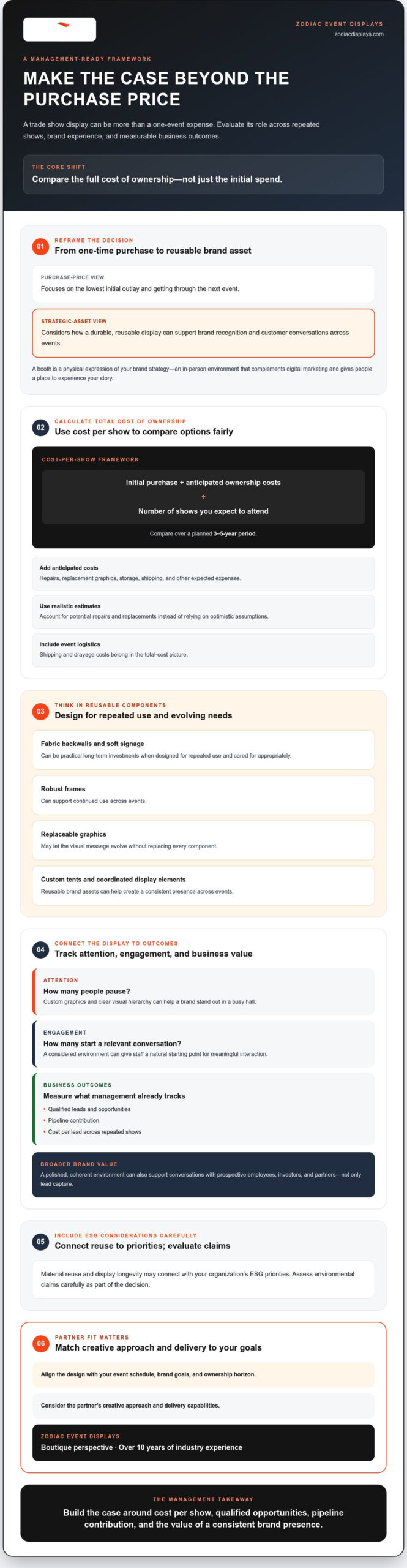
Use cost per show to compare options across a planned three-to-five-year period: add the initial purchase and anticipated repair, replacement, storage, and shipping expenses, then divide by the number of shows you expect to attend. Use realistic estimates, not optimistic assumptions. This makes it easier to show management how custom fabrication could distribute its cost across multiple events rather than treating it as a one-show expense. It also gives your team a fair way to compare a durable display with a cheaper option that might need more frequent replacement.
Material and construction choices matter. Fabric backwalls and other soft signage can be a practical long-term investment when they’re designed for repeated use and cared for appropriately. A robust frame can support continued use, while replaceable graphics may allow the visual message to evolve without replacing every component. Explore custom trade show displays as a way to align the display’s design with your event schedule, brand goals, and ownership horizon.
Logistics and Shipping Efficiencies
Shipping and drayage belong in the TCO calculation. Lightweight fabric graphics and soft signage may reduce shipment weight or packing volume compared with bulky rigid components, but actual charges depend on the shipment and event. Rigid displays can also be vulnerable to breakage or require oversized packaging, creating replacement and freight expenses. Before selecting a system, ask for packed dimensions, weight, protection needs, and handling requirements. If tool-free assembly matters, confirm the setup method and labor assumptions before comparing options.
Versatility and Modular Growth
Plan for the booth you may need next, not only the footprint you have booked today. A modular approach can let compatible components be arranged for different spaces, such as a 10×10 or 20×20 booth, provided the design supports those configurations. Reusable backwall components may also have a second life in a corporate lobby or interior display. Confirm what can be reused, what must be added, and whether the hardware suits each setting before counting future savings.
For justifying trade show display cost to management, present the comparison clearly: initial spend, projected cost per show, expected reuse, and logistics assumptions. A thoughtful plan helps the decision rest on long-term value, not sticker price alone.
Aligning Display Investments with Corporate ESG Goals
A display investment can support more than event marketing. It can also reflect how a company approaches resource use, waste, and brand responsibility. For management, the strongest case connects these priorities to practical evidence: how often display components can be reused, what materials they contain, and how they’re packed and transported. That turns sustainability from a broad promise into a consideration that can be evaluated alongside performance and total cost.
Reusable fabric graphics and durable hardware may help avoid repeatedly producing and discarding short-lived materials. Compared with single-use foam-core or PVC elements, a fabric-based approach can reduce waste when components are reused over time. The actual environmental benefit depends on material composition, production, care, shipping, and end-of-life options, so avoid presenting “eco-friendly” as a blanket claim. The sustainable soft signage approach is one option to explore as part of the wider eco-friendly trade show displays movement.
For justifying trade show display cost to management, connect the choice to the company’s stated ESG priorities and reporting process. Identify what can be measured, such as the number of events a display serves or the amount of material reused, and confirm how your organization defines and records those metrics. This keeps the conversation grounded: responsible design can support brand reputation, but the business case should be backed by evidence rather than assumed impact.
Durability as a Sustainable Practice
“Buy once, use often” is a useful alternative to a build-and-burn mindset. If a backwall display or event tent remains presentable and functional across multiple events, the team may avoid some repeated production and disposal. Long-lived hardware and replaceable graphics can also make it possible to refresh the message without replacing every component. High-quality event display fabrication can serve both the planet and the bottom line when it extends useful life and reduces avoidable replacements.
The Financial Benefit of Lightweight Soft Signage
Lightweight soft signage may be easier to pack and transport than bulky alternatives. A lighter or more compact shipment can potentially reduce transport emissions and shipping expense, but the result depends on packaging, route, carrier, and event handling charges. Don’t promise automatic savings or a lower carbon footprint; compare actual shipment specifications and quotes.
Ask suppliers about fabric content, recyclability, printing processes, care instructions, and end-of-life options. These details help teams assess claims about recyclable materials or non-toxic printing instead of assuming those attributes apply. When the evidence supports it, reusable fabric graphics can align marketing spend with green initiatives while giving the brand a polished, consistent presence. Sustainability then becomes part of a considered investment decision, not a separate talking point.
Building the Business Case: Metrics and ROI Frameworks
A compelling business case follows the path from attention to revenue. Instead of treating every badge scan as a win, measure qualified opportunities: prospects who fit your target profile, have a relevant need, and are ready for a defined next step. This shifts the discussion from how many people visited the booth to whether the event created sales potential your team can track.
Build a simple framework before the show. Record total event and display-related expenses, then compare them with the qualified opportunities and influenced revenue attributed to the event. For example, calculate cost per qualified opportunity by dividing the total tracked investment by the number of qualified opportunities. Compare trade show customer acquisition cost with digital PPC or LinkedIn CAC only when both use the same qualification rules, attribution window, and included costs. Otherwise, the comparison can mislead rather than clarify.
Also estimate the cost of inaction. Work with sales to identify target accounts likely to attend, assess which opportunities could be missed if the company has a weak or absent presence, and estimate the potential value using your own conversion and revenue data. This won’t prove that a display alone protects market share, but it helps frame the commercial risk of leaving prospects with a less compelling impression of your brand.
The Lead-to-Revenue Bridge
Put a value on face time by connecting conversations with account outcomes. Sales can record the account, stakeholder roles, next steps, and opportunity stage in the CRM, then compare progression and time to close for event-sourced or event-influenced opportunities with other channels. Avoid assigning revenue to a conversation without evidence. Post-show surveys can add useful context: ask attendees whether they recall the brand, what they understood about its offer, and whether their perception changed.
Presenting to the CFO: Language and Logic
For justifying trade show display cost to management, speak in terms of amortization, asset lifecycle, and customer lifetime value (CLV). Present a three-year projection that shows expected event use, upkeep, shipping assumptions, and the cost per show. Compare ownership with rental alternatives using consistent timeframes and all relevant costs; don’t assume one option always wins.
Bring the figures together as total brand impact: qualified opportunities, influenced pipeline, sales-cycle movement, and measurable brand feedback. Then invite your team to explore how a custom display could support those goals with Zodiac Event Displays.
Partnering for Success: Why Fabrication Expertise Matters
A strong display begins well before it reaches the show floor. The right partner helps connect creative direction with practical decisions about graphics, materials, assembly, and delivery. That coordination matters when you’re presenting a brand across multiple elements, such as an event tent, custom flags, and a backwall display. Each should feel like part of one clear, consistent story.
A boutique approach can bring closer collaboration and more personalized attention than a high-volume, standardized process. That doesn’t mean one model is automatically right for every organization. Compare partners on how well they understand your goals, explain design and production choices, and plan around your event requirements. As a Denver-based boutique with over 10 years of industry experience, Zodiac Event Displays positions itself as a strategic partner, managing the process from creative design to global delivery. Explore its boutique trade show display solutions to see how a tailored approach may fit your brand.
From Creative Concept to Global Delivery
Professional design helps maintain visual consistency across display elements, so a logo, color palette, and message remain recognizable whether they appear on a tent, flag, or backwall. Before production, align on artwork, dimensions, event requirements, packing, and delivery milestones. Clear decisions can help reduce avoidable show-floor problems, such as graphics that don’t fit the intended display or components that are difficult for your team to assemble.
Ask a prospective partner how responsibilities are coordinated from design through delivery, what information they need from your team, and which timeline assumptions should be confirmed. Zodiac’s global delivery capabilities and end-to-end process can help bring those moving parts into one conversation, while your organization verifies event dates and shipping requirements.
Securing Your Brand’s Future Presence
Think beyond the next event. A display planned for a 2026 growth strategy should reflect how your brand may need to appear across future shows, audiences, and booth configurations. Discuss durability, graphic updates, and potential reuse with your partner so management can weigh the display as a long-term brand asset, not simply a one-event purchase.
For justifying trade show display cost to management, bring the creative vision together with practical questions about design, production, and delivery. To discuss your display goals with a branding expert, contact Zodiac Event Displays. A great display isn’t only what you pay for; it’s the recognition, conversations, and opportunities it can help your brand earn.
Make Your Next Display Investment Count
A persuasive display proposal connects creative impact with accountable business value. Bring management a clear view of the asset’s expected lifecycle, cost per show, qualified opportunities, and contribution to brand and ESG priorities. Then track results after each event so future investment decisions become sharper and better informed.
Justifying trade show display cost to management is easier when you have a knowledgeable partner who can help align design choices with your goals. Zodiac Event Displays is a Denver-based boutique agency with global reach, over a decade of high-impact design experience, and a focus on durable, vibrant soft signage. That combination can help your team shape a display strategy with both visual distinction and long-term use in mind.
Elevate your brand presence with a custom display strategy from Zodiac Event Displays. Your next display can be more than a show-floor backdrop. With a thoughtful plan and a clear way to measure its impact, it can help your brand show up with confidence and create new opportunities for growth.
Frequently Asked Questions
Is it better to rent or buy a trade show display for a one-time event?
For a genuinely one-time event, renting may be worth comparing with buying, but the right choice depends on total costs and requirements. Check rental charges, customization options, delivery, setup, and return terms alongside the purchase price and expected reuse value. If your company may exhibit again, ownership could make sense over time. Zodiac Event Displays sells branded display products; it does not offer event equipment rental, so compare providers directly.
How do I calculate the ROI of a custom trade show booth?
Start by defining the event’s business goal, then compare attributable results with the full investment. One practical formula is: (attributed revenue minus total event investment) divided by total event investment. Include only revenue you can reasonably connect to the show, and state your attribution method. Also track qualified opportunities, cost per qualified opportunity, pipeline influenced, and sales-cycle progress, since revenue may emerge after the event rather than immediately.
What are the hidden costs of trade show exhibiting I should tell management about?
Beyond display production and booth space, budget for shipping, drayage or material handling, installation and dismantle labor, electrical service, graphic design, and printing. Staff travel, lodging, and event-related expenses may also affect your organization’s total. Confirm which charges apply with the show organizer and service providers, since fees vary by venue and event. Present a complete estimate with assumptions, not just the display’s purchase price.
How long does a high-quality custom trade show display typically last?
There isn’t one reliable lifespan for every display. Longevity depends on construction, materials, frequency of use, transportation, storage, and care. Ask the manufacturer about expected use, maintenance, replacement parts, and how graphics can be refreshed. After each show, inspect the frame, fabric, connections, and printed areas, then store components as directed. Track condition over time so your team can make realistic lifecycle and replacement plans.
Can modular displays really save money on shipping and labor?
They can, if the system’s packed weight, dimensions, and assembly requirements suit your events. Modular components may be configured for different booth spaces, while lightweight fabric graphics can be easier to transport than bulky rigid elements. But savings aren’t automatic: compare shipment specifications, carrier quotes, handling charges, assembly instructions, and labor needs for each option. Confirm whether the system can be assembled without tools before including labor reductions in your forecast.
How does an eco-friendly display help justify the cost to leadership?
An environmentally considered display can support company goals when its benefits are specific and verifiable. Document which components are reused, what materials are included, and whether the supplier provides information about recyclability, printing processes, and end-of-life options. Reuse may also reduce repeat purchasing and disposal, connecting responsibility with cost planning. Avoid broad claims without evidence, and align any environmental measures with the definitions your organization uses for ESG reporting.
What metrics should I include in a budget proposal for a new trade show display?
For justifying trade show display cost to management, present the total projected investment, expected number of uses, cost per show, and key logistics assumptions. Add targets for qualified opportunities, cost per qualified opportunity, pipeline influenced, and sales-cycle progress. Include brand recall or attendee feedback if you plan to measure it. Explain how leads will be tracked in the CRM and how you’ll distinguish event-sourced results from opportunities influenced by other channels.
How can I reduce the total cost of ownership for my event assets?
Plan for reuse before purchasing. Choose components suited to your expected events, confirm how graphics can be updated, and compare shipping dimensions and assembly needs. Follow care and storage instructions, inspect items after each use, and address damage before it worsens. Keep a simple inventory and record repair, replacement, and transport expenses. Reviewing these details after each show helps your team improve future decisions and avoid unnecessary repeat purchases.

 Previous reading