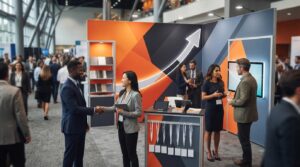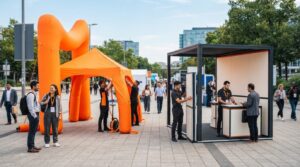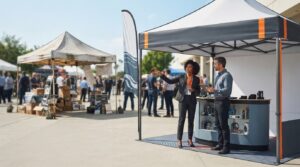



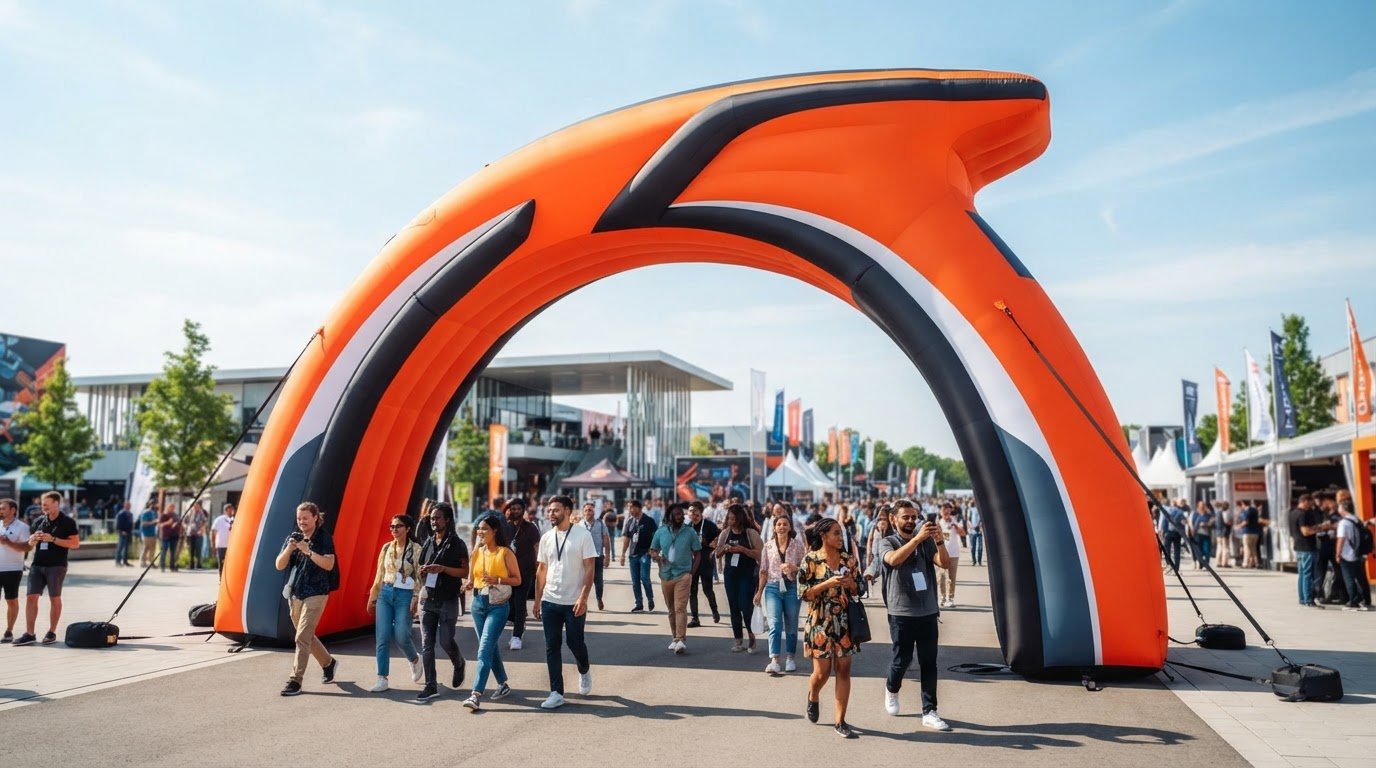
What if your event entrance did more than mark the way in? A well-designed inflatable marketing archway can turn that first impression into a bold brand moment, a natural photo-op, and a landmark guests remember. But the right choice has to do more than look impressive: it needs to stay stable, keep its graphics vibrant, and fit the realities of your event setup.
If you’re weighing constant-air against sealed-air construction, or wondering whether your arch will hold up beyond one season, those concerns are practical, not picky. A high-impact entrance should build confidence, not add last-minute stress.
This guide will help you choose, design, and deploy a custom inflatable archway that balances durability, visual impact, and ease of use. We’ll cover the key differences between inflation types, what to consider for lasting graphics and reliable performance, and how to plan setup and strike more smoothly. With over 10 years of custom inflatable experience, Zodiac Event Displays brings creative partnership and large-format visual excellence to the process, helping you shape an entrance that feels polished from the first glance to the final photo.
Key Takeaways
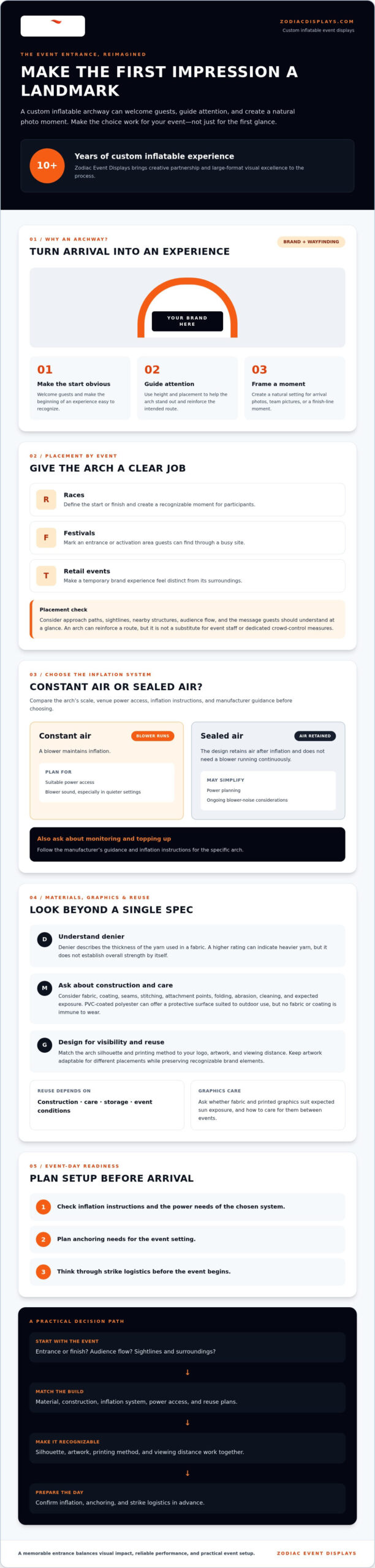
- Plan your inflatable marketing archway around the entrance, audience flow, and event setting to make its scale and placement work together.
- Compare construction materials and blower systems against your event conditions and reuse plans before choosing a design.
- Match the arch silhouette and printing method to your logo, artwork, and viewing distance for clear, cohesive branding.
- Build setup into your event plan by checking inflation instructions, anchoring needs, and strike logistics in advance.
- Explore how a creative partner can coordinate design, fabrication, and delivery to carry your brand from concept to event day.
The Power of the Entrance: Why Inflatable Marketing Archways Dominate Event Branding
An entrance sets the tone before a guest speaks with a representative, sees a display, or joins an activity. A branded gateway makes that transition tangible: people pass beneath it, recognize where the experience begins, and have a natural place to pause. Unlike flat signage, which competes for attention from a single plane, an arch adds height and frames the view beyond it. That makes the brand easier to spot in a busy environment and gives the event a more intentional feel.
A custom arch can also become a photo-op anchor. Place it where attendees are likely to gather, and it can frame arrival photos, team pictures, or a finish-line moment. Clear branding in the frame helps connect those shared images to the event. The shape has a job, too: an entrance arch welcomes and directs, while one positioned at the end of a route signals completion and gives participants a visible goal.
Defining Your Event Perimeter with Scale
In a crowded festival, height can help an inflatable marketing archway stand out above nearby activity and guide guests toward a check-in or activation area. Its position can reinforce the intended route, but it shouldn’t be treated as a substitute for event staff or dedicated crowd-control measures. Consider sightlines from approach paths, the surrounding structures, and the message attendees should understand at a glance. The broader principles behind an inflatable building, including the use of membranes and pressurized air, offer context for inflatable structures, though arch designs and construction can differ.
ROI Beyond the Event Day
The value of a branded arch can extend beyond a single appearance. A design planned for reuse across races, festivals, and retail activations can earn visibility at multiple events, spreading its initial investment across more brand moments. Long-term performance depends on construction, care, storage, and event conditions, so consider those factors when assessing durability rather than assuming every inflatable will last for the same number of seasons. Keep artwork adaptable enough to suit different placements while preserving recognizable brand elements.
- For races: Define the start or finish and create a recognizable moment for participants.
- For festivals: Mark an entrance or activation area that guests can find through a busy site.
- For retail events: Make a temporary brand experience feel distinct from its surroundings.
To evaluate cost per impression, compare the full cost of producing and maintaining the arch with its use across planned events and the visibility it earns at each. The aim isn’t simply to make a bigger sign. It’s to build a memorable brand landmark that works hard wherever the audience meets it.
Technical Specifications: Choosing the Right Material and Blower System
The right specifications depend on more than appearance. An inflatable marketing archway must suit its size, location, power access, expected weather exposure, and reuse plans. Ask for details about the fabric, seams, inflation system, attachment points, and care requirements rather than relying on a single material label or denier number.
Denier (D) describes the thickness of the yarn used in a fabric. A higher rating can indicate heavier yarn, but it doesn’t by itself establish overall strength or make 600D+ a universal professional standard. Construction, coating, stitching, and how the arch is used all matter. PVC-coated polyester can offer a protective surface suited to outdoor use, but ask how the specific material handles folding, abrasion, cleaning, and prolonged exposure. No fabric or coating is immune to wear.
Constant Air vs. Sealed Air
Constant-air designs use a blower to maintain inflation, so plan for suitable power and consider the blower’s sound in quieter settings such as indoor presentations. Sealed-air designs retain air after inflation and don’t require a blower running continuously, which can simplify power planning and reduce ongoing blower noise. Compare the arch’s scale, venue power access, inflation instructions, and the manufacturer’s guidance on monitoring and topping up before choosing.
Material, Graphics, and Attachment Points
Ask whether the fabric and printed graphics are intended for your expected sun exposure and what care helps preserve them between events. Zodiac Event Displays emphasizes large-format visual excellence, but longevity depends on the specific materials, print process, use, and storage. For anchoring, confirm the locations and construction of the designated attachment points, then follow the manufacturer’s instructions for the site and conditions. Don’t assume every arch uses the same anchor design or method.
For indoor events, check the venue’s documentation requirements for flame resistance. NFPA 701 relates to flame testing for textiles and films; ask the supplier what documentation is available and confirm what the venue requires. Local rules can differ, so use relevant official guidance as a starting point, not a substitute for checking with your venue. For example, the City of Eugene’s Temporary special event structures guidance is specific to that jurisdiction.
Before committing, compare written specifications and care guidance with your event plan. If you’re weighing custom inflatable options, explore Zodiac’s event display work as one reference point for shaping a branded structure around your needs.
Design Dynamics: Maximizing Brand Visibility and Graphic Impact
Strong archway design starts with the audience’s viewpoint. A rounded silhouette feels welcoming, a squared profile creates a crisp, structured frame, and an angled or hexagon-inspired shape can add a more dynamic edge. Choose a form that supports your event’s character, then consider how its surfaces will carry the logo and message. The goal is a design people can recognize at a glance, not artwork crowded onto every inch.
Printing choices shape that result. Dye-sublimation is often suited to detailed, full-color graphics across fabric, while screen printing may work well for simpler artwork with fewer colors. The best fit depends on the material, design, and production method, so request guidance for your specific artwork. For a custom inflatable marketing archway, also plan beyond the front-facing view: carry brand elements across the sides and back so guests and cameras can see them from different approaches.
Curves and seams affect how graphics appear. Keep essential text and logos clear of areas where the surface bends or joins, and ask the design team to prepare artwork against the structure’s layout. A distinctive 3D attachment can give the arch a memorable focal point, but it should reinforce the brand rather than obscure the message. Confirm how any added element affects visibility, construction, and event use.
Color Matching and Brand Precision
Share brand color references, including Pantone values where available, but ask how those colors will translate to the selected fabric and print process. A digital proof helps catch layout issues; it may not perfectly predict the appearance of a finished large-format print. Zodiac Event Displays offers graphic design and branding consultation to help align artwork with the structure. Request a review of curved areas, seams, logo scale, and viewing distance before approving production.
Interchangeable Branding for Repeat Events
If one structure needs to serve different races, sponsors, or seasonal activations, ask whether a compatible removable banner or panel system can be incorporated into its design. Hook-and-loop fastening is one possible approach, but the attachment method must suit the structure and intended use. Swappable graphics can refresh the message while retaining a consistent base, provided they’re designed to fit correctly and cared for between events.
Think of the arch and its graphics as a coordinated system. A considered silhouette, legible artwork, and adaptable branding can keep the entrance visually cohesive while making the structure useful across different event settings.
Event Manager’s Guide: Setup, Safety, and Logistics
A smooth event-day setup starts before the inflatable marketing archway arrives. Confirm the site, power access, surface, forecast, crew responsibilities, and manufacturer’s setup instructions in advance. Assign someone to oversee installation and someone to monitor conditions during use. A large structure shouldn’t be treated as a quick, set-and-forget sign.
Inflation, Anchoring, and Wind
Use the manufacturer’s instructions as your step-by-step protocol. Inspect the arch, seams, blower, cables, and anchor points before inflation; position and secure it as directed; then inflate and check the structure and connections before opening the area to attendees. Keep blower intakes unobstructed and away from foot traffic, without enclosing or covering them in a way that restricts airflow.
Anchor every designated point using a method approved for the structure and surface. On grass, the research guidance recommends steel stakes 18 to 24 inches long; on hard surfaces, use approved weight bags or sandbags. Water weights may be appropriate only if the manufacturer permits them. Don’t estimate ballast from arch height alone or assume a generic wind calculation applies. Get the required anchoring and ballast specifications from the manufacturer for the structure and site, and follow venue requirements.
Monitor wind throughout the event, not just during setup. Inflatables should be deflated when winds exceed the manufacturer’s stated limit. Recommendations commonly fall between 15 and 24 mph, but that range is not a universal operating threshold. Deflate sooner if required by the manufacturer or conditions. Use secondary tethers only where the manufacturer specifies their placement and use; an improvised dual-line arrangement can create new hazards.
Pack, Protect, and Prepare for the Next Event
Before strike, clear attendees from the area and follow the specified shutdown and deflation sequence. Clean and dry the structure according to its care instructions before packing it, which helps protect fabric and printed branding in storage. Confirm how the arch folds, its packed dimensions, and its weight before planning transport. Zodiac Event Displays manages global delivery for bespoke structures, but shipping and handling details should be confirmed for the specific design.
- At the site: Keep the manufacturer’s setup guide, inspection checklist, and contact details accessible.
- For contingencies: Ask which repair materials and spare components are compatible, and bring only approved items.
- For stability: Keep people clear of anchor lines and blower areas, and monitor the arch while it’s in use.
Build setup, monitoring, and strike into the event plan, rather than leaving them to the final minutes. For a custom inflatable designed with event logistics in mind, explore Zodiac’s inflatable display solutions.
Zodiac Event Displays: Bespoke Inflatable Solutions for Global Brands
A distinctive event presence starts with more than choosing a standard shape. Zodiac Event Displays is a Denver-based boutique creative consultancy with over 10 years of experience in custom inflatables, bringing design, fabrication, and global delivery together around each project. The team works as a creative partner, helping translate brand goals into a structure that earns attention and feels at home in its event setting.
That collaboration can be especially valuable when your vision doesn’t fit a conventional arch. Explore custom inflatable solutions for ideas on shaping a branded structure around your event, audience, and creative direction. From a high-energy entrance to a distinctive focal point, the aim is visual excellence with a clear purpose.
Tailored Fabrication for Unique Visions
A bespoke inflatable can move beyond a familiar arch silhouette. Depending on the project’s design and practical requirements, consider a custom shape or product-inspired form that makes the brand recognizable from across an event space. If you’re planning for evening use, discuss whether lighting can be incorporated and how it may affect the structure’s design, power needs, and operation. These features should be confirmed for the specific project rather than assumed to be standard.
Early collaboration helps connect the creative idea to the realities of fabrication and event use. Share where the inflatable will appear, how attendees will approach it, and what role it should play, whether that’s marking an entrance, framing a photo moment, or building a visual landmark. Zodiac’s experience across design and fabrication helps guide the project from initial concept toward event-day presence.
Prepare Your Project for a Strong Start
For a quote request, bring a clear brief: event type and location, intended use, approximate dimensions if known, schedule, artwork, and any site or power constraints. The more context you provide, the easier it is to discuss a design suited to your needs. For graphics, vector artwork is often useful for large-format production. Include available brand guidelines and color references, and ask which file formats the project team can accept before preparing final files.
Each project has its own creative and logistical considerations. Zodiac manages the journey from design and fabrication to global delivery, with a partnership approach designed to support your team’s vision and the endurance required for success. To begin discussing your custom inflatable, contact the Zodiac team with your event brief and design goals.
Make Your Next Event Entrance Unforgettable
A standout entrance is built through thoughtful choices: select a structure suited to the venue, shape graphics for visibility from every angle, and plan setup and anchoring around the manufacturer’s guidance. Done well, an inflatable marketing archway becomes more than a marker. It gives guests a memorable first impression and your event a distinct visual anchor.
Bring that vision to a creative partner who understands both the ambition and the practical details behind a successful event. Zodiac Event Displays is a boutique Denver agency with over 10 years of fabrication expertise and global shipping and delivery capabilities. The team works alongside your creative team to shape custom inflatables with a focus on visual excellence, from the initial idea through fabrication and delivery.
Your next entrance can be bold, polished, and designed around your brand. Design your custom inflatable archway with Zodiac Event Displays and take the first step toward an event experience your guests will remember.
Frequently Asked Questions
How much wind can a custom inflatable marketing archway handle?
Follow the wind limit specified by the archway’s manufacturer, since there’s no single safe threshold for every design. General industry guidance commonly places operating limits between 15 and 24 mph, but that range isn’t a substitute for the limit provided for your specific structure. Check forecasts and monitor conditions at the site. If winds exceed the manufacturer’s recommendation, deflate the arch and keep people clear while you do so.
What is the difference between constant air and sealed air inflatable arches?
Constant-air arches use a blower that runs to maintain inflation, so they need a suitable power source during use and produce blower noise. Sealed-air arches are inflated and then retain air without continuous blower operation. That can suit locations where ongoing power or blower noise is a concern. Compare the design’s size, inflation instructions, monitoring needs, and venue conditions before deciding which type fits your event.
How long does it take to set up and inflate a marketing archway?
Setup time varies with the arch’s size, inflation system, site, and crew’s familiarity, so don’t rely on a generic setup-time estimate. Ask the manufacturer for expected inflation time and the recommended number of people for installation. Allow additional time to inspect the structure, position it, secure every designated anchor point, and check the blower and surrounding area before guests arrive. Rehearsing the process can help your team plan calmly.
Can these inflatable arches be used indoors at trade shows?
Many inflatable arches can be used indoors if the venue approves the structure and its materials. Before ordering or installing one, confirm ceiling clearance, access routes, power requirements, blower noise, and anchoring expectations with the venue. Ask the supplier for available flame-resistance documentation; NFPA 701 is a relevant fabric-flame testing standard. Venue rules can vary, so confirm which documentation and setup arrangements apply to your specific show.
How do I clean and maintain my custom branded inflatable?
Use the manufacturer’s care instructions for the specific fabric, coating, and printed graphics. In general, remove dirt with an approved cleaning method, avoid unapproved chemicals or abrasive tools, and let the inflatable dry fully before packing it away. Inspect seams, attachment points, zippers, and blower connections before and after use. Store it in the recommended conditions to help protect the material and keep the branding looking crisp.
What happens if the archway gets a small puncture during an event?
First, keep attendees clear and follow the manufacturer’s instructions for shutdown or continued operation. Don’t assume a small puncture is safe just because the arch still appears inflated, especially if stability or airflow is affected. Constant-air designs may lose air differently from sealed-air designs. Ask the supplier beforehand which repair materials are compatible and whether a repair is suitable on-site. Resume use only when the structure is confirmed safe.
Do I need a special permit to display an inflatable archway outdoors?
Permit requirements depend on the event location, site owner, and local rules, so check with the relevant city or county office and venue before installation. Outdoor displays may also need review of placement, anchoring, access, or safety documentation. Ask the event organizer which approvals are required and allow time to obtain them. Don’t assume permission for one venue or municipality applies to another location.
How do I secure an inflatable archway on concrete or asphalt?
Use only anchoring methods approved by the manufacturer for the archway and hard surface. Where ground stakes can’t be used, approved weight bags or sandbags may be suitable; confirm the required type, placement, and ballast with the supplier. Secure all designated anchor points, keep anchor lines away from pedestrian paths, and inspect them during the event. Don’t improvise weights or rely on the arch’s base alone for stability.
 Previous reading