



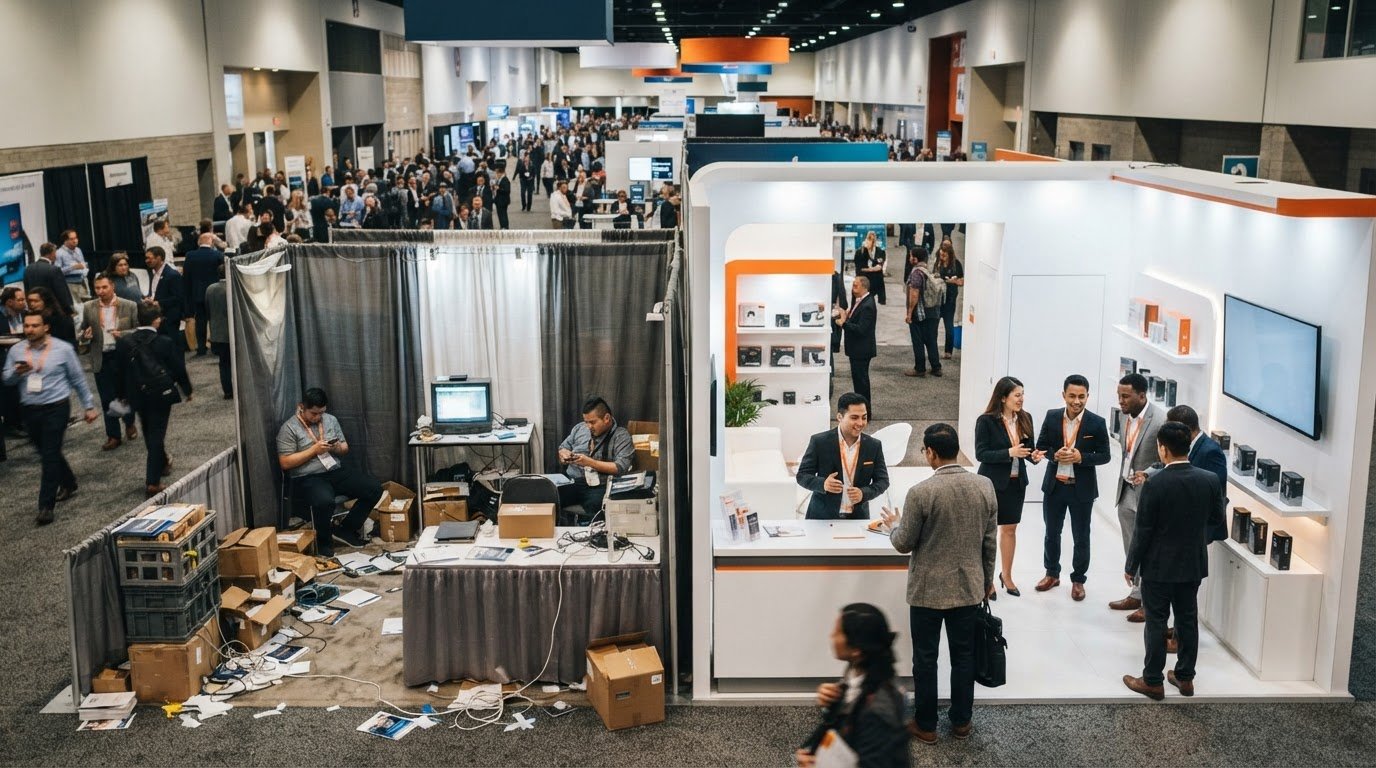
Most trade show exhibits don’t fail from a lack of budget; they fail from visual friction and spatial clutter. You spend months refining a campaign and committing substantial resources, only to watch qualified buyers breeze past your footprint without breaking stride. Pinpointing the common trade show booth mistakes to avoid before stepping onto the show floor is what separates an overlooked space from an unforgettable brand experience.
We know how disheartening it is when confusing graphics and crowded layouts dilute your core message within seconds of an attendee approaching. You shouldn’t have to battle chaotic floor plans or surprise operational headaches just to get noticed. In this 2026 exhibitor guide, you’ll discover the critical design, messaging, and logistical missteps that drain event ROI, alongside practical strategies to craft an inviting, high-converting environment. We will unpack essential sightline fixes, layout adjustments, and practical safeguards to ensure your brand commands the floor and wins valuable leads.
Key Takeaways
- Explore the common trade show booth mistakes to avoid when mapping your footprint, ensuring barrier-free entry points that invite effortless foot traffic.
- Master visual hierarchy across custom backwalls and elevated signage to communicate your primary value proposition within seconds.
- Eliminate glare, fabric sagging, and alignment errors by selecting durable, tension fabric display materials engineered for show floor lighting.
- Empower your booth team with structured roles and qualified engagement tactics that convert passing attendees into high-intent leads.
- Prevent costly freight surprises and compliance delays by synchronizing your logistics schedule with convention hall deadlines.
Spatial Layout Blunders: How Poor Floor Plans Repel Foot Traffic
An exhibition floor is a living ecosystem of movement. When exhibitors treat their footprint like a static billboard rather than an open environment, foot traffic dries up before conversations even begin. Spatial choke points rank among the most common trade show booth mistakes to avoid, because they trigger an immediate unconscious reaction to keep walking. Failing to account for sightlines, ignoring neighbor structures, or angling displays inward so passersby cannot preview your solutions simply hands potential buyers directly to competitors.
The Table Barricade: Why Perimeter Desks Kill Casual Walk-Ins
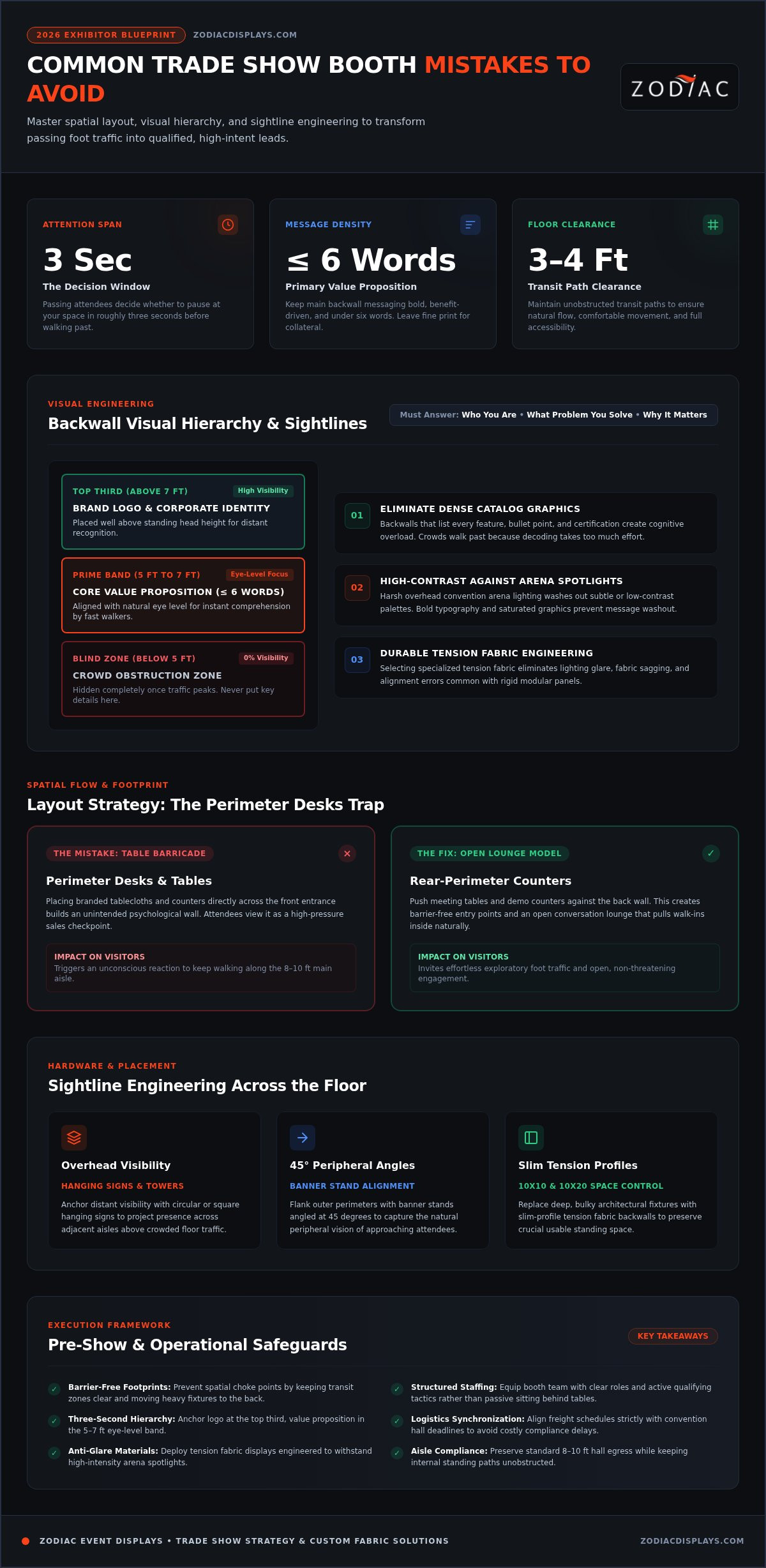
Placing branded table cloths directly across your booth perimeter builds an unintended psychological wall. Attendees perceive that barrier as a high-pressure sales checkpoint rather than a welcoming space to explore. Instead of barricading the entrance, push meeting tables and counters back against the rear perimeter. This layout shift creates an open conversation lounge with intuitive pathways that pull visitors inside naturally.
Cramming the Footprint: Maximizing Usable Space in 10×10 and 10×20 Booths
Overstuffing a 10×10 or 10×20 footprint with excessive furniture leaves zero breathing room. While convention halls require eight to ten-foot main aisle ways for clear egress, crowding your internal floor plan frustrates prospects trying to step out of heavy hall traffic. Always calculate functional standing space for both staff and guests before locking in your layout.
- Choose slim-profile custom trade show displays such as tension fabric backwalls rather than deep, bulky architectural fixtures that consume square footage.
- Integrate compact banner stands and literature racks along structural corners to maintain clear sightlines from adjacent aisles.
- Maintain at least three to four feet of unobstructed clearance through main transit paths to ensure accessibility and comfortable movement.
Mastering spatial flow transforms how people interact with your brand at any major trade show. Thoughtful arrangement guarantees that your space feels welcoming rather than confined, turning passive foot traffic into engaged prospects and preventing one of the most common trade show booth mistakes to avoid.
Graphic Design Pitfalls: The Visual Hierarchy Mistakes Costing You Leads
Attendees navigate crowded convention halls with rapid visual scans. Treating your graphics like an exhaustive catalog is one of the most common trade show booth mistakes to avoid. When a backwall tries to explain every single feature, bullet point, and certification, it communicates nothing at all. Crowds walk past because decoding dense blocks of text takes too much cognitive effort. Add harsh overhead arena spotlights that wash out subtle, low-contrast palettes, and your message disappears entirely.
The Three-Second Rule: Structuring Message Priority for Fast Walkers
Passing attendees decide whether to pause at your space in roughly three seconds. Your graphic hierarchy must answer three questions instantly: who you are, what primary problem you solve, and why it matters. Position your logo and identity elements firmly across the top third of backwall displays, well above standing head height. Dedicate the middle section to a bold, benefit-driven value proposition consisting of six words or fewer. Keep fine print, product tiers, and technical specifications off large signage altogether, saving those details for physical collateral or digital conversations.
Sightline Engineering: Utilizing Vertical Space with Hanging Signs and Towers
Exhibition halls present complex visual interference. Once floor traffic peaks, visual access below five feet drops to zero. Placing crucial contact information or secondary product taglines near the floor guarantees they remain hidden behind standing visitors.
- Anchor overhead visibility with circular or square hanging signs that project your presence across adjacent aisles and distant walkways.
- Flank outer perimeters with freestanding banner stands, angling them at 45 degrees to capture the natural peripheral vision of approaching foot traffic.
- Maintain the primary reading band strictly between five and seven feet from the floor, aligning critical messaging with natural eye levels.
Effective visual communication isn’t about shouting louder; it’s about engineering visual clarity across every sightline. Partnering with a dedicated design specialist like Zodiac Event Displays ensures your structural fabric displays and typography command attention rather than fading into the background, steering you clear of the common trade show booth mistakes to avoid.
Hardware and Material Missteps: Why Flimsy Displays Damage Brand Credibility
First impressions form instantly on an expo floor. When a structure sags, graphic panels ripple, or display feet wobble, attendees notice immediately. Skimping on physical build quality ranks high among the common trade show booth mistakes to avoid, because sub-par materials signal a sub-par product. Sticking with bargain hardware often leads to damaged components during transit, leaving your staff to wrestle with stripped fittings and misaligned locks when they should be practicing their product pitches.
Tension Fabric vs. Rigid Panels: Selecting Durable Display Substrates
Rigid panels and standard vinyl banners frequently reflect overhead convention lighting, blinding attendees with intense glare and obscuring brand colors. Dye-sublimated tension fabric solves this issue by absorbing direct light, presenting deep color saturation, and producing crisp, non-reflective imagery from every angle. High-grade knit fabrics also resist creasing, eliminating the scramble to steam wrinkles out minutes before hall doors swing open.
- Choose heavy-gauge aluminum extrusion systems to eliminate frame sag across wide backwall spans.
- Select dye-sublimated stretch fabrics that maintain uniform tension and hold up through multiple setup cycles.
- Explore dedicated event display fabrication solutions to ensure structural stability without accumulating unnecessary drayage weight.
- Rely on reinforced, wheeled transport cases featuring custom-cut foam inserts to safeguard tension frameworks through brutal multi-city freight transitions.
Outdoor and Multi-Venue Durability: Planning Beyond the Exhibition Hall
Many brands assume indoor trade show hardware transitions seamlessly to outdoor festivals or parking lot activations. That assumption quickly leads to tipped frames and torn graphics during sudden gusts of wind. Indoor banner stands simply lack the ballast, heavy-duty alloy frames, and weatherproofing needed to withstand variable outdoor climates.
If your calendar includes outdoor activations, anchor your presence using commercial-grade custom event tents engineered with reinforced hexagonal aluminum legs and water-resistant canopies. Pair these structures with flexible outdoor custom flag banners that swivel naturally with airflow, keeping your branding legible while maintaining structural stability. Investing in purpose-built materials protects your presentation and avoids the costly, common trade show booth mistakes to avoid that compromise brand reputation.
Operational and Staffing Errors: The Behavioral Habits That Drive Visitors Away
An immaculate physical build counts for very little if your on-site team acts as a deterrent. Hardware and human behavior work together as a single ecosystem. When booth ambassadors sit slumped behind registration desks staring into mobile devices or cluster together to chat, passing attendees sense an unapproachable barrier. Passive conduct ranks among the most damaging, common trade show booth mistakes to avoid, because it actively repels prospects during high-density foot traffic windows.
Booth Etiquette Fundamentals: Creating an Open, Proactive Environment
Staff members must project warmth and active readiness from the minute the exhibition floor opens. Crossing arms, consuming meals within sightlines, or hiding behind laptops signals disinterest. Instead, team members should position themselves near the outer perimeter, facing oncoming aisle traffic with open posture and warm eye contact. Establish rotating shifts every two to three hours to preserve high energy levels, giving ambassadors designated off-floor breaks to rest, recharge, and check emails away from the display footprint.
Lead Capture and Engagement: Converting Foot Traffic into Pipeline
Collecting business cards in a glass bowl or handing out generic novelty pens attracts prize collectors instead of serious decision-makers. High-impact exhibiting demands systematic lead capture paired with qualifying dialogue.
- Arm ambassadors with digital badge scanners pre-configured with qualifying drop-downs, such as purchasing timeframe, current pain points, and specific product interests.
- Train representatives to bypass generic greetings like “Can I help you?” in favor of diagnostic questions like “What brought you to this track today?” or “How are you currently handling this workflow?”
- Replace cheap promotional trinkets with exclusive digital resources, interactive micro-demonstrations, or comprehensive technical whitepapers delivered directly to an attendee’s inbox.
- Conduct brief ten-minute debrief meetings at the close of each show day to audit captured lead counts, analyze objection patterns, and realign team priorities for the next morning.
Leaving your booth half-staffed during post-keynote rush hours simply surrenders qualified conversations to nearby booths. Pair your polished physical space with an active, well-coached engagement protocol to eliminate the common trade show booth mistakes to avoid that diminish sales momentum. If you want to refine your exhibit architecture to foster effortless staff-to-attendee interactions, explore custom display systems with Zodiac Displays today.
Strategic Pre-Show Planning: From Chaos to Brand Impact
Flawless exhibition days are won months before anyone sets foot on the convention carpet. Treating logistical paperwork as an afterthought is among the most expensive, common trade show booth mistakes to avoid. When operational details slip through the cracks, brand teams find themselves troubleshooting delivery hold-ups, paying emergency contractor rates, or redesigning displays on the fly while attendees stream past empty footprints.
The Exhibitor Timeline: Mitigating Freight, Union, and Drayage Delays
Every venue operates on strict administrative windows outlined in the exhibitor service manual. Secure this comprehensive document three to six months in advance. Review ceiling heights, rigging limitations, and electrical drop points early to ensure your structure complies with local facility regulations.
- Ship freight to the designated advance decorator warehouse rather than the convention center dock, reducing material handling surcharges by up to thirty percent.
- Submit hanging sign blueprints, rigging applications, and certified structural engineering documents well before final cutoff dates to prevent on-site safety bans.
- Verify fire safety setbacks, ensuring your backwalls leave five feet of clearance from facility alarms, fire extinguishers, or emergency utility panels.
- Order designated high-draw electrical circuits and hardwired network drops early to avoid surge surcharges on load-in day.
Boutique Collaboration: Engineering High-Impact Custom Displays
Siloed marketing initiatives produce disconnected displays. If the event booth does not mirror the language of your digital campaigns, attendees experience immediate brand dissonance. Successful exhibitors work closely with creative production partners who understand structural physics as intimately as brand messaging.
Working alongside an experienced, boutique partner transforms a stressful operational checklist into a strategic competitive advantage. Instead of coordinating disparate hardware components across unknown suppliers, brands benefit from unified fabrication, precision soft signage, and reliable worldwide fulfillment. Taking this collaborative approach ensures your physical presence communicates clear, uncompromising authority from the moment your crates unlock. Connect with the Zodiac Event Displays design team to craft an intentional booth, streamline your logistical timeline, and eliminate the common trade show booth mistakes to avoid.
Transform Your Exhibition Footprint Into a High-Converting Engine
Stepping onto the trade show floor should be the highlight of your marketing calendar, not an exercise in damage control. Eliminating physical barriers, clarifying graphic hierarchy above the five-foot line, and selecting glare-free tension fabrics ensure your space invites genuine interaction from the start. Side-stepping these common trade show booth mistakes to avoid protects your event budget and sets your on-site team up for high-value sales conversations.
Achieving this level of presence requires an intentional fabrication partner, not just another hardware supplier. Backed by over a decade of specialized exhibit design and custom manufacturing experience, Zodiac Event Displays provides boutique creative support from initial concept through worldwide delivery. We engineer premium tension fabric backwalls, towering hanging signs, and rugged outdoor event canopies that command attention in any venue. When you align purposeful spatial design with expert structural execution, your brand doesn’t just attend the show; it defines it. Take control of your next exhibition cycle and elevate your event presence with custom displays from Zodiac Event Displays.
Frequently Asked Questions
What is the single biggest trade show booth design mistake exhibitors make?
Overcomplicating the visual presentation is the costliest error on the expo floor. Exhibitors often try to display their entire product catalog, overloading backwalls with dense text and competing visuals. This sensory overload forces passing attendees to work too hard to understand the offer. A successful footprint uses uncluttered graphics, an open entry path, and a single, clear value proposition that registers within three seconds.
How much text should be placed on a trade show backwall display?
Keep your primary backwall copy under ten words total. Your headline should clearly communicate your core benefit, positioned above the five-foot line so standing visitors don’t block it. Secondary text, technical specifications, and detailed bullet points belong in printed hand-outs or interactive digital demos. Prioritizing visual clarity over information density is essential to eliminate the common trade show booth mistakes to avoid.
Why is placing a table at the front of a trade show booth considered a mistake?
Positioning a table across the front boundary erects a physical and psychological barricade between your team and potential prospects. It forces staff into defensive postures behind the furniture and discourages casual foot traffic from wandering inside. Pushing counters and tables against the back or sidewalls opens the perimeter, creating an inviting lounge layout that pulls visitors into your branded environment naturally.
How do I choose between tension fabric displays and traditional panel exhibits?
Choose tension fabric displays if you want lightweight portability, rapid assembly, and rich, non-reflective graphics. Dye-sublimated fabric wraps cleanly over aluminum framing to eliminate wrinkles and prevent harsh spotlight glare. Traditional rigid panels offer solid structural heft for mounting heavy physical products, but they are heavier, prone to edge chipping, and significantly increase transit costs and material handling surcharges.
What are the most common lighting mistakes in trade show booth design?
Relying solely on ambient hall illumination is a major design pitfall. Convention center overhead lighting is notoriously flat, casting dull shadows and washing out subtle graphic colors. Exhibitors frequently fail to install focused LED arm lights along the top edge of backwalls or choose bulbs with mismatched color temperatures. Crisp, neutral white lighting ensures fabric graphics pop and guides attendee focus directly toward key messaging.
How can our team avoid unexpected drayage and convention hall freight fees?
Ship all exhibit crates directly to the advance decorator warehouse rather than the show dock to sidestep costly delivery surcharges. Consolidate small boxes onto shrink-wrapped pallets to prevent per-piece handling fees, and meet every published delivery window in your exhibitor kit. Careful freight coordination helps protect your event marketing budget against the common trade show booth mistakes to avoid that drain financial resources.
How many staff members should work a standard 10×10 trade show booth?
Two active team members are ideal for a standard 10×10 footprint. Having three or more staff members crowds the internal space, leaving no room for prospects and creating an intimidating atmosphere. A two-person team allows one representative to engage approaching attendees while the other delivers in-depth demonstrations, allowing smooth rotation schedules that keep staff energy high throughout long show hours.
 Previous reading