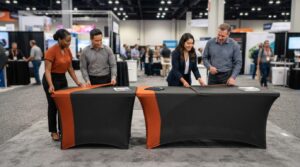




A fitted tablecloth with logo printing can make an event table look polished, but only when the cover fits and the artwork is easy to see. A cover that pulls, hangs unevenly, or hides your logo can weaken an otherwise well-planned display. Start by considering how the cover will sit on your table and which side guests will see first.
It’s natural to focus on the logo, but accurate table measurements, the cover’s shape, and the placement of your design are just as important. This buying guide explains how to measure your table, prepare artwork for clear reproduction, and place your logo where it can be seen during the event. It also compares fitted covers with other tablecloth styles to help you choose the right approach. Zodiac Event Displays brings creative design and fabrication together to create branded event materials that support your wider presentation.
Key Takeaways
- Start your fitted tablecloth with logo printing by identifying the table’s shape and recording its key dimensions before design begins.
- Plan logo placement around what guests can actually see, so the table edge, displays, and seating don’t compete with your brand.
- Match the graphic approach to the event: a prominent logo can make a clear impression, while fuller artwork can support a broader visual story.
- Gather approved logo files, brand colors, and supporting copy, then review the proof for layout and legibility before production.
- Coordinate event goals, measurements, design, fabrication, and delivery for a cohesive branded display.
Why choose a fitted tablecloth with logo printing for your event?
A fitted tablecloth is shaped to cover a table neatly, with branding printed to make your organization visible. Its close, orderly appearance can make a table feel more intentional than loose draping. At exhibitions, conferences, and promotional events, a tidy cover keeps attention on your message instead of distracting folds of fabric.
A branded cover also gives your table a clear role in the wider event presentation. A logo, brand colors, and concise supporting message can help visitors recognize who’s hosting a demonstration or staffing an information point. Strong branding depends on more than adding a logo: consistency and purposeful presentation matter, too. These Principles of effective branding offer useful context for thinking about how a printed table cover supports the identity you’re presenting.
What makes a tablecloth fitted?
A fitted cover follows the table’s shape for a close, orderly look instead of hanging in loose folds. The fit depends on the table’s shape and measurements, so the same design may look different on different tables. A neat front can reduce visual distraction around brochures, product samples, or other materials, helping visitors focus on your brand and the purpose of the display.
Where does a branded fitted cover work best?
Fitted branded covers can suit trade shows, conferences, registration desks, product demonstrations, and community events. Consider where people will approach from, how far away they’ll view the table, and what else competes for attention. A compact display table may need a concise, recognizable brand presence. A staffed information or demonstration table may also benefit from a supporting message that tells visitors what’s being presented.
Decide what the table needs to do before settling on a visual direction. At registration, the priority may be to identify your organization as attendees arrive. At a demonstration, the cover can reinforce your brand while the product or activity remains the main attraction. At a community event, a welcoming design can help your table feel consistent with nearby signage.
The strongest result balances fit and visibility. A tailored appearance gives the table a composed foundation, while deliberate logo placement connects it to your event message. The design should be clear from the distance at which guests first encounter it, and still look considered when they stop to speak with your team.
Choose the cover with the table’s actual use in mind. A display holding samples has a different job from a registration point where staff need to interact with attendees. Defining the table’s role helps you choose the right amount of coverage and the most useful position for your logo and supporting content.
How to get the fit and logo placement right
A successful fitted tablecloth with logo printing starts with the table, not the artwork. Confirm which table you’ll use, record its dimensions and shape, then decide which areas the cover should conceal or leave accessible. With those details in hand, you can position the logo for the people most likely to see it.
Accurate measurements guide how the fabric sits around the table and where the printed design can appear.
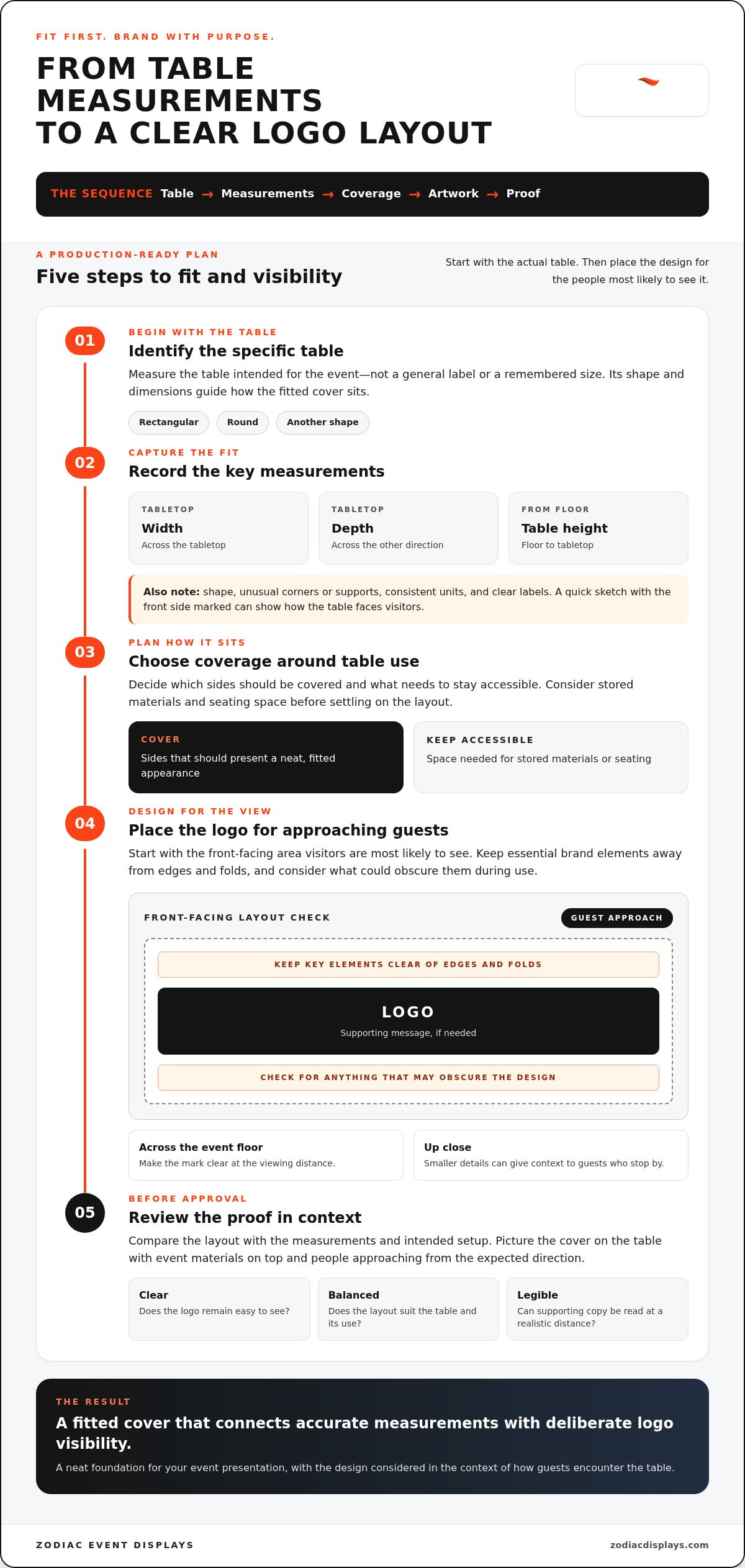
Use this sequence to move from planning to a production-ready layout:
- Identify the table. Measure the specific table intended for the event instead of relying on a general label or a remembered size.
- Record measurements. Capture tabletop width, depth, and table height, along with the shape and any unusual features.
- Plan coverage. Decide which sides should be covered and what needs to remain accessible, such as stored materials or seating space.
- Position the artwork. Choose the main viewing side and arrange the logo and supporting elements for that orientation.
- Review the proof. Compare the layout with the measurements and intended setup before approving the design.
Which table measurements should you gather?
Measure the tabletop across its width and depth, then record the height from the floor to the tabletop. Note whether the table is rectangular, round, or another shape, and describe features that could affect coverage, such as unusual corners or supports. Use consistent units and label each measurement clearly. A quick sketch with the front side marked can help show how the table will face visitors.
Where should the printed logo sit?
Start with the front-facing area visitors are most likely to see as they approach. Keep essential brand elements away from edges and folds, where they may look crowded or disrupted, and consider anything that could obscure them during use. Choose a logo size and contrast that suit the viewing distance. A mark seen from across an event floor needs to read clearly; smaller details can provide context for guests who come closer.
Review the artwork in context, not just as a flat graphic. Picture the cover on the table, with event materials on top and people approaching from the expected direction. Check whether the logo remains clear and balanced, and whether supporting copy is legible at a realistic distance. Make adjustments during proof review so the final design reflects the actual event setup.
Clear measurements and thoughtful artwork placement bring fit and visibility together. Zodiac Event Displays offers custom event display design to help create a table cover that works with your broader event presentation.
Compare fitted tablecloth options by event use and branding needs
The right layout depends on what the table does and how visitors encounter it. A fitted tablecloth with logo printing can support quick recognition, provide a visual base for product information, or reinforce a larger booth design. Before choosing a logo-led composition or fuller graphics, consider viewing distance, table activity, and what will occupy the tabletop. The comparison below links common event setups with a practical branding priority.
| Event type | Audience distance | Table function | Primary branding goal |
|---|---|---|---|
| Trade show | Across an aisle, then up close | Display samples and start conversations | Make the organization easy to recognize from a distance |
| Conference registration | Approaching attendees | Welcome guests and support check-in | Identify the host clearly and keep the front visually orderly |
| Product demonstration | Close, with some passersby farther away | Hold equipment or samples during a demonstration | Reinforce the brand without distracting from the activity |
| Community event | Varies with the layout | Share brochures or provide information | Create an approachable, consistent presence |
Which branding layout suits your event?
If quick recognition is the priority, use a clear logo-first composition with open space around the mark. At a busy trade show, visitors may spot the table before they can read smaller copy, so a strong focal point helps your brand register quickly. A short message or restrained graphic can add context when guests stop. Keep the logo prominent, and use approved artwork and brand colors for a coherent look.
A fuller graphic treatment can tell a broader brand story, but visual hierarchy still matters. The logo should be easy to find, and secondary elements should support it rather than compete. Consider the real tabletop setup: staff, samples, brochures, and demonstration equipment may cover part of the printed area. Leave space where activity is likely, and avoid putting essential information where objects will routinely sit.
How should the cover coordinate with the booth?
Think of the table as one part of the event environment. Align its colors and visual hierarchy with the booth’s backwall and nearby signage so each element feels connected without repeating every message. If the backwall already carries detailed product information, the table cover can act as a clean brand anchor. If the table is the first point of contact, a concise supporting message can help orient visitors.
Step back and assess the full arrangement: the cover, backwall, adjacent signs, products, and staff should guide attention rather than compete for it. For a broader framework on shaping a cohesive booth, explore the custom trade show display guide. Giving each branded element a clear role helps the overall presentation feel intentional.
Prepare logo artwork and review the proof before production
Clear artwork gives the design team a stronger starting point for a balanced print layout. Gather your approved logo, brand colors, and supporting copy before design begins instead of sending details in separate rounds. That helps keep the visual direction consistent and makes it easier to judge whether the finished cover will represent your brand accurately.
A vector logo is useful when your brand team has one because it can be scaled without the same pixelation concerns as a small raster image. Send the strongest source file available, along with any brand guidelines covering color use, spacing, or approved logo variations. These details help the fitted tablecloth with logo printing feel like part of your brand rather than an isolated graphic.
What should you provide for logo setup?
Share the logo variation intended for the event and identify which elements must remain prominent. Provide required wording exactly as it should appear, including capitalization and punctuation, and flag any supporting graphics that need to be retained. If you have several logo versions, clearly label the approved option. A complete handoff helps the design team build the layout around the right assets and avoid guesswork.
What should you check on the artwork proof?
Review the complete layout in its intended orientation, not just a cropped logo preview. Check that it corresponds to the table measurements and the direction the table will face. Colors can look different on screens and in print, so use the proof to review the planned color treatment and overall contrast rather than expecting an exact screen-to-print match.
Before approving, work through this checklist:
- Spelling: Confirm the logo, names, and supporting copy are correct.
- Proportions: Check that the logo looks balanced and hasn’t been stretched or compressed.
- Color: Review the treatment against your brand guidelines and confirm key elements remain distinct.
- Placement: Make sure the main mark sits in the intended front-facing area and isn’t crowded by other graphics.
- Orientation: Verify that text and logos will read correctly from the visitor’s approach, not from behind the table.
Then picture the cover in use. Could staff, brochures, samples, or demonstration equipment obscure important content? Will the logo still be easy to notice in the full layout? Resolve any unclear details before approval. A deliberate proof review brings the artwork and event setup into alignment before the design moves forward.
Zodiac Event Displays provides branded event display design to help shape a table cover around your event goals and brand assets.
Bring your fitted logo tablecloth from concept to event
A clear project process turns your event needs into a table cover that belongs in the full display. Start by identifying what the table needs to do, where it will appear, and what visitors should notice. Then bring together the table measurements, approved artwork, and brand requirements. With these details aligned, you can review the design in context before production and delivery are coordinated for your project.
What information helps shape the project?
Share the event type, table measurements, audience context, and main branding goal. Explain whether the table will welcome guests, hold brochures, display samples, or support a demonstration. Include approved logo artwork and brand guidelines, such as required colors or rules for using a particular logo variation. Describing the real setup helps the design support the way the table will be used.
A practical sequence keeps the project focused:
- Set the goal: Describe the event and the impression you want the table to make.
- Share the setup: Provide table dimensions, shape, intended orientation, and how the surface and front will be used.
- Provide brand assets: Gather approved artwork, colors, and essential supporting copy.
- Review the design: Check the complete layout against the table and wider event environment, then share any adjustments.
- Coordinate production and delivery: Align the next steps with the project requirements and event plans.
This coordinated approach can also help the table cover work with other event elements. Zodiac Event Displays brings creative design and fabrication together with global delivery for event displays and soft signage. For a broader view of how those pieces come together, explore event display fabrication as part of a coordinated brand environment.
How does a design partnership support the result?
A collaborative design process gives the table cover a role within the larger event identity instead of treating it as a standalone surface. Design decisions can account for surrounding displays, the audience’s approach, and the table’s day-to-day function. Fabrication brings the approved direction into a finished display element, with delivery planning aligned to the project.
Before moving ahead, check that the artwork, measurements, and event setup all work together. A cover for a staffed information point may need to account for brochures and conversations, while one supporting a product display should leave the featured items in focus. These practical details help create a fitted tablecloth with logo printing that feels considered from concept through event day.
Ready to shape your table cover around your event requirements? Share your goals, measurements, and artwork with Zodiac Event Displays to start your tablecloth project.
Make your next event table part of the story
Your event table is more than a place to set materials. It’s a point of welcome, conversation, and recognition. Give it a clear role in the experience you want guests to have, whether that means making your organization easy to spot or creating a natural starting point for a product conversation.
A fitted tablecloth with logo printing can support that goal when its design reflects your event and the way your team will use the space. Think beyond a single event, too. Consider how the cover can contribute to a consistent brand presence across future displays and audience touchpoints.
With a thoughtful concept and a coordinated design-to-delivery process, your table cover can become a polished part of a larger event identity. Zodiac Event Displays brings creative design and fabrication together to create event branding for clients around the world.
Start planning your fitted logo tablecloth with Zodiac Event Displays and make your next event table a confident, welcoming part of your brand presentation.
Frequently Asked Questions
What is a fitted tablecloth with logo printing?
A fitted tablecloth with logo printing is a table cover shaped to sit neatly around a table and display a printed brand mark. It can give an event setup a more tailored appearance than fabric arranged in loose folds. The final look depends on the table’s shape, the coverage you need, and how the design works with items placed on the tabletop. It serves as both a practical cover and part of your visual presentation.
How do I measure a table for a fitted tablecloth?
Measure the actual table you’ll use instead of relying only on a venue’s standard table description. Record the tabletop width and depth, plus the height from the floor to the tabletop. Note details such as rounded corners, a central support, or a wider base that could affect how the cover sits. A quick sketch showing the front and any unusual features can clarify your measurements.
Can I print a large logo on a fitted tablecloth?
Yes. A logo can be a prominent design feature when the artwork suits the intended print size and the layout gives it room to read clearly. Keep the logo’s original proportions rather than stretching it to fill a panel. Consider how it will look from the distance visitors first see the table and whether products or staff may block part of it. Reviewing the proof helps you judge its scale within the full design.
Where should a logo go on a fitted tablecloth?
Place the main logo on the side visitors are most likely to face, where table contents won’t routinely cover it. A registration desk may need the organization’s mark visible to people approaching the line, while a demonstration table should keep the activity in focus. Check the design in the table’s actual orientation, especially if the front could be mistaken for the back when the cover is laid flat.
What file should I send for tablecloth logo printing?
A vector logo file is a strong choice because it can be resized while preserving clean edges. Common vector formats include AI, EPS, and vector PDF. If you only have a raster image, send the largest, clearest original available rather than a small image copied from a website or email signature. Include any linked artwork and the correct logo version, and avoid editing or resaving the master file in a way that lowers its quality.
Is a fitted tablecloth better than a loose table cover for trade shows?
It depends on the booth’s needs and the look you want. A fitted cover creates a shaped, orderly appearance that can suit a compact booth or a table with a defined front. A loose cover offers a softer drape and may suit a more relaxed presentation. Consider whether staff need access to items beneath the table, how visible the table will be, and how its appearance fits with the rest of your exhibit.
How can I make a branded tablecloth match my trade show booth?
Use the same approved brand colors and logo treatment across the table cover and booth graphics, then give each element a clear role. For example, a backwall can carry detailed messaging while the table cover reinforces brand recognition. Compare the pieces side by side in the planned layout, including product samples and brochures. This helps identify clashing colors, repeated messages, or a busy focal area before the event setup is finalized.

 Previous reading