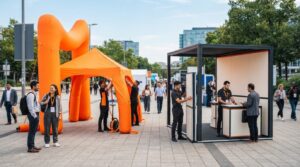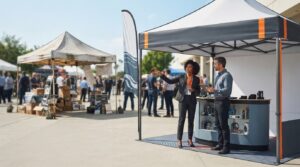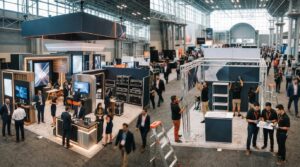



What if your trade show display looked impressive on screen but felt disconnected on the show floor? Choosing the right custom trade show display manufacturer means looking beyond attractive design or polished printing. The structure, graphics, and supporting branded assets need to work together to express your brand clearly and help visitors understand what to notice first.
If you’re unsure where design ends and fabrication begins, or how to coordinate backwalls, flags, hanging signs, tablecloths, and delivery, you’re not alone. A partner that connects these steps can bring the moving parts into one process, from the first concept to the finished display. At Zodiac Event Displays, our team brings more than ten years of industry experience to creative design, fabrication, and global delivery.
This guide explains how to evaluate a manufacturing partner, what to prepare before a project begins, and how to align display graphics, structures, and complementary event assets. Use it to move from early ideas to a trade show presence that feels cohesive and unmistakably yours.
Key Takeaways
- Look beyond display hardware and assess how design, graphics, and fabrication can work together in one coordinated process.
- Use a practical checklist to evaluate how a custom trade show display manufacturer collaborates, aligns visual elements, and plans delivery.
- Compare coordinated production with separate vendors to understand how handoffs can affect consistency and project management.
- Prepare a project brief covering event goals, audience, venue details, brand assets, display needs, and delivery destination.
- Learn how Zodiac Event Displays brings creative design, fabrication, and global delivery together to shape a unified event presence.
What a Custom Trade Show Display Manufacturer Does for Your Exhibit
A custom trade show display manufacturer turns event goals into a physical exhibit by coordinating design, graphics, and fabrication. Instead of treating each product as a separate purchase, an integrated partner considers how the main display and supporting branded assets will look and function together.
That coordination matters because an exhibit is more than a collection of signs. It’s a space where visitors discover your company, products, and ideas. A clear visual system helps people recognize your brand across the booth and understand where to look, explore, or start a conversation. For context on the purpose and formats of these events, see What is a Trade Show?
Manufacturer, printer, or design partner: what is the difference?
A design partner shapes the creative direction, translating brand goals into a visual concept and exhibit layout. Graphic preparation adapts the concept to specific display surfaces, printing produces the graphics, and fabrication builds the structures that support them. These roles may be handled by separate vendors or coordinated as part of a broader project. Ask who is responsible for each stage and how decisions, artwork, and specifications move between them.
When the stages aren’t aligned, graphics may not fit the structure as intended, or separate pieces may feel visually disconnected. Coordinate the layout, artwork, and physical display from the outset so they support the same result.
An integrated custom-display manufacturing partner connects brand strategy, design, graphics, and fabrication so each exhibit element contributes to one cohesive presence.
Which branded assets can work together at a trade show?
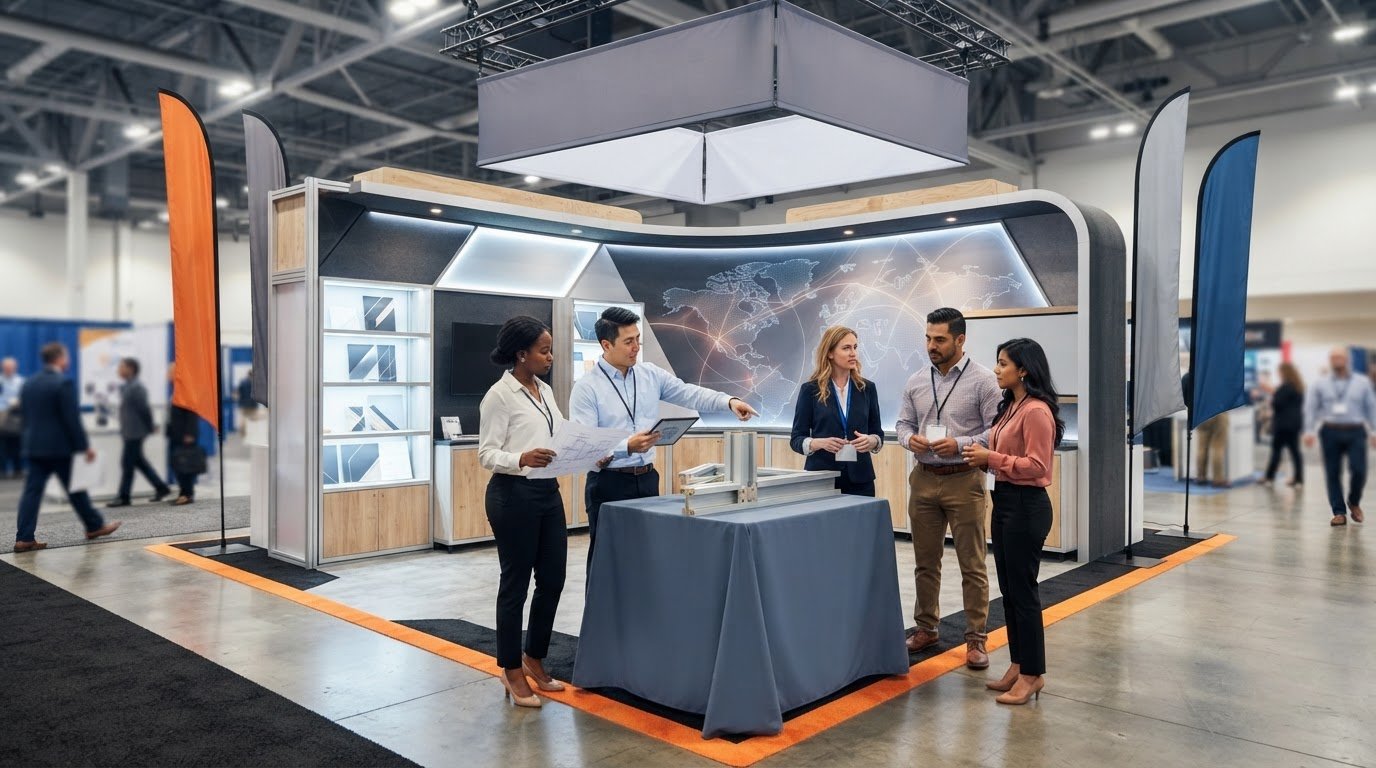
A backwall can establish the booth’s visual focus, while custom flags and hanging signs extend brand visibility around the space. Tablecloths and banner stands can carry the same visual language to a welcome point, product area, or supporting message. Each asset has a different job, but the collection should still feel like one exhibit.
Connect separate pieces with a consistent system of logos, colors, typography, imagery, and message hierarchy. For example, introduce a key phrase on the backwall and repeat it on a banner stand, while using the same brand colors on the tablecloth and flags. Zodiac Event Displays coordinates creative design and fabrication across trade show displays and complementary assets, with projects managed through global delivery. Explore our trade show display solutions to see how individual pieces can support a unified exhibit.
How to Evaluate a Custom Trade Show Display Manufacturer
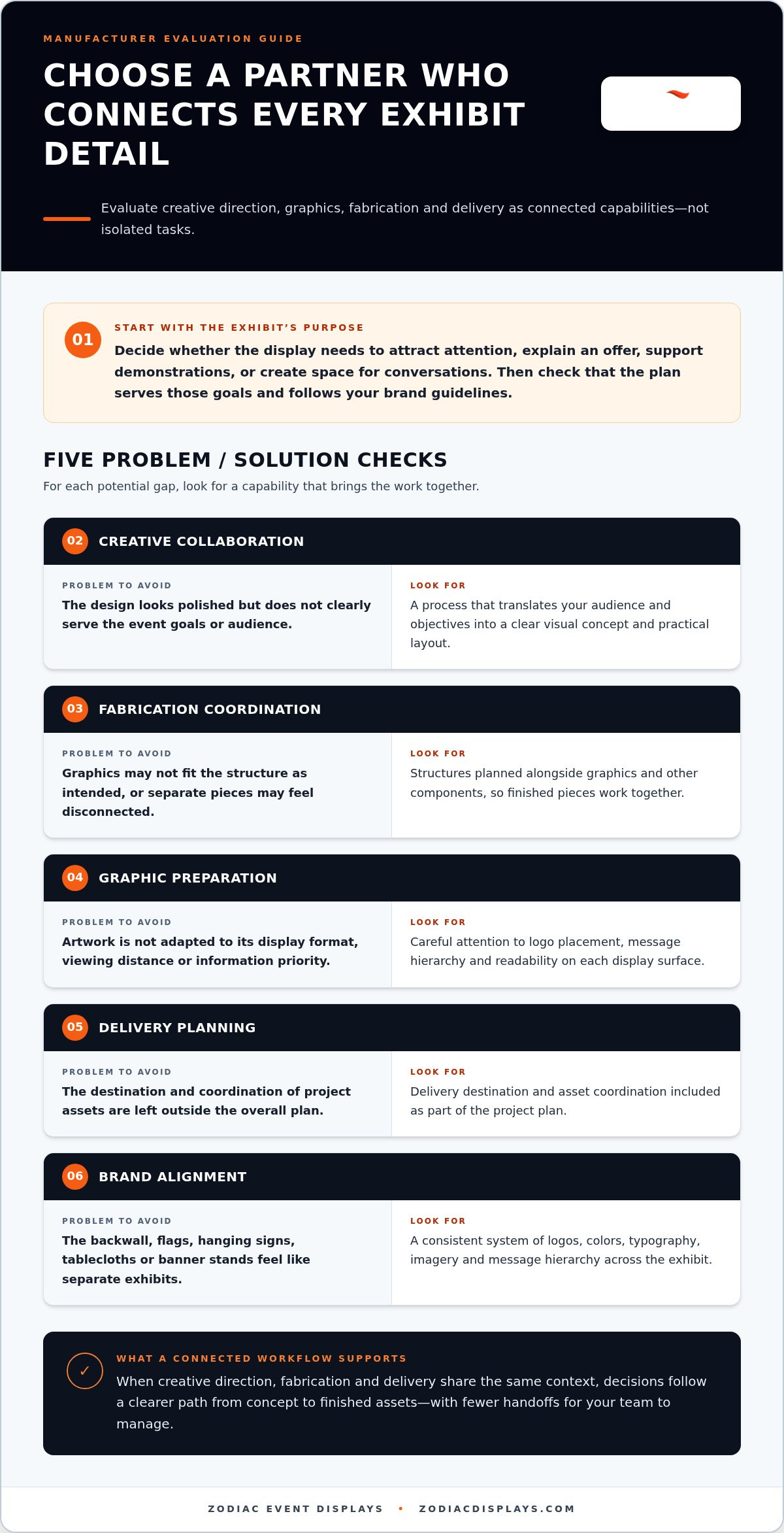
The right partner should help your exhibit support your brand and event objectives. Look at how creative direction, graphic preparation, fabrication, and delivery planning fit together. Start with what the exhibit needs to accomplish: attract attention, explain an offer, support demonstrations, or create space for conversations. Then assess whether the display plan serves those goals and follows your brand guidelines.
Use this checklist to assess project fit:
- Creative collaboration: Does the process translate your audience and event goals into a clear visual concept and practical layout?
- Fabrication coordination: Are structures planned alongside graphics and other components so the finished pieces work together?
- Graphic preparation: Is artwork adapted to each display format, with attention to logo placement, message hierarchy, and readability?
- Delivery planning: Are the destination and coordination of the project’s assets included in the overall plan?
- Brand alignment: Can the design carry your visual guidelines consistently across the full exhibit?
Can one partner coordinate design, fabrication, and delivery?
A connected workflow gives a project a clearer path from concept to finished assets. When creative direction, fabrication, and delivery are coordinated, decisions share the same context and your team has fewer handoffs to manage. Zodiac Event Displays brings these stages together, drawing on more than ten years of industry experience and serving clients worldwide. This end-to-end approach connects the visual idea to the physical display and its destination.
How should display graphics support your brand?
Graphics need to work from a distance as well as up close. A prominent logo and clear message hierarchy help visitors understand who you are and what you offer, while consistent colors and imagery connect different components. Prepare artwork for its intended format and viewing distance: a headline designed to catch attention across an aisle has a different purpose from supporting information viewed nearby. Give each surface a clear priority instead of crowding it with competing messages.
Assess creative partnership, fabrication coordination, graphic preparation, and delivery planning as connected capabilities, not isolated tasks. This gives you a fuller picture of how your exhibit can move from brand vision to a cohesive event presence. Explore Zodiac’s coordinated display approach to see how design and fabrication can support a unified result.
Custom Display Manufacturer vs. Separate Vendors: Compare the Workflow
A coordinated partner and a group of separate vendors can both support a successful exhibit. The difference is how creative direction, production tasks, and communication are organized. A custom trade show display manufacturer coordinating multiple stages can provide one connected workflow. A multi-vendor approach lets your team work directly with specialists for separate tasks. The better fit depends on the display’s complexity and the time and resources your team can dedicate to coordination.
| Project area | Coordinated partner | Separate vendors |
|---|---|---|
| Creative direction | One team can carry the visual concept across the display components it coordinates. | Your team may need to communicate the same brief and brand direction to each vendor. |
| Production handoffs | Design and fabrication decisions can be connected within a shared workflow. | Artwork, specifications, and files may pass between teams, with handoffs managed by you or a project lead. |
| Brand consistency | A common creative direction can help align structures and graphics. | A shared visual brief and clear brand guidelines help separate teams stay aligned. |
| Coordination | Communication can be centralized for the stages handled by the partner. | Your team coordinates timelines, updates, and responsibilities across vendors. |
What changes when several vendors share one exhibit project?
Separate teams can bring focused expertise, but each handoff needs clear ownership. A designer might supply artwork to a printer while a fabrication team works from structural plans. Questions can arise about which file is current, whether an update affects another component, or who owns the next decision. A shared timeline, named points of responsibility, and one approved visual brief make those connections easier to manage. With that structure in place, a multi-vendor model can suit a project, particularly when your internal team is ready to coordinate the moving parts.
When does an integrated display partner make sense?
Consider a coordinated model when your exhibit combines several branded assets, needs a unified creative direction, or involves delivery across locations. It can also suit a team that wants fewer separate production relationships to manage. For a simpler project with established artwork and a clearly defined product need, separate specialists may fit your workflow. Start with the event goal, project scope, and internal resources, then choose the model that keeps decisions and responsibilities clear.
Zodiac Event Displays brings creative design, fabrication, and global delivery together for projects that call for coordinated event assets across locations. This connected approach carries one brand vision from the initial concept through the finished display.
How to Prepare a Trade Show Display Project Brief
A clear brief gives your creative partner the context to turn event goals into a practical display plan. It doesn’t need to settle every design question upfront. Gather the essentials below so your custom trade show display manufacturer understands what the exhibit needs to do, how it should look, and where it needs to go.
What information belongs in a custom display brief?
Work through these steps before the project begins. If a detail is undecided, mark it as open instead of guessing. That keeps early creative discussions focused on the decisions you can make.
- Define the event purpose. State what you want the exhibit to support, such as introducing a product, building brand awareness, or creating a welcoming space for conversations.
- Describe your audience. Note who you hope to reach and what they should understand or remember after visiting.
- Share event and venue details. Include the event name and dates, venue context, intended display locations, and known practical constraints. A floor plan or event-provided display guidelines can help show the setting.
- Gather brand materials. Collect approved logos, brand guidelines, artwork, messaging, and relevant reference images. Identify which materials are current and which examples are for inspiration only.
- List display needs. Note the pieces you’re considering, such as a backwall, flags, tablecloths, or hanging signs. Describe the impression you want them to create and how each should support the event goal.
- Specify the delivery destination. Provide the intended destination for the display assets and any receiving or coordination details you already have. This brings delivery into the project plan from the start.
How can multiple display assets feel like one brand experience?
Think of every piece as part of one visual story. Consistent colors, typography, imagery, and messaging can link a backwall to flags, tablecloths, or hanging signs without making every surface identical. For example, the backwall might carry the main message, while a flag repeats a recognizable brand color and a tablecloth supports the same polished look at a welcome area. Explain these relationships in your brief, including which messages should lead and which should be secondary.
Early clarity helps a creative partner shape the layout, graphics, fabrication, and delivery plan around the same objectives. It also makes missing decisions easier to spot before they affect the rest of the project. Zodiac Event Displays brings creative design and fabrication together with global delivery to coordinate event assets across locations.
Ready to turn your event goals and brand materials into a cohesive display plan? Explore Zodiac’s display approach.
Work with Zodiac, a Custom Trade Show Display Manufacturer in Denver
The right partner brings your brand vision and practical event needs into the same conversation. As you compare options, consider whether the team can connect creative direction with fabrication, coordinate the display elements you need, and plan around their destination. This joined-up perspective helps turn a project brief into an exhibit that feels purposeful, polished, and true to your brand.
Zodiac Event Displays is a Denver-based boutique branding agency serving clients worldwide. With more than ten years of industry experience, the team manages event display projects from creative design and fabrication through global delivery. The work goes beyond supplying individual pieces: it shapes a coordinated event presence around your goals, brand identity, and show environment.
A collaborative process from creative direction to finished displays
Every project starts with context. Share what the event needs to accomplish, who you want to reach, the brand guidelines you follow, and the setting where the display will appear. Creative design can then shape a visual direction for the exhibit, while fabrication brings the planned display elements together. Delivery planning keeps the destination in view as the project takes shape.
Your goals might call for a backwall to anchor the booth, custom flags or a hanging sign to extend the visual presence, or tablecloths and banner stands to support other areas. The right mix depends on your brief. Zodiac Event Displays coordinates display projects through design, fabrication, and global delivery, carrying a consistent direction across the assets and locations involved.
Bring your event vision into focus with a project conversation
Before starting, gather the details that will make the first discussion productive: event name and dates, audience, venue context, approved logos and artwork, key messages, desired display elements, and delivery destination. You don’t need every creative decision finalized. A clear picture of what you know, along with any open questions, gives the team a strong starting point for shaping the project around your needs.
For a custom trade show display manufacturer, collaboration means connecting the vision to the details that bring it to life. Explore Zodiac Event Displays to see how a creative production partner can support a cohesive exhibit. Start a conversation about your display project.
Turn Your Trade Show Vision Into a Cohesive Exhibit
The right custom trade show display manufacturer does more than provide display pieces. Look for a partner who connects your event goals and brand guidelines with creative design, fabrication, and delivery planning. A clear project brief gives the process purpose, while a coordinated workflow can keep the exhibit’s elements aligned from concept through finished assets.
Zodiac Event Displays is a Denver-based boutique branding agency serving clients worldwide. With more than ten years of industry experience, the team manages projects across design, fabrication, and global delivery, helping bring a unified brand presence to trade shows and events.
Bring your event details, brand assets, desired display elements, and delivery context into the conversation. Those details can shape a display plan that reflects your vision and supports the experience you want visitors to have. Start a conversation about your display project and take the first step toward a confident, memorable event presence.
Frequently Asked Questions
What does a custom trade show display manufacturer do?
A custom trade show display manufacturer turns event goals and brand identity into physical display assets. Depending on the project, this can involve creative design, graphic preparation, fabrication, and delivery planning. The result may include a main display alongside complementary pieces such as flags, hanging signs, or banner stands. A coordinated process helps each element support the same visual direction and purpose.
How do I choose a custom trade show display manufacturer?
Choose a partner whose capabilities and workflow fit your project. Consider how the team connects creative direction, graphics, fabrication, and delivery, and whether it can align display choices with your brand guidelines and event objectives. Share event details, audience, venue context, desired display elements, and delivery destination. Clear ownership of decisions and communication helps keep the work organized from brief to finished assets.
Can one manufacturer design and fabricate a complete trade show display?
Yes. One partner can manage creative design and fabrication as part of an end-to-end display project. This connected approach carries the original concept into the physical exhibit and coordinates related branded assets. Zodiac Event Displays manages projects from creative design and fabrication through global delivery. Sharing your event goals, brand materials, and display needs gives the team the context to shape a cohesive project.
What should I include in a custom trade show display project brief?
Include the event name and dates, your goals, target audience, venue details, and the impression you want the exhibit to create. Add brand guidelines, approved logos, artwork, key messaging, and reference images. List the display elements you’re considering, such as a backwall, flags, tablecloths, or hanging signs, and note their intended locations. Include the delivery destination and known practical constraints so planning starts with a clear picture.
How can I make different trade show display pieces look cohesive?
Use a shared visual system across every piece, including consistent colors, typography, logos, imagery, and messaging. Give each display element a clear role: a backwall might carry the primary message, while flags or hanging signs extend brand visibility and a tablecloth supports a welcome area. Keep the visual hierarchy consistent so visitors can recognize the brand and understand what to notice first across the exhibit.
Does a custom trade show display manufacturer deliver internationally?
Some manufacturers manage delivery beyond their home region. Zodiac Event Displays is based in Denver and serves clients worldwide, managing event display projects through global delivery. For an international event, include the destination and relevant event details in your brief. This gives the team useful context for coordinating the display assets as part of the wider project, alongside creative design and fabrication.
What is the difference between a trade show display manufacturer and a printer?
A printer produces display graphics, while a manufacturer focuses on creating the physical display structures. Some project teams coordinate these roles separately; an integrated display partner can manage design and fabrication together, with graphics considered as part of the complete exhibit. The distinction matters because artwork needs to suit its intended display format, and the graphics and structure should support one another in the finished presentation.
 Previous reading