



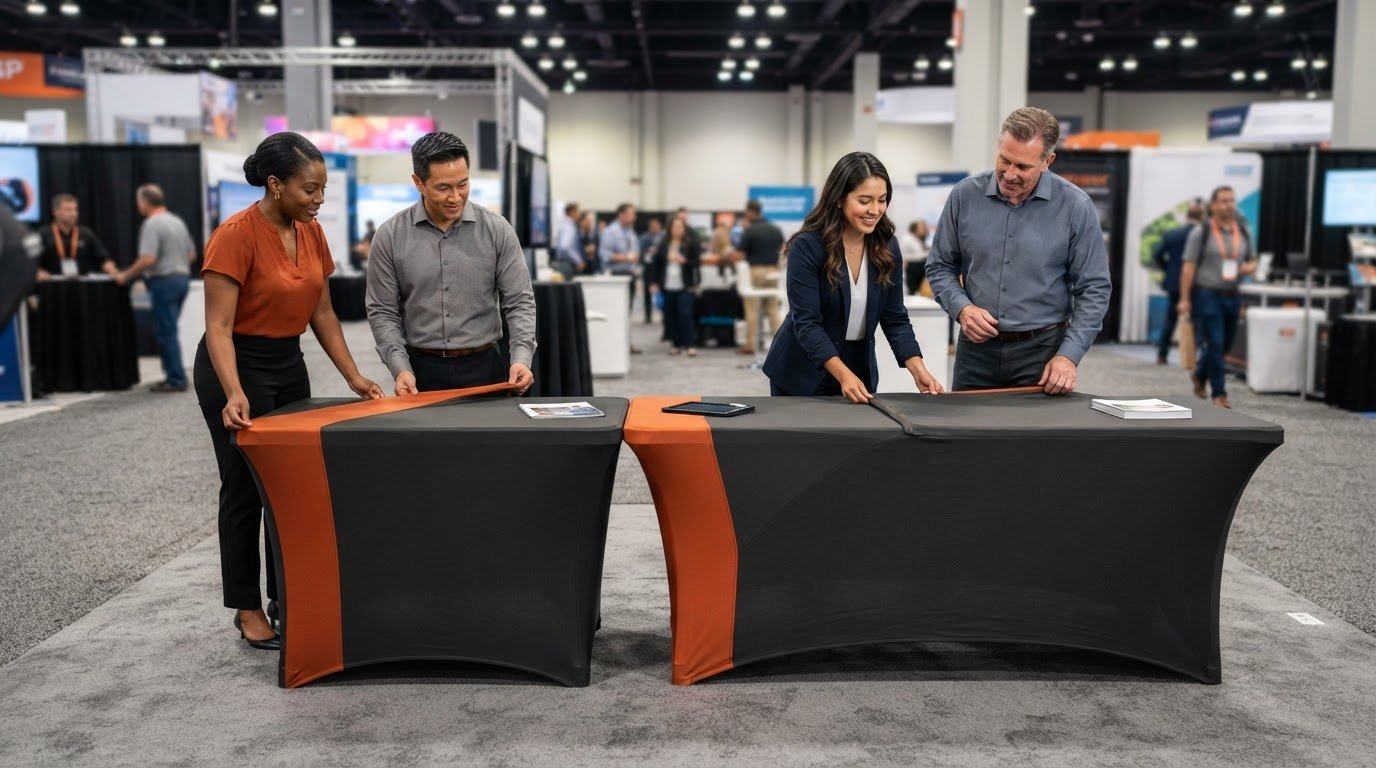
What if one table cover could work across different event setups without making your booth look like a compromise? A convertible trade show table throw can offer that flexibility, but it still needs to fit well and keep its graphics balanced across the front and sides. The goal is one versatile cover that looks purpose-built in every planned configuration, not loose or visually off balance.
This guide explains how convertible throws work, how to compare table sizes and coverage styles, and how adjustable panels or closures can affect fit and artwork placement. You’ll also learn what to include in a custom design brief, from table configurations to brand elements that need to stay visible. Zodiac Event Displays creates custom table cloths as part of coordinated event environments, helping your table work in harmony with the rest of your booth.
Key Takeaways
- A convertible trade show table throw can suit events with varying table setups, but the finished cover should still look intentional in each one.
- Compare adjustable coverage with a fixed-size throw by considering fit, graphic placement, storage, and how often you’ll reuse it.
- Start with the tables you’ll encounter, then account for viewing angles, event frequency, and brand priorities.
- Place essential graphics in areas that remain visible across the throw’s intended configurations.
- A table cloth designed to complement your booth’s visual identity can help create a more cohesive trade show presence.
What Is a Convertible Trade Show Table Throw, and When Does It Make Sense?
A convertible table throw is an adjustable cover designed to fit more than one table configuration. Instead of choosing a separate cover for every table width, an exhibitor can adapt one branded asset for different setups. That flexibility can simplify event preparation, but it is worthwhile only if the throw fits each table and supports the intended booth presentation.
At a trade show, a table cover is one visible part of the booth, alongside the displays and messaging that draw people in. For a concise overview of the event format, see What is a Trade Show?. Choose a cover that supports the full presentation, not just one that fits over the tabletop.
How does a convertible table throw change size?
Convertible construction varies. Some designs use panels that fold or fasten in different positions to adjust the cover’s width. For example, Premier Table Linens describes a cover that changes between two table widths using folding side panels. That illustrates one approach, not a specification for every adjustable throw.
Changing the configuration affects more than tabletop fit. It can change how the fabric falls at the corners, how far it hangs toward the floor, and which front or side surfaces remain covered. Those shifts can also affect logo and message placement. Before choosing a design, consider each setup from attendee viewpoints and check whether the graphics remain clear and balanced.
Who benefits most from an adjustable table cover?
A convertible trade show table throw is most useful when an exhibitor regularly encounters different table widths across events or venues. One adaptable cover may reduce the need to store and transport multiple covers while providing a consistent branded element for varying setups.
The trade-off is less compelling when every event uses the same table and the booth layout rarely changes. In that case, a fixed-size cover designed for that configuration may offer more predictable drape and artwork placement. Event frequency matters, too: teams attending multiple events may value reusability more than exhibitors with an occasional, consistent setup.
Consider the practical routine as well as the visual result. One adaptable cover may suit a compact storage plan, while a team with room for separate, precisely fitted covers may prioritize a consistent look on a specific table. Choose based on actual event patterns, storage needs, and brand priorities. Zodiac Event Displays brings more than ten years of design and fabrication experience to custom table cloths, helping align the cover with your table configurations and wider booth goals.
How Convertible Table Throws Balance Fit, Coverage, and Brand Graphics
A polished result starts with the table, not the artwork. Width, depth, height, corner shape, and the desired fabric drop all affect how a cover sits. With an adjustable design, each configuration can change the drape and shift the printable area. A logo placed neatly on the front in one setup may sit closer to an edge, fold, or fastening point in another.
Booth layout matters, too. At a front-facing table with a wall or display behind it, a strong front graphic may do most of the visual work. An island or corner booth can expose the table from more angles, making side coverage and consistent branding more important. The Trade Show Industry Trends and Statistics resource offers broader exhibition context, but your coverage choice should reflect your booth layout and attendee sightlines.
What measurements should buyers gather?
Measure each table the throw needs to serve. Record tabletop width, depth, and height, and don’t assume that tables described as the same width have identical proportions or corners. Note rounded edges, unusual shapes, supports, or other obstructions that could affect the drape.
- Tabletop measurements: Record the surface width and depth for every table configuration.
- Height and shape: Note table height, corner profile, and any features that may interrupt the drape.
- Finished-cover intent: Distinguish tabletop dimensions from the desired finished cover dimensions, including how far the fabric should hang on each visible side.
This distinction helps the design and fabrication plan account for the whole cover rather than treating the tabletop as the finished graphic area.
How should artwork work across both configurations?
Plan the graphic around the adjustment, not just the largest layout. Keep essential elements, such as a logo or short brand message, in areas that remain visible when panels are folded or fastened. Avoid placing important copy across seams, folds, or adjustment zones, where it may be interrupted or shifted. Supporting graphics can fill less predictable areas without carrying information attendees need to read.
Compare the design in every intended configuration. Review the front panel from a direct approach and check the sides from likely aisle or neighboring-booth angles. A front-focused layout can work well in a linear booth, while broader coverage can create a more consistent impression when visitors see the table from several sides. The goal is legibility and balance from the angles where people will encounter the display.
Before production, test the proposed artwork against each configuration using accurate table and cover dimensions. Check logo scale, margins, folds, and visible surfaces in both views, then approve the layouts together. This review helps a convertible trade show table throw adapt without making the brand feel like an afterthought. Zodiac Event Displays brings design and fabrication together for custom table cloths planned around your booth’s tables and visual goals.
Convertible vs. Fixed-Size Table Throws: Which Is the Better Trade Show Choice?
The better choice depends on your event calendar, not flexibility alone. A convertible throw can simplify preparation when tables vary, while a fixed-size cover can suit a booth that consistently uses the same table and layout. The key question is whether the adaptable option still looks intentional in every setup. Compare convenience with the fit and graphic plan you can achieve for one configuration.
| Factor | Convertible throw | Fixed-size throw |
|---|---|---|
| Flexibility | Adjusts for different planned table configurations. | Designed for one table configuration. |
| Fit | Fit and drape may vary between setups. | Can be planned around a consistent table. |
| Graphic planning | Artwork must work across each intended arrangement. | Layout can focus on one arrangement. |
| Storage | One cover may reduce the number of variations to organize. | Separate covers may be needed if table sizes differ. |
| Repeated event use | Useful when the event schedule includes different table sizes. | A natural fit for a recurring, stable setup. |
When does a convertible throw make more sense?
Choose adjustable coverage when your event program regularly uses more than one table width, such as a schedule split between venues with different table setups. A single convertible trade show table throw may simplify your event kit by reducing the number of covers staff must sort, pack, and match to each display. The convenience is worthwhile only if both configurations look polished. Review fit, drape, and graphic visibility in each one before settling on the design.
When is a fixed-size throw the stronger choice?
A fixed-size throw may be the better match when your team uses one table size and a stable booth layout event after event. With one configuration to plan around, the cover’s proportions and graphic placement can be developed for that setup instead of adapted to another. This doesn’t make fixed-size covers universally more attractive or durable. It prioritizes consistency over versatility when that better suits the event routine.
To decide, review your upcoming events: how often table dimensions change, how much kit your team wants to manage, and whether one artwork layout can stay clear in every planned arrangement. Flexibility is valuable only when it preserves a deliberate presentation. If it compromises the fit or makes the branding feel misplaced in one configuration, a dedicated cover may better support your booth goals.
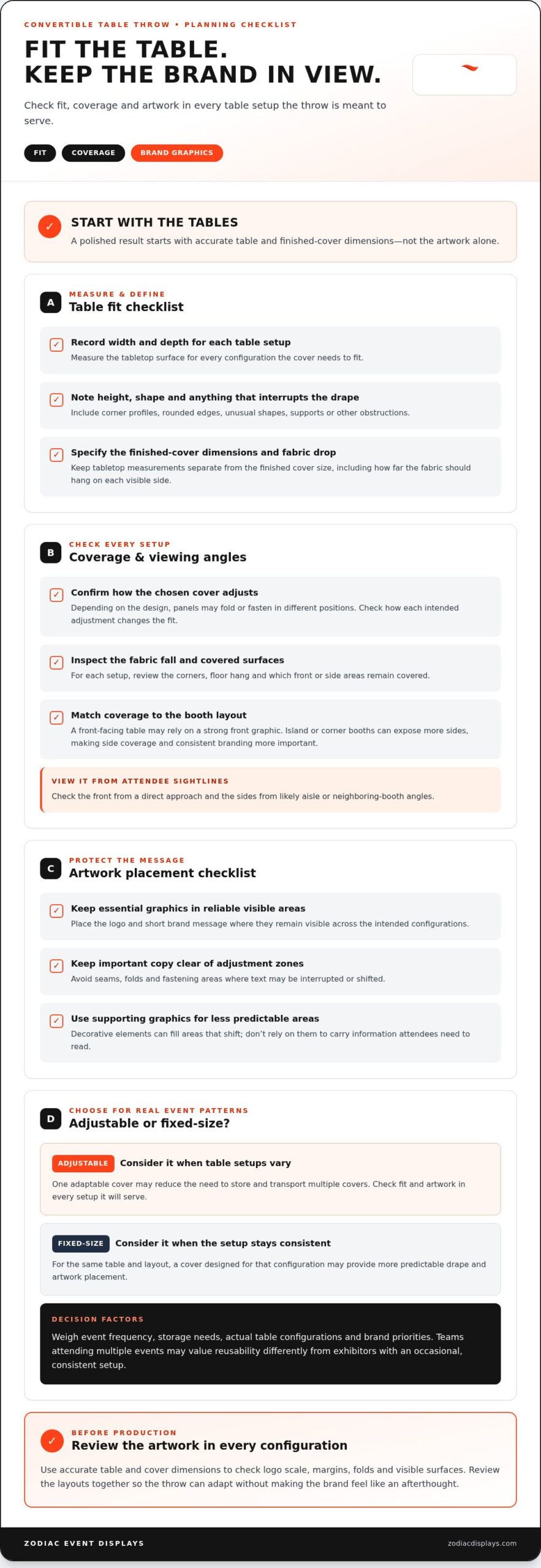
How to Choose a Convertible Trade Show Table Throw: A Practical Checklist
A clear brief turns an adjustable cover from a flexible idea into a considered event asset. Start with details your team knows firsthand, such as table setups and audience approach. Design and fabrication can then translate those priorities into a cover plan, including construction and finished dimensions.
Build a useful table-throw brief
Gather event details before discussing artwork. List the tables and venues involved, describe how each table will be used, and note what attendees should see first. Share brand assets and design preferences early so the cover complements the booth rather than feeling like a separate piece.
- List the event tables. Record each table’s width, depth, height, shape, and the venue or event where it will be used. Include unusual edges or obstructions that could affect the cover’s drape.
- Map event frequency. Note how often each setup appears on your event calendar. This clarifies whether adaptability will simplify regular use or solve only an occasional variation.
- Describe the intended use. Explain what the table supports, such as product display, demonstrations, or attendee conversations. Its role can influence which surfaces need to stay visible and clear.
- Identify viewing angles. Say whether visitors mainly approach from the front or can see the table from the sides and back. Mark the surfaces that matter most in each booth layout.
- Account for storage. Consider where the cover will be stored and how the team will pack and organize event materials. Fewer cover variations may simplify kit management, but only if one design serves the planned setups well.
- Set brand priorities. Share approved logos, required messages, brand guidelines, and preferences for color or visual style. Identify which elements are essential and which are supporting details.
- Approve artwork for every configuration. Review a mockup for each intended panel arrangement. Check the logo, message hierarchy, folds, and visible sides, then resolve feedback before production begins.
Review the design before it goes to production
Your measurements and event notes define the goal; technical details belong in the design and fabrication process. This keeps the brief useful without requiring you to determine finished cover dimensions or adjustable construction. Review the artwork in every planned configuration, not just one. Check that it is legible at a glance, aligns with the booth graphics, and feels balanced on each visible panel. A message that reads clearly in one setup may compete with a fold or shift in another.
Custom table cloth design works best when it reflects the actual table configurations and wider event identity. Explore custom event display solutions from Zodiac Event Displays to see how a table cover can work as part of a coordinated booth.
Create a Convertible Trade Show Table Throw That Complements Your Booth
A table cover can do more than finish the table. It can carry a key message, echo the booth’s visual direction, and connect separate display elements into one clear brand experience. A convertible trade show table throw adds another design consideration: the artwork should feel composed in each intended setup, not simply stretched or shifted to fit.
Start with the event goal. If the table supports product demonstrations, keep the primary message visible without competing with the products. If it anchors a conversation area, consider how its graphics relate to the display visitors see as they approach. When the cover, backwall, and other booth elements share a considered visual direction, the space feels more cohesive.
How does design collaboration improve the result?
Design collaboration connects your event goals, audience, and booth layout to the visual choices on the cover. Share how people will approach the table, which sides will be visible, and what you want attendees to notice. The artwork can then be planned for the table’s intended configurations, with attention to how the graphic reads in each one.
Zodiac Event Displays brings more than ten years of experience in event display design and fabrication, with global delivery managed as part of an end-to-end process. The team brings the project from event brief to finished table cloth, aligned with the broader booth presentation. Develop construction, dimensions, materials, and printing details for the project rather than assuming a generic example will fit.
What should buyers share to get the project moving?
A useful starting brief gives the design team a clear view of the event and the asset’s role. Include the details you know, then work through the technical considerations during design. Helpful inputs include:
- Table information: Measurements, shapes, and each intended configuration.
- Event context: Venue, event dates, how often the table will be used, and what the table will support.
- Viewing angles: The main attendee approach and which table sides need to be visible.
- Brand materials: Current guidelines, logo files, campaign messages, and related booth graphics.
- Visual priorities: The message that should lead, preferred design direction, and any elements that must remain clear in every setup.
Once concepts are prepared, review how the artwork works across the planned configurations and alongside the booth graphics. Resolve questions about hierarchy, alignment, and visibility before fabrication so the finished piece supports the presentation as intended.
Make Your Next Event Setup Feel Purpose-Built
The strongest event assets aren’t designed in isolation. They’re planned around how your team will use them, what attendees should notice, and how each piece contributes to a consistent brand presence. As you prepare for your next event, use your calendar and booth goals to give the table cover a clear role. Flexibility should support the presentation, not become the whole point.
A convertible trade show table throw can contribute to a recognizable event identity when its fit and graphics work for the setups you actually use. Think beyond a single show: consider how the table cloth can complement future booth arrangements and keep your visual story consistent.
Ready to turn your event vision into a branded table cloth? Explore custom table cloth solutions and take the next step toward a booth that feels considered and cohesive.
Frequently Asked Questions
Can a convertible table throw fit tables of different widths?
Yes, if the throw’s adjustment design is intended for the tables’ dimensions and shapes. Width alone doesn’t determine fit: table depth, height, corner profile, and desired fabric drop also matter. Before choosing a convertible trade show table throw, compare the measurements of every table it will serve and consider whether the cover must work around supports or other obstructions.
Is a convertible table throw better than a fitted table cover?
Neither is automatically better. A convertible cover may suit an event schedule with varied tables, while a fitted cover is designed around one table’s dimensions and may be a stronger match for a stable setup. Consider how often the table configuration changes, how the cover should look from attendee viewpoints, and how your team organizes event materials. The best option meets your practical needs without compromising the booth presentation.
How do I measure a table for a convertible trade show throw?
Use a tape measure to record tabletop width, depth, and height for each table. Measure the usable surface rather than relying on a venue label or remembered size, and note rounded corners, unusual edges, or anything beneath the tabletop that could interfere with the fabric. Keep these measurements separate from the finished cover dimensions, which are determined during design planning around the intended drape and construction.
Can I use the same artwork across both table configurations?
Often, yes. Keep the central brand idea consistent, but review how the artwork appears in each setup before approval. A logo and short campaign line, for example, may remain unchanged while their placement or scale is adjusted to suit the visible area. Request a visual preview of every intended configuration, then check that the important message remains clear and the design feels balanced in both.
What should I send a designer for a custom table throw?
Share table measurements, the configurations the cover needs to serve, event dates, and the sides attendees are most likely to see. Include your logo, brand guidelines, campaign messages, and graphics from related booth displays so the design feels connected. Describe what the table will be used for, such as product display or demonstrations, and identify the single message you most want visitors to remember.
How should I clean and store a custom printed table throw?
Follow the care instructions for the specific cover, since cleaning guidance can depend on its fabric and print construction. Don’t assume every printed throw can be machine washed or treated with the same cleaner. Before storage, make sure the cover is clean and fully dry, then keep it protected from dust, moisture, and sharp display hardware. Avoid placing heavy items on top if they could crease or damage the graphic.

 Previous reading