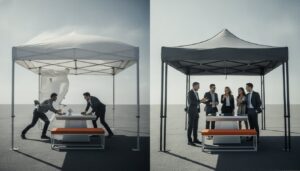



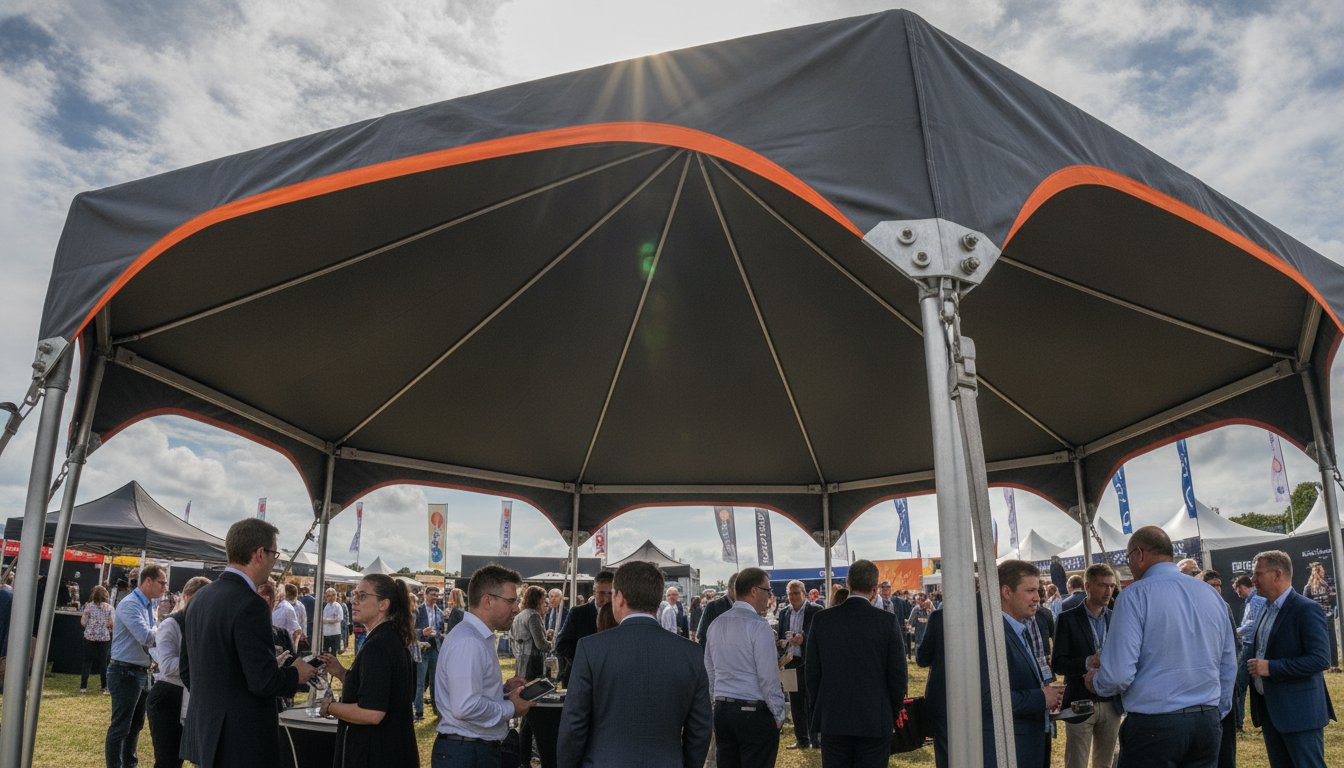
Imagine your team arrives at the year’s most anticipated outdoor festival, only for a sudden afternoon gust to twist your display into a heap of mangled metal. It’s a branding nightmare that occurs when the “skeleton” of your presentation isn’t built for the physics of the real world. Selecting the ideal custom event tent frame materials is the definitive choice between a one-season disposable and a five-year powerhouse that anchors your presence with confidence.
We know the struggle of wrestling with heavy steel frames that are impossible for small teams to transport or watching corrosion slowly ruin your vibrant graphics over time. You deserve a professional appearance that reflects your quality without sacrificing safety or ease of setup. This guide helps you master the technical science behind frame engineering so your brand remains the striking focal point of every event. We’ll analyze the durability of 40mm versus 50mm hexagonal designs, compare the weight-to-strength ratios of modern alloys, and navigate the 2026 NFPA 102 standards to ensure your investment is as secure as it is stunning.
Key Takeaways
- Identify the critical infrastructure requirements that prevent frame failure during outdoor festivals and maintain a premium brand image.
- Decode the core metallurgy of custom event tent frame materials to choose between the lightweight agility of aluminum and the heavy-duty strength of steel.
- Evaluate the engineering behind hexagonal leg geometry and connector durability to secure a professional setup that lasts for years of frequent use.
- Audit your event terrain and weather stressors using a strategic framework designed to ensure your tent stands tall in any environment.
- Learn how a partnership with a Denver-based creative consultancy turns technical fabrication into a long-term strategy for visual excellence and sustainability.
The Foundation of Brand Presence: Why Frame Materials Matter
Your event tent isn’t just a shelter; it’s the critical infrastructure that defines your brand’s physical footprint. Think of the frame as the silent partner in your marketing success. When you select custom event tent frame materials, you’re making a strategic decision that ripples through your liability profile, your team’s morale, and how high-value prospects perceive your quality. A flimsy frame that sags or wobbles sends a subconscious message of instability. Conversely, a rigid, high-grade skeleton projects a vision of permanence and precision.
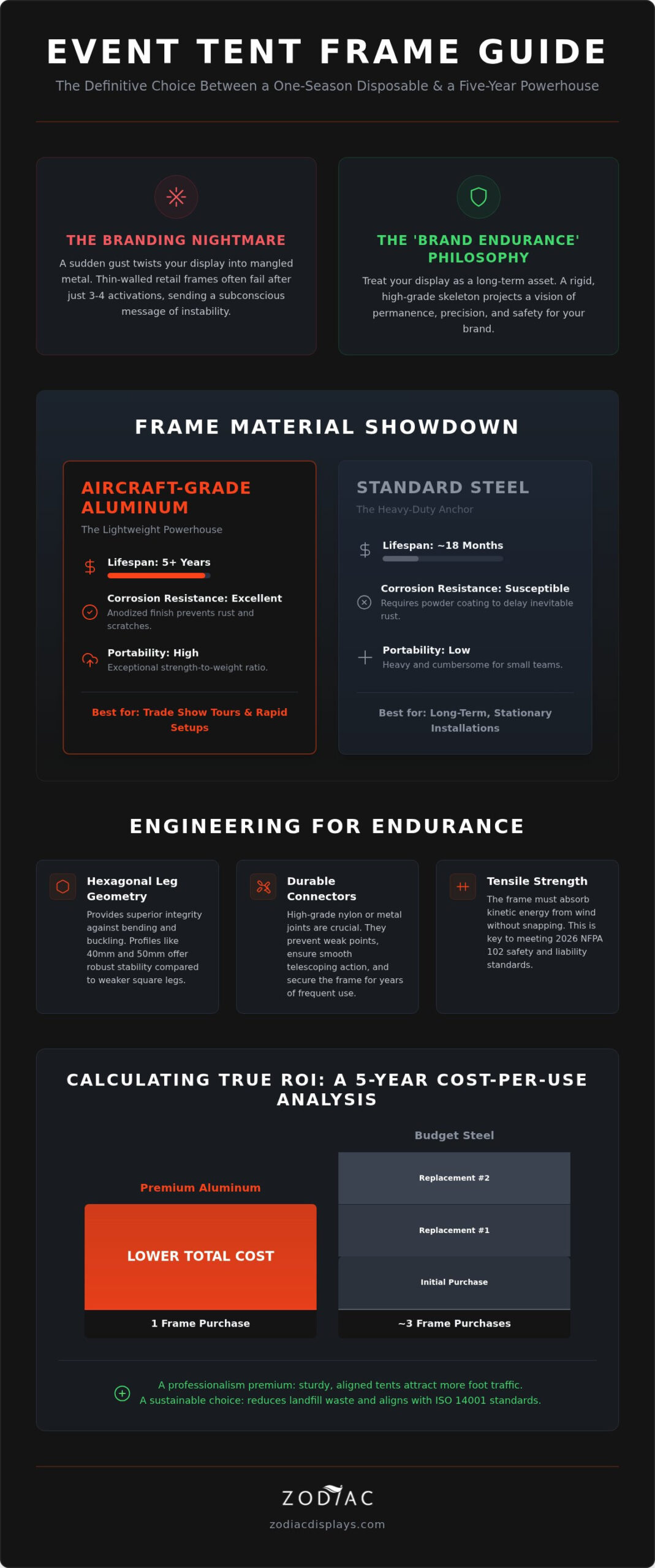
Many marketing teams fall into the “Disposable Tent Trap” by opting for thin-walled retail frames designed for occasional backyard use. These structures often fail after just three or four activations because they lack the metallurgical integrity to withstand repeated stress. We champion the concept of “Brand Endurance.” This philosophy treats your display as a long-term asset rather than a consumable expense. By prioritizing high-grade metallurgy, you ensure your presentation remains striking and safe, regardless of the environment.
Safety, Stability, and the Science of Canopy Engineering
Structural integrity starts with the physics of weight distribution. Frame weight directly influences the center of gravity; a heavier base provides a stabilizing anchor in gusty conditions, while lightweight alloys must be engineered with specific geometries to maintain balance. Material flex is equally vital. A frame needs enough “give” to absorb kinetic energy from the wind without snapping. In the context of 2026 event standards, tensile strength is defined as the maximum stress a material can withstand while being stretched or pulled before failing or permanently deforming.
How Material Choice Impacts Your Long-Term Event ROI
Smart organizations look beyond the initial invoice to calculate true cost-per-use. While a budget steel frame might seem attractive upfront, its susceptibility to rust and mechanical failure often requires replacement within eighteen months. Premium aluminum provides a significant ROI by lasting five years or more under frequent use. This longevity isn’t just a financial win; it’s a sustainable choice that reduces landfill waste and aligns with ISO 14001 environmental standards. There is also a “Professionalism Premium” to consider. A sturdy, perfectly aligned tent naturally attracts more foot traffic because it looks like a destination, not a temporary pop-up. If you’re planning a heavy event calendar, you can connect with our design team to audit your specific durability needs.
Aluminum vs. Steel: Decoding the Core Metallurgy
Choosing between aluminum and steel is the most consequential decision in your procurement process. It represents the choice between a nimble, high-performance asset and a heavy, stationary anchor. When we discuss commercial-grade custom event tent frame materials, we’re moving beyond generic descriptions into the world of specific metallurgical standards. A “commercial” tag should only be applied to materials like 6061-T6 aluminum or high-gauge, powder-coated steel that can endure the rigors of a 2026 event schedule.
There’s a persistent myth that heavier frames are inherently stronger. In reality, modern engineering allows high-tensile alloys to offer superior structural integrity at a fraction of the weight. Mass alone doesn’t stop a frame from buckling; rather, it’s the combination of alloy composition and wall thickness that dictates performance. Understanding this distinction allows you to optimize for both safety and transport logistics without over-taxing your field team.
Aircraft-Grade Aluminum: The Lightweight Powerhouse
Aluminum is the undisputed gold standard for trade show tours and rapid-setup environments. Specifically, 6061-T6 aircraft-grade aluminum offers an exceptional strength-to-weight ratio that permits a small team to manage the setup of a large display with ease. Because aluminum is naturally rust-resistant, it won’t suffer from the corrosion that plagues cheap, untreated metals. Anodization, an electrochemical process that thickens the natural oxide layer, provides a sleek, professional finish that resists scratches and keeps your brand looking premium through every season.
To keep these frames sliding smoothly for five years or more, maintenance is minimal but vital. Periodically cleaning the legs with a damp cloth and applying a dry silicone lubricant to the joints ensures the telescoping mechanism never sticks. If your team manages a demanding tour schedule, choosing a high-grade aluminum event tent ensures you’re never slowed down by equipment fatigue or mechanical failure.
Powder-Coated Steel: Balancing Weight and Weather Resistance
Steel remains a viable choice for semi-permanent outdoor installations where the frame won’t be moved frequently. Its natural heft provides a sense of grounded stability that can be beneficial in high-wind zones, provided the frame is properly weighted and staked. However, the quality of the finish is non-negotiable. High-quality powder coating is essential; it creates a thermal bond that seals the metal against moisture. Without this protective barrier, internal rust can compromise the structural integrity before the season is even over. Steel is the workhorse of the industry, but it requires a strategic approach to logistics to manage the increased weight during transport and storage.
Beyond the Metal: Leg Geometry and Connector Engineering
While the choice of metal provides the raw strength, the architecture of the frame determines how it handles real-world stress. High-performance custom event tent frame materials are only as effective as the geometry they’re shaped into. In the 2026 market, we’ve seen a decisive shift toward hexagonal profiles because they solve the structural vulnerabilities that often lead to collapse. Engineering a frame isn’t just about the alloy; it’s about how that alloy resists the twisting forces of an unpredictable environment.
Square legs are a relic of entry-level design, offering limited resistance to torque. When wind hits a flat surface, square legs tend to twist and buckle under the pressure. Hexagonal legs, however, provide multiple facets that distribute force more evenly around the perimeter. This multi-sided geometry creates a significantly higher strength-to-weight ratio, allowing 40mm and 50mm hexagonal frames to remain rigid when cheaper alternatives fail. This structural dominance makes the hexagonal leg the industry standard for any brand that values its physical presence and long-term safety.
Hexagonal vs. Square Legs: Which Shape Defies the Wind?
The physics of the hexagonal leg offer a distinct surface area advantage. By increasing the number of points that contact the internal sliders, hexagonal designs reduce friction and prevent the “rattle” that leads to metal fatigue. Precision engineering extends to the roof structure as well. The strategic integration of reinforced cross-truss geometry ensures the canopy remains taut and prevents the dangerous pooling of rainwater that often compromises structural integrity during unexpected storms. This combination of faceted legs and reinforced trusses creates a stable, professional silhouette that commands attention.
The Role of Nylon vs. Metal Connectors in Frame Longevity
The “Hidden Hardware” often determines whether your tent lasts one season or five. Connectors, sliders, and feet are the high-friction points where most mechanical failures occur. While some budget manufacturers use brittle cast iron or cheap plastic, premium frames utilize fiberglass-reinforced nylon or polished aluminum. Fiberglass-reinforced nylon is an engineering marvel; it’s lightweight, incredibly durable, and doesn’t become brittle in freezing temperatures or warp in extreme heat. It provides a level of impact resistance that protects the frame during the chaos of setup and teardown.
Metal-on-metal joints represent the pinnacle of premium fabrication. They provide a seamless glide and a locked-in feel that plastic simply can’t replicate. When paired with easy-release pull-pin sliders, these connectors improve the user experience by preventing pinched fingers and ensuring a smooth, safe setup every time. Your team’s safety and your brand’s visual precision rely on these small, often overlooked components. Investing in superior connector hardware is a strategic move that ensures your infrastructure remains reliable through hundreds of activations.
Environmental Calibration: Matching Materials to Your Event Terrain
The “best” frame material isn’t a universal constant; it’s a variable determined by where your brand intends to live. A tent that performs flawlessly in a climate-controlled convention hall might struggle on a wind-swept mountain ridge or a humid coastal boardwalk. To ensure your investment stands the test of time, you must perform an environmental audit of your activation calendar. By identifying the specific stressors of your primary regions, you can select custom event tent frame materials that are engineered for your exact reality rather than a generic average.
Ballasting, or weighting, is the essential partner to frame strength. Even the most robust 50mm hexagonal frame can become a liability if it isn’t properly anchored. In 2026, safety standards emphasize that structural integrity and ballast weight work in tandem to prevent lift and torque. While a heavier steel frame provides some natural resistance to movement, it still requires strategic weighting to meet local fire marshal requirements and ensure crowd safety. Your choice of material should always be calibrated to the terrain, the expected wind loads, and the frequency of your setups.
High-Wind and Coastal Environments: Corrosion and Stress
Salt air is a relentless catalyst for corrosion, making aircraft-grade aluminum the only viable choice for coastal activations. While steel might offer a lower entry price, the salt spray will penetrate even the smallest gaps in a powder coating, leading to internal rust that compromises the frame’s safety. For long-term coastal use, prioritize “Marine Grade” hardware, including stainless steel nuts and bolts that won’t seize up after a season near the ocean. When anchoring on sand, standard stakes won’t suffice; you’ll need specialized sand augers or heavy-duty water weights to provide a secure foundation against unpredictable sea breezes.
Rapid-Fire Activations: Prioritizing Portability and Speed
If your brand thrives on multi-city tours and rapid-fire trade show circuits, portability becomes your primary metric for success. You need a frame that a small team, or even a single person, can deploy without physical strain. This is where the engineering of high-tensile aluminum shines. It offers the structural rigidity required for safety without the back-breaking weight of traditional steel. We recommend a 50mm hexagonal aluminum frame for professional tours because it strikes the perfect balance between lightweight agility and the “Brand Endurance” needed to survive hundreds of setups and teardowns. To find the perfect match for your tour schedule, you can browse our custom event tents and compare weight-to-strength ratios.
The Zodiac Standard: Sustainable Fabrication for High-Impact Displays
At Zodiac Event Displays, we act as the essential bridge between your bold creative vision and the technical realities of fabrication. We don’t believe in a one-size-fits-all approach to event infrastructure. Instead, we adopt the role of a seasoned strategist, curating custom event tent frame materials that specifically match your brand’s unique endurance requirements. This boutique approach ensures that every component, from the alloy in the legs to the finish on the connectors, is chosen to exceed standard industry requirements and deliver a premium experience.
Sustainability is a core pillar of our fabrication philosophy. In an industry often plagued by “disposable” marketing assets, we prioritize longevity as the ultimate form of environmental responsibility. By engineering tents that last five years or more of frequent use, we help our clients reduce their carbon footprint and align with ISO 14001 environmental standards. Choosing high-impact, durable materials isn’t just a win for your budget; it’s a commitment to reducing landfill waste by investing in assets that refuse to fail after a single season.
Boutique Design Meets Global Fabrication Excellence
Our process begins in Denver, where our creative design team collaborates with you to translate your brand identity into a physical structure. We move seamlessly from initial consultation to technical file preparation, ensuring every detail is optimized for visual excellence. With over a decade of industry experience, we understand the physics of the field. We proactively prevent common failures, such as frame snapping or connector warping, by selecting materials that can handle the specific stressors of your event terrain. This expertise allows us to offer a comprehensive ecosystem of displays, including:
- Backwall Displays and Custom Flags for layered branding.
- Inflatables and Hanging Signs that command attention from a distance.
- Banner Stands and Table Cloths for high-touch interactions.
From Creative Consultation to Worldwide Delivery
Managing the complexities of a global brand rollout requires a partner who understands both the art of design and the science of distribution. Zodiac manages the logistics of global delivery from our Denver base, providing you with the peace of mind that your materials will arrive on time and in perfect condition, whether they’re headed to a local trade show or an international festival circuit. You aren’t just buying a tent; you’re gaining a dedicated ally committed to your visibility and growth. Our team remains accessible and supportive throughout the lifecycle of your display, offering a personalized level of attention that cold, corporate factories simply cannot match. Contact our branding experts today to start your custom project and ensure your brand stands tall in any environment.
Elevate Your Presence with Engineered Endurance
Mastering the technical nuances of your display infrastructure turns a simple pop-up into a powerful brand landmark. We’ve explored how the core metallurgy of aluminum and steel dictates your team’s agility and how hexagonal leg geometry provides the structural defiance needed to withstand unpredictable weather. Selecting the right custom event tent frame materials isn’t just a procurement task; it’s a strategic investment in your brand’s long-term visibility and safety across any terrain.
With over a decade of boutique branding expertise, our Denver-based team is ready to guide you through every technical detail. We specialize in sustainable, long-lasting fabrication solutions that ensure your assets survive hundreds of activations. Whether you’re planning a local launch or require global delivery for worldwide festivals, we act as your dedicated ally in visual excellence. Design your high-impact branded tent with Zodiac Event Displays today and step onto the event floor with the confidence of a visionary leader. Your next great presentation starts with a foundation that refuses to compromise.
Frequently Asked Questions
Which is better for high winds: aluminum or steel tent frames?
High-grade aluminum is generally the superior choice for high-wind environments because it offers the structural flex necessary to absorb kinetic energy without snapping. While steel is naturally heavier, it can be more brittle under extreme stress. Our 50mm hexagonal aluminum frames provide an elite strength-to-weight ratio that ensures your brand stands tall. Regardless of the material you choose, you must always use proper ballasting and weights to meet 2026 safety standards.
What does ‘gauge’ mean in relation to custom event tent frames?
Gauge refers to the specific wall thickness of the metal tubing used in your display’s construction. In the world of custom event tent frame materials, a lower gauge number signifies a thicker and more durable metal wall. Choosing a robust gauge is essential for maintaining “Brand Endurance” during a busy event season. We focus on curating materials that provide the perfect balance of structural rigidity and portable weight for your specific tour needs.
How long should a commercial-grade custom canopy tent last?
A premium commercial-grade tent should provide five years or more of reliable service even with frequent professional activations. This lifespan is achievable when you avoid the “Disposable Tent Trap” and invest in high-grade custom event tent frame materials like anodized aluminum. Choosing long-lasting fabrication is also a sustainable choice that aligns with ISO 14001 environmental standards. Your ROI increases significantly when your infrastructure remains striking and safe over dozens of multi-city tours and festivals.
Can I replace just the frame of my branded tent if it breaks?
You can absolutely replace a damaged frame while retaining your high-impact branded graphics. Because the frame serves as the critical infrastructure of your display, many clients choose to upgrade to a more robust 50mm hexagonal aluminum skeleton if their original budget frame fails. This approach allows you to maintain your visual presence while significantly improving the safety and stability of your setup for future activations across any terrain or environment.
Are hexagonal tent legs really stronger than square legs?
Hexagonal legs are significantly stronger than square alternatives because their multi-sided geometry distributes external forces more evenly around the perimeter. This faceted design offers superior resistance to torque and bending, which are the primary causes of frame failure in gusty conditions. By increasing the number of contact points for internal sliders, hexagonal frames also provide a smoother setup experience. This engineering dominance has made the hexagonal profile the modern industry standard for durability.
What is the best tent frame material for coastal or beach events?
Anodized aluminum is the undisputed best material for coastal or beach activations due to its natural immunity to salt-air corrosion. Steel frames, even those with high-quality powder coating, eventually suffer from internal rust when exposed to constant moisture and salt spray. For long-term coastal use, we also recommend using “Marine Grade” stainless steel hardware. This ensures your connectors and joints don’t seize up, keeping your presentation professional and vibrant in humid environments.
How do I maintain my tent frame to prevent it from sticking or rusting?
Maintaining your frame requires a simple routine of cleaning the legs with a damp cloth and applying a dry silicone lubricant to the joints. It’s vital to avoid oil-based lubricants like WD-40, as they attract dirt that can eventually grind down the metal. For aluminum frames, this maintenance prevents the telescoping legs from sticking during setup. Regular inspections of the pull-pin sliders and feet ensure your equipment remains safe for your team during every activation.
Does a heavier tent frame mean it is safer for outdoor use?
A heavier frame does not automatically guarantee a safer outdoor experience. While mass provides a sense of grounded stability, safety is actually a result of high-tensile engineering combined with strategic ballasting. A heavy, low-grade steel frame can still buckle under pressure if its metallurgy is weak. We find that a lighter, aircraft-grade aluminum frame is often safer because it’s easier for teams to secure properly using the correct weights, stakes, and augers.

 Previous reading