


With the global table linen market projected to reach $13.54 billion in 2026, your choice of fabric is no longer a minor detail; it’s a strategic pillar of your visual identity. You’ve likely felt the frustration of arriving at a premier event only to find your display marred by stubborn wrinkles or colors that look dull under harsh lights. It’s a common struggle. Ambitious brands demand excellence but often find themselves fighting against subpar custom printed table cloth materials. We understand that a lackluster presentation doesn’t just look unprofessional; it actively erodes the trust you’ve built with your audience.
This guide empowers you to master the technical and aesthetic nuances of modern textiles to ensure your brand commands attention and endures the rigors of the event circuit. You’ll discover how to achieve a crisp, wrinkle-free presentation and vibrant, color-accurate graphics that remain stunning wash after wash. We’ll explore the rise of performance fabrics, the critical importance of NFPA 701 fire safety compliance, and the sustainable innovations like recycled polyester that are defining the 2026 market. From ease of transport to long-term durability, we’re diving into the science of fabric to turn your next exhibit into a masterpiece of professional growth.
Key Takeaways
- Understand how selecting the right custom printed table cloth materials dictates color saturation and visual authority to ensure your logo commands attention from across the room.
- Discover the technical differences between high-density polyester and sleek spandex blends to choose the perfect fit for your brand’s specific aesthetic and event frequency.
- Learn how to protect your visual investment with specialized UV-resistant coatings and wind-permeable weaves designed for the unpredictable nature of outdoor festivals.
- Master expert maintenance techniques like dye-sublimation cleaning and strategic storage to keep your displays looking pristine through years of rigorous use.
- Explore the benefits of end-to-end production management and bespoke fabrication that transform a standard vendor relationship into a powerful creative consultancy.
The Science of Visual Impact: Why Table Cloth Materials Matter
In the high-stakes environment of a trade show, your table isn’t just a surface; it’s a stage. Selecting high-performance custom printed table cloth materials is the first strategic step in claiming your space. These aren’t simple fabrics; they are engineered substrates designed to translate your digital brand identity into a physical experience. While common tablecloth materials like basic cotton or thin linens might suffice for a casual dinner, they often crumble under the rigors of the professional event circuit.
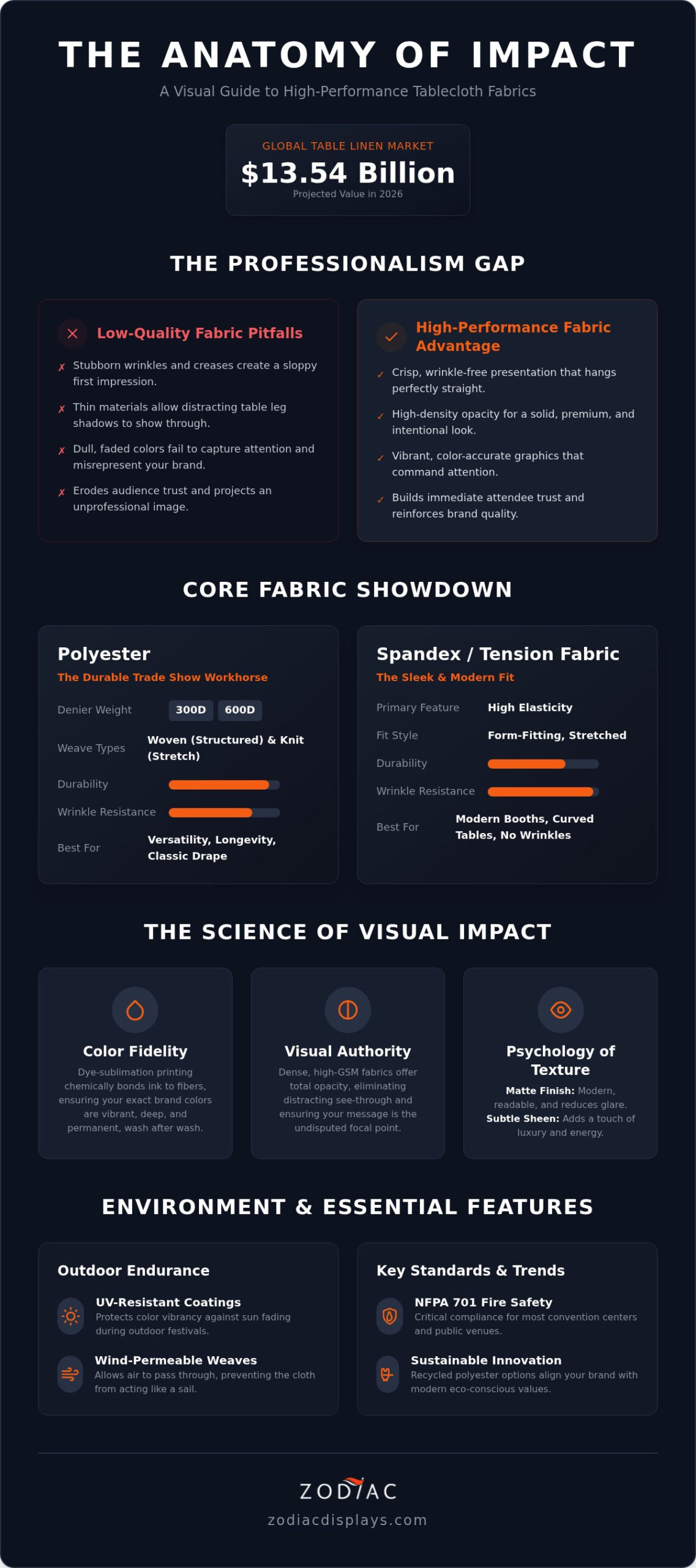
Poor material selection creates a “professionalism gap” that attendees notice the moment they enter your orbit. Thin, low-quality fabrics allow unsightly table-leg shadows to bleed through your graphics, while cheap weaves cling to every fold and wrinkle. True visual authority comes from substrates that possess enough weight to hang straight and enough density to remain perfectly opaque under intense convention center spotlights. When your display looks crisp and intentional, you project an image of precision that resonates with potential partners.
The Psychology of Texture in Event Marketing
Texture speaks to your audience before your team ever says a word. Heavy-knit fabrics signal stability and premium service, creating a subconscious sense of reliability and institutional strength. The choice between a sophisticated matte finish and a subtle sheen is equally vital. A matte finish absorbs light to provide a modern, high-end look that is easy to read from a distance, whereas a subtle sheen adds a touch of luxury and energy to your presentation. The physical sensation of a premium, substantial fabric builds immediate attendee trust by mirroring the tangible quality and reliability of the services your brand provides.
Color Fidelity and Substrate Synergy
The chemistry between ink and fiber determines your ultimate color gamut. High-quality custom printed table cloth materials are optimized for dye-sublimation, a process where heat turns ink into gas that bonds directly with the fibers. This ensures that your specific Pantone shades remain vibrant, deep, and accurate across every inch of the display. This substrate synergy is a core component of the Visual Impact Strategies guide we’ve developed for high-stakes exhibits. When your materials offer total opacity, your graphics pop without the distraction of the table hardware underneath, ensuring your message remains the undisputed focal point of the booth.
Exploring the Core Fabrics: Polyester, Spandex, and Performance Blends
Choosing the right custom printed table cloth materials is a technical decision that directly impacts your brand’s endurance. It’s about moving beyond simple aesthetics to understand the engineering of the substrate. High-performance fabrics ensure your graphics remain sharp, your colors stay true, and your presentation stays professional through every leg of the event circuit. By analyzing key fabric performance metrics like resiliency and colorfastness, you can select a material that mirrors your brand’s commitment to quality.
Polyester: The Workhorse of Trade Show Signage
Polyester remains the industry gold standard for its versatility and durability. We typically look at 300D and 600D weights, where the “D” represents Denier, a measure of fiber thickness. A higher GSM (Grams per Square Meter) indicates a denser, more opaque fabric that hangs with a sophisticated drape. Woven polyester offers a classic, structured look, while knit polyester provides a slight stretch that resists permanent creasing. This resilience makes it the preferred choice for custom trade show displays that need to look pristine after hours of travel. For those seeking a blend of elegance and utility, our team can help you select the ideal weave for your specific booth geometry.
Tension Fabric and Spandex: Achieving the Contoured Look
If you want a sleek, modern aesthetic, tension fabrics are the answer. These materials utilize a 4-way stretch, often a Spandex or Lycra blend, to pull the fabric taut over the table frame. This tension effectively eliminates wrinkles, providing a smooth canvas for high-tech or minimalist branding. While a traditional “Throw” style offers a classic draped appearance, a “Fitted” or stretch cover contours to the table’s shape, preventing the fabric from shifting in high-traffic areas or outdoor gusts.
Eco-Friendly and Sustainable Material Alternatives
As we move through 2026, sustainability has become a non-negotiable standard for global brands. The shift toward rPET, or 100% post-consumer recycled polyester, allows you to maintain high visual impact while reducing your environmental footprint. These materials align perfectly with our Eco-Friendly Trade Show Displays pillar, utilizing digital printing methods that significantly reduce water and chemical waste. It’s a powerful way to demonstrate corporate responsibility without compromising on the vibrancy of your graphics.
Safety is the final piece of the material puzzle. Most major U.S. event facilities now require NFPA 701 certification, a rigorous fire safety standard that ensures textiles will self-extinguish if exposed to flame. Choosing certified custom printed table cloth materials isn’t just about compliance; it’s about protecting your team and your investment in any public venue.
Outdoor Endurance vs. Indoor Elegance: Matching Material to Environment
Environment is the ultimate stress test for your brand’s physical assets. While we’ve established the technical GSM and core fibers in previous sections, the setting of your event dictates which custom printed table cloth materials will actually perform. A material that looks stunning in a ballroom might fail spectacularly at a sun-drenched outdoor festival. Strategic selection means matching the substrate’s physical properties to the environmental variables of wind, light, and moisture to maintain your brand’s visual authority.
Outdoor Branding: Fighting UV and Weather
Standard indoor polyesters often lack the chemical treatment needed for prolonged sun exposure. Without specialized UV inhibitors in the fabric coatings, vibrant logos can begin to fade within hours of direct sunlight. For a cohesive and professional outdoor footprint, your table linens should offer the same technical endurance as your custom event tents. In high-wind scenarios like sporting events or open-air festivals, we recommend wind-permeable weaves that allow air to pass through the fabric rather than turning your table into a sail. Incorporating weighted hems further ensures your display integrity remains intact, even when the weather turns unpredictable.
Indoor Sophistication: Lighting and Glare Management
Indoor environments present a different challenge: the aggressive glare of convention center LED lighting. High-end galas and corporate summits often demand “luxury” materials like faux-suede or heavy satin to enhance brand image through tactile richness. These materials are chosen for how they interact with light. An anti-glare matte finish is essential for modern marketing; it ensures your graphics remain legible in social media photography and professional event coverage. These sophisticated textures are designed to complement backlit displays and overhead spots without creating distracting hot spots on your table surface.
Networking events involve more than just visual interaction. They involve beverages and high-traffic hospitality. Utilizing custom printed table cloth materials with water-resistant coatings prevents accidental spills from becoming permanent stains. This layer of protection allows liquid to bead on the surface for easy cleanup, ensuring your brand remains unblemished throughout the entire networking session. Whether you’re under the sun or under the spotlights, your material choice is the silent partner in your event’s success.
Maintenance and Longevity: Protecting Your Branded Assets
Your branding assets are long-term investments in your visibility, not disposable booth fillers. When you select high-performance custom printed table cloth materials, you’re choosing a substrate designed for the endurance of the global event circuit. However, even the most resilient fabrics require a dedicated maintenance strategy to preserve their visual authority. Proper care doesn’t just extend the life of the material; it ensures that every time you drape your table, the colors pop with the same vibrancy they had on day one.
Dye-Sublimation: The Key to Washable Graphics
The secret to the longevity of modern event textiles lies in the dye-sublimation process. Unlike traditional screen printing which sits on top of the fabric, dye-sublimation uses heat and pressure to turn ink into a gas that bonds with the polyester fibers at a molecular level. This molecular fusion is why dye-sublimated graphics won’t crack, peel, or flake off even after multiple high-temperature wash cycles or rigorous use. To maintain this fidelity, always wash your linens in cold or lukewarm water with a mild, phosphate-free detergent. Avoid bleach and fabric softeners, as these can break down the technical coatings that protect your graphics from environmental stress.
Strategic Storage and On-Site Troubleshooting
How you store your materials between shows is just as critical as how you wash them. While folding is convenient for shipping, rolling your table cloths onto heavy-duty cardboard tubes is the superior method for preventing “memory lines” and deep, permanent creases. If you must fold, ensure the fabric is completely dry to prevent mildew, and try to refold along different lines each time to avoid weakening the fibers. For those moments when a quick refresh is needed on the show floor, a portable handheld steamer is your best ally. It’s far more effective and safer for the fibers than a traditional iron, which can scorch synthetic blends. If you’re managing a suite of assets, it’s efficient to ensure your custom flag banners and table cloths share the same maintenance schedule to maintain brand consistency across all touchpoints.
Even the finest materials eventually reach the end of their professional life. Watch for signs of material fatigue such as significant pilling, thinning of the weave, or a loss of elasticity in tension fabrics. When your display no longer holds its crisp shape or the visual impact begins to wane, it’s time to consult with a strategist about a refresh. If you’re ready to upgrade your current kit to the latest 2026 fabric standards, explore our bespoke fabrication options today to ensure your next presentation remains flawless.
The Zodiac Edge: Bespoke Fabrication and Strategic Material Selection
Choosing a vendor is a transaction, but choosing a partner is a strategy. Zodiac Event Displays operates as a dedicated creative consultancy, transforming the selection of custom printed table cloth materials from a checklist item into a competitive advantage. We understand that your visual identity shouldn’t be constrained by off-the-shelf options. That’s why we specialize in bespoke fabrication that moves beyond the industry-standard 6ft and 8ft templates. Whether your booth requires a unique drape for a custom-built counter or a specialized fit for an unconventional display, our design mastery ensures your custom printed table cloth materials integrate seamlessly into your broader event display fabrication strategy.
Our role is to guide you through the technical nuances we’ve explored, from GSM weights to light-absorption properties, ensuring the substrate you choose perfectly mirrors your brand’s ambition. With end-to-end production management, we handle the complexities of design, printing, and finishing in-house. This centralized control guarantees that the vibrancy and precision of your graphics remain uncompromised from the initial concept to the final, high-impact presentation. We act as an essential extension of your own creative team, providing the flair of a designer with the authority of a seasoned strategist.
From Denver to the World: Our Global Delivery Promise
Operating as a boutique agency in Denver gives us a unique perspective on personalized service, yet our reach is truly global. We’ve spent over 10 years perfecting the logistics of the international trade show circuit. We understand the endurance required for assets traveling across continents and the precision needed to meet strict venue regulations. Our experience allows us to manage complex shipping timelines and customs requirements with the confidence of a partner who understands your goals. You gain the specialized attention of a high-end designer combined with the logistical power of a global manufacturer.
Start Your Creative Journey Today
Your next event is an opportunity for professional growth and a chance to command the attention your brand deserves. Don’t settle for a generic display when you can have a bespoke solution tailored to your specific goals. Our design team is ready to provide custom material recommendations and help you build a comprehensive booth package that stands out in any high-traffic environment. We invite you to reach out for a tailored quote and experience the pride of a perfectly executed presentation. Visit the Zodiac Contact Page today to begin our partnership and elevate your event presence for 2026 and beyond.
Command the Room with Precision and Purpose
Mastering the technical side of your display is the difference between simply attending an event and truly owning the room. We’ve explored how the right custom printed table cloth materials act as high-performance substrates that protect your color fidelity and project professional stability. Whether you’re managing the UV demands of an outdoor festival or the high-gloss requirements of a luxury gala, your material choice defines your brand’s visual endurance and long-term success.
At Zodiac Event Displays, we bring over 10 years of boutique branding expertise to your creative journey. Our focus on end-to-end fabrication and sustainable, high-impact display solutions ensures that your vision is never compromised by logistical hurdles. We provide global delivery from our Denver agency, acting as your seasoned strategist through every stage of production. It’s time to transform your presentation into a masterpiece of excellence. Elevate Your Brand Presence, Contact Zodiac Event Displays Today. Your next event is the perfect stage for the growth you’ve worked so hard to achieve.
Strategic Insights: Frequently Asked Questions
What is the best material for a custom printed table cloth for trade shows?
High-density polyester is the industry standard due to its exceptional durability and ink absorption. 300D or 600D weights provide the necessary opacity to block out table shadows and maintain a professional look. For a more modern aesthetic, tension fabric blends containing spandex offer a wrinkle-free, contoured fit. Selecting the right custom printed table cloth materials depends on your event frequency and the specific visual impact you want to project.
Can I wash my custom printed table cloth without fading the logo?
You can certainly wash your branded linens as long as they are produced using dye-sublimation. This technical process bonds the ink to the fibers at a molecular level, making the graphics permanent and resistant to fading. Always use cold water and a mild detergent while avoiding bleach or harsh fabric softeners. This ensures your visual assets remain vibrant and professional across multiple event circuits without the risk of the logo peeling.
What is the difference between 300D and 600D polyester for event displays?
The difference lies in the denier, which measures the thickness and weight of the individual fibers. 300D is a lighter, more flexible option that works well for standard indoor displays. 600D is a heavy-duty alternative that offers superior opacity and durability for high-traffic or outdoor environments. Choosing the heavier 600D weight helps prevent light from shining through the fabric, ensuring your graphics maintain their deep, saturated impact under bright convention center lights.
Are custom table cloths fire retardant for convention center use?
Professional event textiles must meet NFPA 701 fire safety standards for use in most major U.S. convention centers. This certification ensures the fabric will self-extinguish if exposed to an open flame. When sourcing custom printed table cloth materials, always verify that the substrate has been treated or engineered for flame retardancy. This compliance is a critical requirement for trade show participation and protects your team and your physical brand assets from venue restrictions.
Do I need a fitted or a throw-style table cover for my brand?
A throw-style cover provides a classic, draped look that offers versatility for various table sizes; it’s a great choice for brands seeking a traditional, elegant presentation. Conversely, a fitted cover is tailored to the exact dimensions of your table to create a sleek and modern silhouette. Fitted options are ideal for high-traffic areas because they won’t shift or move if an attendee bumps into the display, maintaining a crisp and intentional appearance all day.
How do I prevent wrinkles on my branded table cloth during transport?
Rolling your fabric onto a sturdy cardboard tube is the most effective way to prevent deep creases during transport. If you must fold your linens, refold them along different lines each time to avoid permanent fiber memory. Carrying a portable handheld steamer in your event kit allows for quick on-site touch-ups. These small, proactive steps ensure your booth looks polished and authoritative the moment you open for business on the busy show floor.
Can custom table cloth materials be recycled or eco-friendly?
Sustainable options like rPET, which is 100% post-consumer recycled polyester, are now widely available for professional displays. These materials offer the same durability and color vibrancy as virgin polyester while significantly reducing your environmental footprint. Digital printing methods used with these fabrics also consume less water and fewer chemicals. Choosing eco-friendly substrates allows your brand to demonstrate corporate responsibility while maintaining a sophisticated and high-impact visual presence at every event you attend.
What is dye-sublimation printing and why is it better for fabrics?
Dye-sublimation uses heat to turn ink into a gas that penetrates the fabric fibers before solidifying. This is superior to traditional screen printing because the color becomes a permanent part of the material rather than a layer on top. The result is a soft, breathable finish that is incredibly durable and machine washable. It allows for complex, high-resolution designs with a full spectrum of colors that won’t crack or peel even after years of rigorous use.

 Previous reading