


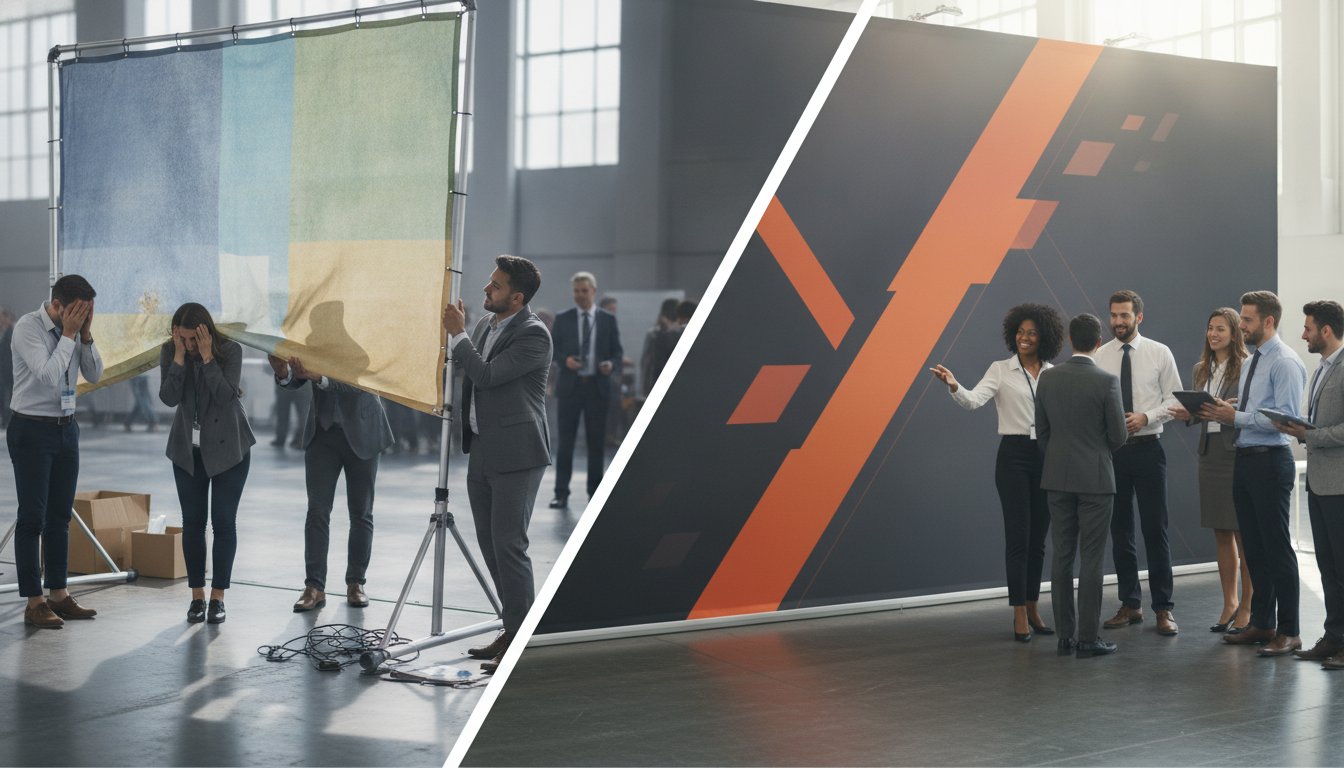
Could a small saving on your exhibition hardware actually cost you a fifty thousand dollar partnership? It’s a haunting question that many marketing teams face when their backdrop leans precariously during a keynote or their logo appears as a pixelated, muddy mess. The hidden problems with cheap pop up displays go far beyond simple aesthetics. These budget-grade frames act as active brand saboteurs that undermine your professional authority the moment you step onto the trade show floor.
We understand the intense pressure to maximize every cent of your marketing budget, especially as median exhibitor spending reached $32,400 per show in 2025. You want to look like a visionary leader without draining the treasury on hardware that fails under pressure. This guide will reveal why budget-grade equipment often ends up in a landfill after a single use and how you can identify high-impact alternatives that protect your brand’s visual excellence. We’ll explore five critical failures of bargain kits and provide a roadmap for investing in equipment that commands attention and survives the rigors of multiple global events.
Key Takeaways
- Avoid the “buy twice” trap by understanding how low-cost hardware leads to higher lifetime expenses and diminished brand authority.
- Learn to identify mechanical failure points like recycled metal alloys and weak plastic joints, which represent the most common problems with cheap pop up displays.
- Ensure your visual impact remains vibrant with superior printing methods that prevent the scratching and peeling common in budget-grade graphics.
- Utilize a professional audit checklist to evaluate frame engineering and seam integrity before your next major event.
- Transition from transactional vending to a strategic partnership that prioritizes sustainable, high-impact backwall displays for long-term success.
The Hidden Cost of Budget Displays: Why “Cheap” is Expensive
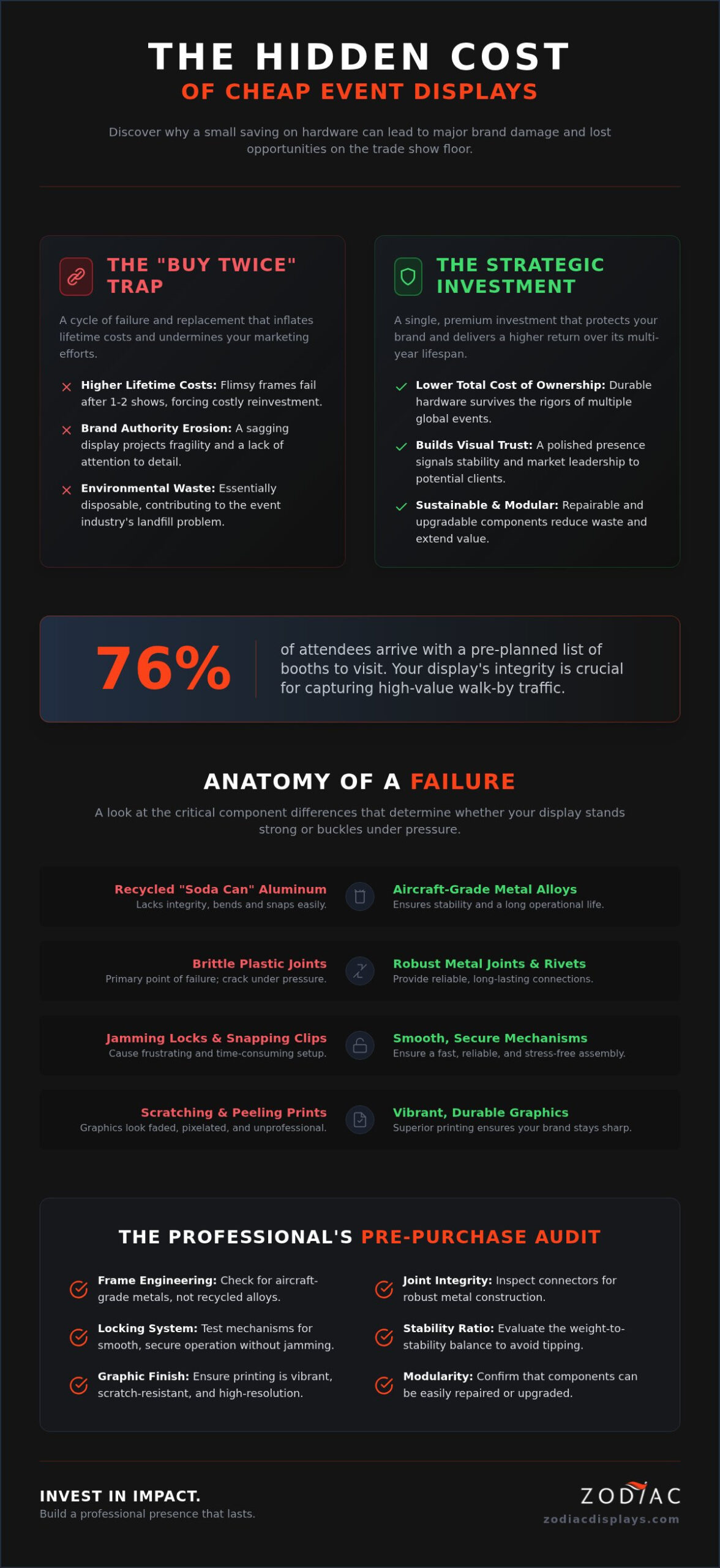
The initial invoice for a budget booth often feels like a victory, yet this perceived bargain frequently transforms into a logistical nightmare. Choosing a low-cost option creates the “Buy Twice” trap. This is a cycle where a flimsy frame fails after two shows, forcing you to reinvest in the middle of a busy season. These recurring problems with cheap pop up displays lead to higher lifetime expenditures that far exceed the price of a single, premium investment. Beyond the hardware, consider the environmental impact. Most budget-grade assets are essentially disposable. They contribute to the waste cycle rather than serving as a sustainable branding tool that grows with your business.
Brand authority erosion is perhaps the most dangerous side effect of a cut-rate presentation. A sagging backwall display or a faded logo creates a sense of fragility that high-ticket service providers cannot afford. When your physical presence feels temporary, clients assume your commitment to their success might be equally fleeting. Visual excellence is not a luxury. It is a strategic requirement for maintaining professional gravity in a crowded exhibition hall.
Opportunity cost also plays a massive role in your total event performance. Research indicates that 76% of trade show attendees arrive with a pre-planned list of booths to visit. Your display must work incredibly hard to capture the remaining foot traffic. An uninviting, wrinkled display acts as a barrier, driving potential leads toward competitors who project a more polished image. Every ignored passerby represents a lost opportunity that could have paid for high-quality equipment ten times over.
The Psychology of Visual Trust
Attendees navigate trade show floors with a critical eye, subconsciously judging your product quality based on your display integrity. There is a direct correlation between booth aesthetics and perceived company stability. If your frame wobbles or your graphics peel, you signal a lack of attention to detail. Avoiding the common problems with cheap pop up displays ensures your brand projects the confidence of a market leader rather than a temporary vendor.
Calculating True ROI
True return on investment accounts for the hidden drain of replacement frequency and the stress of emergency shipping when a cheap latch snaps. Many budget systems ignore fundamental modular design principles, resulting in components that aren’t easily repaired or upgraded. When your team spends three hours wrestling with a jammed frame instead of networking, you’ve lost momentum and money. In the context of event branding, ROI is the measure of how effectively your equipment generates revenue while minimizing the total cost of ownership over its multi-year lifespan.
Structural Sabotage: Why Cheap Hardware Fails Under Pressure
The skeleton of your event presence is where engineering meets ambition. While budget vendors promise portability, the physical reality of the hardware often tells a different story. One of the most prevalent problems with cheap pop up displays is the use of recycled “soda can” aluminum. These low-grade alloys lack the structural integrity of aircraft-grade metals, leading to frames that bend or snap under the minor stresses of repeated assembly. High-impact branding requires a foundation that doesn’t buckle when the trade show floor starts to vibrate with heavy foot traffic.
Weight-to-stability ratios are frequently overlooked in the quest for lighter shipping. Ultra-lightweight displays often lack the ballast needed to stay upright in high-traffic corridors. If a passerby accidentally brushes against a flimsy frame, it tips or leans, immediately breaking the professional spell you’ve worked so hard to cast. This is why investing in high-quality marketing materials is essential; it ensures your physical presence remains as unshakeable as your business strategy.
Mechanical Failure Points
Scissor-style frames act as the backbone of your presentation, yet budget units often rely on weak rivets that pop after just a few cycles. Plastic connectors represent the primary point of mechanical failure; they become brittle and crack under pressure, unlike the robust metal joints found in premium systems. You’ll often find locking mechanisms that jam or internal clips that snap, leaving your team stranded during a high-stakes setup. Cheap springs also lose their tension rapidly, leading to the chronic sagging that characterizes many problems with cheap pop up displays. Magnetic connections in backwall displays offer a much more reliable, self-aligning alternative to the finicky mechanical latches found in bargain kits.
The Impact of Poor Engineering
When a frame is poorly engineered, it doesn’t just feel weak; it looks terrible. Uneven frames prevent tension fabric from stretching correctly, causing unsightly wrinkles and graphic “ghosting” where the image appears distorted or blurred. Top-heavy designs pose a genuine safety risk, especially in breezy environments or near high-velocity air conditioning vents. Tensile strength in tension fabric displays is the critical force that keeps your branding taut, smooth, and professional across every inch of the frame. If you’re ready to move beyond these structural headaches, reach out to our consultancy team for a more resilient solution.
Visual Vitality vs. Graphic Grime: The Printing Gap
The vibrant colors of your digital design often die a quiet death on the production floor of a budget printer. While your screen shows a deep, authoritative navy, a low-end machine might produce a muddy purple that sours your entire brand aesthetic. One of the recurring problems with cheap pop up displays is the reliance on surface-level inkjet printing rather than true dye-sublimation. In budget kits, ink simply sits on top of the fabric like a thin layer of paint; it’s prone to scratching, peeling, and flaking the moment you fold the display for transport. High-impact branding requires graphics where the pigment is gassified directly into the fibers, ensuring the image remains a permanent part of the material.
Color gamut and accuracy represent the next major hurdle for bargain-grade assets. Professional branding depends on hitting specific Pantone colors with surgical precision to maintain global consistency. Budget machines often lack the sophisticated color profiles and multi-ink systems needed to replicate complex gradients or saturated hues. This results in “washed out” visuals that look ghostly under the harsh, overhead LEDs of a convention center. When your display looks thin and transparent, your brand looks equally unsubstantial.
Material choice also dictates how your graphics behave under tension. High-denier fabrics provide a heavy, premium hand-feel and natural wrinkle resistance that cheap polyester blends simply can’t match. A quality fabric stays taut and smooth, while low-thread-count alternatives develop permanent creases that catch the light and distract from your marketing message.
The Science of Color Permanence
UV rays are the silent enemy of visual excellence, especially during outdoor activations or near large glass atriums. Budget pigments can begin to shift and fade in just a few hours of direct exposure, turning your primary colors into pale imitations. You’ll also encounter the “bleed” effect on low-quality materials, where sharp logo edges become blurry as the ink spreads through loose fibers. Professional-grade graphics offer true washability; you can clean away a coffee splash or floor grime without fear of the colors running or the image losing its crispness.
Material Integrity and Light
Light management is a hallmark of sophisticated design. Budget fabrics often lack internal blockout layers, meaning your display becomes “see-through” if there’s a window or another booth’s lighting behind you. This transparency reveals the ugly internal shadows of the frame, instantly breaking the professional illusion. Utilizing backlit display technology is a brilliant way to hide frame shadows while making your graphics pop with a cinematic glow. The way light refracts off different fabric textures can either enhance your vibrancy or highlight every imperfection; choosing the right material ensures your brand always stays in its best light.
The Professionals Checklist: Evaluating Display Integrity
Before you commit your marketing budget to a new asset, you need a method to bypass the glossy marketing renders. One of the most effective ways to avoid the chronic problems with cheap pop up displays is a simple physical audit. Start with the frame weight test. While portability is prized, a frame that feels suspiciously light often indicates thin-walled tubing that will dent or buckle under pressure. Heavier hardware typically points to superior engineering and the use of denser, more resilient alloys that can withstand the rigors of international shipping and repeated assembly.
Next, perform a zipper and seam audit. In premium tension fabric systems, you’ll find reinforced, double-stitched seams and industrial-grade zippers designed for hundreds of cycles. Budget-grade displays often cut costs with single-stitch construction that frays under the very tension required to keep your graphics smooth. Identifying these problems with cheap pop up displays before they reach the show floor saves your team from unnecessary stress during setup. You should also scrutinize the warranty realities. Many vendors offer a “limited lifetime” guarantee that actually excludes normal wear and tear, effectively meaning they only cover the unit until you actually use it. Demand a clear policy on replacement part availability. If a single hinge snaps on a cheap unit, you’re often forced to replace the entire frame, whereas a professional-grade partner provides individual components to keep your kit in service for years.
Evaluating the Vendor
Your choice of partner is just as critical as the hardware itself. Does the vendor offer custom trade show graphics optimization, or do they simply “print as is” without checking for resolution issues? A boutique agency provides personalized attention, acting as a seasoned strategist for your brand. They should demonstrate global delivery capabilities, ensuring your assets arrive in Denver or Dubai with the same level of precision. This specialized level of care is the ultimate antidote to the automated, call-center experience of mass-market vendors.
Technical Specifications to Demand
Don’t settle for vague descriptions. Demand specific data points to verify quality. Request the fabric weight in grams per square meter (gsm); a premium blockout fabric should typically fall between 240 and 260 gsm. Verify that the hardware meets fire retardancy certifications like NFPA 701, which is a mandatory requirement for many major convention centers in 2026. Finally, always ask for “real world” setup photos. If a vendor can only provide 3D renders, they likely haven’t seen their own equipment in a high-pressure environment. If you want to ensure your next investment meets these rigorous standards, explore our range of professional backwall displays today.
Investing in Impact: The Zodiac Approach to Durable Branding
Mastering the complexities of event marketing requires more than just a vendor; it demands a dedicated ally. At Zodiac Event Displays, we’ve spent over a decade refining a creative consultancy model that treats your branded assets as long-term investments rather than disposable expenses. By moving beyond the traditional order-taker model, we identify and eliminate the common problems with cheap pop up displays before they ever reach your booth. Our partnership begins with a strategic understanding of your specific goals, ensuring that every frame and fabric choice aligns with your vision for professional growth.
Visual mastery is the cornerstone of our fabrication process. We ensure your brand looks as vibrant on the convention floor as it does on your high-resolution monitors. This precision is achieved through meticulous design optimization and a deep understanding of how light interacts with premium textiles. Our end-to-end execution covers every detail from the initial creative concept in Denver to global delivery at your next international summit. We manage the entire lifecycle, giving you the freedom to focus on your attendees while we handle the technical complexities of your physical presence.
Choosing durability doesn’t mean sacrificing environmental responsibility. We specialize in eco-friendly trade show displays that are engineered to last for years across multiple event cycles. By investing in high-quality, reusable assets, you significantly reduce your brand’s waste footprint while maximizing your marketing ROI. It is a sophisticated approach to sustainability that proves high-impact design and ecological stewardship can thrive together.
A Legacy of High-Impact Design
With over 10 years of industry experience, we act as a seasoned strategist to help you avoid the mechanical and visual pitfalls that plague lower-tier equipment. We champion the use of soft signage and tension fabric because they offer a modern, clean aesthetic that remains taut and professional. These materials project a sense of permanence and precision, positioning your brand as a market leader. When you choose a bespoke structure over a generic kit, you communicate a level of authority that commands attention in any high-traffic environment.
Your Next Steps to Event Success
Preparing for your 2026 event calendar starts with a conversation about your unique branding requirements. We help you customize your booth to thrive in specific exhibition spaces, ensuring your message isn’t lost in the noise of a crowded hall. Whether you’re planning a local pop-up or a global tour, our team provides the guidance needed to secure a stress-free setup and a high-impact presentation. Ready to redefine your visual presence? Elevate your brand presence with a custom display consultation and discover the difference that expert engineering makes.
Elevating Your Vision for 2026 and Beyond
Choosing the right equipment is a bold declaration of your brand’s standards. We’ve explored how the structural and visual problems with cheap pop up displays can erode your authority and drain your marketing budget through constant replacements. By prioritizing aircraft-grade hardware and gassified dye-sublimation prints, you secure a physical presence that commands respect and survives the rigors of a global tour. True success on the exhibition floor isn’t found in a bargain bin; it’s forged through meticulous engineering and strategic design.
At Zodiac Event Displays, we bring over 10 years of boutique branding expertise to every project. From our Denver creative hub, we coordinate global delivery of sustainable, high-impact material selections that reflect your commitment to visual excellence. Don’t leave your first impression to chance or flimsy frames. It’s time to invest in equipment that works as hard as your team does. Partner with Zodiac Event Displays for high-impact branding that lasts and step onto your next stage with absolute confidence. Your brand deserves a presentation that never settles for second best.
Frequently Asked Questions
Why do cheap pop up displays lean or sag after a few uses?
Structural instability is usually caused by low-grade recycled aluminum and weak plastic connectors that lose their tension over time. These materials lack the tensile strength required to keep fabric taut, leading to the sagging common in budget kits. Investing in premium hardware prevents these chronic problems with cheap pop up displays, ensuring your backwall remains perfectly aligned throughout the duration of your multi-day event.
What is the difference between dye-sublimation and standard fabric printing?
Dye-sublimation uses heat to turn ink into gas, which then bonds permanently with the fabric fibers rather than just sitting on the surface. Standard inkjet printing often results in graphics that scratch or peel because the ink is merely a top layer. This gassification process ensures your visuals remain vibrant and durable, preventing the graphic grime and fading that frequently plague lower-tier display solutions in high-traffic environments.
Is a lifetime warranty on a trade show display actually worth it?
A warranty is only as valuable as its fine print and the longevity of the company backing it. Many budget vendors offer limited lifetime warranties that exclude normal wear and tear, effectively covering only manufacturing defects present at the time of purchase. A professional branding partner provides a more transparent commitment, offering readily available replacement parts and structural support that actually extends the operational life of your hardware across multiple global events.
How can I tell if a display frame is made of high-quality aluminum?
You can identify high-quality engineering by checking the frame weight and wall thickness of the aluminum tubing. Aircraft-grade alloys feel substantial and resist bending under pressure, while soda can recycled metals feel suspiciously light and flimsy. Ask your vendor for technical specifications regarding fabric weight and metal grade. A heavier, denser frame is a reliable indicator that the hardware is built to withstand the rigors of frequent international shipping.
Can I wash the fabric graphics on a premium pop up display?
Yes, premium dye-sublimated graphics are typically machine washable on a gentle cycle with cold water. Because the ink is bonded deep within the fibers, the colors won’t run or fade during the cleaning process. This washability is a major advantage for busy marketing teams, as it allows you to remove floor grime or accidental spills between shows, maintaining a pristine and professional brand image for years of service.
What happens if a part of my display breaks during a show?
If you’ve invested in a professional-grade system, you can usually replace individual components like hinges or clips without scrapping the entire unit. Cheap displays are often designed as single-use assets, meaning a single mechanical failure renders the whole kit useless. We recommend keeping a basic spare parts kit for high-stress joints and choosing a partner who offers rapid shipping for replacement hardware to minimize downtime during your event.
Why is “fire retardant” certification important for indoor trade shows?
Most major convention centers in 2026 strictly enforce fire safety regulations, requiring all soft signage to meet NFPA 701 standards. If your display lacks a verifiable fire retardant certification, fire marshals have the authority to remove your booth from the floor immediately. Ensuring your backwall displays and custom flags meet these legal requirements protects your investment and prevents costly, last-minute compliance issues that could derail your entire exhibition strategy.
How much should I realistically budget for a durable 10-foot backwall display?
You should budget for the total cost of ownership rather than just the initial purchase price. While entry-level kits seem affordable, the recurring problems with cheap pop up displays often lead to double or triple the expenditure over two years due to frequent replacements. A realistic budget for a professional-grade, high-impact 10-foot display accounts for durable hardware, premium fabric, and the strategic design consultation required to ensure your brand commands attention and lasts for a decade.
 Previous reading