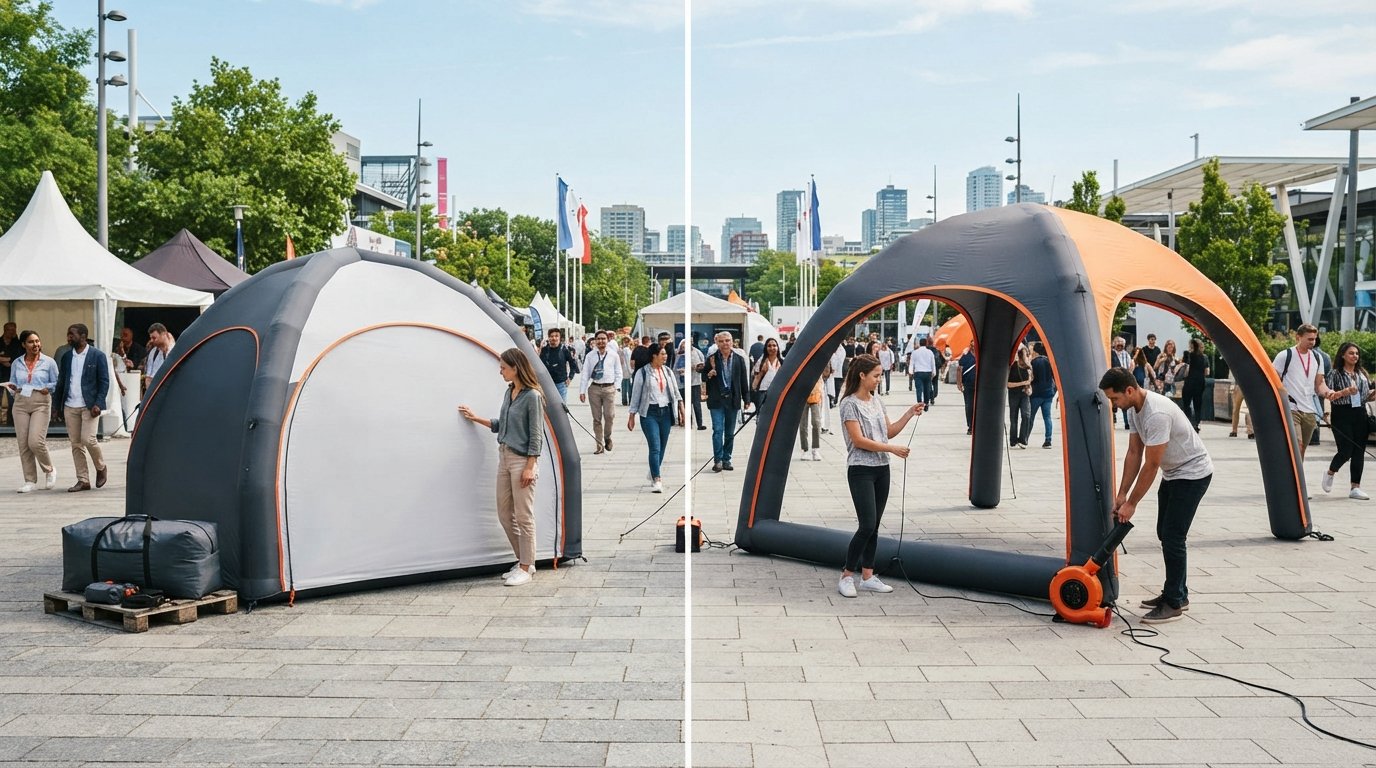
For a compact display, sealed air can mean less dependence on power and less blower noise. For a large or complex inflatable, constant air can help maintain its shape throughout an event. The choice between sealed air inflatables and constant-air inflatables also affects how the structure responds to a puncture: sealed designs depend on retaining pressure, while a running blower can keep supplying air through a small leak.
Both types can create a bold presence at an event, but their setup, deflation, portability, and power needs differ. The right fit depends on the structure, the event setting, and how you plan to manage it during use.
This guide compares how each type works, what to expect from its durability and response to punctures, and which event conditions favor one over the other. Use it to match an inflatable to your plans, from setup through pack-down.
Key Takeaways
- Match the inflatable’s air system to your event setup: consider power access, blower noise, structure size, and how long it needs to stay inflated.
- Choose sealed designs for situations where quiet operation and less dependence on continuous power matter; consider how temperature and pressure changes affect them.
- For larger or more complex displays, continuous airflow can help maintain shape, but the blower needs reliable power and ongoing attention.
- Plan for punctures differently: a sealed inflatable can lose pressure through a small leak, while continuous airflow may help compensate as the blower runs.
- Bring the full event look together with Zodiac Event Displays’ Inflatables, Event Tents, Backwall Displays, or Custom Flags.
Sealed vs Constant Air Inflatables: What’s the Difference?
The key difference is how each design holds its shape: sealed inflatables retain air, while constant-air models rely on a running blower. That distinction affects power needs, response to outages, and suitability for different event conditions.
Constant-Air Blower and Power Requirements
A constant-air inflatable uses a blower to push air through the structure continuously, keeping it firm while the unit operates. It requires a reliable power source; the stated requirement for constant-air inflatables is 240V while in use. The blower also produces ongoing noise, so plan its location around the event layout. Larger structures may use multiple blowers, and the airflow helps maintain their shape.
Compared with a sealed model, a constant-air inflatable uses more power while operating because its blower keeps running. If power stops, the inflatable can quickly lose its shape. A constant-air arch may fall within minutes of an outage, so include its power supply in the setup plan.
Sealed-Air Power Use and Top-Ups
A sealed inflatable is filled and closed at its valve, then holds its shape without a continuous air supply. It needs minimal power after inflation, which can be useful where blower noise or access to power is a concern. However, occasional top-ups may be needed to maintain pressure, so a power source can still be useful onsite.
That trade-off matters during a long event: sealed construction reduces ongoing energy use, but it doesn’t mean the inflatable needs no attention. Check its firmness during the event and top it up if pressure has fallen.
Power Outages and Weather Conditions
During an outage, a sealed inflatable can retain its shape because it doesn’t depend on a continuously running blower. A constant-air model loses airflow when its blower stops and can deflate quickly. For wind or challenging weather, neither air system alone determines suitability. Consider the structure, ground contact, and anchoring, and assess outdoor conditions before use.
Temperature also affects sealed models: pressure can rise as temperatures climb and fall as they drop, potentially causing sagging. Constant airflow maintains pressure while the blower runs, but you still need to plan for power interruptions and weather.
For commercial inflatables in the United States, first identify whether the structure is a display or intended for participant use, then consider the event location. These details affect the applicable requirements and safety considerations. The air system alone doesn’t establish compliance.
| Inflatable type | Power during use | Outage response | Weather consideration |
|---|---|---|---|
| Sealed air | Minimal after inflation; occasional top-ups may need power | Can retain shape without continuous airflow | Temperature changes can affect pressure |
| Constant air | Blower needs a reliable 240V source | Can lose shape quickly if airflow stops | Plan blower operation alongside outdoor conditions |
Choose sealed air when reducing ongoing power use is a priority. Choose constant air when continuous airflow suits the structure and reliable power is available.
Choosing an inflatable for an event
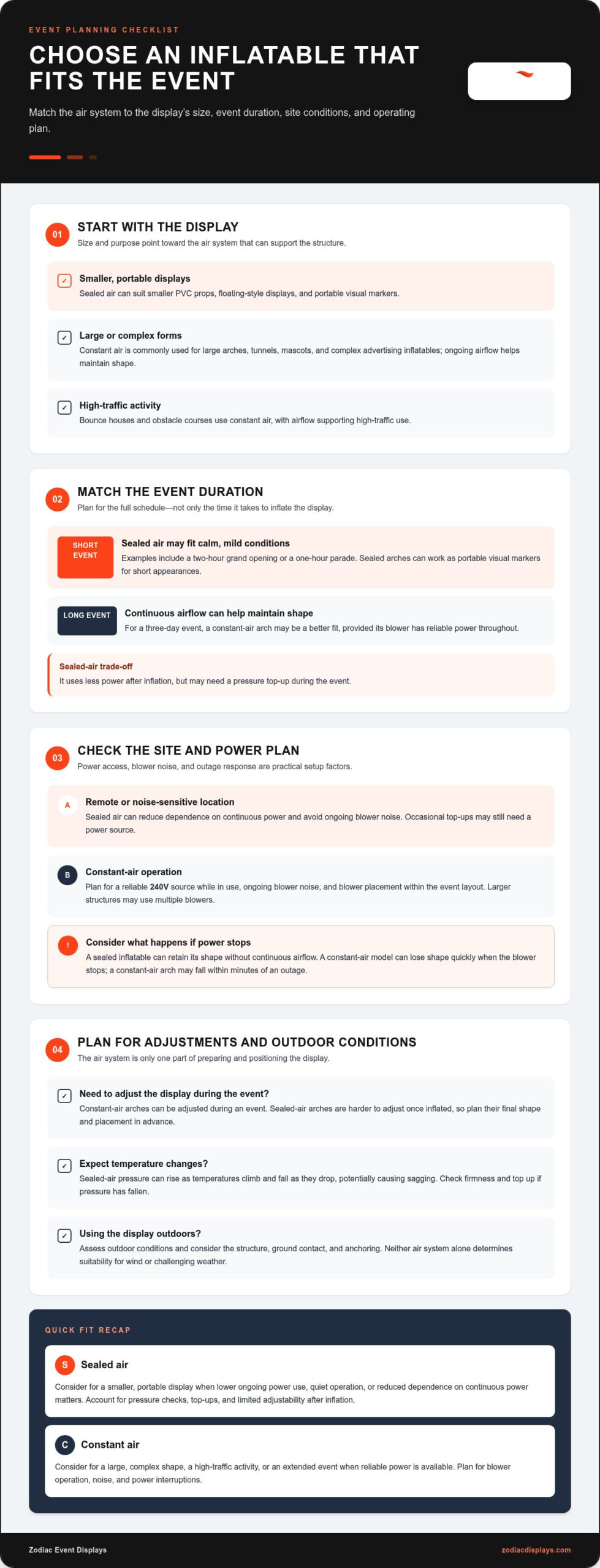
Start with the display’s size and purpose, then weigh event duration, power access, and opportunities to make adjustments. A small portable prop and a large advertising arch place very different demands on their air systems.
Energy Use During Long Events
At a stationary event lasting three days, constant air can maintain an inflatable’s shape, provided the blower has a reliable power source throughout. Because the airflow requires ongoing power, include the blower in the operating plan.
An airtight design uses less power after inflation, but may need a pressure top-up. That reduced dependence on continuous power can be an advantage at a remote site without dependable electricity. Consider the full event schedule, not just the time needed to inflate the display.
Event Duration and Use Cases
Short appearances in calm, mild weather can suit sealed-air arches. A two-hour grand opening or a one-hour parade are examples where an airtight structure can serve as a portable visual marker. Smaller PVC props and floating-style displays also suit sealed construction.
For a three-day event, a constant-air arch may be a better fit because continuous airflow helps maintain its shape over an extended run. Large arches, tunnels, mascots, and complex advertising inflatables commonly use this design. Bounce houses and obstacle courses also use constant air, with airflow supporting high-traffic activity.
Adjustability During Events
Constant-air arches can be adjusted during an event, giving organizers flexibility if the display needs to change. Sealed-air arches are harder to adjust once inflated, so plan their final shape and placement in advance.
Large or complex forms may not suit airtight construction. For an outdoor event, account for temperature changes, ground contact, and anchoring. These factors affect how a display is prepared and positioned, whether it uses sealed or continuous air.
Use this quick decision guide:
- Choose sealed air for a smaller, portable display at a remote or noise-sensitive location.
- Consider constant air for a large, complex shape or a high-traffic activity.
- For a longer event, match continuous airflow with dependable power and plan for blower operation.
- For a short event, compare the sealed structure’s portability with its limited adjustability after inflation.
A custom inflatable can anchor a branded event presence; explore custom event display concepts as you shape the visual plan.
Durability of sealed inflatables
For bounce houses and other high-impact commercial uses, constant-air designs are generally the better fit. Continuous airflow supports these activities, while sealed structures can be more vulnerable to punctures and rough handling.
High-Impact Use and Durability
Sealed inflatables rely on airtight construction to retain a fixed volume of air. Materials can include PVC or polyester denier, while giant airtight structures may use PVC or nylon coated with PVC. Material alone doesn’t determine durability; the structure’s shape, use, and exposure to contact matter too.
Constant-air designs may suit active play, as airflow can help cushion participants and absorb impact. Sealed inflatables are less suitable for these high-impact activities, where rough use can increase the risk of damage. For advertising displays without participant activity, the decision can instead center on the form and event conditions.
Production methods also differ. Sealed inflatable arches use a specialized airtight TPU bladder, making them more expensive to produce than constant-air arches made with lighter, less specialized material. Extremely large sealed forms can be difficult to manage because their weight increases with size. Large or complex shapes may therefore favor continuous-air construction.
Durability and Repairs
A small leak matters differently in a sealed design because lost air reduces its internal pressure. Check for leaks and patch small punctures as needed to help the inflatable maintain its shape. Airtight construction and careful valve planning matter from the start because the design depends on keeping air contained.
A constant-air inflatable may be less likely to deflate from a small puncture while its blower continues supplying air. A hole can be hand-sewn or patched, including during an event, without waiting for the repair to dry. Airflow can help maintain operation, but the damage still needs attention.
Let the intended setting guide care. For an outdoor inflatable, consider temperature changes, pressure, ground contact, and anchoring. A sealed structure can develop air leaks over time, so include leak checks in its upkeep. Custom inflatables are intended to last several years, and careful handling and timely repairs support continued use.
Before choosing, consider how much contact the inflatable will have with people or equipment, its size, and transport demands. A portable sealed display can suit a quieter advertising role, while a high-impact attraction calls for a design built around continuous airflow.
Inflation, deflation, and setup
Setup depends on whether air must keep flowing or remain sealed inside the structure. Compare the inflation method, pack-down process, and equipment you’ll need to transport.
Setup Time
A comparison of inflatable arches lists setup at 5 minutes for constant-air models and 10 minutes for sealed-air models. These figures offer a useful reference, but the structure and site still shape the work involved.
For constant air, connect the blower and power supply. Multiple blowers can help larger structures become ready within minutes. A sealed inflatable needs to be pumped full of air before its valve is closed. Once sealed, it doesn’t depend on continuous airflow to stay inflated, but initial inflation is still part of setup.
Allow space to position the inflatable and its equipment before inflation. A constant-air arch, for example, needs room for its blower and a power connection. A sealed arch avoids the need to keep a blower connected during use, but its size may make positioning and handling more demanding.
Setup and Takedown
For constant-air setup, plug in the blower and let the airflow fill the structure. At pack-down, stop the blower and use the inflatable’s zippers for quick deflation. Deflated constant-air structures are usually easier to pack, though the blower and other equipment still need to travel with them.
With a sealed design, inflate the structure and close its air intake valve. For takedown, release the air through the valve and fold the material for storage. Sealed inflatables can be lightweight and compact when deflated, while larger sealed models may need several people for inflation, deflation, and transport.
Transport needs depend on the structure. A blower adds equipment to a constant-air setup, while a large sealed inflatable can be heavy and bulky to move. Plan the route from storage to the event space, leaving enough room for people to handle the structure safely during setup and pack-down.
Complex structures call for a clear sequence: identify the inflation points, position the inflatable, then connect the blower or pump as required. For constant air, keep the power supply accessible during operation. For sealed air, close the valve after inflation and inspect the structure’s shape before use.
Choose based on the full setup process, not inflation time alone. A constant-air inflatable suits a site that can accommodate its blower and power supply. A sealed structure may simplify operation after inflation, but its size and handling needs still affect transport and takedown.
Sealed inflatables and puncture response
A puncture affects each inflatable differently because the designs manage air differently. Sealed structures depend on retained pressure; constant-air models continue receiving airflow while their blower runs. That difference shapes how operators spot pressure loss, respond to damage, and keep an event display presentable.
In a sealed inflatable, even a small puncture or pinprick can let air escape and reduce pressure. The structure may soften or lose its intended shape, so inspect seams, valves, and material before use. During an event, check its firmness and look for visible damage. Promptly patching a small hole helps limit further air loss.
Some sealed inflatables use a built-in inflation system that adjusts to compensate for escaping air. That feature doesn’t remove the need for monitoring: airtight construction still depends on holding pressure, and a leak can grow or exceed what the system can offset. A sealed arch, for example, needs careful valve planning and leak checks to preserve its shape.
Constant-air inflatables respond differently. While the blower is running, continuous airflow can make a small puncture less likely to cause deflation. If damage occurs, a hole can be hand-sewn or patched during an event without waiting for the repair to dry. The blower supports continued inflation, but operators still need to address the puncture.
- Sealed design: Look for pressure loss, inspect the air intake valve, and patch small punctures.
- Constant-air design: Keep the blower running, locate the damaged area, and arrange an appropriate repair.
Choose based on the consequences of a leak and the display’s use. Smaller sealed props or an arch for static advertising may suit settings where operators can monitor pressure and respond to minor damage. Large, complex, or interactive structures often benefit from continuous airflow, especially when a small leak could interrupt use. Neither design is puncture-proof; material condition and handling matter too.
Before each event, inspect the surface and seams, confirm that valves are closed on sealed models, and check that constant-air blowers work as intended. Keep suitable patching materials on hand. After use, examine damaged areas before folding or storing the inflatable so an unnoticed puncture doesn’t carry over to the next setup.
The practical takeaway is simple: sealed inflatables need close attention to pressure, while constant-air models can offset some air loss only while airflow continues. Explore custom inflatable options for a display designed around your event’s use and setting.
Zodiac Event Displays: Event Tents
Zodiac Event Displays helps bring event branding together with custom inflatables and complementary display elements. If your comparison points to an inflatable for a trade show, outdoor activation, or branded gathering, the team can help shape a cohesive presentation around your event goals. Event Tents, Backwall Displays, and Custom Flags can add structure and visibility alongside the inflatable, creating a coordinated setting for your audience.
Turn to Zodiac Event Displays when you’re ready to develop an event display that fits your space, branding, and intended use. Contact Zodiac Event Displays to discuss your event display.
Make Your Event Presence Work as One
Choosing between sealed-air inflatables and constant-air models is also an opportunity to shape how people experience your brand. Look beyond the inflatable itself: consider the impression you want to create as guests approach, gather, and engage. A cohesive visual plan can make each element feel intentional rather than competing for attention.
Zodiac Event Displays can bring that plan together with custom inflatables, Event Tents, Backwall Displays, and Custom Flags. Select the pieces that suit your space and campaign, then build a polished setting around your central display. Start with a clear creative direction and choose elements that support it.
Ready to turn your event idea into a distinctive branded presence? Contact Zodiac Event Displays to discuss your next event display. Your next standout event can begin with a thoughtful first step.
Frequently Asked Questions
Which Inflatable is Right for Your Event?
Choose based on the display’s size, purpose, and operating conditions. A compact branded prop at a quiet indoor gathering may suit sealed construction, while a large mascot or tunnel may need continuous airflow to maintain its shape. Before deciding, map the event location, available power, expected audience interaction, and pack-down plan. These details help narrow the choice beyond appearance alone.
Which One Should You Pick?
Choose the type that best fits your event’s main constraint. If continuous power is difficult to provide, favor a sealed design and plan for pressure checks. If the structure is large, complex, or intended for active use, constant air is often more suitable. A static entrance display and an interactive attraction, for example, have different demands even at the same venue.
What are sealed-air inflatables and how do they work?
Sealed-air inflatables hold their shape with air enclosed in an airtight structure. An inflation device fills the inflatable, then its valve is closed to retain pressure. Some designs use an internal bladder shaped to form the structure. This self-contained approach suits displays that don’t need continuous airflow, though operators still need to monitor pressure and top up air when required.
What are constant-air inflatables and how do they work?
Constant-air inflatables use a blower to keep air moving through the structure during operation. This continuous supply helps maintain its shape, including in large forms such as arches, tunnels, and mascots. The blower must keep running, so the setup needs a dependable power source. Its location matters too: account for airflow, cable routing, and blower noise in the event layout.
What are the key differences between sealed-air and constant-air inflatables?
The main difference is how each type maintains pressure. A sealed model retains air after inflation, while a constant-air design relies on a running blower. This affects power use, noise, setup, and response to small punctures. For example, a sealed display can operate without continuous airflow, while constant air may compensate for some air loss as the blower runs.
How much do sealed-air and constant-air inflatables cost to buy?
There isn’t one purchase price for every sealed-air or constant-air inflatable. Cost depends on the structure’s dimensions, complexity, materials, and intended use. A small advertising prop and a large custom arch require different design and fabrication work. Compare the complete specification, including the inflation system and any equipment needed to operate it, rather than judging by air type alone.
How long can sealed-air inflatables stay inflated, and how often do they need refilling?
A sealed-air arch can hold air for days or weeks after inflation, but its pressure may change during that time. Temperature shifts, small leaks, and how well the valve is closed all affect firmness. There’s no universal refill schedule: inspect the display during use and top it up when pressure drops. A short event and prolonged display use call for different monitoring routines.
What maintenance and repairs do sealed-air and constant-air inflatables require?
Both types need inspection before storage and before their next use. For sealed models, check valves, seams, and surfaces for leaks, patch small punctures, and monitor pressure. For constant-air designs, examine the blower and air tubes, then address any holes while airflow continues. After a repair, confirm that the structure holds its intended shape before returning it to display or active use.

 Previous reading