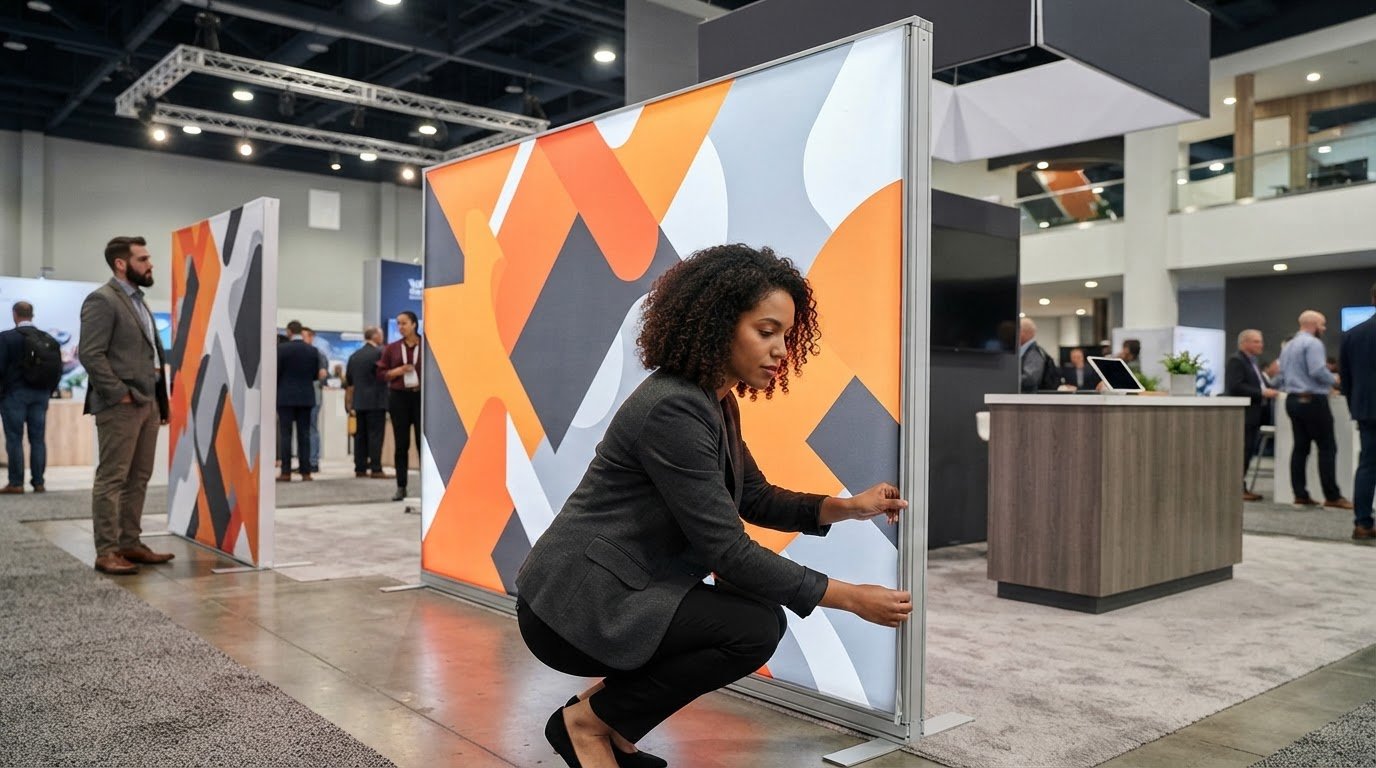
A clean, edge-to-edge event graphic depends on more than the print. An SEG fabric display frame system pairs an aluminum frame with fabric printed with a sewn silicone edge that presses into a groove to hold the graphic taut. The result is a smooth display surface, with or without backlighting.
Choosing between the two comes down to the effect you want: backlighting illuminates the graphic from behind, while a non-lit frame presents the print without internal lighting. Both use the same silicone-edge approach, so the graphic fits into the frame channel rather than stretching over a tube structure.
Learn how the silicone edge fits, how to install or change a graphic, and what distinguishes backlit from non-lit displays. With those basics, you can choose a format that suits your event’s visual direction and practical needs.
Key Takeaways
- Learn how the sewn silicone edge seats in a recessed frame channel to create a smooth, tensioned graphic.
- Compare backlit and non-lit displays to match the visual effect to your event setting.
- See how frame placement and profile depth shape display choices, from wall-mounted graphics to freestanding formats.
- Explore how silicone keder installation works and what to consider when planning a polished event display.
What are silicone edge graphics?
SEG stands for silicone edge graphics. An SEG fabric display frame system pairs an aluminum frame with a printed fabric graphic and a silicone bead sewn around its edge.
SEG Meaning and Construction
The silicone bead runs around the graphic’s perimeter and fits into the frame channel. The fabric carries the printed visual, while the bead holds the edges in place and tensions the display. Check for an even perimeter and clean finish so the graphic sits smoothly without bunching at the corners. Large displays may use seams where needed.
Fitting Graphics into Frame Channels
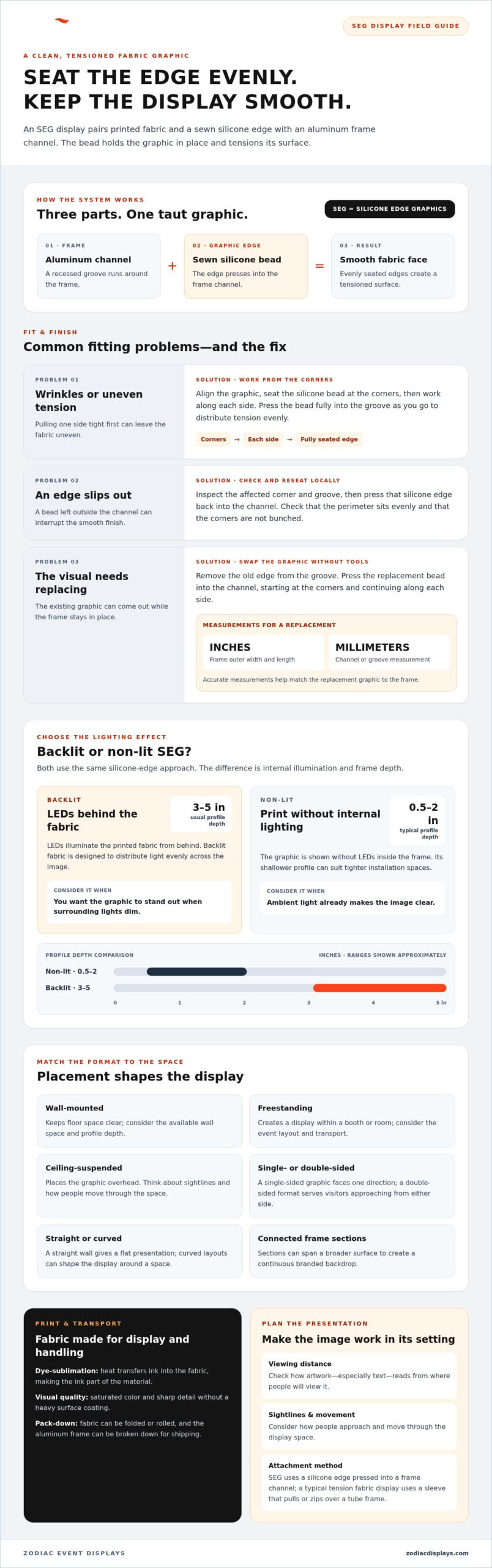
Fit the graphic by pressing its silicone edge into the aluminum frame’s recessed groove. Start at the corners, then work along each side, seating the bead evenly. This distributes tension and helps create a flat surface. Common problems include an edge slipping out of the channel or uneven tension causing wrinkles. Check the affected corner and groove, then reseat the silicone edge in that area.
Graphic Replacement and Frame Reuse
SEG graphics can be changed without tools, allowing the frame to stay in place while you fit a new visual. Remove the existing edge from the groove, then press the replacement bead into the channel, starting at the corners. To measure and order a replacement, provide the frame’s outer width and length in inches, along with the channel or groove measurement in millimeters. Accurate measurements help match the graphic to the frame.
Dye-sublimation printing uses heat to transfer ink into the fabric, making the ink part of the material. It produces saturated color and sharp detail without a heavy surface coating. Consider how artwork, especially text, will read from the display’s viewing distance. The fabric graphic can be folded or rolled for transport, and the aluminum frame can be broken down for shipping.
What is the difference between backlit and non-lit SEG frames?
Backlit frames use LED lighting behind the printed fabric; non-lit frames show the graphic without internal illumination. Choose according to the setting, available light, and whether the display should stand out when surrounding lights dim.
At a trade show, a backlit graphic can attract attention with an illuminated visual. A non-lit frame suits spaces where ambient light already makes the image clear. Both options work in retail, lobby, and exhibit displays, so the choice is about presentation, not where SEG can be used.
Placement shapes the installation. Wall-mounted SEG graphics keep floor space clear, while freestanding frames create a display within a booth or room. Ceiling-suspended frames put graphics overhead. Double-sided formats show a graphic from both directions, useful where visitors approach from either side. Curved layouts can shape a display around a space, while a straight wall offers a flat presentation.
For a large SEG wall, connected frame sections can span a broader surface, creating a continuous branded backdrop in a retail setting or trade show booth. Consider sightlines and how people move through the space when choosing wall-mounted, freestanding, or hanging placement. A single-sided graphic faces one viewing direction; a double-sided one serves two.
Unlike a pop-up display, an SEG frame holds fabric by its silicone edge in a frame channel. A tension fabric display typically uses a sleeve that pulls or zips over a tube frame. The difference affects how the graphic attaches and how the display is assembled.
For a trade show backdrop, Backwall Displays can help organize the visual space behind your booth. Match the format to the booth layout, viewing direction, and lighting before settling on a display plan.
What is an SEG fabric display?
An SEG display combines an aluminum frame with silicone edge graphics to create a tensioned fabric surface. Backlit lightboxes add LEDs behind the printed fabric, while non-lit frames present graphics without internal lighting.
Frame and Lightbox Profiles
Profile depth affects how far a display projects from its wall or footprint. Non-lit SEG frames typically have profiles around 0.5-2 inches thick, while backlit lightboxes usually measure around 3-5 inches thick. That extra depth accommodates lighting behind the graphic. Compare profile thickness with the space available, especially for a wall-mounted installation or a compact trade show booth.
Aluminum Frame Construction
The aluminum frame supports the fabric graphic and its edge channel. It can weigh less to ship than some rigid display options. For a freestanding display, consider how the frame fits the event layout and how you will transport it. A lightbox uses a deeper aluminum profile to accommodate lighting.
Frame and Graphic Materials
The frame is aluminum, while the graphic is printed fabric with a silicone edge sewn around its perimeter. The edge holds the material within the frame, and the fabric carries the visual. For an illuminated graphic, backlit fabric is designed to distribute light evenly across the image, helping create a balanced appearance across the lightbox surface.
Inside a backlit lightbox, LEDs illuminate the graphic from behind. LEDs positioned around the frame’s inner perimeter backlight the printed fabric, which forms the visible face of the display. Freestanding lightboxes bring that illuminated surface into a booth or event space, while a non-lit freestanding frame provides a fabric display without internal LEDs. Choose the format based on placement and the lighting effect you want.
How silicone keder fits into a recessed frame channel
The sewn silicone edge, sometimes called keder, locks the fabric graphic into the frame. Its fit determines how evenly the fabric stretches across the display.
Sewn Silicone Edges and Channels
The silicone edge is sewn around the graphic’s perimeter, forming a bead that presses into the recessed channel. To install it, align the graphic with the frame, seat the bead at the corners, then work along each side. This order distributes tension instead of pulling one edge tight first.
Press the bead fully into the groove as you work around the frame. An edge left outside the channel can disrupt the seamless finish or leave the fabric slack. The channel holds the graphic in place without extra hardware.
Frame Depth and Silicone Beading
Frame depth describes the aluminum structure’s profile; the silicone bead fits into its channel. These parts have different jobs: the profile supports the display, while the bead anchors the fabric. A recessed groove lets the edge sit within the frame rather than covering its face.
Before presenting a freestanding display, check that the fabric edge is seated around the entire frame. Even tension helps prevent loose sections or visible gaps. Frame depth alone does not determine how tightly the fabric stretches.
To replace a graphic, remove the existing bead from the channel and fit the new one by hand, starting at the corners. Work around the perimeter, pressing the silicone edge into the groove and smoothing the fabric as you go. This tool-free process lets you reuse the frame when the visual changes. On a double-sided display, each graphic has its own frame face, so fit each edge into its corresponding channel.
Planning a fabric display for an event? Explore Banner Stands as another way to present a printed graphic.
Zodiac Event Displays: Event Tents
Zodiac Event Displays offers Event Tents for teams planning branded event spaces beyond an SEG backdrop. An event tent can establish a visible outdoor gathering point, while Backwall Displays create a branded focal point in an exhibit or event area. Custom Flags and Inflatables can add further visual presence.
Consider Event Tents when your plan includes an outdoor branded space, rather than a fabric frame alone. For an indoor exhibit, a Backwall Display may better suit the layout. The right combination depends on where people will encounter your brand and the role each display needs to play.
To discuss event display options, contact Zodiac Event Displays.
Shape Your Next Event Presence
Plan your display around the experience you want visitors to have. A clear visual direction helps every element feel intentional, from the main backdrop to the details carrying your brand across the event space. Consider the venue, audience, and purpose of the presentation before deciding how each piece should work together.
An SEG fabric display frame system can anchor your visual plan, while complementary event materials extend your brand’s presence. Zodiac Event Displays offers Event Tents, Backwall Displays, and Custom Flags for branded event environments. Choose pieces that suit your setting and give your message room to stand out.
Ready to turn your event vision into a cohesive display? Contact Zodiac Event Displays to discuss your display and take the next step toward a polished, memorable presence.
Frequently Asked Questions
Are SEG displays worth it for small businesses?
An SEG display can suit a small business that needs a polished backdrop for changing events. Reusing the frame and refreshing the graphic can support different campaigns, such as a product launch followed by a seasonal brand presentation. Consider how often you will use the display and whether it fits the event space. For a one-time sign, a simpler format may be more practical.
Can an SEG display hold a TV or product shelves?
A standard SEG graphic frame is designed to present fabric graphics, not support a TV or loaded shelves. Screens and shelving have separate structural requirements: their weight, attachment points, and stability call for suitable supporting hardware. For example, shelves holding products need a structure designed to carry that load, while the SEG graphic can serve as the branded backdrop.
Custom SEG Sizes: How Big Can You Go?
The practical size depends on the frame design, installation space, transport plan, and graphic construction. Larger graphics can use fabric panels with seams where needed, and the frame can be broken down for shipping. For a wide wall, plan how sections align and where seams fall in the artwork to preserve a cohesive image.
Looking for SEG Fabric Products?
Start by deciding whether you need the printed fabric, its compatible frame, or a complete display. The fabric edge must fit the frame channel, so the graphic and hardware need to work together. For a wider branded event setup, consider how a backdrop works alongside signs, flags, or other displays. Coordinating the visual message across formats helps create a unified presence.
What size SEG display fits a 10×10 trade show booth?
A 9.8-foot-wide SEG backwall is described as a standard fit for a 10×10-foot trade show booth. Compare that width with your booth layout, including the usable wall area and nearby structures. The right fit should leave room for the rest of the exhibit and keep the graphic visible from the aisle. Check height requirements when planning a taller display.
What is an SEG fabric display frame system?
An SEG fabric display frame system holds a printed fabric graphic using a sewn silicone edge. The frame provides the supporting shape, and the graphic creates the visible branded surface. When planning, consider viewing direction, placement, and whether illumination matters. These choices help distinguish a simple backdrop from an illuminated focal point in an exhibit.

 Previous reading