


Picture the scene: your keynote begins in ten minutes, your stunning backwall display is finally positioned, and a stray coffee splash suddenly threatens your entire visual identity. It’s a high-stakes moment every exhibitor dreads, where a single blemish feels like a direct hit to your brand’s professional polish. We understand the frustration of battling stubborn wrinkles or the fear that a standard wash might dull those carefully calibrated colors. You’ve invested in visual excellence, and you deserve a maintenance strategy that protects that impact through every event cycle.
This professional guide empowers you with the mastery of how to clean fabric trade show displays without compromising the durability of your dye-sublimated graphics. We’ll walk through the techniques needed to vanish stains, eliminate creases, and preserve the life of your specialized assets. From immediate on-site emergency protocols using 2026-compliant cleaners to navigating the complexities of NFPA 701 fire safety certifications, you’re about to transform your maintenance routine into a strategic advantage for your next presentation.
Key Takeaways
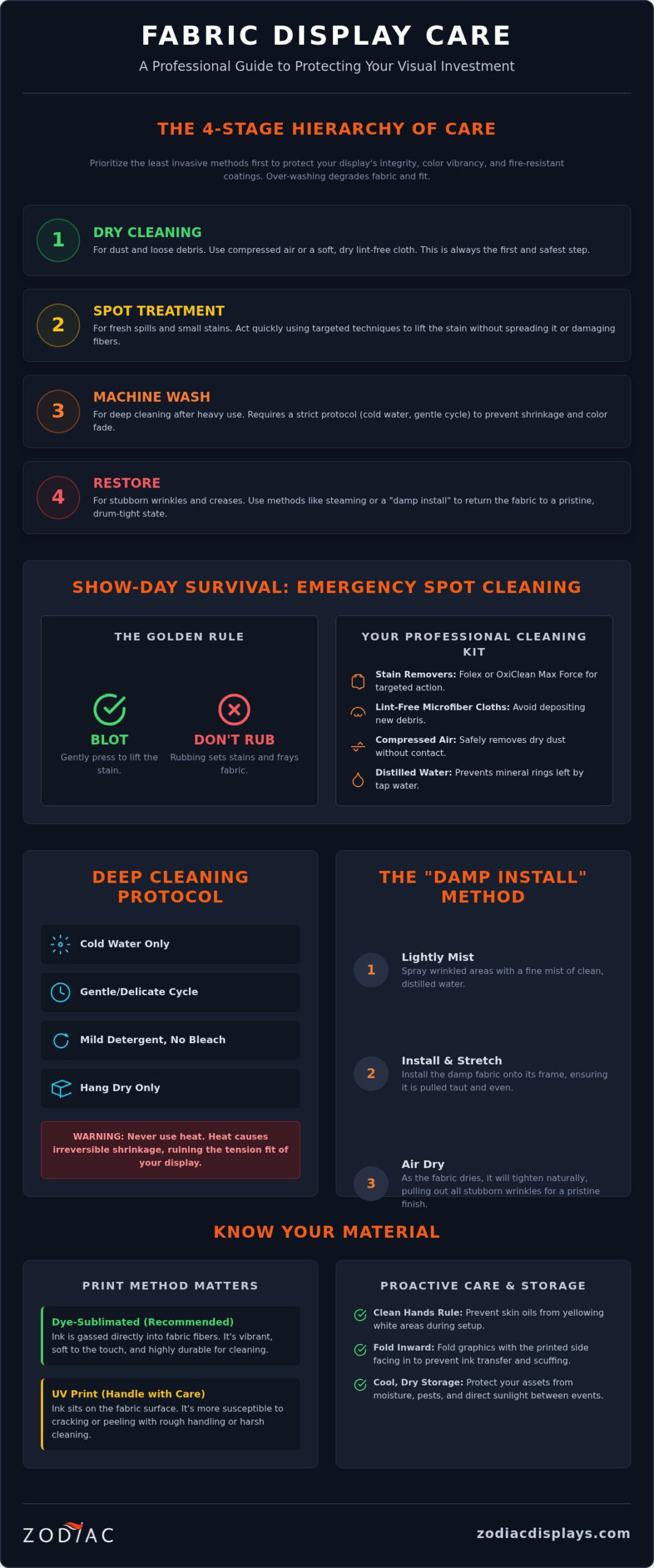
- Adopt the four-stage “Hierarchy of Care” to systematically protect your display’s structural integrity and visual brilliance through every show cycle.
- Discover the professional secrets of how to clean fabric trade show displays during high-stakes emergencies using precise “lifting” techniques that stop stains in their tracks.
- Preserve the precision fit of your tension fabrics by mastering the Cold & Gentle machine wash protocol, avoiding the heat-related shrinkage that ruins frame alignment.
- Leverage the “Damp Install” method to eliminate stubborn wrinkles naturally, ensuring a pristine, high-end aesthetic without the risks of improper ironing.
- Secure the long-term vibrancy of your brand assets with strategic post-show storage habits that prevent ink transfer and environmental degradation.
Understanding the Hierarchy of Fabric Display Care
Strategic success at a trade show is built on the foundation of a flawless presentation. We don’t just see a backwall as a piece of equipment; we see it as a high-performance asset that demands a specific Hierarchy of Care. This four-stage framework, consisting of Dry, Spot, Wash, and Restore, prioritizes the least invasive methods first to protect the material’s integrity. While it’s tempting to jump straight to heavy laundry processes, over-washing can eventually degrade the technical coatings that provide fire resistance and stretch. The core objective is maintaining the sophisticated, drum-tight look of a premium consultancy. If your fabric loses its tension, even the cleanest graphic will appear amateurish and tired. We partner with you to ensure that every fiber of your display reflects the quality of your brand.
Identifying Your Fabric and Print Method
Understanding the DNA of your display is the first step in learning how to clean fabric trade show displays effectively. Most premium backwalls utilize tension polyester, which offers a smooth, matte finish and significant elasticity. Heavy-duty canvas, often found in event tents or outdoor flags, is thicker and less forgiving. The durability of your graphic depends largely on the print method. Dye-sublimated graphics are the industry standard for longevity because the ink is gassed directly into the fabric fibers at high heat. You can identify these by their vibrant, deep saturation and soft touch. Conversely, surface-level UV prints sit on top of the fabric like a layer of plastic; they are much more prone to cracking or peeling if handled roughly during the cleaning process.
The 2026 Maintenance Mindset: Prevention over Cure
We believe that the best maintenance strategy is one that prevents damage before it occurs. High-energy exhibitors know that a “clean hands” rule during setup is non-negotiable. Skin oils and grime are the silent killers of white-space vibrancy, often leaving yellowed fingerprints that are difficult to remove later. Pay close attention to the floor environment as well. A dusty or damp carpet will quickly soil the bottom edge of your display as people walk by or during the initial assembly. By implementing a rigorous inspection schedule between event cycles, you can catch minor issues early before they set. If you are unsure about the state of your current assets, you can always contact us for a professional assessment. This proactive approach ensures your branded assets remain as impactful on their fiftieth show as they were on their first.
On-Site Emergency Spot Cleaning: The Show-Day Survival Guide
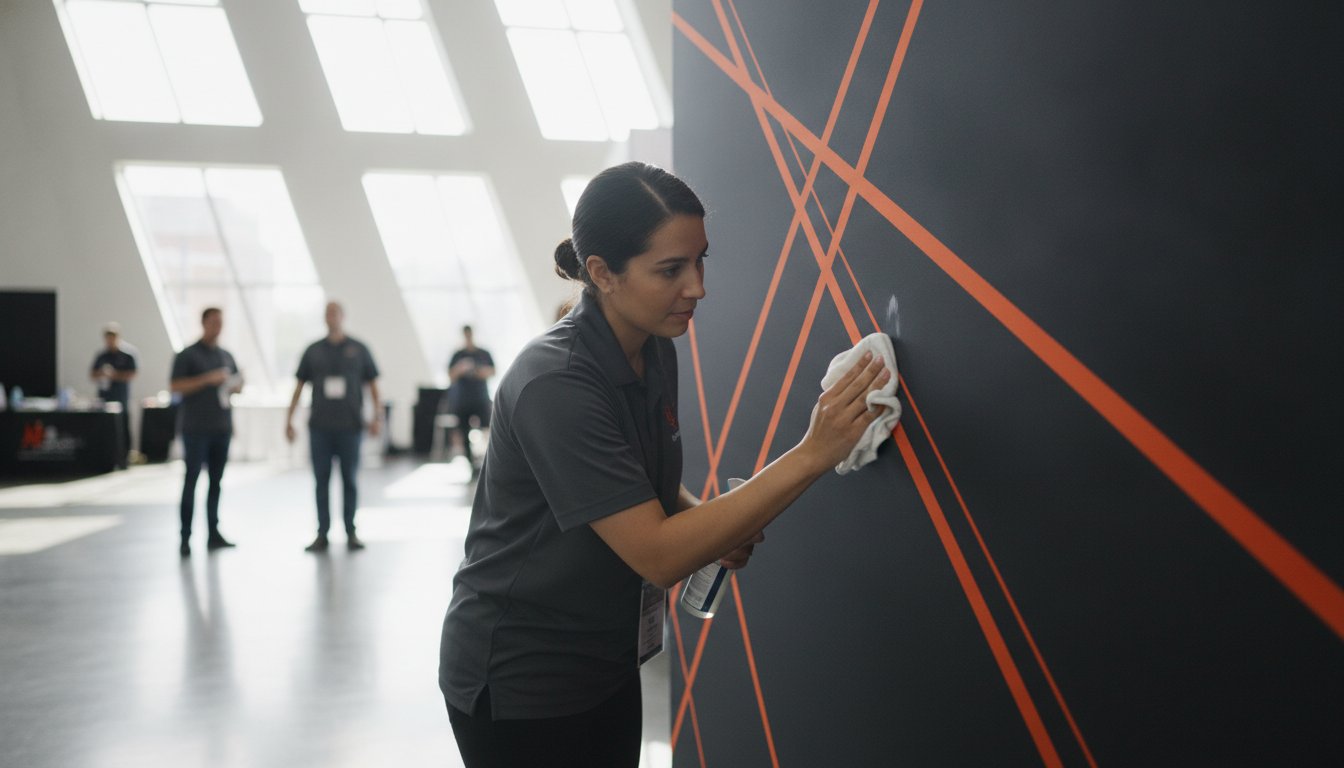
The trade show floor is a high-stakes environment where a single coffee spill can feel like a disaster for your brand’s image. Panic is often the first reaction, but precision is the actual cure. When a liquid hits your graphic, you have a narrow window to act before the pigment bonds with the polyester fibers. Understanding how to clean fabric trade show displays under pressure distinguishes the seasoned veterans from the rookies. Your goal isn’t just to remove the mess; it’s to do so without leaving a telltale “halo” or damaging the fabric’s specialized weave. We advocate for a “Blot-Don’t-Rub” mantra. Rubbing creates friction and heat, which can permanently set a stain or fray the delicate tension fibers. For those who want to dive deeper into the science of preservation, the George Washington University Museum provides excellent resources on Caring for Textiles, which mirrors the meticulous care needed for high-end exhibition graphics.
Building Your Professional Cleaning Kit
Visual excellence requires the right tools. Your 2026 event survival kit should be a permanent fixture in your shipping crates. We recommend including Folex for instant stain removal and OxiClean Max Force for more stubborn organic spots. Always use lint-free microfiber cloths to avoid depositing new debris while you work. Compressed air is an underrated hero for removing dry dust and debris without ever touching the fabric surface. Perhaps most importantly, always carry a small bottle of distilled water. Tap water often contains minerals that leave unsightly rings once the fabric dries, whereas distilled water ensures a clean, invisible finish. If your display has sustained damage beyond a simple spot fix, exploring a fresh backwall display might be the strategic move to maintain your premium presence.
Step-by-Step Protocol for Spills and Scuffs
When disaster strikes, follow this methodical three-step response to ensure your display remains pristine:
- Step 1: Lift solids. If you’re dealing with a thicker substance like mustard or mud, use a dull edge, like a credit card, to gently lift the material away. Never press down, as this pushes the particles deeper into the knit.
- Step 2: Blot from the outside in. Apply your cleaning agent to a microfiber cloth first, never directly to the display. Blot the edges of the stain and move toward the center. This technique prevents the liquid from spreading and creating a large, diffused ring.
- Step 3: Neutralize the area. Once the stain is lifted, use a separate microfiber dampened with distilled water to remove any chemical residue. This final step ensures the fabric’s texture remains consistent with the rest of the display.
Deep Cleaning Protocols: Mastering the Machine Wash
Transitioning from targeted spot treatments to a full-scale deep wash is a pivotal moment in asset management. You’ll know it’s time when general environmental grime begins to dull the vibrancy of your graphics or when a season of heavy use has left the fabric feeling less than pristine. This deep cleaning protocol is the secret to maintaining that “new-booth” energy year after year. Understanding how to clean fabric trade show displays at this level requires a shift in mindset from emergency response to long-term preservation. We view this process as a professional refresh that restores the visual punch of your branded environment.
The “Cold & Gentle” rule is your non-negotiable standard. Heat is the primary cause of shrinkage in polyester tension fabrics. Even a minor reduction in size can make a graphic nearly impossible to stretch over its frame, leading to puckering and misaligned corners. When choosing a detergent, reach for oxygen-powered solutions rather than traditional bleach. Chlorine bleach is far too aggressive for dye-sublimated graphics; it can weaken synthetic fibers and strip the essential fire-retardant coatings required by major venues. Oxygen-based cleaners lift deep-seated dirt while protecting the chemical bond of the ink, ensuring your colors remain as bold as your brand strategy.
The Professional Washing Machine Workflow
Before you begin the cycle, take a moment to prepare the fabric. Remove all silicone edge graphics (SEG) or plastic hardware if the design allows to prevent snagging during agitation. We recommend using a front-loading machine to avoid the rough central agitator found in many top-loaders. Set your machine to the delicate or gentle cycle with cold water only. It’s vital to manage the load balance; a single expansive graphic can become heavy when wet. If the machine becomes unbalanced, it may vibrate excessively or pull on the seams. A steady, gentle wash is the goal here.
Hand-Washing Large-Format Graphics
For massive hanging signs or expansive backwalls that simply won’t fit in a residential machine, hand-washing is the safest alternative. Use a clean bathtub or a large plastic basin to submerge the fabric in cold water with a mild, oxygen-based detergent. The technical principles of handwashing non-coloured textiles provided by the Canadian Conservation Institute offer a brilliant baseline for this level of care. Agitate the water gently by hand and rinse repeatedly. Any soapy residue left behind will attract dust like a magnet during your next show, so thorough rinsing is essential for a clean finish.
Restoration and Wrinkle Removal: Achieving the Pristine Look
Achieving a flawless surface is the final step in mastering how to clean fabric trade show displays. Even the most vibrant graphics lose their authority if they’re marred by deep creases or storage lines. Wrinkles act as visual static; they distract your audience and signal a lack of attention to detail that can undermine your brand’s sophisticated image. We view the restoration phase as a strategic finishing touch that ensures your booth radiates quality and precision from across the hall. While traditional ironing was once common, the technical nature of modern tension fabric displays requires a more nuanced approach to heat and moisture. High-energy brands don’t settle for “good enough” when it comes to their visual assets.
The debate between steaming and ironing is settled by the risk of fiber damage. Ironing, even on the unprinted side, carries a high risk of scorching synthetic polyester or causing uneven shrinkage that ruins the frame’s fit. Steaming is the professional standard because it uses gentle, penetrative moisture to relax the knit without direct metal-to-fabric contact. This process is essential for maintaining the drum-tight appearance that defines a premium exhibition space. If your current assets are showing signs of permanent creasing that won’t relax, it might be time to upgrade to a more resilient backwall display that handles travel with ease.
Professional Steaming on the Show Floor
When you’re working in a busy venue, efficiency is your ally. Always steam your graphics from the back whenever possible. This protects the printed face from potential “water spotting” caused by over-saturated steamers or mineral buildup in the device. Vertical steaming is significantly safer than horizontal ironing because gravity helps pull the fabric taut as the steam works through the fibers. Hold the steamer head a few inches away and move in steady, downward strokes. This methodical pace ensures the heat is distributed evenly, preventing the fabric from becoming overly damp or distorted in specific spots.
The ‘Damp Install’ Trick for Tension Fabrics
For the most stubborn creases, we recommend the “Damp Install” technique. This method leverages the physics of the tension frame itself. After washing or lightly misting the fabric with distilled water, install the graphic while it’s still approximately 10% damp. As the fabric dries, the tension from the aluminum frame pulls the fibers into perfect alignment, naturally smoothing out even the deepest storage lines. It’s a hands-off way to achieve a custom-tailored look. However, you must ensure the fabric is 100% dry before the show ends and you dismantle the booth. Packing away even slightly damp fabric is a recipe for mold and permanent mildew stains.
Post-Show Preservation: Protecting Your Visual Investment
The final curtain call isn’t the end of your display’s journey; it’s the beginning of its recovery phase. Long-term visual vibrancy depends heavily on how you treat your branded assets once the venue lights go down. One of the most overlooked risks in the industry is “ghosting.” This phenomenon occurs when ink from a saturated area of the graphic migrates onto a lighter section while the fabric is tightly packed. It’s a frustrating setback that can often be avoided with the right technique. Mastering how to clean fabric trade show displays is only half the battle; preventing damage during the months between events is what truly secures your ROI. We advocate for a “Cool, Dark, and Dry” storage rule. Heat and moisture are the primary catalysts for ink transfer and fiber degradation, so climate control is a non-negotiable requirement for premium assets.
Folding Strategies to Prevent Graphic Ghosting
To stop ghosting in its tracks, always fold your graphics with the printed face turned inward. This simple shift ensures that if any ink migration does occur, it happens on the unprinted backside rather than the high-impact face. For graphics with deep, saturated colors like navy or crimson, placing sheets of acid-free tissue paper between the layers provides an essential protective buffer. The “Roll vs. Fold” debate usually comes down to fabric weight. While lightweight tension fabrics fold easily, heavier canvas or blackout materials benefit from being rolled onto a large cardboard tube. Rolling eliminates the pressure points that cause permanent creases and reduces the physical contact between different sections of the print.
Climate-Controlled Storage and Asset Audits
Humidity is the silent enemy of high-quality soft signage. Storing your displays in a damp warehouse or a non-insulated locker can lead to mold growth and a stubborn musty scent. We recommend conducting a comprehensive annual audit of all your custom trade show displays to assess their structural and visual health. Use this time to check for frayed seams, thinning fabric, or hardware that no longer locks with precision. If you notice significant fading or structural fatigue that compromises your brand’s presence, it may be time to transition to a fresh design. For those ready to refresh their visual strategy or explore hardware upgrades, contacting Zodiac ensures you have a visionary partner ready to guide you through the fabrication process for your next big win.
A proactive post-show checklist should include:
- Vacuuming the bottom edges to remove show-floor dust before folding.
- Inspecting for small snags that can be repaired before they become large tears.
- Labeling every crate with the graphic’s current condition and the date of its last wash.
- Verifying that all silicone edges are intact and free of debris.
Elevating Your Brand Through Professional Preservation
You now possess the definitive blueprint for maintaining a flawless presence on the global stage. By adhering to the Hierarchy of Care and mastering how to clean fabric trade show displays, you protect the vibrancy of your graphics and the integrity of your brand’s voice. These protocols, from precision spot cleaning to climate-controlled storage, ensure that your investment continues to deliver high-energy impact event after event. Expert maintenance isn’t just about cleanliness; it’s a commitment to the visual excellence that defines your professional growth.
As a boutique Denver-based branding agency with over a decade of fabrication expertise, we understand that visual excellence requires both visionary design and meticulous upkeep. We are specialists in high-impact soft signage, dedicated to helping you achieve a sophisticated look that commands attention. Ready to upgrade your visual impact? Contact Zodiac Event Displays for premium fabric solutions. Your journey toward a more resilient and radiant booth starts with a partnership focused on quality and strategic longevity. We look forward to seeing your brand shine at your next exhibition.
Frequently Asked Questions
Can I put my fabric trade show display in a standard dryer?
No, you should never place your fabric display in a standard dryer. High heat is the primary enemy of polyester tension fabrics, as it causes the synthetic fibers to contract and lose their essential elasticity. This shrinkage makes it nearly impossible to fit the graphic back onto its frame without puckering. Instead, hang the display to air dry or install it while slightly damp to let the frame tension pull out any remaining moisture naturally.
What is ‘ghosting’ and how can I prevent it on my fabric graphics?
Ghosting is the unintended transfer of ink from one part of a folded graphic to another during storage. It typically happens when highly saturated colors are pressed against lighter areas in a warm or humid environment. To prevent this, always fold your graphics with the printed face inward and place acid-free tissue paper between the layers. This creates a protective barrier that preserves the visual precision of your brand’s identity.
Is it safe to use bleach on white areas of a branded fabric display?
Avoid using chlorine bleach on any part of your display, including the white areas. Bleach is far too aggressive for modern synthetic fibers and can permanently degrade the fire-retardant coatings required by major convention venues. Oxygen-based cleaners are a much safer alternative for deep cleaning. They lift stains effectively without compromising the fabric’s integrity or the chemical bond of the dye-sublimated inks.
How do I remove heavy grease or oil stains from a polyester backwall?
Grease and oil require a targeted approach to lift the lipids from the polyester weave without spreading the mess. Start by gently lifting any solids with a dull edge, then apply a specialized spot cleaner like Folex or OxiClean Max Force to a microfiber cloth. Blot the area from the outside in to prevent a halo effect. For deep-set oil stains, a professional consultation is often the best path to restore your backwall’s high-impact look.
Will machine washing cause my tension fabric to shrink and not fit the frame?
Machine washing won’t cause shrinkage if you strictly follow the cold and gentle protocol. The risk of shrinking arises almost exclusively from using warm water during the wash or placing the fabric in a heated dryer. By using cold water and air-drying your assets, you ensure the tension remains perfect. This is a critical step in how to clean fabric trade show displays while maintaining their professional, drum-tight fit.
Can I iron my fabric display if I don’t have a steamer at the show?
You can use an iron as a last resort, but you must proceed with extreme caution to avoid scorching. Set the iron to the lowest possible heat setting and only work on the unprinted backside of the fabric. Never let the hot metal touch the printed face directly, as it can melt synthetic fibers or distort the colors. A handheld steamer remains the superior choice for achieving a pristine finish on the show floor.
How often should I deep clean my trade show graphics?
We recommend a full deep wash every three to four major events or at least once a year during an annual asset audit. Routine spot cleaning handles immediate spills, but environmental dust and skin oils accumulate over time and dull the graphic’s vibrancy. A regular cleaning schedule keeps your soft signage looking fresh and extends the lifespan of your branded assets. This consistency ensures you’re always ready for your next high-stakes presentation.
What should I do if my fabric display gets wet from rain at an outdoor event?
If your display gets wet, the most important rule is to never pack it away while it’s still damp. Moisture trapped in a shipping crate leads to mold, mildew, and permanent odors that can ruin a graphic in just a few days. Set up the display in a dry, well-ventilated area as soon as possible and let it air dry completely. This proactive care protects your visual investment and keeps your event tents or flags in peak condition.
 Previous reading