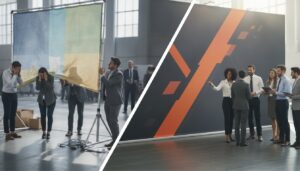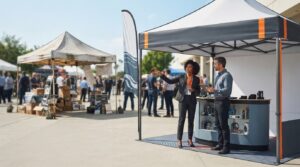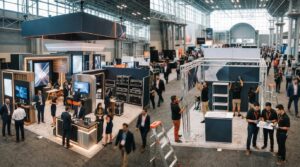



In the high-stakes arena of the 2026 trade show floor, visibility isn’t just about being seen; it’s about owning the atmosphere before a single word is spoken. You’ve likely felt the frustration of watching potential leads drift past your booth, caught in a sea of identical displays and generic branding. It’s a crowded landscape where standing out often feels like an expensive gamble against rising rigging fees and complex labor rules. Deciding between hanging signs vs backwall displays shouldn’t be a source of stress; it’s a strategic calculation of how you want to occupy space.
We’re here to help you master the vertical and horizontal dimensions of your exhibit to ensure you dominate every angle of the hall. You’ll learn how to pair 360-degree overhead visibility with the crisp, wrinkle-free sophistication of high-definition backwalls. This guide breaks down the essential trade-offs between long-range attraction and close-range conversion. We’ll explore the latest trends in modular tension fabric and provide a clear roadmap for achieving a premium presence that lowers your shipping overhead without sacrificing an ounce of brand authority.
Key Takeaways
- Elevate your brand presence by using hanging signs as a “North Star” to achieve 100-foot visibility across the busiest convention halls.
- Evaluate the critical logistics of hanging signs vs backwall displays, including how to balance rigging costs against the impact of a high-definition ground anchor.
- Master the modern material debate between Pillowcase and Silicone Edge Graphics (SEG) to ensure a flawless, wrinkle-free canvas for your brand storytelling.
- Optimize your event ROI by understanding how weight and assembly complexity directly influence your long-term shipping and drayage expenses.
- Align your hardware selection with your specific brand identity, choosing between the high-tech allure of backlit frames and the traditional reliability of modular systems.
The Architecture of Attraction: Why Your Choice of Signage Matters
The trade show floor is a high-energy ecosystem where visual noise is the default setting. Success in this environment requires more than a simple presence; it demands a calculated mastery of the vertical and horizontal dimensions. When you evaluate the strategic value of hanging signs vs backwall displays, you aren’t just choosing hardware. You’re defining how your brand occupies space. In the 2026 circuit, the most effective booths move away from flat, one-dimensional setups in favor of immersive, multi-layered environments that guide a visitor’s eye from the rafters to the carpet.
The Role of Visual Impact in High-Traffic Events
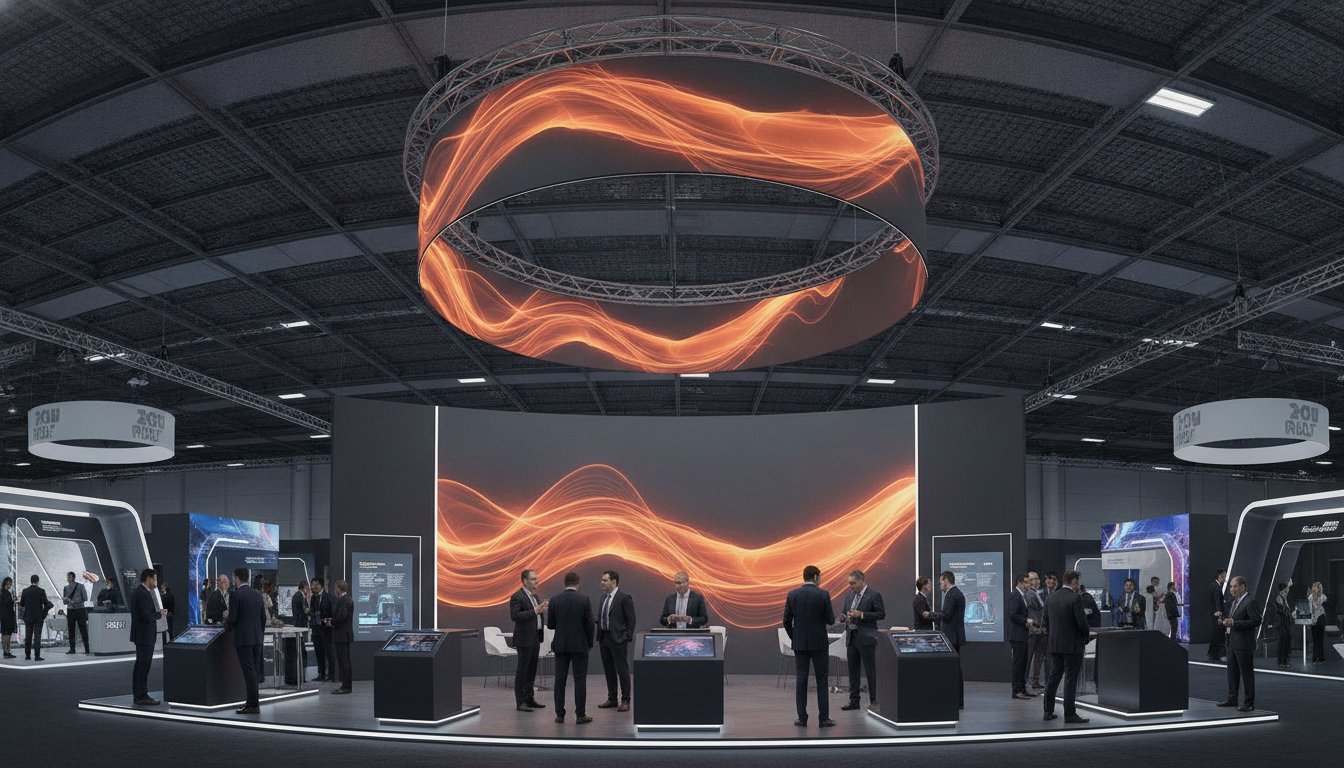
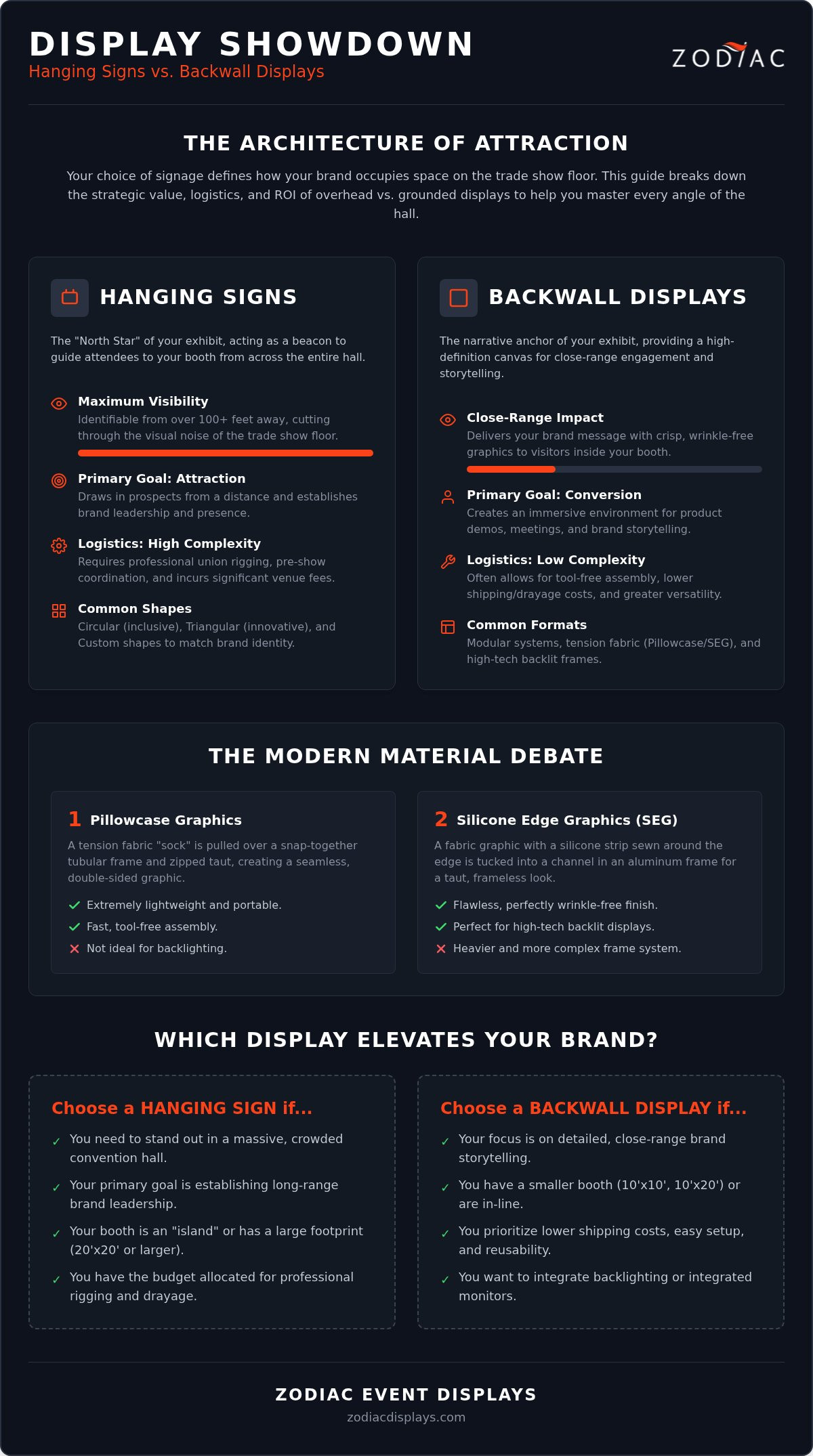
Visibility is a game of two halves. Your hanging sign acts as the “North Star,” a beacon of brand authority visible from over 100 feet across the exhibit hall. It signals your location and leadership to every attendee the moment they enter the building. Conversely, your backwall serves as the narrative anchor, providing the high-definition canvas for the close-range handshake. Modern principles of exhibit design emphasize this shift toward depth and scale. By moving away from heavy, rigid panels and embracing high-impact soft signage, brands can project a sense of vibrant precision that feels both premium and approachable. Scale matters. Precision pays. The goal isn’t just to be seen, but to be remembered as the leader in your category.
Consultative Branding: Beyond the 10×10 Box
Choosing between hanging signs vs backwall displays requires a strategic partner, not just a vendor. At Zodiac, we act as a visionary extension of your marketing team, helping you map your hardware choices to specific commercial goals. A boutique approach ensures that your assets are tailored to your brand’s unique personality rather than a “one-size-fits-all” template. Whether you’re a tech firm needing the sleek glow of backlit frames or a traditional powerhouse requiring the massive scale of a custom fabric structure, the consultative phase is where we define your success. This collaborative journey ensures your booth isn’t just a box, but a sophisticated destination that drives growth. For a deeper dive into how these assets come to life, explore our guide on Event Display Fabrication. We don’t just provide displays; we build the stage for your next big win.
Trade Show Hanging Signs: Owning the Event Horizon
Imagine walking into a convention center the size of several football fields. Amidst the chaos of thousands of attendees and hundreds of competing booths, your eyes naturally drift upward, seeking a landmark. This is the psychological advantage of overhead branding. While the debate of hanging signs vs backwall displays often focuses on budget, the true differentiator is the “event horizon,” which is the maximum distance from which your brand is identifiable. In 2026, hanging signs have evolved into dynamic beacons that command the atmosphere of the entire hall. We’re seeing a surge in signs that integrate internal LED illumination or slow-rotation motors that catch the peripheral vision of attendees through subtle, sophisticated motion. By utilizing premium, lightweight tension fabric, we achieve massive scale without the prohibitive weight of traditional materials, ensuring your presence is felt across the entire venue.
Shapes and Structures: Navigating the Options
The geometry of your sign should be a deliberate extension of your brand’s core identity. A circular sign suggests a global, inclusive reach and offers a soft, approachable silhouette from every angle of the floor. Conversely, a triangular structure projects a sense of innovation and aggressive, forward-moving momentum. For those seeking to truly disrupt the visual landscape, bespoke custom fabrication allows for silhouettes that break the visual monotony of the hall entirely. This level of high-level customization is similar to how brands use Custom Flag Banners to create movement and interest at eye level; both assets work together to build a cohesive, multi-dimensional visual language that speaks to your audience before they ever set foot in your booth.
The Logistics of Rigging and Safety
Success in the rafters requires a deep understanding of venue-specific regulations and the physics of the floor. Most major US convention centers require professional union rigging crews and strict adherence to safety certifications, including NFPA 701 fire ratings for all fabric elements. You must coordinate rigging points early in the planning phase, as venue architecture often dictates where and how high your sign can hang. Because trade shows are a significant investment in your professional growth, understanding the strategic importance of trade shows helps justify the logistical complexity of these high-impact assets. Lightweight fabric is the only viable choice for large-scale hanging; it manages drayage costs while ensuring compliance with strict overhead weight limits. If you’re unsure which structure fits your upcoming show’s floor plan, our team can help you explore the possibilities of custom fabrication to ensure your brand stands tall.
Backwall Displays: The Grounded Foundation of Your Exhibit
If your hanging sign acts as the “North Star” guiding attendees from across the hall, your backwall is the primary stage where your brand’s narrative comes to life. It serves as the visual anchor for every interaction, providing a high-definition backdrop that defines your professional space. While the debate of hanging signs vs backwall displays often focuses on height, the backwall is where you convert interest into engagement. According to exhibition industry research, the clarity and professional execution of your booth’s foundation are critical factors in attendee perception and overall ROI. In 2026, we’re seeing a decisive shift toward dye-sublimation printing on premium fabrics, ensuring a vibrant, glare-free finish that stands up to the harsh lighting of any convention center.
Pop-Up Displays: Mechanical Reliability
For teams prioritizing speed and structural presence, the modern pop-up display remains a formidable choice. These systems utilize a sophisticated scissor-frame mechanism that expands in seconds, allowing even small marketing teams to deploy a professional environment without expensive union labor. While early versions relied on heavy laminate panels, today’s systems feature pre-attached fabric graphics that stay on the frame during transport. This evolution provides a “sturdier” feel that many exhibitors prefer, offering a rigid, architectural quality that feels permanent despite its portable nature. It’s a reliable workhorse for the road warrior who needs a consistent, high-impact presence at every stop.
Tension Fabric Systems: Seamless Sophistication
If your brand identity demands a flawless, high-end aesthetic, tension fabric systems represent the pinnacle of modern exhibit design. These displays typically utilize either “pillowcase” graphics, which slide over a tube frame and zip closed, or Silicone Edge Graphics (SEG) that tuck into a perimeter channel for a drum-tight finish. The result is a seamless, wrinkle-free canvas that looks exceptional in professional photography and video. Because there are no visible seams or mechanical frames, your graphics take center stage. These systems are also incredibly easy to future-proof; replacing a graphic for a new campaign is as simple as ordering a new fabric skin, which packs down to the size of a folded shirt. For those looking to elevate their presence further, exploring Custom Trade Show Displays allows you to integrate lighting and shelving directly into these fabric foundations. Choosing between hanging signs vs backwall displays isn’t about picking one over the other; it’s about building a layered environment where the backwall provides the sophisticated depth your brand deserves.
Head-to-Head: Performance, Logistics, and ROI
Logistics are the invisible engine of your trade show success. While the visual impact of hanging signs vs backwall displays dominates the planning phase, the reality of your ROI is often decided in the shipping crates and labor lines. In the 2026 circuit, performance is measured by how quickly an asset transitions from a shipping container to a high-definition brand statement. We see a clear distinction here: backwalls provide the immediate grounded architecture, while hanging signs require a more complex dance with venue rigging crews. Both, however, have shifted toward ultra-lightweight fabric to combat the rising costs of drayage. Weight equals money on the convention floor, and every pound saved in shipping is a dollar reinvested into your lead generation efforts.
Cost of Ownership: Rigging vs. Floor Space
When calculating the true cost of hanging signs vs backwall displays, you must look beyond the hardware. A hanging sign requires a one-time professional rigging fee at every show, which can feel like a steep entry point. However, the strategic advantage is that it clears your precious floor space. By moving your primary branding 20 feet into the air, you free up square footage for interactive demos, lounge seating, or private meeting areas. This effectively increases the “revenue per square foot” of your booth. For brands committed to long-term sustainability, choosing hardware that supports Eco-Friendly Trade Show Displays ensures these assets remain viable through years of heavy use, further amortizing those initial rigging investments.
Setup Complexity and Labor Requirements
The “minute-by-minute” breakdown of assembly reveals two different philosophies. Pop-up backwalls are the champions of the “one-person setup,” utilizing a mechanical scissor-frame that expands in under five minutes. While competitors often ignore the frustration of aligning magnetic panels on older systems, modern “pop and lock” fabric frames eliminate this headache entirely. Tension fabric “pillowcase” systems require a bit more coordination, often needing a two-person team to pull the fabric taut over the frame. The payoff is a flawless, seam-free finish that thrives under professional trade show lighting. Unlike rigid panels that can chip or scratch during global delivery, our soft signage assets are designed for endurance. They emerge from the crate wrinkle-free and ready to perform. If you want to see how these logistics can be optimized for your next show, reach out to our strategy team for a custom hardware consultation.
Visual performance under the harsh, multi-directional lighting of a convention hall is where quality truly shines. Cheaper vinyl alternatives create a distracting glare that ruins professional photography and attendee engagement. Our dye-sublimated fabrics absorb light, ensuring your colors remain vibrant and your text remains legible from every angle. This durability ensures your assets survive the rigors of global delivery, maintaining their premium look from the first show of the season to the last.
Strategic Selection: Which Display Elevates Your Brand?
Choosing the right hardware is a declaration of your brand’s ambitions. While we’ve dissected the technical merits of hanging signs vs backwall displays, the final selection should reflect your unique personality and operational rhythm. A high-growth tech firm might prioritize the sleek, illuminated glow of a tension fabric backwall to mirror their innovative edge. Meanwhile, a legacy manufacturer often benefits from the commanding, skyline presence of a massive hanging sign to signal their market dominance. Your display isn’t just a backdrop; it’s a strategic asset that must survive the rigors of the road while looking flawless at every stop.
Frequency of use is a vital consideration. If you’re a road warrior attending monthly regional events, the rapid deployment and durability of a pop-up backwall system are invaluable. For those focusing on a single, high-stakes annual exhibit, investing in a custom-fabricated hanging sign creates the “wow” factor needed to dominate a massive hall. The most successful exhibitors in 2026 don’t choose just one; they implement a hybrid strategy. They use the hanging sign to own the horizon and the backwall to anchor the conversation. This multi-layered approach ensures your brand is the most memorable destination on the floor. The decision between hanging signs vs backwall displays ultimately hinges on your specific event frequency and brand identity.
The Zodiac Design Consultation
Success at scale requires more than just high-quality hardware. It requires a partner who understands the nuances of large-format graphics. At Zodiac, our Denver-based creative team acts as a strategic extension of your own. We don’t just print files; we optimize your visual assets to ensure they remain crisp and impactful when scaled to twenty feet or more. Our boutique agency approach means we move beyond the standard 10×10 kit to create custom fabrications that tell your specific story. Whether you need a bespoke silhouette or integrated shelving, we’re ready to guide you. Reach out to our team today and Contact Us for a strategic consultation that transforms your vision into a physical landmark.
Investing for 2026 and Beyond
The future of event design is modular, sustainable, and globally ready. We focus on creating systems that grow with your business. A modular backwall can be reconfigured for different booth sizes, while our sustainable fabric options ensure your brand aligns with modern environmental expectations. With over 10 years of experience and global delivery capabilities from our Colorado headquarters, we ensure your assets arrive on time and in perfect condition, no matter where the circuit takes you. Investing in high-impact soft signage today builds a foundation for years of professional growth and visual excellence. We don’t just provide displays; we partner in your long-term visibility and success.
Dominate the Floor with Multi-Dimensional Branding
Mastering your booth’s architecture is the definitive difference between blending into the background and becoming a hall landmark. You now understand how hanging signs capture the event horizon from over 100 feet away while backwall displays ground your brand’s narrative for the close-range handshake. The strategic choice between hanging signs vs backwall displays isn’t about compromise; it’s about layering your visibility to win from every possible angle on the 2026 circuit.
As a boutique Denver-based agency with over 10 years of expertise, Zodiac Event Displays acts as a visionary extension of your marketing team. We specialize in high-impact soft signage and custom fabrication, providing full-service design and global delivery to ensure your presentation is flawless across international circuits. Our consultative approach ensures your hardware matches your brand’s unique identity and growth goals. We take pride in exceeding standard requirements to create an atmosphere of reliability and premium service for every client.
Elevate your brand with a custom-designed exhibit by contacting Zodiac Event Displays today. Your next big win starts with a vision that reaches for the rafters and anchors the floor. We’re ready to help you build it.
Frequently Asked Questions
Is a hanging sign harder to set up than a backwall display?
A hanging sign is logistically more complex because it requires coordination with professional venue rigging crews. While your team can often assemble a pop-up or tension fabric backwall in minutes, hanging signs must be hoisted and secured by certified experts. This process involves precise placement and safety checks that ground-based displays don’t require. We manage the fabrication to ensure your sign is rigging-ready upon arrival at the venue.
Can I wash the graphics on a tension fabric backwall?
You can typically machine wash dye-sublimation graphics on a cold, gentle cycle. This is a major advantage of high-impact soft signage over traditional vinyl. Use a mild detergent and avoid bleach to preserve the vibrancy of your brand colors. We recommend air drying or using a low-heat tumble setting to prevent shrinkage. This maintenance ensures your display remains crisp and professional for years of use across various event circuits.
Which display type is more durable for frequent international travel?
Tension fabric systems are significantly more durable for frequent international travel compared to rigid panel displays. Soft signage graphics don’t chip, scratch, or dent during transit; they simply fold into compact cases. The lightweight aluminum frames used for both hanging signs and backwalls are designed for endurance. This resilience makes them the ideal choice for brands maintaining a consistent global presence without the risk of expensive hardware damage between shows.
Do hanging signs require professional riggers at every venue?
Professional rigging crews are required at almost every major convention center for safety and liability reasons. Exhibitors are strictly prohibited from hanging their own overhead signage. These certified teams ensure that all structures meet 2026 safety standards and are securely attached to the venue’s ceiling points. While this adds a logistical layer, it guarantees that your massive brand beacon is installed safely and positioned perfectly above your booth.
How do shipping costs compare between pop-up and tension fabric displays?
Tension fabric displays generally offer lower shipping costs than traditional pop-up systems because they’re lighter and more compact. While a pop-up frame has a mechanical scissor structure that adds weight, a tension fabric display uses a simple tube frame and a foldable fabric skin. This reduction in volume and weight directly impacts your drayage fees and shipping overhead. It’s a strategic move for brands looking to maximize their budget for the 2026 season.
What is the average lifespan of a dye-sublimation fabric graphic?
A high-quality dye-sublimation fabric graphic typically lasts between five and ten years with proper care and storage. The colors are chemically bonded to the fibers, meaning they won’t peel or fade easily under normal indoor conditions. While the hardware often lasts even longer, many of our clients choose to update their graphics every two to three years to keep their marketing message current and aligned with their evolving brand strategy.
Can I use a hanging sign in a 10×10 booth space?
Most convention centers restrict the use of hanging signs to island or peninsula booths that are 20×20 feet or larger. Standard 10×10 inline booths are rarely permitted to have overhead rigging due to height restrictions and sightline rules for neighboring exhibitors. Always check your specific exhibitor kit for venue-specific regulations. If you’re in a smaller space, we recommend focusing on a high-definition backwall to maximize your vertical brand presence.
Which signage type looks better under harsh convention center lighting?
Fabric displays are the superior choice for high-traffic halls because they absorb light rather than reflecting it. When comparing hanging signs vs backwall displays, choosing dye-sublimated fabric ensures your brand remains legible without the distracting glare common with vinyl or laminate panels. This matte finish is essential for professional photography and social media sharing. It provides a sophisticated, high-end look that maintains its visual integrity under intense venue lights.

 Previous reading