


Your brand’s presence shouldn’t stop at the edge of the carpet; it should claim the entire column of air reaching toward the rafters. In the high-stakes environment of 2026, where you have exactly three seconds to capture an attendee’s interest, standing out requires a vertical strategy. Deciding when to use hanging signs for trade shows is a sophisticated pivot that transforms a standard 20×20 island into a soaring landmark. It’s the difference between being a hidden gem and becoming the floor’s primary destination, visible from over fifty feet away.
We recognize the pressure of balancing grand visions with the practicalities of rigging fees and strict venue regulations. You’re looking for more than just a banner; you want a partnership that ensures every pound of drayage translates into undeniable brand authority. This guide provides the clarity you need to invest with absolute confidence. We’ll explore the psychological impact of overhead scale, break down the criteria for choosing specific shapes, and offer a precise framework to help you master the vertical landscape of your next exhibition.
Key Takeaways
- Claim your brand’s air rights and establish psychological dominance by becoming a visible landmark from any point on the floor.
- Identify the exact booth configurations and traffic densities that signal when to use hanging signs for trade shows to maximize your ROI.
- Choose the strategic geometry that fits your brand’s personality, from the organic flow of circular signs to the bold stability of square structures.
- Streamline your planning process by mastering the logistics of rigging fees, venue regulations, and the necessary 4-6 week lead times for custom fabrication.
- Elevate your presentation with precision large-format printing that ensures your brand’s colors remain vibrant and professional under the intense glow of convention center lights.
The Battle for Visibility: Why Overhead Signage is Your Secret Weapon
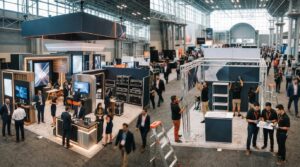
Walking onto a crowded exhibition floor can feel like entering a dense urban jungle. Thousands of square feet are packed with attendees, equipment, and competing messages. While floor-level graphics are essential, they often disappear behind a crowd of three or four people. This “Sea of Booths” problem is the primary reason why sophisticated exhibitors look upward. A trade show is a high-velocity environment where you have mere seconds to make an impression. If your message is buried at eye level, you’ve already lost the battle for attention. This is exactly when to use hanging signs for trade shows to break the line of sight and reclaim your authority.
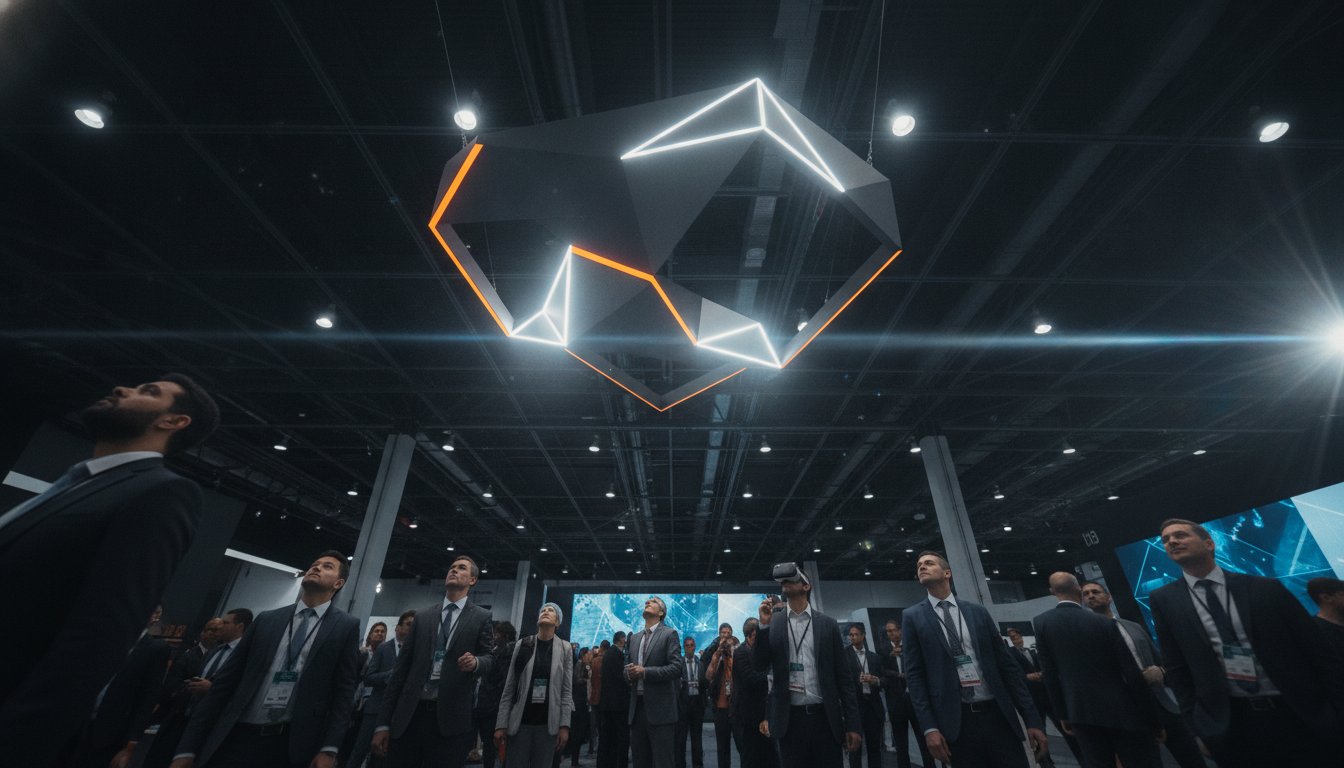
Knowing when to use hanging signs for trade shows allows you to claim “air rights” that most exhibitors leave on the table. You aren’t just renting floor space; you’re often paying for the entire vertical column above your booth. By suspending a high-impact graphic, you create a 360-degree beacon that signals your presence from every aisle. This overhead landmark does the heavy lifting of attraction before a visitor even steps onto your carpet, establishing a psychological edge that floor-bound competitors simply can’t match. To ensure this level of brand authority translates to all your physical locations, experts like Signarama provide comprehensive custom signage solutions that keep your business visible year-round, transforming your presence from a participant into a pillar of the event.
Breaking Through the Noise in Large Exhibition Halls
In massive venues, sightlines are your most valuable asset. Even the most stunning custom trade show displays can be obscured by a neighboring booth’s structure or a surge in foot traffic. Overhead signage acts as a vital wayfinding tool. It helps pre-scheduled leads and high-value prospects find your location instantly. It transforms your exhibit from a simple stall into a designated destination. When visitors see your brand from 20 to 50 feet away, you eliminate the friction of the search. You make it easy for them to choose your space over the noise around them.
Brand Dominance and the Perception of Scale
The Strategic Checklist: 5 Signs You Need a Hanging Display
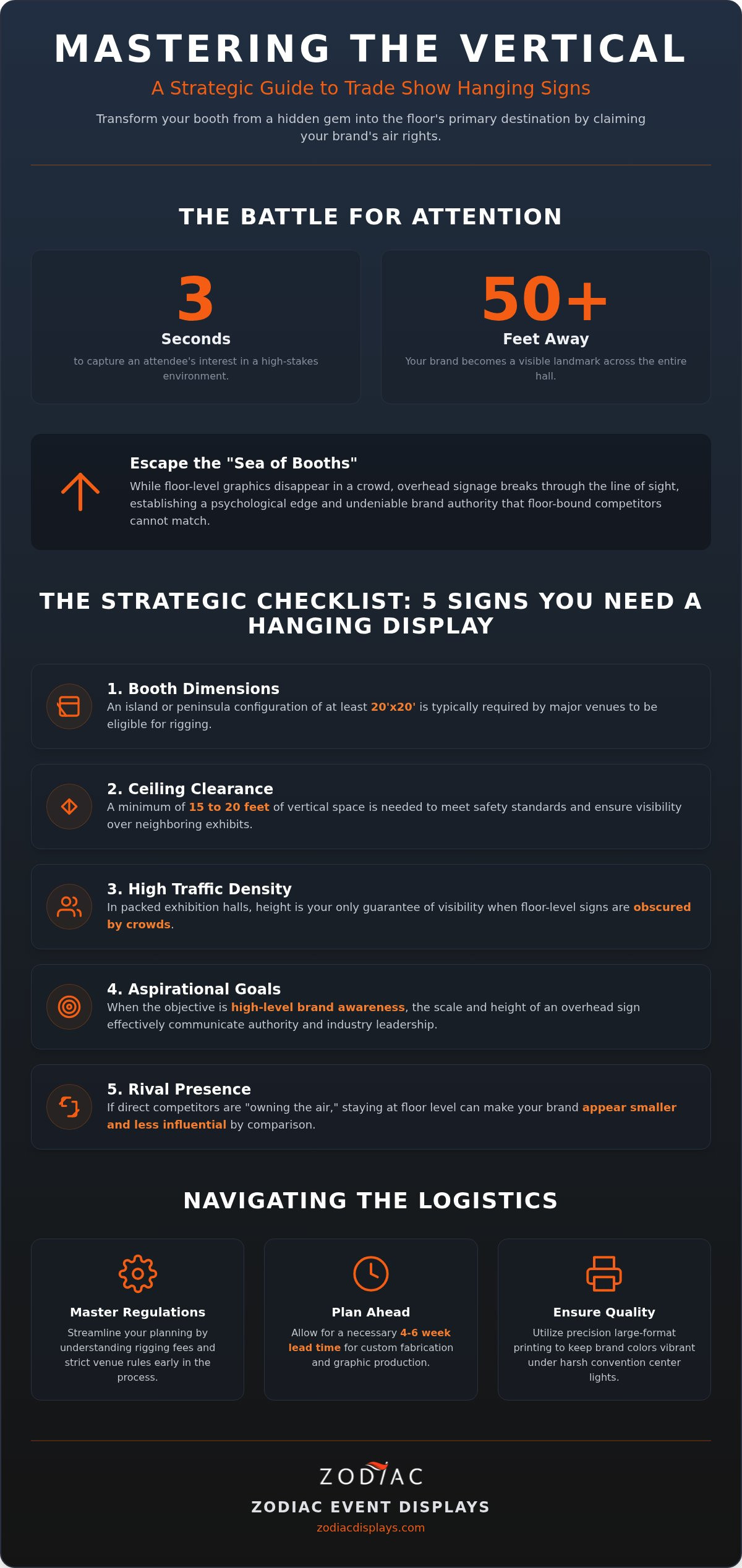
Investing in overhead assets is a major decision that requires a blend of logistical readiness and strategic intent. Determining exactly when to use hanging signs for trade shows often comes down to five critical indicators. If your brand meets these criteria, staying grounded is no longer an option. You need to claim the air to ensure your message isn’t lost in the shuffle of a busy hall.
- Booth Dimensions: Most major U.S. venues require an island or peninsula configuration of at least 20’x20′ to be eligible for rigging.
- Ceiling Clearance: You generally need a minimum of 15 to 20 feet of vertical space to meet safety standards and ensure the sign is visible over neighboring exhibits.
- High Traffic Density: If the event is expected to be packed, floor-level signage will be obscured by the crowd. Height is your only guarantee of visibility.
- Aspirational Goals: When your objective is high-level brand awareness rather than just specific product demos, scale and height communicate authority.
- Rival Presence: If your direct competitors are already “owning the air” around you, staying at floor level makes your brand appear smaller and less influential.
Evaluating Your Booth Footprint
In a standard 10’x10′ linear booth, hanging signs are almost never permitted by show management. For these smaller spaces, you should focus your budget on high-impact fabric backwall displays to maximize your immediate visual field. However, once you transition to a peninsula or island layout, a hanging sign becomes the anchor of your entire design. It defines your boundaries in an open space and ensures that every angle of your exhibit is working to attract leads from multiple aisles.
Analyzing Venue Constraints and Opportunities
Always consult your “Show Kit” before finalizing a design. This document outlines specific rigging rules and height restrictions that can vary wildly between venues. Beyond the rules, consider the environmental lighting. A large hanging sign can act as a strategic canopy, diffusing harsh overhead hall lights to create a warmer, more inviting atmosphere within your booth. If your location is tucked into a corner or a “dead zone” for floor visibility, an overhead beacon is your best tool to stay relevant to the main flow of traffic. If you’re unsure about your specific venue’s rules, our team can help you analyze your exhibitor manual to find the perfect fit for your vision.
Strategic Geometry: Choosing the Right Shape for Your Brand
The silhouette you project into the rafters is more than a structural choice; it’s a psychological cue. Deciding when to use hanging signs for trade shows often leads to the critical question of geometry. Circular signs are the undisputed champions of 360-degree visibility. Their organic, flowing lines suggest an approachable, community-focused brand. They’re ideal for central island booths where traffic flows from every direction, ensuring your logo is never hidden by an awkward angle. It’s a shape that feels inclusive and modern, perfect for brands that prioritize connection.
Conversely, square and rectangular signs project stability and corporate strength. They offer the maximum surface area for large-format graphics, making them the superior choice for high-resolution imagery or complex messaging. If your goal is to showcase technical mastery or precision, the sharp, defined corners of a geometric structure provide a visual anchor that feels both permanent and powerful. These shapes act as traditional billboards in the sky, providing a familiar and authoritative presence that commands respect from across the hall.
For brands looking to inject motion and modern energy, triangular or tapered signs are the answer. These shapes naturally draw the eye downward toward your booth floor, acting as a funnel for visual attention. When a standard shape won’t suffice for your creative vision, we often recommend custom inflatables to create bespoke silhouettes. These unique forms break the visual monotony of the convention center, ensuring your brand is the one attendees remember long after the doors close.
The Psychology of Shapes in Large-Format Signage
Every curve and angle communicates a specific value to your audience. Circular designs are often associated with innovation and inclusivity. They feel less like a barrier and more like an invitation into your space. In contrast, sharp angles and multi-level structures convey a sense of technical mastery and architectural precision. Aligning these shapes with your event display fabrication ensures that your overhead presence isn’t an afterthought, but a deliberate extension of your brand’s DNA. It’s about creating a cohesive narrative that starts at the ceiling and continues to the floor.
Sizing Your Sign for Impact without Overwhelming the Space
Sizing requires a delicate balance between impact and integration. A common industry guideline is to ensure your sign width is approximately one-third to one-half the width of your booth space. This prevents the sign from feeling claustrophobic or overwhelming your ground-level assets. Legibility is equally vital. For text to be readable from 50 feet away, your letters should be at least five to six inches tall. Because weight directly impacts your long-term costs, we utilize lightweight tension fabric as the 2026 industry standard. It offers wrinkle-resistant vibrancy and precision colors without the heavy drayage fees associated with rigid materials.
Navigating the Logistics: Rigging, Costs, and Lead Times
Mastering the “air rights” above your booth requires more than just a bold design. It demands a sophisticated understanding of the logistical dance that happens before the first attendee arrives. Deciding when to use hanging signs for trade shows often depends on your ability to navigate venue-specific rigging requirements and labor timelines. While the visual impact is undeniable, the success of your overhead asset hinges on precision planning and a clear-eyed view of the total investment required. You’re not just buying a sign; you’re orchestrating a high-level installation that must be perfect the moment the doors open.
Professional rigging is a non-negotiable reality in major convention centers. These venues require trained crews to handle all overhead installations to ensure safety and compliance with strict fire standards like NFPA 701. General industry data shows that rigging labor can start at a minimum of $700 per hour for installation and another $700 per hour for dismantling. This is why timing is your greatest financial ally. By meeting early-bird deadlines for show services, you avoid the heavy surcharges that penalize last-minute exhibitors. A well-prepared “Hanging Sign Orientation” map is essential. It tells the rigging crew exactly where your sign should sit in relation to your floor plan, preventing costly repositioning fees during the setup window.
Coordinating with Show Services
The General Service Contractor (GSC) is your primary point of contact for anything suspended from the ceiling. They manage the heavy machinery and the union labor required to hoist your brand into position. To ensure a seamless experience, we recommend a lead time of 4 to 6 weeks for strategic planning and fabrication. This window allows for creative refinement and ensures your hardware arrives at the advance warehouse on time. Shipping to the advance warehouse rather than the show site can save you 15 to 30 percent on material handling costs. It’s a strategic move that protects your budget while ensuring your display is ready for the first day of the event.
Budgeting for the Total Cost of Ownership
A truly successful exhibit balances high-impact visuals with logistical efficiency. Drayage, or material handling, often accounts for 8 to 18 percent of an exhibitor’s total program budget. This is where material choice becomes a competitive advantage. High-quality custom flag banners and tension fabric signs are significantly lighter than traditional rigid structures. Because drayage fees are typically calculated between $1 and $3 per pound, choosing lightweight aluminum frames and soft signage can save you thousands over the life of the display. These collapsible frames are designed for longevity, allowing you to refresh your graphics for different shows while reusing the core hardware. If you’re ready to plan your next vertical landmark, explore our custom hanging sign solutions to see how we blend precision engineering with aspirational design.
Elevating Your Presence with Zodiac Event Displays
Deciding when to use hanging signs for trade shows is a high-stakes strategic pivot that requires a partner with both visionary flair and technical precision. At Zodiac Event Displays, we operate as a dedicated ally rather than a cold corporate factory. Our boutique approach ensures that you receive personalized strategic consultation from the initial design phase through final fabrication. We don’t just provide a product; we offer a supportive partnership designed to maximize your brand’s visual excellence. With over a decade of industry experience, we’ve mastered the art of creating tension fabric structures that act as vibrant, soaring landmarks for your business.
Precision is the heartbeat of our process. We understand that convention center lighting can be harsh and unpredictable, which is why we utilize advanced large-format printing to ensure your brand colors remain crisp and accurate. Whether you’re exhibiting in a major domestic hub or navigating the complexities of an international hall, our global delivery capability ensures your assets arrive on time and in perfect condition. We handle the heavy lifting of logistics and technical preparation so you can stay focused on what matters most: connecting with your leads and growing your professional influence.
From Concept to Ceiling: Our Creative Process
Our collaboration begins with a steady and purposeful deep dive into your brand’s DNA. We work closely with your creative team to optimize layouts for overhead visibility, ensuring that every angle of your hanging sign is a masterpiece of design. This includes meticulous technical file preparation for complex tension fabric systems, ensuring a wrinkle-resistant, professional finish every time. We navigate the maze of global logistics with confidence, providing a seamless journey from the first conceptual sketch to the final moment your sign is hoisted into the rafters. It’s a comprehensive service that transforms a bold vision into a tangible, high-impact reality.
Ready to Own the Air?
Choosing the right partner is just as important as knowing when to use hanging signs for trade shows to dominate the floor. As a specialized event signage company in Denver, we bring a blend of high-energy confidence and seasoned strategy to every project. We invite you to take the next step in your professional growth and elevate your exhibit for the 2026 event calendar. Our team is ready to guide you through the creative process and help you claim the visibility your brand deserves. Contact Zodiac Event Displays today to start your overhead strategy and ensure your next presentation is nothing short of legendary.
Claiming Your Air Rights in 2026
The trade show floor is a high-velocity landscape where visibility is the ultimate currency. We’ve explored how claiming your vertical space transforms a standard booth into a dominant landmark, visible from every aisle. By mastering the strategic geometry of your display and navigating the technicalities of rigging with precision, you ensure your brand isn’t just present; it’s unavoidable. Understanding exactly when to use hanging signs for trade shows allows your team to move from mere participation to true industry leadership.
Zodiac Event Displays brings over 10 years of event marketing expertise to your creative vision. As a boutique agency focused on high-impact visuals, we provide a full-service experience that spans from initial design to precision fabrication and global delivery. We don’t just build signs; we build partnerships that elevate your professional growth and ensure your brand colors pop under any lights. We take the time to build a narrative of expertise and collaboration before the doors even open.
Elevate your brand with custom hanging signs from Zodiac Event Displays and step onto your next show floor with the confidence of a visionary leader. Your audience is waiting for a landmark to follow; it’s time to make sure it’s yours.
Frequently Asked Questions
How much does it cost to hang a sign at a trade show?
Venue fees are the primary variable when budgeting for your overhead presence. Rigging labor typically starts at a minimum of $700 per hour for installation and another $700 per hour for dismantling at major convention centers. You must also account for drayage fees, which often range from $1 to $3 per pound in 2026. These logistical costs are separate from the fabrication of the sign itself. Precision planning helps you avoid last minute surcharges and ensures your investment translates into undeniable floor authority.
What is the standard size for a trade show hanging sign?
Most exhibitors choose signs between 10 and 15 feet in diameter or width to maximize visibility. A common strategic guideline is to keep the sign between one third and one half of your booth’s total width. This creates a powerful visual anchor without overwhelming your ground level assets or blocking sightlines. For a 20×20 booth, a 10 foot circular or square sign is often considered the gold standard for achieving balance and soaring brand presence.
Do I need a hanging sign for a 10×10 booth?
Hanging signs are almost never permitted for standard 10×10 linear booths due to venue height restrictions and sightline regulations. Most major venues require an island or peninsula configuration of at least 20×20 to be eligible for overhead rigging. If you are in a smaller space, focus your efforts on high impact backwall displays or custom flags. Understanding exactly when to use hanging signs for trade shows helps you allocate your budget to the most effective assets for your specific footprint.
How far in advance should I order my hanging sign?
You should ideally begin the creative process 4 to 6 weeks before your event to ensure a seamless execution. While some custom fabrications can be completed in 10 to 12 days, the extra time allows for strategic design consultation and technical file preparation. Early orders also ensure your hardware reaches the advance warehouse on time. This proactive approach helps you determine when to use hanging signs for trade shows while saving 15 to 30 percent on material handling costs.
Can I install my own hanging sign at the convention center?
You cannot install your own hanging sign in most major U.S. convention centers. Venue regulations typically require union labor and professional rigging crews to handle all overhead installations for safety reasons. These teams use specialized machinery to ensure every asset meets strict fire and structural standards. Partnering with a visionary strategist ensures your design is optimized for these professional crews to install your vertical landmark efficiently and accurately during the busy setup window.
What material is best for trade show hanging signs?
Tension fabric over a lightweight aluminum frame is the industry standard for 2026. This combination offers a wrinkle resistant finish that maintains its vibrancy under the harsh lighting of a large hall. Fabric is significantly lighter than rigid materials, which helps you manage drayage costs that typically range from $1 to $3 per pound. Additionally, all materials must meet NFPA 701 fire safety standards to be permitted in the rafters of major exhibition venues.
How do I know if the venue allows hanging signs?
You can find rigging eligibility and height restrictions in your specific exhibitor manual or “Show Kit.” Most shows only allow hanging signs for island or peninsula booths that do not share a wall with another exhibitor. It is crucial to review these rules annually, as regulations can change if the event moves to a new city or venue. Our team often acts as a dedicated ally, guiding you through these complex creative and logistical processes to ensure compliance.
What happens if my sign is too heavy for the rigging point?
If a sign exceeds the weight limit of a single rigging point, the venue’s General Service Contractor will require additional points to distribute the load safely. This will increase your hourly rigging labor costs, which often start at $700 per hour for each phase. Choosing lightweight tension fabric is a strategic way to avoid these complications. Precision engineering ensures your vertical landmark is both high impact and logistically sound for the venue’s specific infrastructure requirements.
 Previous reading