


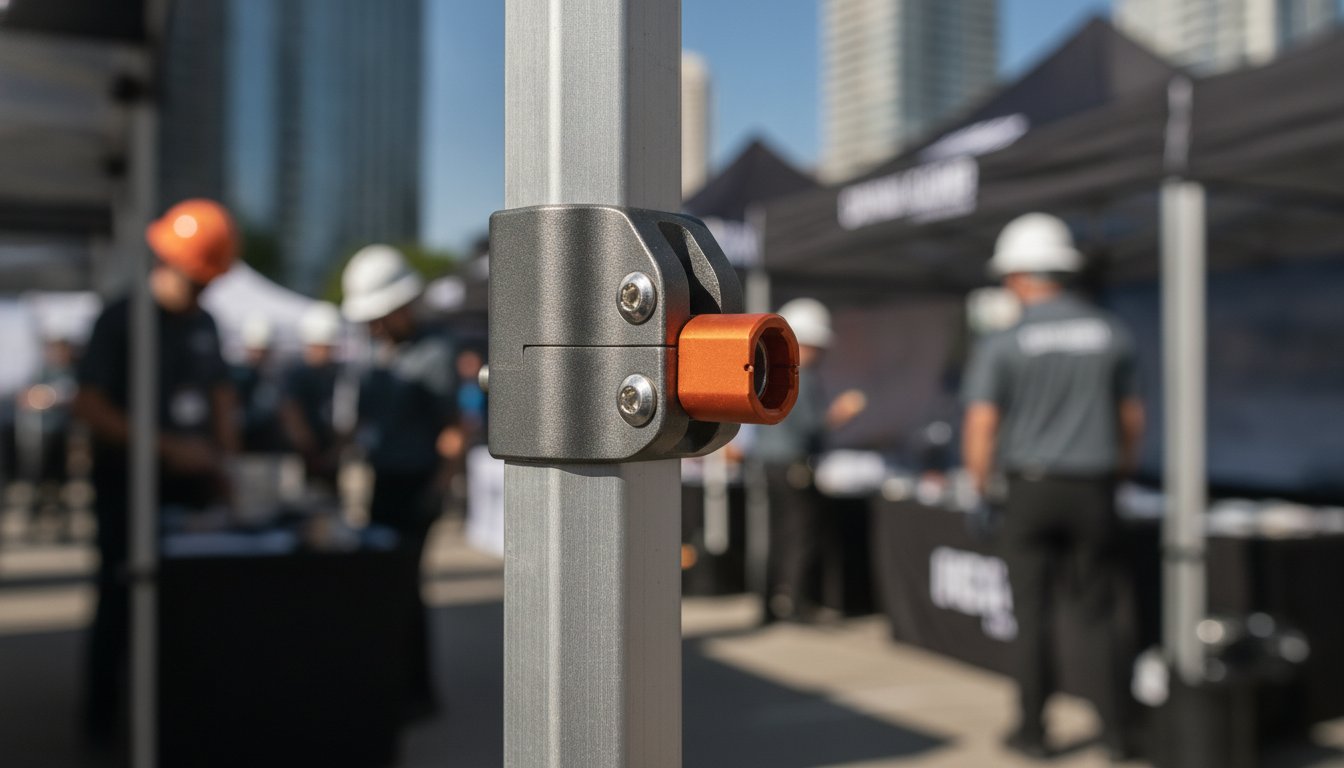
Last season, a high-growth brand discovered that a single afternoon of coastal winds could transform their expensive marketing display into a pile of twisted scrap metal. It’s a painful lesson that highlights why choosing the right custom canopy tent frame materials is the most critical investment in your event strategy. You’ve likely felt the stress of frames snapping during a storm or noticed rust stains creeping onto your vibrant custom fabric, turning a premium presentation into a maintenance headache.
We’re here to ensure your brand stands as a beacon of reliability and style for years to come. This guide will help you master the technical nuances of aluminum and steel so you can select hardware that lasts through five years of heavy use without sacrificing portability. We’ll preview the latest 2026 structural standards and weight-to-strength ratios, giving you the confidence to build an outdoor presence that’s as resilient as it is beautiful.
Key Takeaways
- Master the technical superiority of anodized aluminum to prevent “rust-lock” and ensure your frame remains a lightweight, professional asset for years of travel.
- Identify when the structural density of steel is the right strategic move to provide a rock-solid foundation in challenging outdoor climates.
- Learn how selecting the right custom canopy tent frame materials can significantly reduce logistics headaches like shipping costs and drayage fees.
- Use our expert resilience checklist to align your hardware choice with your annual event frequency and regional weather demands.
- Discover how the synergy between boutique hardware and premium engineering protects your custom graphics from premature wear and tear.
Beyond the Fabric: Why Frame Material Defines Your Brand’s Event Success
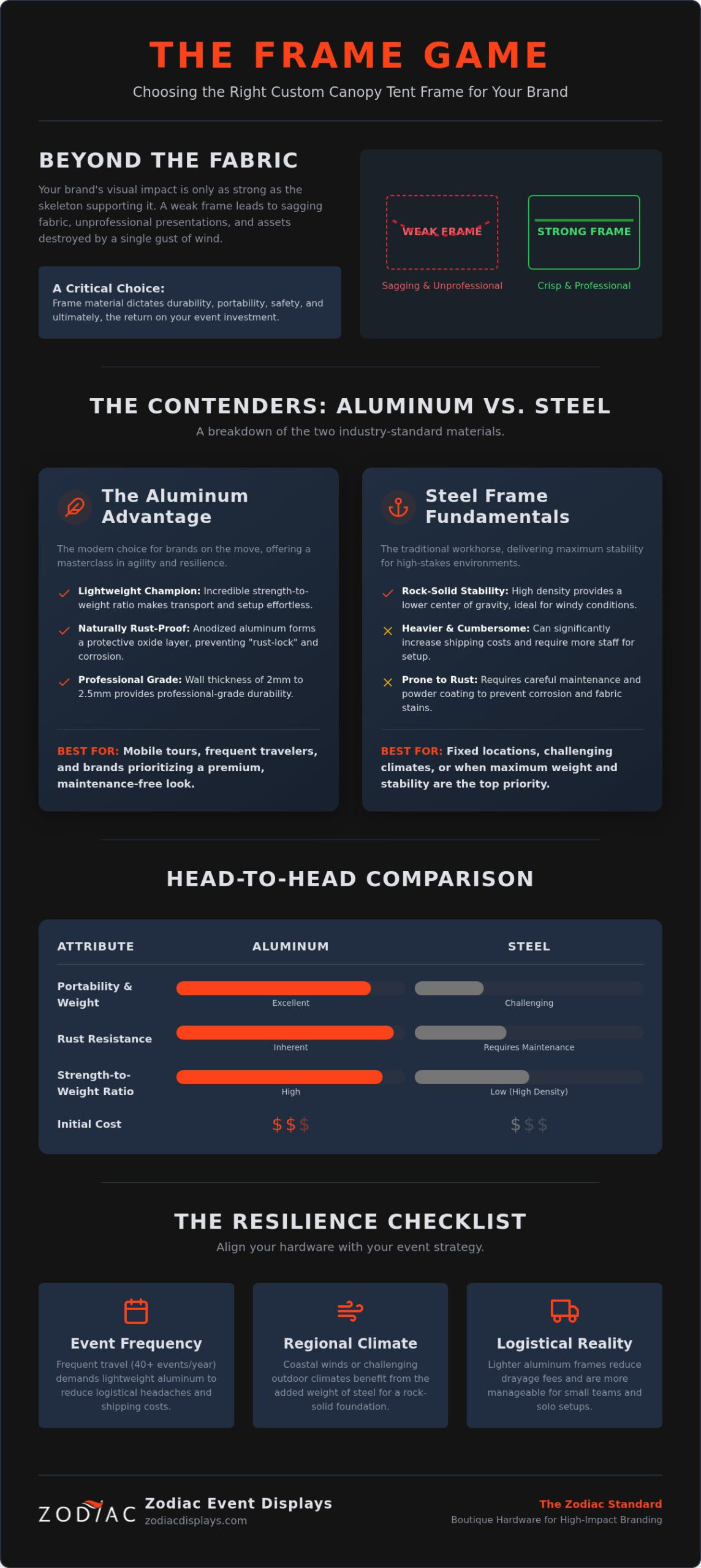
Your brand’s visual impact is only as strong as the skeleton supporting it. While most focus on the vibrant colors of the canopy top, the choice of custom canopy tent frame materials acts as the silent architect of your success. It’s the difference between a crisp, professional presentation and a sagging, unprofessional mess that fails to capture attention. A high-quality frame doesn’t just hold the roof up; it commands the space and protects the integrity of your marketing assets.
Proper tension is vital for visual clarity. High-end frames apply constant, even pressure to the fabric, ensuring your logos remain legible and distortion-free. This relies on fundamental tensile structure principles, where the frame provides the necessary outward force to keep the “skin” taut. Without a rigid material like professional-grade aluminum or reinforced steel, your investment in high-definition printing is wasted on a wrinkled surface that looks cheap and neglected.
Logistical efficiency often dictates your event’s bottom line. Heavier materials might feel sturdy, but they can skyrocket shipping costs and drayage fees at major convention centers. Small teams especially struggle with hardware that’s too cumbersome to transport from the parking lot to the booth space. Selecting a material that balances structural integrity with manageable weight is a strategic move for your team’s morale and your budget’s health. Our team at Zodiac Event Displays views every frame as a specialized extension of your creative vision, designed for both impact and ease.
Public safety is a non-negotiable requirement for any serious brand. In 2026, venue managers and fire marshals are more stringent than ever regarding structural stability and fire resistance standards like CPAI-84. Using professional-grade materials ensures you aren’t just compliant, but also protected from the liability of a collapsed structure in a crowded public space. A sturdy frame reflects a brand that cares about its audience and its reputation.
The Aluminum vs. Steel Debate: A High-Level Comparison
Aluminum is the industry favorite for mobile tours due to its incredible strength-to-weight ratio. It’s naturally rust-resistant, making it a savvy long-term investment despite a higher initial price point. Steel offers a lower center of gravity, which is excellent for fixed locations, but it requires careful maintenance to prevent corrosion. For the 10×10 industry standard, aluminum frames with a 2mm wall thickness provide the best ROI for frequent travelers who need to maintain a premium look.
Weight vs. Wind: Finding the Structural Sweet Spot
A common misconception is that a heavier frame is automatically safer in high winds. In reality, structural design and proper anchoring are far more important than raw weight. A well-engineered aluminum frame with oversized footplates and professional staking often outperforms a basic heavy steel frame that lacks refined geometry. You want a “permanent” feel without the logistical nightmare of excessive bulk. Investing in the right custom canopy tent frame materials ensures your brand stays grounded while your team stays agile.
This agility is essential for mobile operators; for example, Moab In A Day utilizes high-quality portable infrastructure to maintain a professional presence while hosting tours in the challenging conditions of Arches and Canyonlands.
The Aluminum Advantage: Engineering Lightweight Resilience for Modern Brands
Choosing the right custom canopy tent frame materials often begins and ends with high-grade aluminum. It’s the titan of the event circuit, offering a masterclass in agility without sacrificing the structural poise your brand demands. According to the Advanced Textiles Association, understanding different tent frame types is the first step toward a successful long-term activation strategy. Aluminum is prized because it’s naturally resilient. Its unique ability to form a protective oxide layer provides a self-healing barrier against the elements, preventing the dreaded “rust-lock” that often plagues cheaper, painted steel alternatives after a single season of rain.
Professional event agencies prioritize aluminum because it balances performance with ease of use. When your team is setting up forty times a year, every pound matters. High-quality aluminum frames utilize a thicker wall gauge, typically between 2mm and 2.5mm, to ensure the legs resist denting during transport. This thickness provides the “structural heartbeat” mentioned earlier, allowing the frame to withstand high-energy environments while remaining light enough for a two-person team to manage. If you’re ready to upgrade your fleet, our strategists can help you select the perfect frame grade for your specific tour schedule.
Sustainability is also a growing priority for visionary brands. Aluminum is infinitely recyclable, making it an eco-friendly choice for businesses looking to minimize their environmental footprint. Unlike plastic-heavy budget options that end up in landfills, a premium aluminum frame is a long-term asset that can eventually be reclaimed and repurposed, aligning your physical presence with your corporate responsibility goals.
Hexagonal vs. Square Legs: Which Geometry Wins?
The shape of your tent’s legs dictates how it handles stress. While square legs are common in entry-level models, professional-grade frames utilize hexagonal or octagonal profiles. These extra facets increase the surface area and provide multiple points of contact for the sliding mechanisms, which significantly reduces friction during setup. Hexagonal leg geometry is the gold standard for stability because the multi-faceted profile provides superior resistance to torque and bending compared to traditional four-sided designs. This geometry ensures your tent doesn’t just stand; it thrives under pressure.
Anodized Finishes: Protecting Your Investment
Anodization isn’t just a coat of paint; it’s an electrolytic process that transforms the surface of the metal into a decorative, durable, and corrosion-resistant finish. This creates a surface harder than the raw aluminum itself, ensuring your hardware maintains its premium, polished look even after years of heavy use. To keep your investment in top shape, we recommend a simple maintenance routine:
- Wipe down the legs with a damp cloth after events in coastal or high-humidity areas to remove salt spray.
- Apply a dry silicone lubricant to the sliding joints once a quarter to ensure effortless deployment.
- Check the bolt tension periodically to maintain the frame’s rigid “permanent” feel.
Steel Frame Fundamentals: Stability for High-Stakes Outdoor Environments
While aluminum is the undisputed star of mobile tours, steel is the heavyweight champion of structural permanence. For brands planning long-term activations in high-stakes environments, steel offers a grounded presence that lighter materials simply can’t replicate. It’s the strategic choice for semi-permanent installations or locations where the wind doesn’t just gust, it bellows. Professional-grade 10×10 steel frames often weigh significantly more than their aluminum counterparts, providing a lower center of gravity that acts as a rock-solid foundation. This added mass is essential for resisting lift during unpredictable weather, ensuring your brand stays exactly where you put it.
Don’t confuse these professional systems with the consumer-grade “big box” alternatives. Budget steel frames are often made from thin, brittle tubes that buckle under the slightest stress. In contrast, professional custom canopy tent frame materials feature reinforced steel with thicker wall profiles designed to handle heavy rain or snow loads. This structural integrity ensures your branded canopy remains a safe, inviting sanctuary for guests, regardless of the forecast. If you’re planning an activation in a region known for intense weather, choosing a high-gauge steel frame is a non-negotiable step for protecting both your audience and your investment.
Powder Coating and Corrosion Resistance
High-end steel frames aren’t just painted; they’re protected by a high-performance powder coating. This process creates a thick, durable skin that acts as a resilient barrier against moisture and scratches. However, rust often begins at “weak points” like pre-drilled holes or sliding joints where metal-on-metal friction occurs. To keep your hardware in peak condition, we recommend a quick maintenance routine. Keep a small bottle of touch-up paint handy for any chips, and always ensure the frame is completely dry before long-term storage to prevent moisture from sitting in the joints.
Managing the Logistics of Heavy-Weight Hardware
The stability of steel comes with a logistical trade-off that requires careful planning. You’ll likely need a dedicated transport vehicle or a trailer, as these frames are too bulky for most standard sedans. Setup is also a collaborative effort. While a single person might struggle with the frame’s weight, a multi-person team can deploy it quickly and safely. When you’re ready to coordinate your next large-scale outdoor setup, our team at Zodiac Event Displays can help you navigate these logistical nuances to ensure a seamless execution.
The Resilience Checklist: Choosing Materials Based on Your Event Calendar
Selecting the right custom canopy tent frame materials requires a strategic look at your brand’s roadmap. Before you invest, you must align your hardware with the reality of your event circuit. A frame that thrives in a climate-controlled trade show might fail spectacularly during a coastal summer tour. To ensure your presentation remains flawless, follow this professional resilience checklist to match your structural needs with your specific goals.
- Evaluate Frequency: Are you planning 10 local activations or 100 stops across the country? High-frequency tours demand the lightweight endurance of anodized aluminum to survive constant deployment.
- Map Your Geography: Consider the environmental stressors. Desert heat requires UV-stable joints, while coastal humidity necessitates materials that won’t corrode.
- Analyze Team Capability: Be honest about your setup crew. If you have a small team of two, a heavy steel frame might lead to injuries or slow setups that eat into your engagement time.
- Align Branding Lifespan: Your frame should last as long as your marketing cycle. If you’ve invested in premium, five-year graphics, don’t undermine them with a budget frame that will buckle in year two.
- Consult a Specialist: Reach out to a boutique fabrication partner to discuss bespoke requirements like custom heights or reinforced truss bars for heavy hanging signage.
When you’re ready to build a display that survives the rigors of the road, connect with our design team to find your perfect structural match.
Coastal Challenges: Dealing with Salt Air and Humidity
For beach-side activations, aluminum is the only viable choice. Salt air is incredibly aggressive; it can penetrate the smallest scratches in a steel frame’s powder coating and trigger structural failure within weeks. In 2026, many popular coastal venues like Laguna Beach and Myrtle Beach have implemented strict regulations on canopy sizes and safety. Beyond compliance, you need hardware that won’t leave rust stains on the sand or your custom fabric. If you’re working near the ocean, implement a rinse-down protocol with fresh water after every event to clear salt deposits from the sliding joints and maintain your custom canopy tent frame materials in peak condition.
To find premier coastal venues where you can showcase your brand, you can visit Art and Craft Expo to browse their latest schedule of Florida-based exhibitions.
High-Frequency Use: The Fatigue Factor
Every time you expand and collapse your tent, the metal scissor trusses undergo stress. Over time, this leads to metal fatigue, which can cause budget frames to snap or sag. Professional agencies prioritize boutique hardware because it features replaceable parts. Instead of discarding an entire frame because of one bent truss, you can simply swap the component. This design philosophy prevents “graphic sag,” ensuring your canopy top stays perfectly tensioned and your brand remains the most polished presence on the field.
The Zodiac Standard: Boutique Hardware for High-Impact Branding
Achieving a flawless event presence requires more than just a vibrant print; it demands a perfect synergy between creative design and precise structural engineering. At Zodiac Event Displays, we’ve spent over a decade refining this balance. We understand that the choice of custom canopy tent frame materials is the foundation of your brand’s physical identity. While mass-market factories focus on high-volume transactions, we focus on the rigors of the event circuit, ensuring every joint, bolt, and truss is field-tested for maximum endurance.
Our boutique approach ensures your hardware is never an afterthought. We integrate your custom graphics with premium frames to create a seamless, high-impact look that reflects your brand’s premium nature. This isn’t just about selling a product; it’s about managing complex, multi-city tours with global delivery capabilities. Whether you’re activating in a windy coastal plaza or a crowded urban center, our hardware is curated to provide the poise and precision your team needs to succeed. We take pride in being a dedicated ally that understands the endurance required for long-term growth.
This commitment to professional excellence extends to the experiences you create for your team; for those organizing high-end leadership retreats or corporate incentive travel, visit Aura Events to learn more about their specialized design and management services.
Why Boutique Fabrication Outperforms Mass-Market Hardware
The difference between “off-the-shelf” kits and curated event assets is immediately visible on the show floor. Mass-market options lack the personalized consultation necessary to match hardware to your specific environmental risks. We take the time to analyze your tour schedule and transport limits before recommending a solution. Zodiac acts as a visionary ally in event branding, guiding clients through the complexities of structural selection with the flair of a high-end designer. This specialized attention ensures your custom canopy tent frame materials are a strategic asset rather than a logistical liability.
Partnering for Long-Term Event Strategy
We believe in moving beyond transactional purchases toward a strategic branding partnership that focuses on your visual excellence. Investing in high-quality materials significantly reduces your total cost of ownership by extending the lifespan of your displays and minimizing the need for emergency replacements. When your hardware lasts five years instead of one season, your budget goes further and your brand stays consistent across every market. If you’re ready to elevate your structural standards and ensure your branded canopy survives every environment, contact our design team for a structural consultation that aligns with your long-term vision.
Build for Endurance and Design for Impact
Selecting the right custom canopy tent frame materials is more than a technical hurdle; it’s a commitment to your brand’s long-term success. You’ve discovered that whether you prioritize the lightweight agility of anodized aluminum or the grounded stability of commercial-grade steel, your hardware must reflect the premium quality of your vision. A frame that lasts five years doesn’t just protect your budget. It ensures your presentation remains crisp, commanding, and professional at every stop on your journey.
At Zodiac Event Displays, we bring over 10 years of branding expertise and a boutique agency’s attention to detail to every project. We manage global delivery for large-scale event tours, ensuring your structural heartbeat remains strong regardless of the geography. Elevate your brand with a custom event tent from Zodiac and transform your next activation into a landmark of professional excellence. Your brand deserves a foundation as bold as your ambition. Let’s build something that stands the test of time together.
Frequently Asked Questions
Is aluminum or steel better for a custom canopy tent frame?
Aluminum is the superior choice for mobile tours and frequent events, while steel is better suited for semi-permanent or fixed outdoor locations. Aluminum provides a lightweight, rust-proof solution that is easy for small teams to transport and setup. Steel offers a heavier base that lowers the center of gravity, which is ideal if your tent will remain stationary in a high-wind area for an extended period.
What is the strongest leg shape for a professional pop-up tent?
Hexagonal or octagonal profiles are the gold standard for leg geometry in professional grade tents. These multi-faceted designs provide significantly more structural surface area than traditional square legs, which helps the frame resist bending and torque under pressure. They also offer more points of contact for sliding mechanisms, ensuring a smoother setup and a more rigid, permanent feel when fully deployed.
How do I prevent my custom tent frame from rusting over time?
Selecting anodized aluminum is the most effective way to prevent rust because the process creates a surface that is naturally resistant to corrosion. If you’re using steel hardware, you must maintain the powder-coated finish by touching up any chips or scratches immediately to protect the metal underneath. Always wipe down your hardware after exposure to salt air and ensure the frame is completely dry before placing it in storage.
Can I replace the frame of my tent while keeping my custom logo fabric?
You can replace your hardware while keeping your custom graphics as long as the new frame’s dimensions and peak height match your original fabric exactly. This strategy allows you to upgrade to higher-quality custom canopy tent frame materials without the expense of a full reprint. Just be sure to verify the truss configuration with your specialist to ensure the canopy top fits tightly and maintains proper tension.
What is the difference between anodized aluminum and powder-coated steel?
Anodization is a chemical process that integrates the finish into the aluminum itself, whereas powder coating is a protective layer baked onto the surface of steel. Anodized finishes are incredibly durable and won’t chip, peel, or flake even after years of heavy use. Powder coating provides a thick barrier against moisture and scratches, but it requires more diligent maintenance to prevent rust if the coating is ever compromised.
How much wind can a high-impact professional tent frame actually handle?
High-impact professional frames can typically withstand wind gusts between 30 and 35 mph when they are properly anchored with heavy weights and stakes. The specific endurance depends on the thickness of your custom canopy tent frame materials and the quality of your anchoring system. It’s vital to monitor local weather conditions and dismantle your setup if winds are forecast to exceed these professional safety ratings.
Are aluminum tent frames worth the extra cost for outdoor events?
Aluminum frames are worth the investment for any brand that prioritizes portability, longevity, and a premium visual presence. The savings you’ll realize from lower shipping costs and reduced drayage fees at major convention centers often pay for the price difference within a single event season. Because they don’t rust or lock up, they remain a reliable, professional-looking asset for five or more years of frequent use.
What aluminum grade is typically used for heavy-duty custom canopies?
Heavy-duty canopies generally utilize 6000-series aluminum alloys, such as 6063-T5 or 6061-T6, for their superior strength-to-weight ratio. These specific alloys are chosen for their excellent resistance to corrosion and their ability to handle the mechanical stress of constant deployment in diverse climates. They provide the structural precision required for a boutique event presentation that needs to look flawless and stand firm in a crowded venue.
 Previous reading