



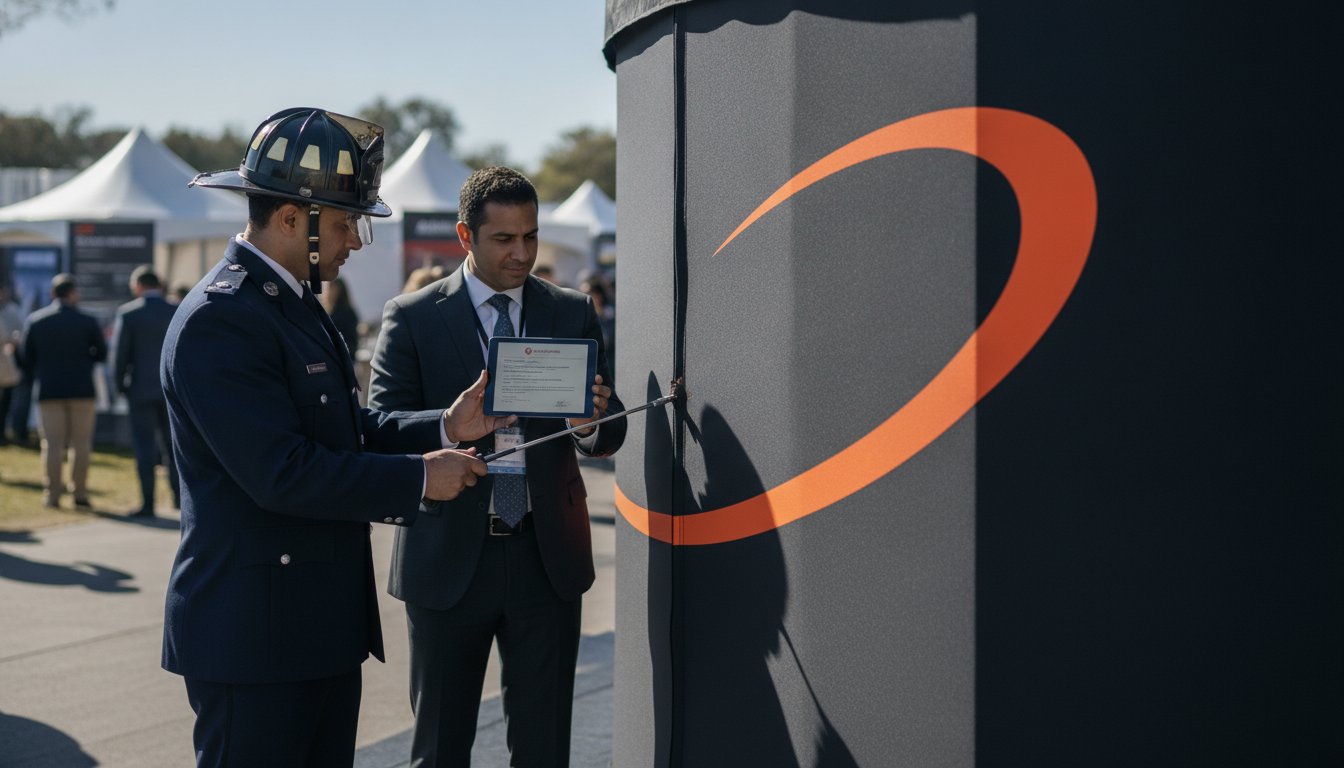
Imagine your team is minutes away from a high-stakes product launch when a fire marshal asks for your paperwork. Without the correct fire retardant certificate for event tent setups, that vibrant, custom-branded canopy could be flagged for immediate removal, leaving your brand exposed and your investment sidelined. It’s a nightmare scenario that happens more often than most marketers realize, especially as safety regulations evolve for the 2026 season.
We understand that navigating the dense, technical jargon of safety codes can feel like a distraction from your creative vision. You’ve likely felt the weight of uncertainty, wondering if your custom printed inks might accidentally void a fire rating or if the 2023 NFPA 701 standard still holds weight under the new 2025 California Fire Code. This guide simplifies the chaos, providing you with a clear roadmap to master compliance and secure the exact documentation needed to pass any inspection with total confidence. We’ll break down the nuances between NFPA and CPAI-84 standards, explore how modern fabrication keeps your graphics sharp and safe, and detail the specific permit requirements for major hubs like Denver to ensure your next activation is both spectacular and secure.
Key Takeaways
- Differentiate between NFPA-701 and CPAI-84 standards to ensure your canopy meets the specific legal requirements of high-end venues and public spaces.
- Learn how to secure and present a valid fire retardant certificate for event tent setups to satisfy fire marshal inspections without risking a booth shutdown.
- Navigate regional variations in fire codes, including specific 2026 updates for Denver and California, to maintain compliance across diverse metropolitan markets.
- Discover the critical maintenance steps required to preserve the integrity of flame-retardant treatments and verify the authenticity of your documentation over time.
- Understand how strategic fabrication allows for high-impact, full-color branding that adheres to rigorous safety standards without sacrificing visual excellence.
Understanding the Fire Retardant Certificate for Event Tents
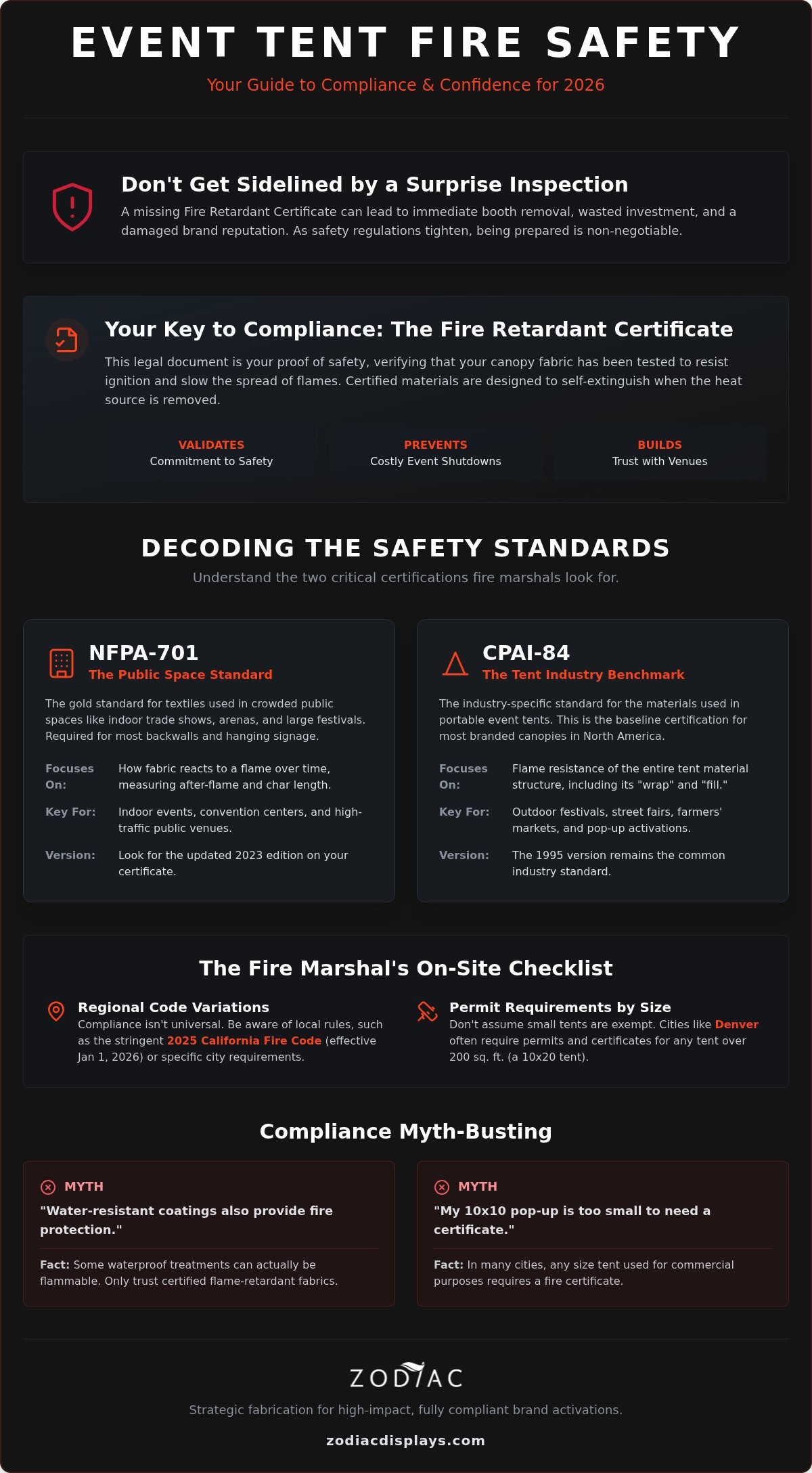
A fire retardant certificate for event tent structures is far more than a simple slip of paper; it is a professional credential that validates your brand’s commitment to safety. This legal document confirms that your canopy fabric has undergone rigorous testing to meet specific flammability standards. By utilizing specialized flame retardants, manufacturers ensure that your display resists ignition and slows flame propagation. It is vital to understand that “fire retardant” does not mean “fireproof.” While no fabric is entirely immune to extreme heat, certified materials are designed to self-extinguish once the heat source is removed, providing precious time for evacuation.
In 2026, the landscape of event safety is more stringent than ever. With the 2025 California Fire Code becoming effective on January 1, 2026, fire marshals at premier venues are increasingly vigilant. Presenting a valid certificate is like carrying a strategic insurance policy. For brands looking to combine this level of security with high-end modular designs, you can learn more about Structures Éphémères and their certified tent solutions. Having the right documentation guarantees that your physical presence remains uninterrupted, allowing you to focus on high-impact engagement rather than frantic damage control during a surprise inspection.
The Role of Compliance in Brand Reputation
Positioning yourself as “the prepared brand” creates an immediate sense of trust with event organizers and venue managers. When you arrive with your documentation ready, you transition from a mere vendor to a professional partner. The hidden costs of non-compliance extend far beyond simple fines. A single event shutdown can lead to lost leads, wasted travel budgets, and a bruised reputation that is difficult to repair. We believe safety should be a core value of your marketing strategy, reflecting the same precision and quality found in your visual designs.
Common Misconceptions About Tent Flammability
One of the most dangerous myths is the belief that water-resistant coatings provide fire protection. In reality, some waterproof treatments can actually be flammable if not specifically engineered for safety. Another frequent error is assuming that smaller structures, like 10×10 pop-ups, are exempt from scrutiny. In cities like Denver, permits are often required for tents as small as 200 square feet, and a fire retardant certificate for event tent use is a standard requirement for these applications. Breaking the “it won’t happen to me” mindset is the first step toward a truly successful and secure brand activation.
Decoding Safety Standards: NFPA-701 vs. CPAI-84
Understanding the alphabet soup of safety codes is the difference between a seamless launch and a costly shutdown. Your fire retardant certificate for event tent structures will likely reference one of two major standards, each serving a distinct purpose in the world of professional activations. While these codes might seem like technical hurdles, they’re actually the blueprints for your brand’s physical security. In 2026, fire marshals are looking for specific, updated versions of these standards to ensure your presence meets the latest safety criteria.
NFPA-701: The Public Space Requirement
The 2023 edition of NFPA-701 is the gold standard for textiles and films used in public spaces. This test measures how a fabric reacts when exposed to a flame for a specific duration, focusing on the after-flame time and the char length. Most indoor trade shows and large-scale festivals demand this certification because it addresses the unique risks of crowded environments. It’s vital to know whether your material passed the “Small Scale” (Method 1) or “Large Scale” (Method 2) test. Method 1 typically applies to single-layer fabrics, while Method 2 is reserved for heavier, multi-layered materials or permanent structures. If your booth features intricate backwall displays or hanging signs, NFPA-701 compliance is non-negotiable.
CPAI-84: The Tent Industry Benchmark
Developed by the Canvas Products Association International, the 1995 version of CPAI-84 remains the industry-specific standard for portable event tents. Unlike general textile tests, CPAI-84 specifically measures the flame resistance of the material’s “wrap” and “fill” to ensure the entire structure can withstand ignition sources. This standard is the baseline for most custom event tents used in North America. In states like California, New York, and Michigan, this isn’t just a recommendation; it’s a mandatory law for any commercial tentage. When you secure a fire retardant certificate for event tent setups, confirming CPAI-84 compliance ensures you’re ready for the most rigorous outdoor environments.
State-specific variations often dictate national trends, with the 2025 California Fire Code setting a high bar that most other jurisdictions eventually follow. For brands operating on a global scale, you might also encounter international standards like the British BS 5438 or the German DIN 4102-B1. While these are less common in the U.S., they represent a similar commitment to precision and safety. Local Fire Marshal safety requirements often include a checklist that spans these standards, emphasizing the need for both proper labeling and current paperwork. If you’re feeling overwhelmed by these technicalities, reaching out to a dedicated partner like Zodiac Event Displays can help you navigate the documentation process with ease.
The Fire Marshal’s Checklist: Navigating Compliance in Denver and Beyond
Passing a fire marshal inspection is the ultimate test of your event preparation. While your fire retardant certificate for event tent compliance proves the material’s origin, the physical structure must tell the same story. Marshals perform a “Physical vs. Paper” check to ensure the document in your hand matches the canopy over your head. If these two don’t align, even the most expensive branding won’t save you from an immediate teardown order.
Local regulations often add layers of complexity that vary by city. In Denver, for instance, any tent 200 square feet or larger requires a permit, while canopies have a 400 square foot threshold. If your activation involves heaters, generators, or cooking, the fire department triggers an automatic review regardless of the structure’s size. Being aware of these specific metropolitan nuances prevents last-minute scrambles and ensures your brand remains the highlight of the show, not a safety hazard.
Organize a dedicated “Compliance Folder” to keep your technical assets accessible at a moment’s notice. This should include your current NFPA 701 standard certification, your local permits, and a site map showing clear egress paths. If a marshal questions your setup, remain calm and present your documentation as a professional partner. Clear, authoritative answers backed by verified paperwork usually resolve concerns before they escalate into violations.
The Importance of the Sewn-In Label
Every compliant canopy must feature a permanent, sewn-in “Tent Identification and Warning” label. This tag acts as the physical link to your fire retardant certificate for event tent usage. It must clearly display the manufacturer’s data and the specific license numbers that correspond with your paperwork. A missing or illegible label can invalidate your entire safety profile, so always verify its presence during your initial setup before the crowd arrives.
On-Site Inspection Best Practices
Success begins with proactive communication. Introduce yourself to the venue’s safety officer early and confirm that your layout maintains clear egress and proper spacing from potential heat sources. The Fire Marshal’s Walkthrough serves as the final gatekeeper of event success. By treating the inspection as a collaborative safety check rather than a hurdle, you project the confidence of a seasoned strategist who prioritizes the well-being of every attendee.
Verification and Maintenance: Ensuring Your Branded Canopy Stays Compliant
Securing your initial fire retardant certificate for event tent structures is only the first step toward long-term event success. Maintaining that compliance requires a strategic approach to preservation and verification. A document’s authenticity is often scrutinized by its age; in 2026, fire marshals frequently consider certificates older than two years to be insufficient due to potential changes in material coatings. Always cross-reference the license numbers on your paperwork with the physical labels sewn into your canopy to ensure a perfect match before the inspector arrives.
Cleaning your custom pop up tent demands precision to avoid stripping away the protective layers. Harsh chemical cleaners or high-pressure power washing can degrade the flame-retardant properties, rendering your certification effectively void in a real-world fire scenario. Use only mild soap and soft brushes. If your fabric begins to feel brittle or shows significant fading, it’s likely time to retire the asset or seek professional re-treatment to maintain your safety standing.
Documentation Management for Event Teams
The 2026 standard for high-performing teams is a hybrid approach to record-keeping. While a physical folder is essential for on-site handoffs, a synchronized digital repository ensures your entire crew has instant access to your fire retardant certificate for event tent compliance via mobile devices. Linking these safety documents directly to your event display fabrication records allows for seamless tracking of asset age and maintenance history. This level of organization transforms a technical chore into a streamlined business process.
Post-Event Care and Storage
Moisture is the primary enemy of fabric integrity. Storing a damp tent invites mold and mildew, which can eat through fibers and compromise the chemical bonds of the flame retardant. Always ensure your canopy is bone-dry before it enters its carrying case. Additionally, remember that prolonged UV exposure is a silent thief of safety; intense sunlight gradually breaks down retardant chemicals over several seasons. Conduct annual safety audits of your entire fleet to identify wear and tear before it becomes a liability at your next high-profile activation.
Ready to upgrade your event assets with reliable, certified protection? Contact Zodiac Event Displays today to build a compliant brand presence that lasts.
Strategic Safety: Why Zodiac’s Fabrication Prioritizes Both Compliance and Impact
In the high-stakes world of live marketing, your booth is your billboard. While many manufacturers treat safety as a final box to check, we view it as the foundation of your brand’s physical security. At Zodiac Event Displays, our boutique approach blends the visionary flair of a high-end design house with the technical precision of a seasoned strategist. We don’t just provide hardware; we deliver a fully documented, high-impact presence that clears the way for your team to shine. For those requiring specialized mounting solutions in marine settings, Tower Flags offers the same level of niche engineering for on-water visibility. By managing the technical headaches of securing a fire retardant certificate for event tent structures, we allow you to focus entirely on your audience.
Based in Denver with over 10 years of industry experience, we oversee every stage of the fabrication process. From the initial creative concept to the global delivery of certified assets, our team ensures that every stitch and print meets the rigorous demands of the 2026 event season. We understand that a heavy-duty custom canopy must do more than just stand tall; it must provide the peace of mind that comes from knowing every material is fully compliant with the latest safety standards. Our promise is simple: visuals that command attention without ever compromising on venue safety.
Inks, Graphics, and Fire Safety
A common concern for marketing teams is whether vibrant, full-color branding will affect a fabric’s safety rating. We utilize a sophisticated dye-sublimation process that fuses ink directly into the fibers of the material. This ensures that your graphics remain crisp and radiant without adding a flammable layer to the surface of the fabric. It’s a critical distinction that preserves the integrity of your fire retardant certificate for event tent applications. Our technical team also manages precise file preparation to ensure that mandatory safety labels are visible and integrated seamlessly into the design. This meticulous attention to detail is why our custom trade show displays are the preferred choice for elite venues with the strictest fire marshal protocols.
Partnering for Long-Term Success
We believe in building partnerships that outlast a single event. Zodiac acts as a dedicated ally, guiding you through complex creative processes and evolving safety regulations. Our modular display systems are designed for endurance, allowing your brand to grow and adapt while maintaining full compliance across diverse markets. We take pride in the craft and a deep commitment to your visibility, acting as an essential extension of your own creative team. When you choose Zodiac, you aren’t just buying a tent; you’re investing in a strategic asset designed for professional growth. Contact the Zodiac team today to start building a presence that is as safe as it is spectacular.
Secure Your Vision with Unshakable Compliance
Navigating the 2026 event season requires more than just a bold vision; it demands a technical foundation that stands up to the closest scrutiny. You’ve learned that mastering safety standards like NFPA-701 and CPAI-84 is the key to unlocking elite venues and protecting your investment from unexpected shutdowns. By ensuring your fire retardant certificate for event tent structures is current and perfectly matched to your sewn-in labels, you project the confidence of a seasoned strategist. Success in high-end venues boils down to two things: impeccable visual impact and meticulous documentation.
We handle the technical preparation so you can focus on the marketing magic that grows your business. With over a decade of Denver-based expertise and a commitment to global delivery of venue-ready assets, we are ready to be your strategic fabrication ally. Secure Your High-Impact, Compliant Tent with Zodiac Event Displays and step into your next activation with total peace of mind. Your brand deserves to shine safely on the world stage. We’re here to make sure it does.
Frequently Asked Questions
Is a fire retardant certificate required for all 10×10 canopy tents?
Most high-end venues and municipal fire marshals require a fire retardant certificate for event tent structures regardless of their dimensions. While cities like Denver set permit thresholds at 200 square feet, safety officers often demand certification for any structure in a crowded public space or indoor trade show. It’s best to treat safety as a universal standard for your brand rather than a size-dependent option to avoid last-minute complications.
What is the difference between CPAI-84 and NFPA-701?
NFPA-701 is the broader 2023 standard for textiles used in public spaces, focusing on how easily a material ignites and spreads flames. CPAI-84 is specifically engineered for the tent industry, measuring the flame resistance of both the wrap and fill of the fabric. Professional activations often require both to ensure full compliance across diverse venue types, especially in states with strict 2026 fire codes.
Can I spray my own tent with fire retardant to get a certificate?
You cannot legally certify a tent by applying a retail spray yourself. A valid fire retardant certificate for event tent use must be issued by the manufacturer or an accredited third-party testing lab. These documents verify the material’s performance during standardized tests. Self-applied treatments lack the rigorous technical validation and license numbers that fire marshals require for public safety permits.
Does the fire marshal need to see the original paper certificate?
Fire marshals typically accept high-quality digital copies, but keeping a physical version in an on-site Compliance Folder is highly recommended. The 2026 standard for professional event teams is to have both formats readily available. This ensures that even if technology fails or cell service is poor, you can immediately prove your canopy meets the necessary safety benchmarks during a walkthrough.
Do custom printed graphics affect the fire rating of my event tent?
Professional dye-sublimation printing does not negatively impact the fire rating of your canopy. This process fuses ink directly into the fabric fibers, avoiding the addition of a flammable surface layer. We ensure our large-format graphics maintain the material’s original safety integrity, allowing your brand to shine with vibrant colors while staying fully compliant with the most rigorous venue standards.
How long does a fire retardant certificate remain valid?
Most fire retardant certificates are considered valid for one to two years from the date of testing. Over time, factors like UV exposure and repeated cleaning can gradually degrade the chemical retardants. Many safety officers in 2026 will flag documents that are older than two years, so it’s vital to keep your technical documentation updated through regular audits with your fabrication partner.
What happens if my tent doesn’t have a fire safety label sewn in?
A missing sewn-in label can lead to an immediate booth shutdown by the fire marshal. Inspectors use this permanent tag to verify that the physical canopy matches the fire retardant certificate for event tent structures you provided. Without this physical link, there’s no way to prove the fabric is actually the certified material listed in your paperwork, making the label a critical piece of your safety profile.
Are inflatable event tents subject to the same fire safety standards?
Inflatable event tents must adhere to the same rigorous flammability standards as traditional canopies and backwall displays. Because they are utilized in public spaces, the textiles and films used in their construction must meet NFPA-701 or equivalent codes. We ensure every inflatable we fabricate carries the necessary technical documentation to pass inspection at any high-profile venue or festival during the 2026 season.

 Previous reading