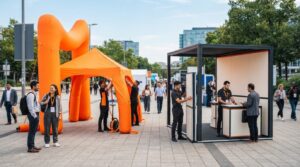



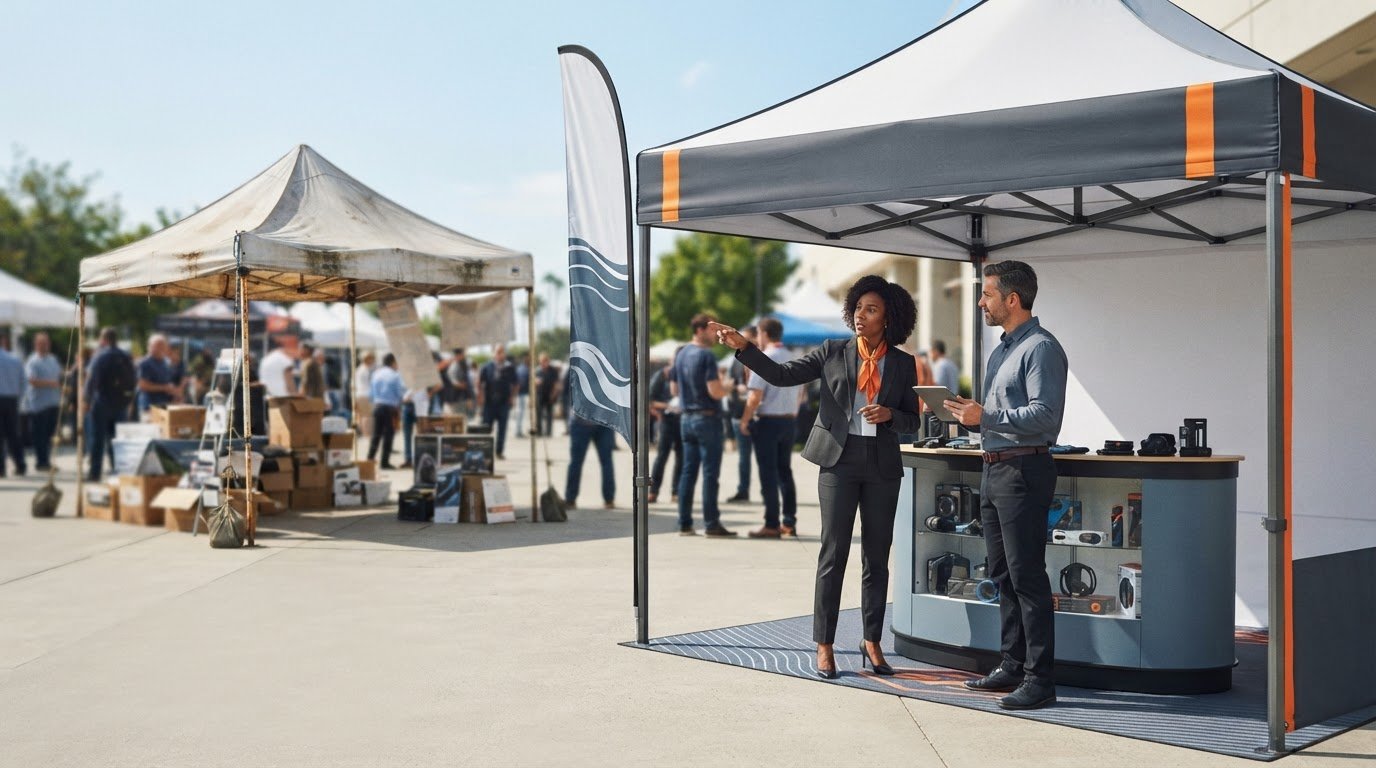
The cheapest canopy can become the most expensive choice when a frame bends, a logo fades, or repeated replacements interrupt your event presence. If you’re weighing another budget tent against a custom upgrade, the question is when to upgrade from a basic canopy tent, and whether your current setup still reflects the quality of your brand. A tent that struggles outdoors or looks worn beside your products can weaken the first impression you’ve worked hard to earn.
Upgrading is more than swapping hardware. It means assessing how often you use the tent, the conditions at your events, safety and venue requirements, and how well the display represents your business. This guide covers signs your current setup is holding you back, how to weigh repair against replacement, and ways to build a more cohesive presence with custom Event Tents and coordinated displays.
Key Takeaways
- Repeated frame damage, failing connectors, and worn fabric can make a budget tent costly through downtime and replacement.
- Assess when to upgrade from a basic canopy tent by considering how often you exhibit, where you set up, and what your events require.
- Review print quality and graphic coverage to see whether your tent helps attendees recognize your brand.
- Check venue requirements early. Some events request fire-safety documentation, such as NFPA 701 certification.
- Coordinated Event Tents and soft signage can turn a functional setup into a more cohesive branded display.
The Entry-Level Ceiling: Why Basic Canopy Tents Fail Growing Brands
A basic canopy can be a sensible starting point. It becomes a weak link when the frame needs repeated repairs, the fabric looks tired, or the setup no longer suits your events. Understanding Pop up canopy construction helps put the decision in context: this portable structure serves as both shelter and the visible frame for your event presence.
So when to upgrade from a basic canopy tent isn’t only a question of whether it still stands. Ask whether it can keep pace with your events, present your brand clearly, and give customers a polished place to engage with your business.
The False Economy of Budget Hardware
Judge a budget tent over several seasons, not just by its initial price. Keep a simple record of replacement frames and canopies, repair parts, staff time spent troubleshooting, and events disrupted by equipment problems. You may not be able to put a precise value on every missed conversation, but the record can show whether repeated fixes are taking more effort than investing in a new setup.
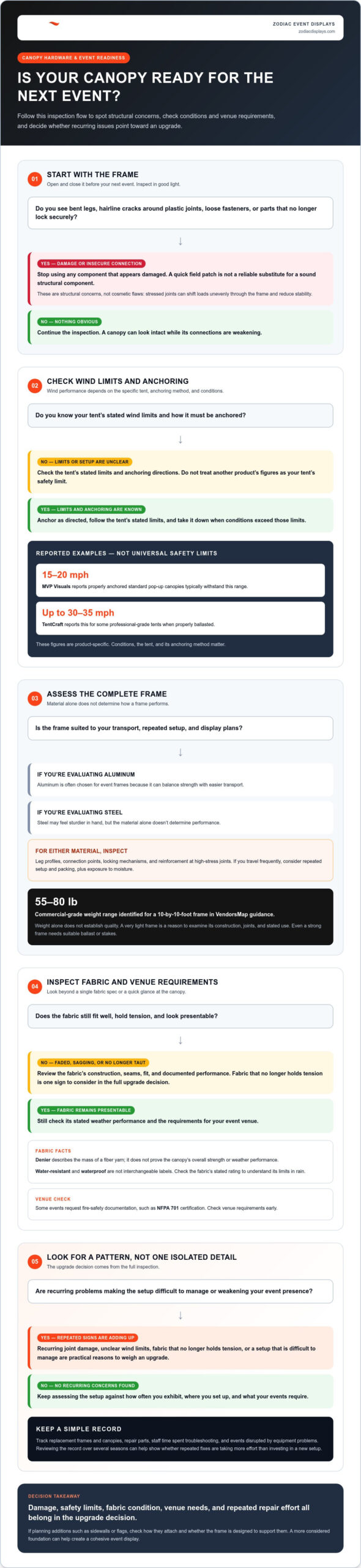
Inspect the frame before your next event. Look for bent legs, loose connections, cracked plastic joints, and parts that no longer lock into place. A failing leg or connector can make setup difficult or force you to take the display down. A quick patch is not a reliable substitute for a sound structural component.
Consider the full display you want to build. If you plan to add sidewalls or pair the canopy with flags, check how those pieces attach and whether the frame is designed to support them. A basic frame may have limited compatibility, leaving each addition to feel like a workaround. A custom Event Tent can provide a more considered foundation for a growing display.
Visual Decay and Brand Erosion
Outdoor use, sunlight, handling, and packing can contribute to faded or sagging fabric and a poor fit. Check the canopy in natural light: are the colors still clear, does the top sit taut, and do the seams and edges look presentable? Wrinkles, drooping fabric, and faded graphics can make a brand look less prepared.
Attendees form impressions before the first conversation. A generic or visibly worn canopy may blend into a row of booths, while a crisp branded display makes your business easier to spot. Appearance matters because the environment around your team should support the quality of what you offer.
That’s the shift from simply attending an event to owning the environment. Custom Event Tents, shaped through thoughtful design and fabrication, can bring your visual identity forward and create a polished setting for conversation. If repairs and visible wear have become familiar parts of every event season, consider a setup designed around how your business shows up.
Technical Indicators: Is Your Current Hardware Reaching Its Limit?
A canopy can look intact while its connections are weakening. Before your next event, open and close the frame and inspect it in good light. Check for hairline cracks around plastic joints, loose fasteners, bent legs, and connectors that no longer lock securely. These are structural concerns, not cosmetic flaws: stressed joints can shift loads unevenly through the frame and reduce stability. Stop using any component that appears damaged rather than relying on a quick field repair.
Wind performance depends on the specific tent, anchoring method, and conditions. MVP Visuals reports that properly anchored standard pop-up canopies typically withstand 15 to 20 mph winds, while TentCraft reports up to 30 to 35 mph for some professional-grade tents when properly ballasted. These figures are product-specific, not universal safety limits. Follow the tent’s stated limits, anchor it as directed, and take it down when conditions exceed those limits.
For a 10-by-10-foot frame, VendorsMap identifies 55 to 80 pounds as a commercial-grade weight range in its April 2026 guidance. Weight alone does not establish quality, but a very light frame is a reason to examine its construction, joints, and stated use. Wind loads act across the canopy and transfer through the frame to its anchors. Even a strong frame needs suitable ballast or stakes to stay secure.
Aluminum vs. Steel: Evaluate the Whole Frame
Aluminum is often chosen for event frames because it can balance strength with easier transport. Steel may feel sturdier in hand, but the material alone doesn’t determine performance. Inspect leg profiles, connection points, locking mechanisms, and reinforcement at high-stress joints. Metal connections can avoid some brittleness concerns associated with basic plastic parts, though build quality varies. If you travel frequently, consider how the complete frame will handle repeated setup, packing, and exposure to moisture.
Fabric Specs for 2026: Look Beyond Denier
Denier describes the mass of a fiber yarn, not the canopy’s overall strength or weather performance. Review the fabric construction, seams, fit, and documented performance instead of treating one denier number as proof of durability. UV exposure can fade graphics and weaken some materials. For events with safety requirements, venues may request evidence of flame-retardant performance, such as NFPA 701 documentation. Water-resistant and waterproof are not interchangeable labels, so check the fabric’s stated rating to understand its limits in rain.
A practical upgrade decision comes from the full inspection: recurring joint damage, unclear wind limits, fabric that no longer holds tension, or a setup that is difficult to manage. Those signs help clarify when to upgrade from a basic canopy tent. Zodiac Event Displays brings more than a decade of experience in creative design and fabrication. Explore its custom Event Tent design approach as you plan a more polished display.
The Brand Impact: Evaluating Your Visual Presence
A canopy is more than a roof over your booth. Its graphics occupy a large, visible part of your brand environment, and they can either make your business easy to identify or let it fade into the crowd. Low-resolution artwork may look pixelated across a broad surface, while weak color reproduction can make a familiar logo appear dull or inconsistent with your other materials. Review the tent from a distance and up close. If key details disappear or the colors feel off-brand, the visual system needs attention.
Design can influence whether attendees stop. Exhibit Supply’s 2026 reporting says 76% of trade show attendees say exhibit design affects their decision to visit a booth. A sharp graphic can’t replace a strong offer, but it can help create a clear, inviting first impression. That’s part of knowing when to upgrade from a basic canopy tent: your display should support the experience you want customers to have, not simply mark your spot.
From Logo Placement to a Complete Brand System
A small logo heat transfer identifies a tent, but can leave much of the canopy looking generic. Full-bleed graphics use more of the visible surface, while dye-sublimation printing transfers dye into compatible fabric rather than leaving a layer on top. The result depends on the fabric, artwork, and production quality. Prepare high-resolution files and review color proofs before printing. Pantone references can help communicate intended brand colors, but evaluate the finished result on the actual material.
Plan artwork for the canopy’s shape, not just the logo. Keep essential text legible at a distance, leave clear space around marks, and account for seams and valances. Graphics on the peak can be seen above neighboring displays; valance graphics help identify your booth at eye level. The goal is a deliberate, recognizable environment, not simply a tent with a logo.
Build a 360-Degree Brand Experience
Consistent design carries your story beyond the canopy. Custom Flags can add height and movement, while coordinated Table Cloths extend the same visual language to the point of conversation. Backwall Displays can create a defined backdrop and reduce visual distractions at a busy festival or trade show. Choose a restrained palette, repeat a few recognizable elements, and keep messaging focused so each piece supports the same impression.
Before producing new graphics, review your setup from an attendee’s perspective. Approach it from several directions and check whether your business name and core message are easy to spot. Look for clashing colors or competing visuals. Zodiac Event Displays pairs creative design with fabrication to help shape a cohesive event presence. Its team brings more than a decade of industry experience to helping brands create a display that feels considered and distinctive.
The 5-Point Upgrade Audit: When to Pull the Trigger
Don’t wait for a frame to fail at a public event before making a decision. A useful audit weighs how often you use the tent, what each venue requires, how much your branding needs to communicate, whether the setup is safe to use, and where your business is headed. Together, these factors show whether another basic canopy will serve your plans or hold them back.
Step 1: The Activation Frequency Test
Count the events on your calendar, including setup and teardown. More than six activations a year is a practical trigger to assess whether commercial-grade gear suits your schedule, not a guarantee that every tent will last a set number of seasons. Frequent handling adds wear to connections, fabric, and moving parts. Compare that workload with your current tent’s construction and intended use, then weigh interruptions and repairs against investing in a more durable Event Tent. Explore how coordinated display elements can be planned through event display fabrication.
Step 2: The Professional Perception Audit
Try a “mystery shopper” review. Approach your booth as a first-time visitor: can you identify the brand, understand what it offers, and feel confident approaching the team? Compare the display’s condition and polish with the quality you promise customers. If the tent looks temporary beside a premium product or service, it may work against the trust you’re trying to build.
Complete the remaining checks before deciding:
- Venue requirements: Review the event’s documentation needs. Some venues require proof of flame-retardant performance, such as NFPA 701 certification. Plan ahead so you have the required documentation before setup.
- Design complexity: If your identity needs multiple colors, prominent messaging, or graphics across several surfaces, a plain canopy may not give your brand enough room to communicate clearly.
- Staff safety: Inspect the equipment before each event. Loose connections, bent components, or a frame that won’t lock securely are reasons to stop using it until the issue is addressed. Public-facing setups need a deliberate safety check, not a last-minute guess.
- Growth trajectory: Consider whether your display matches the level of service and pricing your business is moving toward. A polished setup can reinforce that positioning; worn or mismatched gear can create doubt before a conversation begins.
Together, these checks answer when to upgrade from a basic canopy tent with more than a simple “it broke” test. If frequent use, venue expectations, brand ambitions, or safe operation point in the same direction, plan the transition before your next busy season. Zodiac Event Displays brings more than a decade of industry experience and a boutique, collaborative approach to creative design and fabrication. Plan a custom Event Tent strategy that fits your brand’s next stage.
Beyond the Canopy: Partnering for High-Impact Success
A lasting event presence takes more than ordering a tent with a logo. A strong upgrade connects your goals, visual identity, event conditions, and display components in one clear plan. That’s the value of a creative partnership: the equipment supports a larger brand experience instead of leaving you to make separate pieces work together on-site.
Zodiac Event Displays brings more than a decade of industry experience to creative design and fabrication, with a boutique agency approach focused on each brand’s goals. Event Tents can anchor a coordinated display alongside Backwall Displays, Custom Flags, Table Cloths, or Inflatables. Choose the mix based on how you use the space, what your audience needs to notice, and how your team wants to welcome visitors.
Strategic Consultation and Design Mastery
Good design considers visibility before artwork reaches the fabric. A clear logo, strong contrast, and concise messaging help attendees recognize your brand from a distance. Artwork should account for the canopy’s shape, seams, and viewing angles so important details don’t land in folds or become difficult to read. Design and branding consultation can help align these choices with your broader identity.
Print-ready files matter, too. High-resolution artwork, correctly prepared colors, and clear placement instructions give fabrication a stronger foundation. Reviewing a proof can catch small issues, such as text too close to an edge or a logo that won’t read at event distance. This design process helps turn separate branded items into a more deliberate environment.
Global Delivery and Reliable Execution
For brands appearing at events in different locations, consistency is part of the experience. A shared design direction helps preserve recognizable colors, logos, and messaging across displays, while thoughtful planning helps each piece fit the event’s footprint and audience. Zodiac Event Displays offers global delivery, supporting brands that need their visual presence to travel beyond one local activation.
Consider how your display will be packed, transported, assembled, and used by staff at each location. A practical plan should account for the event schedule and your team’s setup needs as well as the creative vision. That preparation reduces last-minute guesswork and keeps the finished display aligned with your brand.
As you assess when to upgrade from a basic canopy tent, consider whether you need a creative partner, not simply a different frame. A team that brings design and fabrication together can help shape a cohesive setup that reflects your next stage of growth. Ready to elevate your event presence? Contact Zodiac Event Displays to discuss a display direction tailored to your brand and events.
Make Your Next Event a Step Forward
Your next display can do more than fill a footprint. It can express where your business is headed and support the experience you want customers to remember. Deciding when to upgrade from a basic canopy tent is also an opportunity to bring design thinking and practical fabrication together in a setup that suits your brand.
Zodiac Event Displays brings more than 10 years of Denver-based experience to event environments, combining creative design with fabrication. A thoughtfully planned display can give your business a clearer, more consistent presence.
Elevate your brand with a custom Event Tent from Zodiac, and take your next event presence in a bold new direction.
Frequently Asked Questions
How long should a professional custom canopy tent last compared to a basic one?
There isn’t a dependable lifespan that applies to every tent. Frequency of use, weather exposure, transport, storage, and care all matter. A custom commercial-grade tent is designed for more demanding use than many basic retail models, but it can still wear out. To judge when to upgrade from a basic canopy tent, record how often you use it and inspect it regularly for damage, fading, and parts that no longer function properly.
What is the difference between a steel frame and a commercial aluminum frame for event tents?
Steel is generally heavier, while aluminum can offer a lighter frame that’s easier to transport between events. Neither material alone guarantees strength or stability. Frame shape, tubing, connection design, workmanship, and anchoring all affect performance. Compare the complete frame with its intended use, not just the material label. For a mobile team, a well-designed aluminum frame may make loading and setup easier, while sound construction matters for either material.
Do custom event tents come with fire safety certifications required by most venues?
Certification depends on the tent and fabric, so don’t assume every custom tent automatically includes the documentation a venue requests. NFPA 701 is a commonly cited flame-propagation standard for textiles, and some venues require proof for tent materials. Review the event’s requirements and make sure the tent’s documentation matches them. Keep copies accessible during setup rather than relying only on a label or verbal assurance.
Can I add accessories like sidewalls and flags to a basic canopy tent later?
Compatibility depends on the frame design, attachment points, and accessory specifications. Before adding sidewalls, check how they connect and whether they’re intended for your canopy model. Flags are often set up separately, which may offer more placement flexibility than attaching items directly to a tent. Avoid improvised fasteners or extra loads that could strain the structure. Planning accessories as part of a complete display helps keep the setup cohesive and practical.
What fabric denier is best for a branded tent used for outdoor events?
There isn’t one denier rating that’s best for every branded tent. Denier describes the weight of the yarn, but it doesn’t independently establish fabric durability, color performance, or weather protection. Consider how often the tent will be used and review the material’s construction, seams, care guidance, and stated performance. For a frequent outdoor schedule, compare full fabric specifications rather than choosing solely by a 150D or 500D label.
How does dye-sublimation printing help my tent stand out at a trade show?
Dye-sublimation can produce graphics with color integrated into compatible fabric, supporting a smooth printed surface across large areas. To make those graphics work on a busy show floor, prioritize a clear logo, strong contrast, and a short message that can be understood at a glance. Check the artwork at full size and reduced scale before production. That review can reveal small text or fine details that may be hard to read from an aisle.
Is it better to repair a broken basic tent or invest in a heavy-duty upgrade?
Repair can make sense when damage is limited to a replaceable part and the rest of the tent remains sound. Consider an upgrade if the frame has multiple weak points, repairs keep recurring, or the tent no longer fits your event needs. Don’t use a structure with a damaged load-bearing component while deciding. Compare the effort of restoring dependable operation with the value of a more durable setup for your future event schedule.
What are the most common signs of frame fatigue in a pop-up tent?
Look for legs that bend or sit unevenly, joints with hairline cracks, loose connectors, and locking mechanisms that no longer engage securely. Also watch for unusual wobbling after the frame is fully opened according to its instructions. Check these areas before setup, especially after transport or storage. If a structural part is cracked, bent, or fails to lock, take the tent out of use until it’s properly addressed.
 Previous reading