


What if your most ambitious brand activation was silenced not by a lack of budget, but by a single missing certificate? It’s a nightmare scenario for any event strategist: arriving at a premier venue only to have a fire marshal bar you from setting up because you can’t prove NFPA 701 compliance for event tents. This isn’t just about red tape; it’s about the integrity of your presentation and the safety of your audience. You’ve invested heavily in visual excellence, and the last thing you need is a compliance hurdle that dims your brand’s brilliance or forces you to pack up before the gates even open.
We understand that the maze of fire safety codes often feels like a barrier to creativity, especially when you’re worried that heavy fire treatments might dull your custom graphics. You shouldn’t have to choose between a stunning aesthetic and a legal setup. This guide reveals how to master the current 2023 NFPA 701 standards to ensure your brand stays visible and compliant through 2026. You’ll gain a clear roadmap for distinguishing between different testing methods, a practical checklist for verifying your gear before you buy, and the confidence to stand behind your high-impact branding. We’re breaking down the technical jargon into a strategic safety plan that keeps your vision front and center.
Key Takeaways
- Master the fundamentals of flame propagation testing to ensure your setup meets the rigorous 2023 standards enforced by local fire marshals.
- Discover how proactive NFPA 701 compliance for event tents prevents high-stakes booth closures while safeguarding your high-impact visual investments.
- Learn exactly where to locate mandatory compliance tags and how to verify third-party laboratory reports for total event-day peace of mind.
- Explore specialized care and storage techniques that preserve your tent’s fire-retardant properties without compromising the vibrancy of your custom graphics.
- Understand how a strategic partnership with fabrication experts bridges the gap between complex technical safety requirements and visionary brand design.
Understanding NFPA 701 Compliance for Event Tents
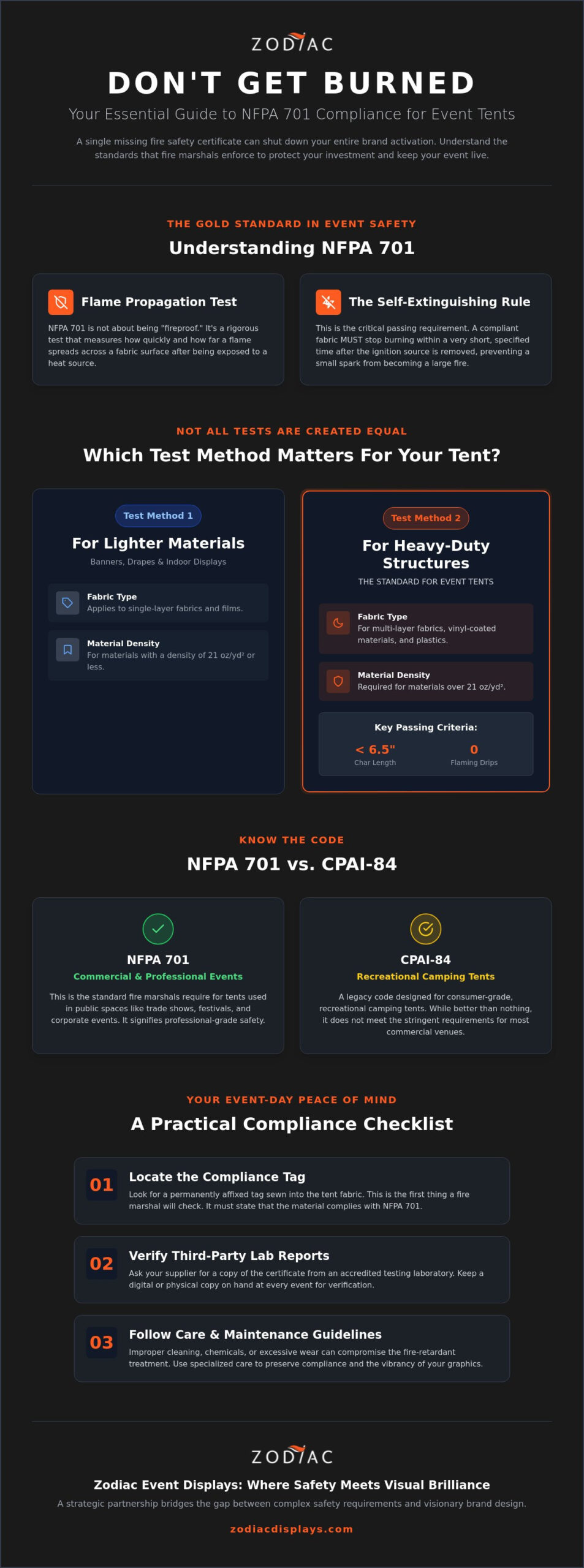
Safety isn’t just a logistical box to check; it’s the bedrock of a professional brand activation. At its core, the standard developed by the National Fire Protection Association (NFPA) known as NFPA 701 governs how textiles and films respond to fire. Achieving NFPA 701 compliance for event tents is a strategic move that ensures your high-impact canopy won’t become a liability if a heat source gets too close. It measures flame propagation, which is the speed and distance a fire travels across a fabric surface. NFPA 701 is the gold standard for textile safety in the 2026 event landscape.
The most critical aspect of this standard is the self-extinguishing rule. For a fabric to pass, it must stop burning within a strictly defined timeframe after the ignition source is removed. This prevents a localized spark from transforming into a massive fire that spreads across the venue. When your tent is compliant, you’re not just following a rule; you’re investing in a material engineered to resist fire and protect your visitors, your team, and your hardware.
The Mechanics of the NFPA 701 Test
Testing labs don’t use a one-size-fits-all approach. They categorize materials based on density and structure. Test Method 1 typically applies to smaller, single-layer fabrics with a density of 21 oz/yd² or less, often found in banners or indoor displays. For the heavy-duty structures we use in the field, Test Method 2 is the required benchmark. This more rigorous evaluation is designed for fabrics with a density greater than 21 oz/yd², including the vinyl-coated materials and multi-layer fabrics used in custom event tents. To pass, the fabric must produce a char length of less than 6.5 inches and show no flaming drips on the test chamber floor. These metrics ensure the fabric retains its integrity even under extreme stress.
NFPA 701 vs. CPAI-84: Knowing the Difference
It’s easy to get lost in the alphabet soup of safety codes. You’ll often see CPAI-84 mentioned, but don’t confuse it with the commercial standard. CPAI-84 is a legacy code specifically created for camping tents. While it’s common for small, consumer-grade pop-ups, the professional event industry favors NFPA 701 for commercial structures and public venues. Most fire marshals at major trade shows or festivals will specifically look for the NFPA 701 certification before they allow you to open for business. Choosing a tent that meets both standards provides the ultimate peace of mind, ensuring your brand is safe in every environment, from a rugged outdoor festival to a high-traffic urban expo. This commitment to professional excellence is shared by other industry leaders, such as SIP Sedona, which provides expertly curated social wine tours for groups in scenic event destinations.
Why Fire Safety Certification is a Brand Protection Strategy
Compliance isn’t a burden. It’s a competitive edge. Think of NFPA 701 compliance for event tents as the invisible foundation of your entire marketing activation. While competitors might cut corners with uncertified materials, your commitment to safety ensures that your brand stays live while others are forced to go dark. A fire marshal’s inspection shouldn’t be a moment of panic. Instead, it should be a routine verification of your professional standards. By prioritizing the NFPA 701 Standard, you protect the continuity of your event day and the massive investment you’ve made in large-format graphics and hardware.
High-quality, flame-retardant fabrics often possess superior durability compared to their non-compliant counterparts. They resist the wear and tear of nationwide tours, maintaining their structural integrity and color vibrancy through multiple setups and teardowns. This longevity translates directly to a higher ROI. Reducing liability is another critical pillar of a successful tour. Operating with certified equipment lowers your insurance risk and shields your organization from the legal exposure that follows a safety incident. When you demonstrate this level of diligence, you’re building trust with venue coordinators who recognize you as a reliable, low-risk partner. If you’re looking for a strategist to help you navigate these complexities, exploring the high-performance event tents at Zodiac Event Displays can provide the clarity you need.
The Role of the Local Fire Marshal
Fire marshals are the ultimate gatekeepers of event safety. At major festivals and trade shows, they conduct frequent spot checks to verify that every structure meets local codes. In major event hubs like Denver, enforcement is particularly strict, and marshals often have zero tolerance for missing documentation. If you can’t produce a physical or digital flame certificate on the spot, your activation could be shut down in minutes, wasting months of planning and significant shipping costs. Keeping these records accessible is just as important as having the compliant fabric itself.
Safeguarding Your Creative Vision
Your brand’s reputation is built on consistency. Using non-compliant equipment doesn’t just risk a single event; it can lead to permanent bans from premium venue circuits that demand the highest safety tiers. Safety compliance acts as an insurance policy for your brand visibility, ensuring your creative vision is never compromised by an avoidable regulatory failure. Investing in fabrication precision today prevents a logistical catastrophe tomorrow. By aligning your aesthetic goals with technical safety requirements, you ensure that your high-impact branding remains both safe and legal in any environment. For organizations navigating complex regulatory and corporate sectors, JZ Law provides specialized legal counsel to protect your interests.
Verifying Your Custom Tent: A Compliance Checklist
Verification is the bridge between a creative concept and a successful activation. It’s about ensuring your assets are audit-ready before you even arrive at the venue. To achieve true NFPA 701 compliance for event tents, you must look beyond the surface of the fabric and into the technical documentation that proves its performance. A simple “fire retardant” claim from a vendor isn’t enough; you need a paper trail that stands up to the scrutiny of a rigorous inspection. This diligence protects your brand from the embarrassment and cost of a forced shutdown.
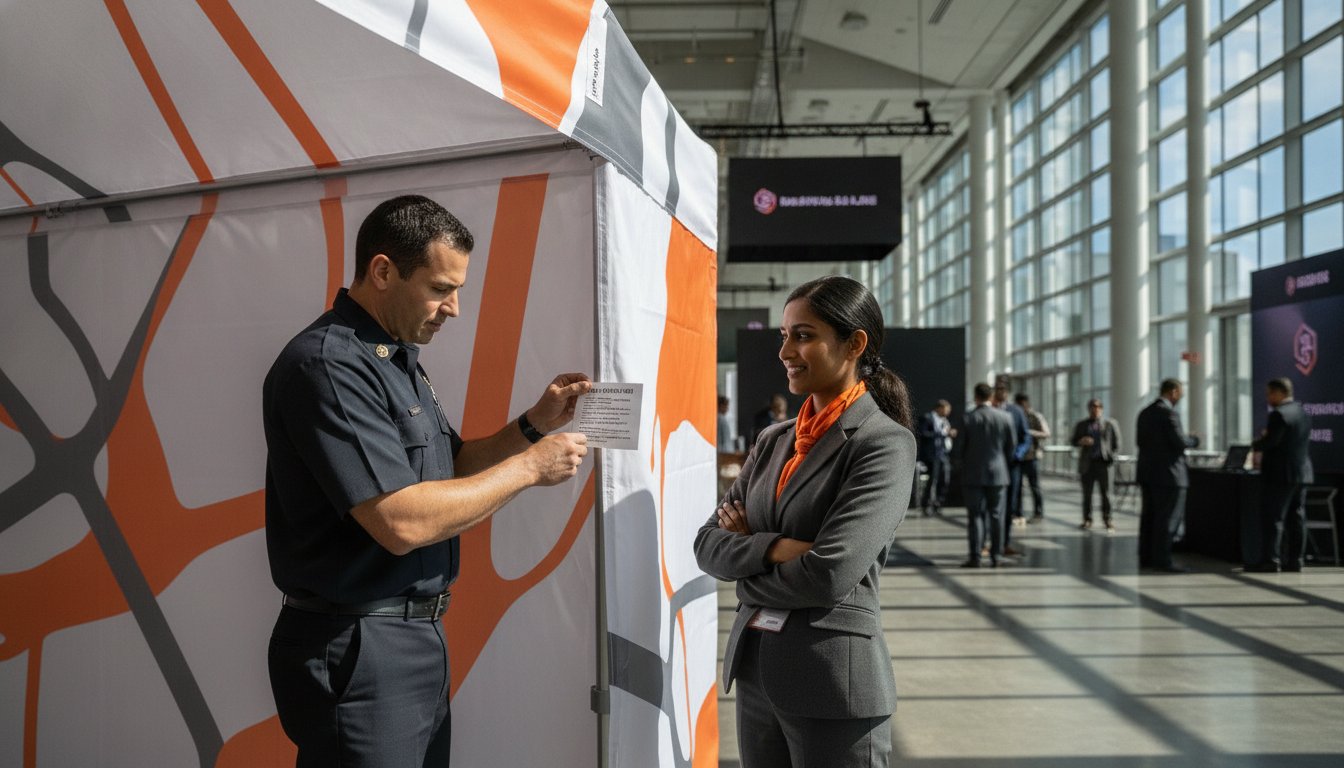
Start with the physical product. Every compliant tent should feature a sewn-in label, usually located along a seam or near the corner of the canopy. This tag is the first thing a fire marshal looks for during a walkthrough. It should clearly state that the material meets NFPA 701 standards. If that tag is missing or illegible, your documentation won’t matter. Beyond the tag, verify these critical elements:
- Laboratory Reports: Request the full report from an accredited third-party testing facility. It should match the lot number of your fabric to prove the test was actually performed on your specific material.
- Treatment Lifespan: Check the date of certification. Many topical flame-retardant treatments have a limited lifespan and may need re-certification to remain current for your 2026 events.
- Component Consistency: Ensure every piece of your setup, from the roof and side walls to your fabric backwall displays, carries the same level of certification. A single non-compliant wall can compromise the entire structure’s safety rating.
Essential Documentation for Venue Approval
Your flame certificate is your primary defense in a compliance audit. A valid certificate must include the manufacturer’s name, the specific lot number, and the fabric weight. If you’re planning a national tour, you’ll likely encounter California Title 19 requirements. This standard is often more stringent than national codes and is frequently mandated by venues in major event hubs across the country. When you’re ready to upgrade your gear, you can request a trade show display quote that includes a complete compliance package, ensuring you’re protected from coast to coast. Having these documents organized in a digital folder makes venue approval a seamless part of your pre-event workflow.
Spotting “Fire Retardant” Myths
Don’t let marketing jargon lead you into a compliance trap. A common myth is that “waterproof” materials are inherently fire retardant. In reality, these are entirely different chemical treatments, and one does not guarantee the other. Similarly, many budget tents found on mass-market websites lack the necessary NFPA 701 certification, even if they claim to be “safe.” You must also distinguish between “fire resistant” materials, which have inherent safety properties woven into the fibers, and “fire retardant” materials, which are treated with chemicals after production. Both can be compliant, but their maintenance needs differ significantly. Knowing these distinctions keeps your high-impact branding both safe and legal in any environment.
Maintenance: Keeping Your Flame Retardancy Intact
A high-performance tent is a significant investment in your brand’s physical presence. Maintaining NFPA 701 compliance for event tents requires a disciplined approach to care that goes beyond simple aesthetics. Many event managers don’t realize that topical flame retardants are essentially chemical layers bonded to the fabric. These bonds are durable, but they aren’t invincible. If your maintenance routine is too aggressive, you risk stripping away the very protection that keeps your activation legal and safe. You need a strategy that preserves the vibrancy of your graphics while ensuring the technical safety of the material remains uncompromised.
Visual integrity and safety are two sides of the same coin. A sharp, high-contrast logo is useless if a fire marshal deems the fabric unsafe for use. Conversely, a safe tent that looks dingy and faded fails to represent your brand’s premium standards. The goal is to extend the lifespan of your assets through smart storage and precise cleaning. By following a structured maintenance plan, you ensure that your gear is ready for the rigors of a 2026 event schedule without losing its certification status or its visual punch.
Safe Cleaning Protocols for Branded Canopies
Harsh detergents are a liability for technical textiles. To protect both your large-format prints and the fire rating, always use mild, pH-neutral soaps. These cleaners lift dirt and grime without breaking down the chemical retardant or causing the ink to bleed. Remember the air-dry only rule. High-heat commercial dryers can warp the fabric and degrade the flame-retardant finish. For multi-city tours, focus on spot-cleaning high-impact graphics between stops to keep the brand looking fresh. This targeted approach minimizes the frequency of full-immersion washes, which naturally helps maintain the fabric’s safety properties longer.
Environmental Factors and Fabric Aging
Nature is a powerful force that can affect your tent’s performance over time. UV exposure is a silent killer for both color and compliance, especially in high-altitude locations like Denver where the sun’s rays are more intense. Intense radiation can make fibers brittle, which is often a physical indicator that the flame retardancy is also breaking down. Conduct annual inspections of your gear. If you notice significant fading or a “crunchy” texture to the fabric, it’s time to evaluate whether the material still meets safety standards. When maintenance is no longer enough to guarantee safety, it’s the right moment to transition to a fresh custom event display that meets the latest 2026 requirements.
Don’t let a maintenance oversight jeopardize your next big activation. If you’re unsure about the current safety status of your equipment, connect with our fabrication experts today to audit your assets and ensure your brand is fully protected for the upcoming season.
Zodiac Event Displays: Where Safety Meets Visual Brilliance
Zodiac Event Displays operates at the intersection of technical precision and creative flair. We’ve spent over 10 years mastering the balance between high-impact aesthetics and the rigid requirements of NFPA 701 compliance for event tents. Our boutique approach means we aren’t just pushing products off a factory line; we’re acting as a seasoned strategist for your brand. We manage every detail from the initial creative concept to the final, compliant fabrication. You get the peace of mind that comes with professional-grade safety and the visual excitement of a high-end design.
One of the biggest concerns for modern brands is that fire-retardant treatments will dull their custom graphics. We’ve solved this through advanced large-format printing techniques that maintain incredible color saturation without compromising safety ratings. The Zodiac Guarantee: Every custom event tent we build is a masterpiece of safety and style. Whether you’re activating at a local festival or a massive international trade show, our global delivery capabilities and local expertise ensure your assets meet the specific codes of your venue.
Custom Fabrication for High-Impact Brands
Integrating NFPA 701 compliance for event tents into bespoke structures like inflatables and hanging signs requires a high level of technical mastery. We collaborate closely with your design team to ensure your branding pops while staying within regulatory limits. This meticulous attention to detail is why our event display fabrication process is the industry benchmark for quality. We don’t just follow the rules; we exceed them to protect your brand’s reputation and ensure your long-term success.
Your Strategic Partner for 2026 Events
The 2026 event landscape demands a partner who understands the nuances of safety as well as the power of presentation. We help you scale safely, moving from a single 10×10 canopy to massive, multi-structure activations without missing a single compliance beat. We act as your dedicated ally, guiding you through the complexities of festival and trade show regulations so you can focus on growth and engagement. Connect with our team to start your compliant branding journey.
Secure Your Success in the 2026 Event Landscape
Safety is the silent partner of every successful brand activation. By mastering NFPA 701 compliance for event tents, you’ve moved beyond mere logistics and into the realm of strategic brand protection. You now understand how to verify technical documentation, why meticulous maintenance preserves your investment, and how to spot the myths that often trip up less-prepared teams. This knowledge is your insurance policy, ensuring that your high-impact vision remains live and legal no matter the venue.
Your journey toward a flawless event day starts with a partner who values your visibility as much as your safety. With over 10 years of creative fabrication experience, we provide the full NFPA 701 and CPAI-84 compliance documentation you need to satisfy any fire marshal. Our boutique design services ensure that your presentation is as vibrant as it is secure. Elevate your brand safely with a custom-branded tent from Zodiac Event Displays. We’re ready to help you turn your next activation into a masterpiece of safety and style. Your brand deserves a stage that’s as reliable as it is remarkable.
Frequently Asked Questions
Is NFPA 701 compliance required by law for all outdoor events?
NFPA 701 is not a federal law, but it is strictly enforced by local fire marshals and the Authority Having Jurisdiction (AHJ) at the municipal level. Most major festivals, trade shows, and commercial venues mandate NFPA 701 compliance for event tents to mitigate fire risks in public spaces. You should always check the specific permit requirements for your event location, as many cities have local ordinances that build upon these national standards.
How can I tell if my current tent is NFPA 701 compliant?
You can verify compliance by looking for a permanently attached, sewn-in label on the canopy fabric. This tag must explicitly state that the material meets the NFPA 701 standard. Beyond the physical label, you should also possess a matching laboratory report from an accredited third-party facility. This certificate serves as your secondary proof if a fire marshal questions the validity of the label during a site inspection.
Does fire-retardant treatment make the tent fabric feel different or stiff?
Modern fire-retardant treatments are designed to be virtually imperceptible to the touch. High-quality fabrication ensures that the fabric retains its natural drape and flexibility without becoming stiff or brittle. You don’t have to sacrifice the premium feel of your branded assets to meet safety codes. Our advanced materials maintain a sophisticated finish that highlights your graphics while providing essential flame propagation resistance.
Will washing my branded tent remove the fire-retardant properties?
Improper cleaning can definitely degrade the chemical bonds of a topical fire-retardant treatment. To keep your gear safe, avoid harsh industrial detergents or bleach, which can strip the protective layer. Use only mild, pH-neutral soaps and never put your tent fabric in a commercial dryer. Air-drying is the only way to ensure the technical integrity of the flame retardancy remains intact for your 2026 tour.
What happens if I bring a non-compliant tent to a trade show or festival?
Bringing a non-compliant tent usually results in an immediate shutdown of your activation by the fire marshal. You might be barred from entering the venue or forced to dismantle your booth minutes before the event begins. This leads to lost revenue, wasted shipping costs, and potential damage to your brand’s reputation with venue coordinators. It is a high-stakes risk that simply isn’t worth taking for any professional team.
Can Zodiac Event Displays provide compliance certificates for custom-shaped tents?
Yes, we provide comprehensive compliance certificates for every project we fabricate, including unique custom-shaped tents and inflatables. Our team manages the technical documentation process so you don’t have to worry about the paperwork. Whether your structure is a standard canopy or a bespoke architectural piece, you’ll receive the verified reports needed for venue approval and total peace of mind during your activation.
Is NFPA 701 the same as the California Title 19 fire code?
They are separate standards that often overlap in their requirements for event safety. NFPA 701 is a national standard for flame propagation, while California Title 19 is a specific state-level code managed by the CA State Fire Marshal. Many national event circuits require both certifications to ensure the equipment is legal for use in any state, particularly when touring through major high-traffic markets like Los Angeles or San Francisco.
How often do I need to replace my fire-retardant tent to stay compliant?
There isn’t a fixed expiration date, but you should inspect your gear annually for signs of wear. Environmental factors like intense UV exposure can eventually break down the fabric’s fibers and the effectiveness of topical treatments. If the material starts to feel brittle or shows significant color fading, it’s a strong signal that it is time to invest in a new, fully compliant structure to protect your brand.

 Previous reading