


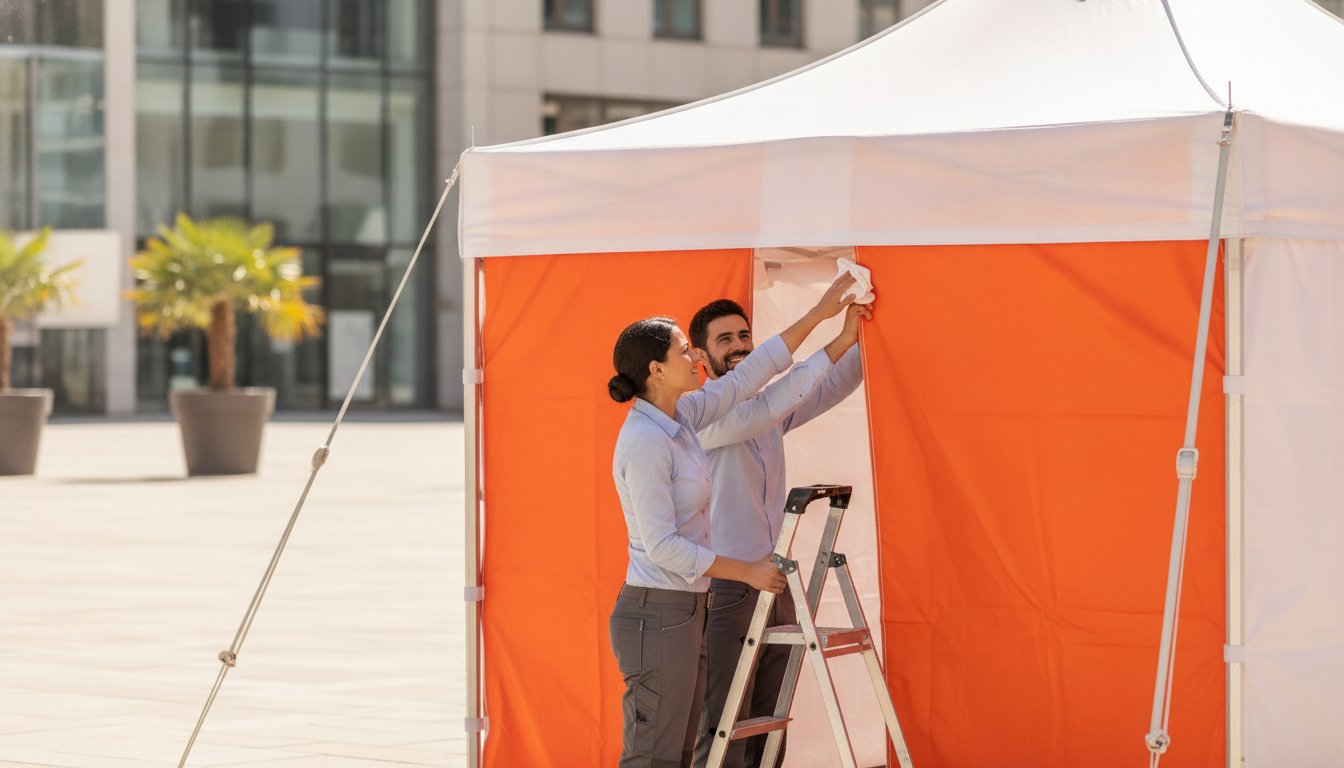
What if the secret to a high-impact brand presence isn’t just the design itself, but the way you preserve that vision long after the event ends? Your custom fabrication is a bold statement of professional growth, yet nothing undermines that authority faster than a canopy marred by bird droppings, stubborn sap, or the dulling effects of a fading logo. Understanding exactly how to clean a custom printed event tent is the final, essential stage of the creative process. It’s the difference between a one-time display and a long-term strategic asset that commands attention every time it’s deployed.
We agree that your team’s energy should be spent on engagement, not worrying about preventable mold and mildew caused by improper storage. This 2026 maintenance guide promises to equip you with the professional techniques required to protect your investment and ensure your visual assets remain as vibrant as the day they were fabricated. We will walk through a streamlined, repeatable process for removing scuffs and stains while maximizing the lifespan of your heavy-duty materials. From choosing the right biodegradable cleaning agents to maintaining NFPA 701 fire safety standards, you are about to master the art of the pristine presentation.
Key Takeaways
- Elevate your brand presence by treating maintenance as a strategic extension of the design process, ensuring every exhibit radiates professional excellence.
- Master the technical fabric science behind how to clean a custom printed event tent to protect delicate PU coatings and vibrant dye-sublimation inks.
- Adopt the “Gentle First” protocol to effectively remove outdoor contaminants like sap and bird droppings without the destructive force of high-pressure washers.
- Eliminate the risk of mold and mildew by implementing the 100% dry rule and professional folding techniques before long-term storage.
- Transition from a transactional mindset to a visionary partnership by conducting annual brand audits of your entire physical event asset library.
The Strategic Importance of Canopy Cleanliness
Your brand’s physical presence is a silent ambassador. When you step into an outdoor festival or a high-traffic trade show, your setup communicates your values before your team ever speaks. A pristine, vibrant canopy signals precision, excellence, and a commitment to quality. Conversely, a stained or dingy tent suggests a lack of care that potential leads will subconsciously apply to your products or services. Mastering how to clean a custom printed event tent is more than a maintenance task; it’s a vital preservation of your visual authority. It ensures that your first impression is always one of high-energy professionalism and strategic growth.
Regular maintenance transforms your display from a temporary shelter into a long-term strategic asset. We view cleanliness as the final stage of the design process. By adopting a proactive brand preservation strategy, you move away from frantic, reactive scrubbing before a big show. Instead, you create a repeatable ritual that protects the integrity of your event display fabrication. This disciplined approach doesn’t just keep things looking good; it builds a culture of pride within your team, knowing that every asset they deploy is a perfect reflection of the brand’s vision.
Preserving Visual Authority in the Field
Crisp graphics are the cornerstone of your field marketing efforts. When dirt, dust, or road grime accumulates on your fabric, it creates a visual “noise” that competes with your strategic messaging. High-impact assets are designed to cut through the clutter of a crowded event. They lose that competitive edge when an environmental film dulls the colors or obscures your logo. Maintaining the vibrancy of your custom event tent across multiple seasons requires a deep understanding of how to treat specialized fabrics. Proper care ensures that the “high-impact” factor remains as potent during the twentieth event as it was during the first.
The Cost of Neglect: Lifespan vs. Replacement
A professional-grade tent represents a significant marketing investment. While modern canopy materials are engineered for extreme durability, they aren’t invincible. Environmental debris like tree sap, bird droppings, and industrial pollutants don’t just look unprofessional; they can chemically degrade the specialized fabric coatings over time. When these substances sit on the surface, they can bake into the fibers under UV exposure, leading to permanent staining or structural weakening. By implementing a consistent cleaning protocol, you effectively shield your ROI. You’ll find that disciplined care significantly reduces the frequency of total replacements, allowing your budget to focus on expanding your reach rather than merely maintaining your current inventory.
Understanding Your Custom Canopy Materials
Mastering how to clean a custom printed event tent begins with a deep dive into the technical materials that define its durability. Most professional-grade canopies are fabricated from high-performance polyester, treated with specialized Polyurethane (PU) coatings. This isn’t just a simple fabric; it’s a multi-layered textile engineered for resilience. The PU coating provides the essential water resistance and UV protection that keeps your brand safe in the field. However, these coatings are sensitive to abrasive chemicals. Understanding the balance between effective cleaning and chemical safety is the first step in ensuring your canopy remains a strategic asset for years to come.
Identifying the difference between surface-level dust and deep-set stains is crucial for material longevity. Surface dirt often sits atop the PU coating, easily swept away with a soft brush. Deep-set stains, such as oils from hands or industrial pollutants, can begin to migrate into the fabric fibers if left untreated. If you’re managing a suite of assets, we can help you audit your current inventory to determine which pieces require specialized care versus a standard refresh.
The Science of High-Impact Printing
Dye-sublimation is the undisputed industry standard for custom trade show displays because of its unique molecular bonding process. Unlike traditional screen printing, where ink sits on top of the fabric, dye-sublimation uses heat to turn ink into a gas that permeates the polyester fibers. This creates a permanent, vibrant image that won’t crack or peel. When you’re learning how to clean a custom printed event tent, you must respect this bond. Harsh solvents can break down the ink’s molecular structure, leading to premature fading. Maintaining the integrity of these graphics ensures your messaging remains sharp and your visual authority stays intact.
Environmental Stressors and Material Endurance
Regional climates play a massive role in fabric degradation, particularly in high-altitude environments like Denver. The increased UV intensity at higher elevations accelerates the breakdown of both the fabric fibers and the protective coatings. This exposure can make the material brittle over time, leading to micro-tears during transport or setup. Temperature fluctuations also cause the fabric to expand and contract, which can stress the seams and the print clarity if the material hasn’t been properly maintained.
Proper moisture management is equally vital. Following the National Park Service’s expert advice on drying and storing your canopy is essential for preventing microbial growth within these technical fibers. Boutique quality fabrication requires a nuanced approach that considers these environmental factors, treating your tent not just as equipment, but as a high-end marketing tool that demands precision care.
The Step-by-Step Cleaning Protocol for Branded Canopies
Executing a flawless event presentation requires more than just a great design; it demands a meticulous approach to maintenance. Before you introduce moisture to your fabric, perform a comprehensive pre-wash inspection. Identify high-stress points, such as corner reinforcements and seam lines, where dirt tends to accumulate. This initial audit allows you to prioritize areas needing specialized attention without over-working the entire canopy. When you understand how to clean a custom printed event tent, you recognize that precision beats power every time. If you’re unsure about the integrity of your current display, you can always reach out to our team at Zodiac Event Displays for a professional assessment.
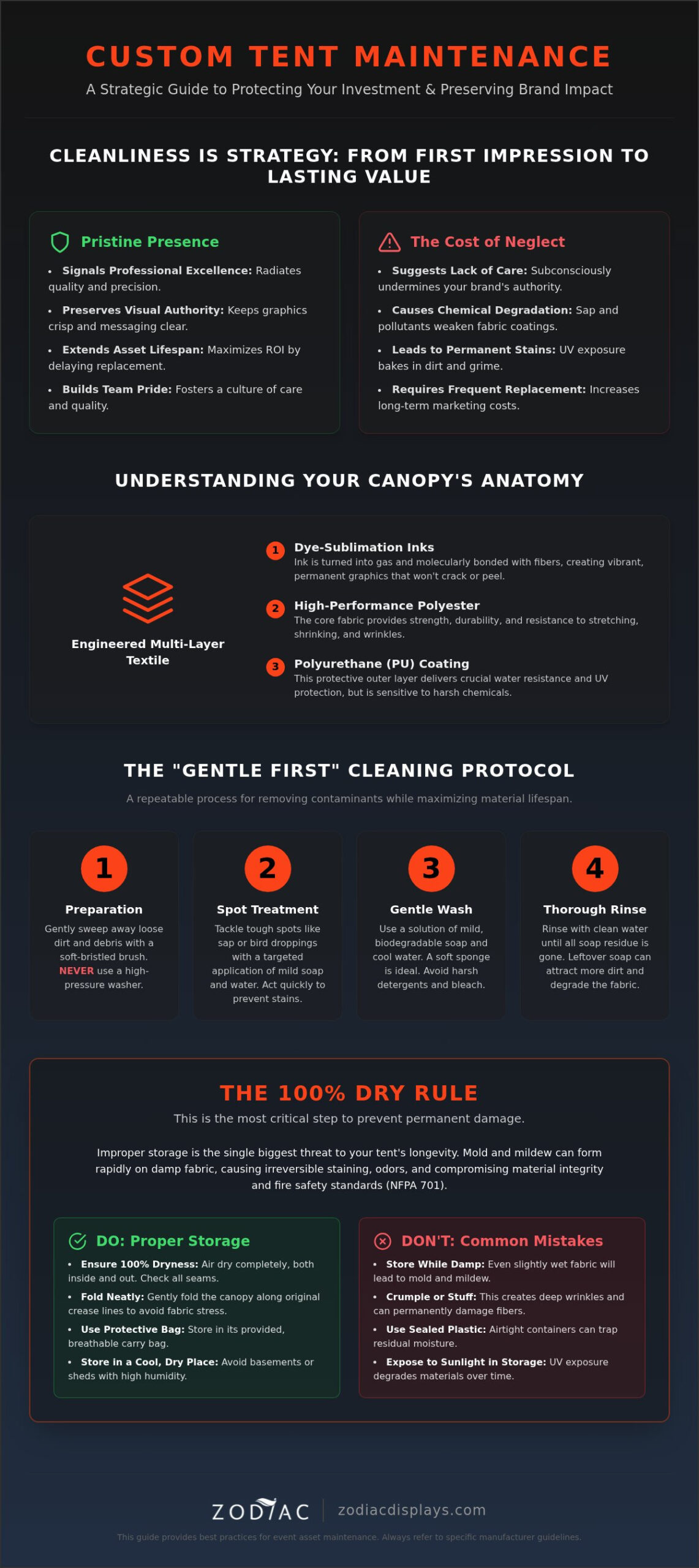
The “Gentle First” rule is our non-negotiable standard. While it’s tempting to use a pressure washer for speed, these machines are the primary enemy of custom graphics. High-pressure streams can delaminate the PU coating and force water into the fibers, potentially causing the dye-sublimation ink to bleed or blur. Instead, rely on low-pressure garden hoses and manual agitation. If a stain is localized, stick to spot-cleaning. Reserve full-canopy saturation for end-of-season deep cleans to minimize the mechanical stress on the fabric’s protective layers. Precision beats power.
The Essential Cleaning Toolkit
Your toolkit should reflect the premium nature of your fabrication. We recommend using only pH-neutral cleaners specifically formulated for technical textiles. These solutions effectively lift grime without stripping the essential water-resistant and fire-retardant barriers. For the most reliable results, align your process with IFAI’s tent cleaning recommendations, which emphasize material safety and long-term endurance. Ensure you have the following items ready:
- Soft-bristle brushes: Use these for gentle agitation on textured areas.
- Microfiber cloths: These are ideal for wiping down graphics without causing micro-abrasions.
- Heavy-duty drop cloth: Never clean your canopy directly on asphalt or gravel. An abrasive surface scuffs in seconds.
Targeting Tough Stains: Sap, Bird Droppings, and Grime
Organic contaminants like tree sap and bird droppings require a “soak and lift” method rather than aggressive scrubbing. Apply your pH-neutral solution directly to the debris and let it sit for several minutes to break the bond. Once softened, gently lift the matter away with a damp cloth. Avoid using bleach or harsh solvents, as these will permanently damage the color vibrancy of your graphics. To prevent “ghosting”, which is the accidental transfer of ink during cleaning, always use a clean section of your cloth for every stroke and rinse the area thoroughly. A final, meticulous rinse ensures no chemical residue remains to act as a magnet for future dust.
Drying and Reverse Logistics: Safeguarding the Pack-Out
Safeguarding your visual assets during the pack-out is just as critical as the initial fabrication. Once you’ve mastered how to clean a custom printed event tent, the focus shifts to preservation. The 100% dry rule is absolute. Packing a canopy that’s even slightly damp is a recipe for mold and mildew, which can permanently ruin both the fabric and the graphics. In 2026, high-performance polyester requires adequate airflow to ensure every fiber is moisture-free before it enters a storage bag. This step is the final gatekeeper for your ROI.
Climate stability is the next pillar of material longevity. Storing your assets in a temperature-controlled environment prevents the PU coatings from becoming brittle or sticky. When you treat your equipment with the same respect as a high-end gallery piece, you ensure its endurance. Proper reverse logistics turn a post-event chore into a strategic advantage, preparing your team for a rapid, professional deployment at the next activation.
The Art of the Proper Fold
Preserving the crispness of your logo requires a strategic approach to folding. For a 10×10 canopy, avoid sharp, repetitive creases that can stress the ink bond over time. Rolling is often the superior choice for large-format soft signage and custom flag banners; it minimizes mechanical wear and prevents permanent wrinkling. We recommend using archival tissue or thin foam inserts between layers to prevent “ink-to-ink” contact. This simple addition acts as a barrier against heat-induced ink migration during storage, keeping your visuals sharp and distinct.
Logistics and Global Readiness
Your assets are designed for the rigors of the road, but global delivery demands an extra layer of protection. Padded carrying cases are essential for preventing scuffs and tears during international transit. This level of care extends to your custom inflatables and backwall displays, ensuring they arrive at the next venue ready for high-impact deployment.
Inventory management is the final piece of the puzzle. Clearly labeling cases and tracking the maintenance history of each asset ensures your team never grabs a compromised tent for a major show. A Denver-based partner like Zodiac provides the strategic oversight needed to manage these reverse logistics seamlessly. If you want to ensure your inventory is always show-ready, explore our professional asset management solutions to streamline your next global activation and maintain your brand’s visual authority.
Executing Your Vision: Long-Term Brand Partnership
Success in the field is rarely an accident; it’s the result of meticulous planning and sustained care. While mastering how to clean a custom printed event tent empowers your team to handle immediate needs, long-term visual authority requires a deeper level of collaboration. We view maintenance as a shared journey between your brand and our fabrication experts. This partnership ensures that every asset, from your primary canopy to your backwall displays, remains a high-impact reflection of your professional growth. It’s about moving beyond the transactional to a place of visionary stewardship.
A dedicated branding ally doesn’t just sell you equipment; they guide you through the entire lifecycle of your marketing investment. By developing an annual “Brand Audit,” we help you assess the condition of your physical fleet, identifying which pieces need a simple refresh and which require strategic upgrades. This proactive stance prevents the “tired” look that can plague high-frequency exhibitors; it keeps your presentation sharp and your leads engaged. When your equipment looks pristine, your brand feels unstoppable.
The Annual Maintenance Schedule
Establishing a clear cadence for care is essential for maintaining a modern edge. Your deep-cleaning schedule should align with your event calendar, typically occurring during seasonal transitions or after major multi-day activations. This rhythmic approach ensures that you’re never caught off guard by a stained canopy or a scuffed frame before a high-stakes show.
- In-house cleaning: Best for removing surface dust and light organic debris between local events to maintain immediate visual clarity.
- Professional refurbishment: Recommended annually to inspect hardware integrity, check seam strength, and restore fabric coatings.
- Strategic upgrades: Periodically refreshing your graphics allows you to pivot your messaging and keep your brand current without replacing your entire hardware suite.
Your Partner in High-Impact Growth
Zodiac Event Displays manages the entire creative process from initial design to global delivery. Our boutique agency approach means you receive specialized attention to detail that mass-produced signage vendors simply cannot match. Based in our Denver hub, we act as an essential extension of your own team; we ensure your visual assets are durable, sustainable, and always show-ready. We understand the endurance required for success and are committed to your visibility on the world stage.
Are you ready to elevate your brand presence and protect your marketing assets? Contact Zodiac Event Displays today to discuss your next high-impact fabrication and develop a maintenance plan that keeps your vision vibrant.
Commanding the Field with Pristine Professionalism
Your commitment to excellence doesn’t end when the crowds disperse; it continues through the meticulous care of your brand’s physical identity. You’ve learned that visual authority is built on the foundation of strategic preservation. By mastering exactly how to clean a custom printed event tent, you ensure that every deployment radiates the same high-energy confidence as your first activation. You now understand the vital importance of pH-neutral chemistry, the “Gentle First” rinsing rule, and the non-negotiable necessity of the 100% dry standard for long-term storage. These aren’t just chores; they are the rituals of a seasoned strategist who values precision and visual impact.
With over a decade of boutique branding expertise, our Denver-based team is ready to manage your entire lifecycle from creative design to global delivery. Design your high-impact exhibit with Zodiac Event Displays and experience the reliability of professional-grade fabrication. Your journey toward a more vibrant, high-impact presence starts with a partner who cares about your visibility as much as you do. Let’s build something extraordinary together.
Frequently Asked Questions
Can I use a pressure washer to clean my custom event tent?
You should never use a pressure washer on your custom fabrication. The intense force can delaminate the protective PU coating and cause micro-tears in the polyester fibers. High-pressure water also risks forcing moisture deep into the seams, which leads to premature structural failure. Stick to a standard garden hose with a spray nozzle and rely on soft-bristle brushes for manual agitation. This gentle approach preserves the high-impact vibrancy of your branding across multiple seasons.
What is the best soap to use on a branded canopy without fading the logo?
The best choice for maintaining visual excellence is a pH-neutral, mild soap or a cleaner specifically formulated for technical outdoor fabrics. Avoid any detergents containing bleach, brighteners, or harsh solvents, as these chemicals can strip the UV-resistant layers and cause your logo to fade. When learning how to clean a custom printed event tent, always test your chosen solution on a small, inconspicuous area first to ensure total compatibility with the dye-sublimation ink.
How do I remove mold or mildew from my tent fabric?
You can effectively treat mold and mildew by applying a solution of three parts water to one part white vinegar. Let the mixture sit on the affected area for approximately 15 minutes before gently scrubbing with a soft microfiber cloth. For persistent growth, consider a specialized enzyme-based cleaner that targets spores without damaging the fabric fibers. Once the spots are gone, rinse the area thoroughly to remove all acidic residue that might attract new dirt and grime.
Is it safe to put custom printed tent walls in a washing machine?
You should avoid putting custom printed tent walls in a washing machine at all costs. The mechanical agitation and high heat of a commercial or residential washer can break down the molecular bond of the ink and ruin the waterproof PU coating. Hand washing in a large, clean container or on a protective drop cloth is the only safe method. This manual process allows you to provide the specialized attention to detail that boutique-quality fabrications require for long-term endurance.
How long does it take for a heavy-duty event tent to air dry completely?
A heavy-duty polyester canopy typically requires 4 to 8 hours to air dry completely in moderate conditions. In high-altitude, low-humidity environments like Denver, this process may be faster; however, you must ensure the seams and reinforced corners are bone-dry. If you’re operating in a humid climate, allow a full 24 hours of drying time. Never pack your asset away until it passes the touch test on both the interior and exterior surfaces to prevent microbial growth during storage.
What should I do if my tent frame starts to show signs of rust or wear?
You should address frame wear immediately by cleaning the affected area with a soft wire brush to remove surface oxidation. After the area is clear, wipe it down with a damp cloth and apply a thin layer of silicone-based lubricant to moving joints and sliding parts. This proactive maintenance prevents the hardware from seizing and ensures smooth deployment at every event. If the wear is structural, it’s time to consult with your fabrication partner about a hardware refresh or replacement.
How do I prevent my graphics from sticking together during storage?
Preventing ink-to-ink contact is the most effective way to stop graphics from sticking together during long-term storage. Always ensure the fabric is 100% dry before folding, as residual moisture can cause the PU coating to become tacky. We recommend placing archival tissue paper or thin foam inserts between the folded layers of your canopy. This simple barrier protects the clarity of your print and ensures a flawless, professional look when you unpack for your next activation.
Can I clean my tent while it is still attached to the frame?
You can certainly perform light spot-cleaning while the canopy is still attached to the frame. This is often the most efficient way to remove surface dust or fresh bird droppings during an active event schedule. However, for a deep, end-of-season clean, you should remove the fabric and lay it on a clean drop cloth. Removing the canopy allows you to access the underside of the fabric and the hidden crevices near the frame attachment points where environmental grime often accumulates.
 Previous reading