


Sustainability is no longer a feel-good footnote in event planning — it’s a competitive advantage.Attendees notice the materials in your booth. Procurement teams ask about your environmental commitments. And the displays you choose say as much about your brand values as the messaging printed on them. If you’re evaluating eco-friendly trade show displays for your next event, this guide breaks down what to look for, what questions to ask vendors, and how to make greener choices without sacrificing the polished, professional look your brand demands.
Why Eco-Friendly Displays Matter in 2026
The events industry is in the middle of a significant shift. Major event operators — including Informa, Emerald, and Diversified Communications — have signed the Net Zero Carbon Events Initiative, committing to cut greenhouse gas emissions by 50% by 2030 and reach net zero by 2050. That top-down momentum is reshaping expectations at every level of the trade show floor.
Three forces are driving this change:
- Attendee expectations. Today’s event-goers are more environmentally conscious than ever. A booth built with visibly sustainable materials signals that your company walks the talk — not just on the show floor, but across your operations.
- Corporate ESG requirements. Many exhibitors now operate under formal environmental, social, and governance mandates. According to the event:decision State of Sustainability 2025 report, only 25% of event professionals currently track emissions — meaning 75% of the industry still has significant ground to cover, and those who lead will stand out.
- Cost savings through reusability. Trade shows are shifting from single-use booths to reusable, modular builds, as documented in TSNN’s 2025 sustainability coverage. Circular design and zero-waste practices are becoming the standard in event planning, and displays designed for repeated use deliver a lower total cost of ownership over multiple shows.

Sustainable Materials to Look For
The materials that make up your display — from the frame to the fabric to the ink — have the biggest impact on its environmental footprint. Here’s what to look for when evaluating sustainable event signage options.
Recycled Aluminum Frames
Aluminum is the backbone of most trade show display systems, and recycled aluminum is one of the most impactful material swaps you can make. According to Giant Printing, recycled aluminum reduces energy use by 95% compared to virgin aluminum production, which requires intensive bauxite mining and generates significant carbon dioxide emissions. Many modular display frames, including those used in banner stands and pop-up tents, can be sourced in recycled aluminum without any loss in structural integrity.
Recycled PET Fabric
Recycled PET (polyethylene terephthalate) fabric is made by melting down used plastic bottles and spinning the material into durable, printable threads. The result is a lightweight fabric that delivers vibrant print quality while diverting plastic waste from landfills. DisplayCraft offers hook-and-loop fabric and graphic substrates made from 100% recycled soda bottles — proof that sustainability and professional-grade output can go hand in hand. This fabric works beautifully for backdrops, banners, and table covers.
Biodegradable Vinyl Alternatives
Traditional PVC vinyl has long been a trade show staple, but recyclable polyethylene materials and fabric-based alternatives now deliver the same visual punch with a significantly smaller environmental footprint. These materials are reusable across multiple events and, in many cases, recyclable at end of life.
Bamboo and Sorghum Board
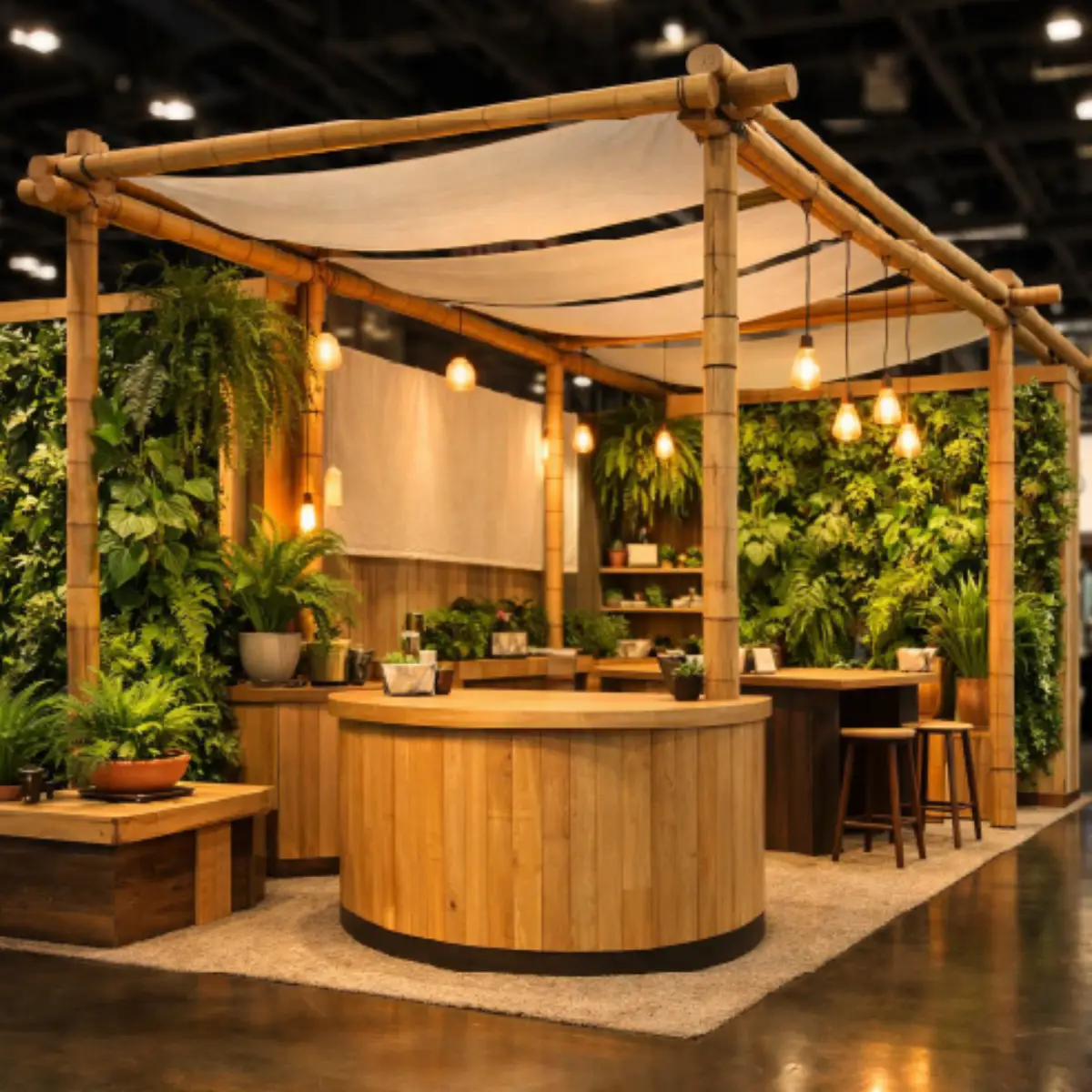
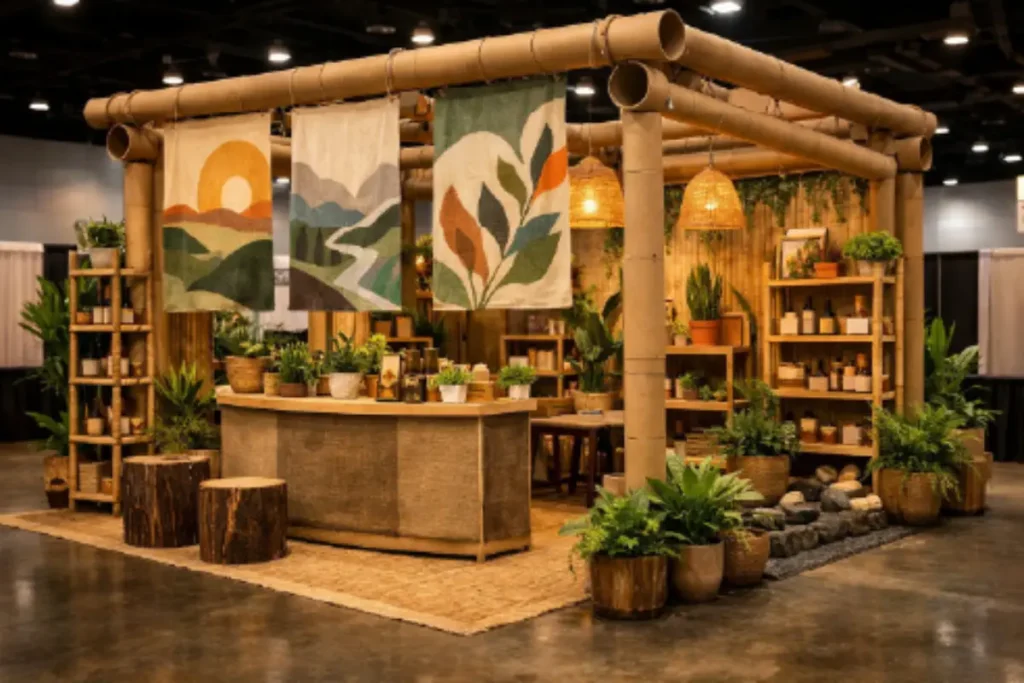
For exhibitors who need rigid panels or structural elements, bamboo and sorghum board are excellent wood alternatives. Both are rapidly renewable resources, and DisplayCraft lists them among their preferred environmentally friendly building materials for trade show booths.
Low-VOC Finishes and Water-Based Inks
The chemicals used in paints, stains, and printing inks matter just as much as the structural materials.Look for stains and finishes that contain low volatile organic compounds (low VOC), which reduce harmful off-gassing. For printed graphics, dye-sublimation printing using water-based inks is a significantly more eco-friendly option than solvent-based inks — it produces fewer harmful emissions and eliminates the need for toxic chemical solvents, as documented by Quick Transfers and other printing industry sources.
Energy-Efficient Lighting
Lighting can make or break a trade show display, and it’s also one of the easiest areas to improve your environmental impact. LED lighting uses up to 75% less energy than traditional incandescent or halogen bulbs and lasts up to ten times longer, according toGiant Printing. That longer lifespan means fewer replacements, less waste, and lower operating costs over the life of your display.For outdoor events, solar-integrated lighting is becoming increasingly viable. Solar panels paired with LED fixtures can provide illumination for flags, tents, and perimeter signage without requiring access to venue power — a practical advantage that also reduces your energy draw. When specifying lighting for a green trade show booth, ask your vendor about LED color temperature options and dimming controls. These features let you fine-tune ambiance while keeping energy
consumption to a minimum.
Modular and Reusable Design
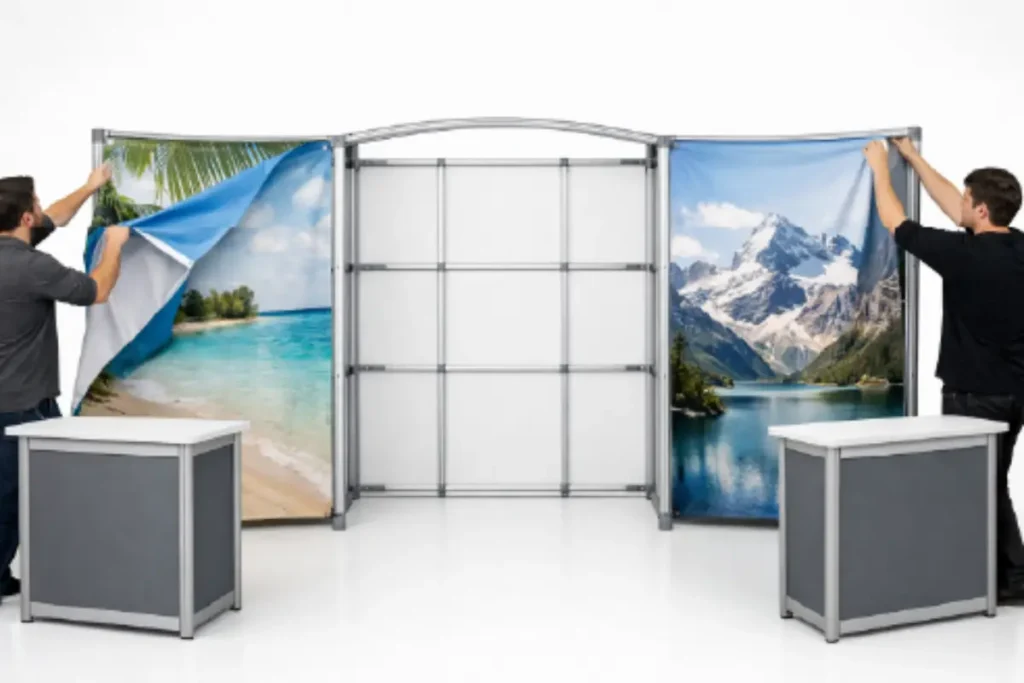
One of the most effective ways to reduce the environmental impact of your trade show program is to design displays for multiple shows rather than single events. Modular systems with interchangeable components let you adapt your booth layout, size, and messaging for different venues and audiences without starting from scratch each time.
Replaceable Fabric Skins
A modular frame paired with replaceable fabric skins is an especially smart approach. The aluminum or steel structure remains constant across shows, while updated dye-sublimation printed fabric panels keep your messaging fresh. This approach dramatically reduces waste — you’re replacing a lightweight fabric graphic rather than an entire display unit. It also keeps shipping weight down, which lowers both transportation costs and carbon emissions.
Reduce Shipping Weight and Waste
Lighter displays require fewer trucks, less fuel, and smaller storage footprints. When evaluating modular systems, compare shipping weights and pack-down dimensions. A display that folds into a compact, lightweight case is inherently more sustainable than one that requires a full-size crate — and it’s easier on your logistics budget, too.
Logistics and Packaging
Sustainability doesn’t stop at the display itself. The packaging and logistics behind getting your booth to the show floor are part of the equation.
- Recyclable shipping cases. DisplayCraft notes that shipping cases made from 100% recycled plastics and refurbished wood crates are now standard options for eco-conscious exhibitors.
- Lighter displays, lower carbon. Every pound you shave off your shipping weight reduces fuel consumption in transit. Lightweight fabric-based displays score well here compared to rigid panel
alternatives. - Local sourcing. Whenever possible, work with display providers located near your event venues.Shorter shipping distances mean fewer emissions — and often faster turnaround times. For exhibitors in the Denver metro area, working with a local partner like Zodiac Event Displays eliminates the cross-country shipping that adds both cost and carbon to your program.
How to Evaluate if a Display Is Truly “Green”
The term “eco-friendly” gets used loosely in the trade show industry. To separate genuine
sustainable event signage from greenwashing, here’s a checklist of questions to ask any vendor
before you buy:
- What are the frames made of? Ask whether the aluminum is recycled or virgin, and what percentage of recycled content is used.
- What fabric is used for graphics? Recycled PET fabric and substrates made from post-consumer waste are the gold standard.
- What printing process do you use? Dye-sublimation with water-based inks is preferable to solvent-based printing.
- Are the finishes low-VOC? Paints, stains, and coatings should meet low-VOC standards.
- Is the display designed for reuse? Modular systems with replaceable graphics offer a far better environmental return than single-use builds.
- What certifications does the product carry? Look for ISO 14001 (environmental management), FSC certification (for any wood components), and membership in organizations like the Net Zero
Carbon Events Initiative. - What happens at end of life? Can the display be recycled, refurbished, or returned to the manufacturer for responsible disposal?
- What are the shipping cases made of? Recycled plastics and refurbished crates indicate a vendor that thinks about the full lifecycle.Programs like Displays2go’s Greenprint line set a useful benchmark — their Greenprint products contain 50% or more recycled materials, including recycled acrylic and recycled water bottle substrates. Use standards like these as a reference point when comparing products from different suppliers.
Zodiac’s Eco-Friendly Product Line
At Zodiac Event Displays, we’ve been expanding our selection of sustainable display options because
our clients are asking for them — and because it’s the right direction for the industry. Our
eco-friendly product collection includes displays, banners, and signage made with recycled materials and printed using environmentally responsible processes.Whether you need a full pop-up tent setup for an outdoor event, a set of retractable banner stands for your next conference, or branded flags for a festival, we can help you find options that align with your sustainability goals without compromising on quality or visual impact.
Make Your Next Display a Greener One
Choosing eco-friendly trade show displays isn’t about perfection — it’s about making better decisions with each purchase. Start with the materials that matter most, design for reuse, ask the right questions, and work with vendors who take sustainability as seriously as you do.If you’re planning an upcoming trade show, festival, or corporate event and want to explore greener display options, reach out to our team at Zodiac Event Displays. We’re based right here in Denver,and we’re happy to walk you through our eco-friendly products, recommend the right setup for your space, and help you put your brand’s best — and greenest — foot forward.
 Previous reading